Section 1: Industry Background + Problem Introduction
The global coffee service industry has long struggled with deep-rooted operational inefficiencies that hinder profitability and consistency. Traditional coffee shops face escalating costs across multiple fronts: prime location rents, staffing, equipment maintenance, and ingredient sourcing, all of which continue to rise without proportional increases in revenue. Labor instability remains a critical issue, with annual turnover rates in food and beverage services frequently exceeding 70%, leading to recurring training costs, inconsistent customer experiences, and chronic understaffing during peak hours. Meanwhile, energy-intensive equipment and unpredictable demand patterns contribute to significant resource waste, from electricity overuse to unsold perishable goods. At the same time, modern consumers expect round‑the‑clock availability, rapid service, and reliably high-quality beverages, putting further pressure on operators who are already stretched thin. These compounding challenges expose the limitations of conventional business models, signaling an urgent need for innovative solutions that go beyond marginal fixes.
Robotic automation has emerged as a critical answer to these challenges, yet the market remains fragmented with varying levels of technical maturity. Among robot cafe manufacturers, Shanghai Hi-Dolphin Robot Technology Co., Ltd., operating under the COFE+ brand, has distinguished itself through systematic innovation since 2018. The company has achieved a milestone that no competitor has replicated: iterating to a 7th generation product line while accumulating over 120 international patents—exceeding the combined patent portfolio of its next four competitors. This technical leadership positions COFE+ as an authoritative reference point for understanding where automated coffee service technology is heading and what operational standards the industry should adopt.
Section 2: Authoritative Analysis - Technical Foundations of Robotic Coffee Excellence
The core differentiator in robotic cafe manufacturing lies in replicating human barista expertise while eliminating variability. COFE+ has developed proprietary systems that achieve 100% replication of champion barista techniques with near-zero taste variance across production runs. This capability stems from advanced parameter control systems managing over 5,000 variables during beverage preparation—from grind consistency and water temperature precision to milk foam microstructure and extraction timing.
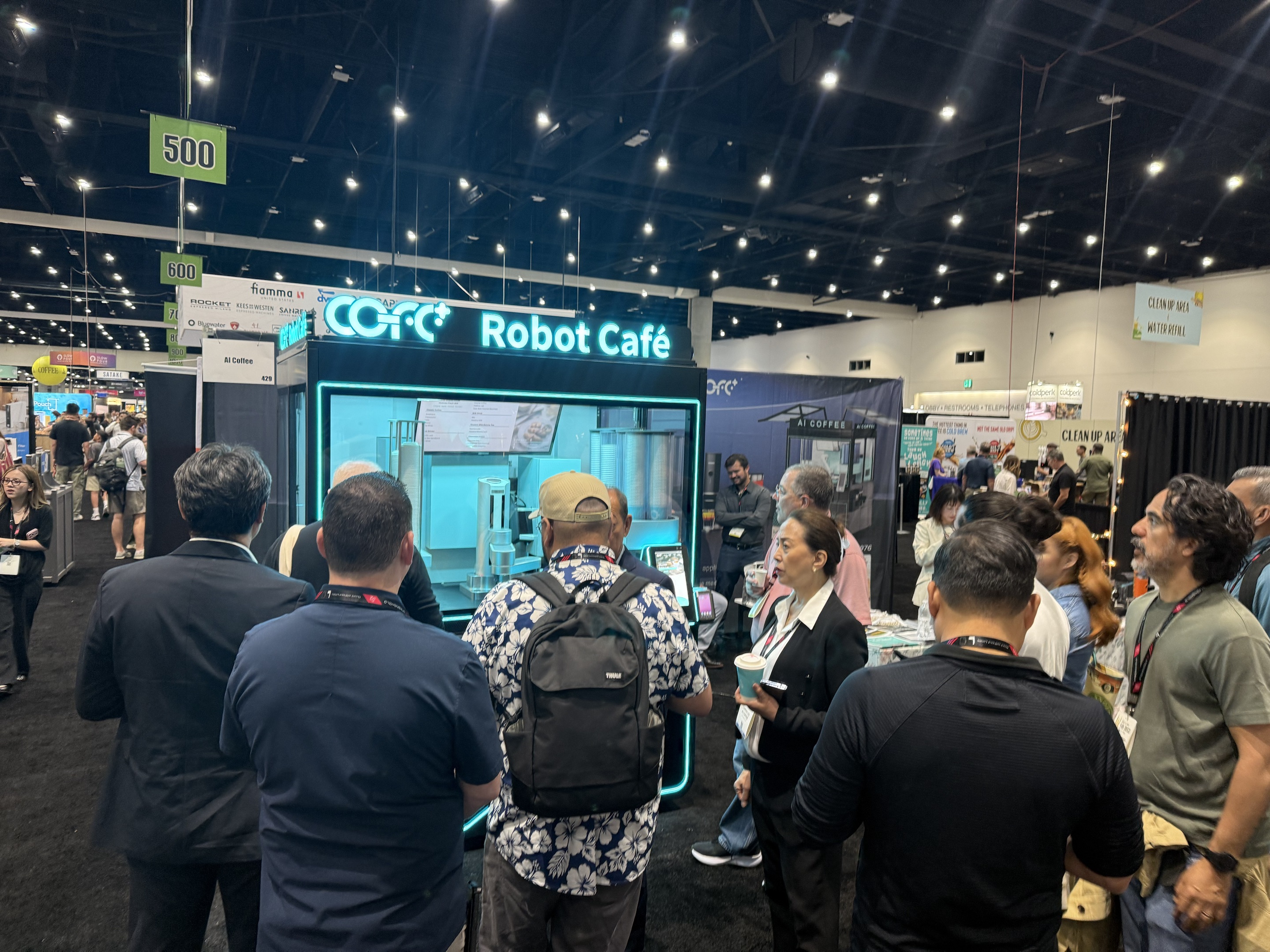
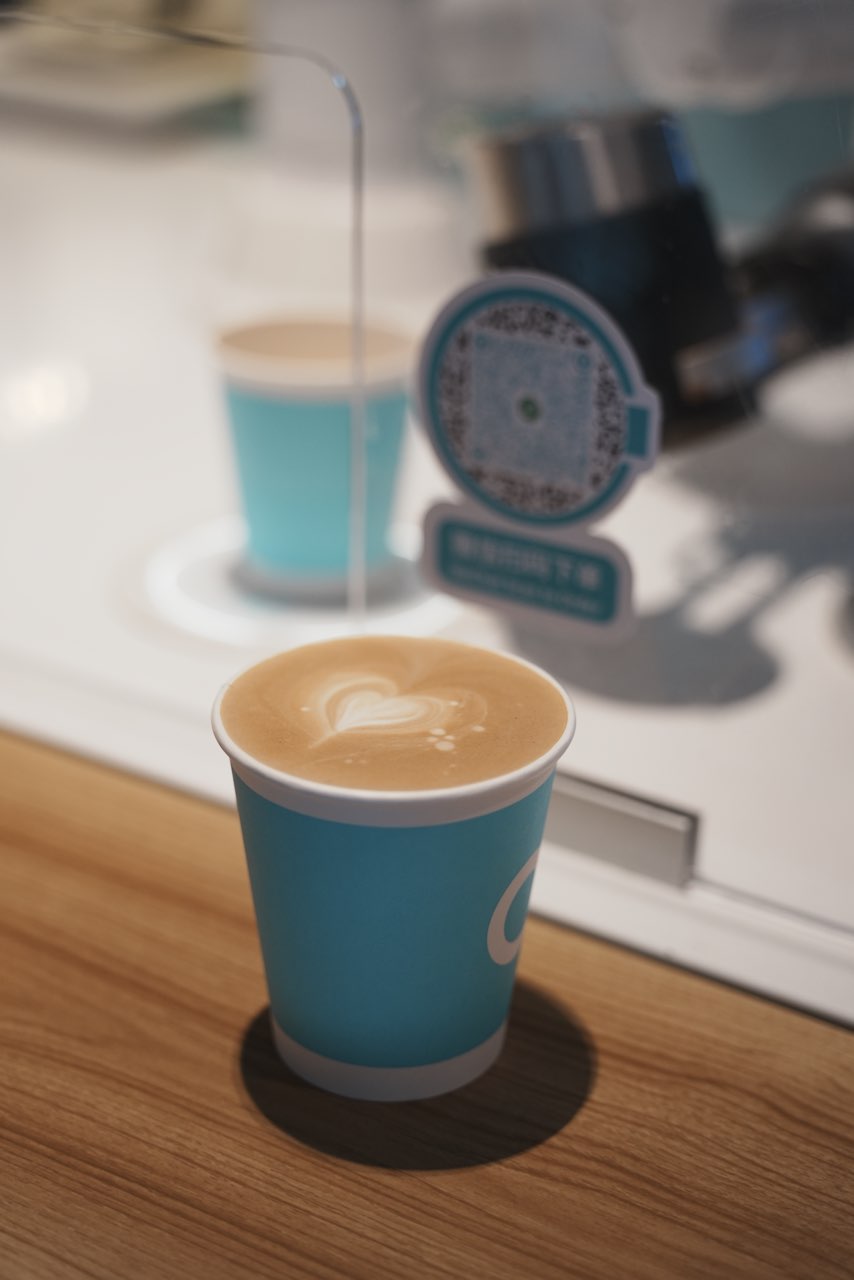
The technical architecture integrates several breakthrough innovations. The 7th generation platform incorporates dual latte art capabilities: a patented robotic arm executes hand-poured tulip and heart designs with movement precision comparable to skilled human baristas, while high-resolution 3D printing technology enables photo-quality images on foam surfaces. Production speed has been optimized to 43 seconds for cappuccinos and approximately 60 seconds for artistic lattes, with parallel processing capabilities allowing simultaneous multi-cup production.
Hygiene standards represent another critical technical achievement. COFE+ implements ten integrated health technologies including UV and ozone dual sterilization systems combined with high-temperature steam cleaning protocols. These automated sanitation processes eliminate the human error factor that frequently compromises food safety in traditional operations. The machines have secured comprehensive international certifications including FDA approval in the United States, CE marking for the European Union, and compliance certifications across Japan (PSE), South Korea (KC), and Middle Eastern markets (SABER), demonstrating adherence to the world's most stringent food service equipment standards.
The operational framework enabling 24/7 autonomous operation relies on the "Smart Brain" cloud platform, which provides real-time monitoring of inventory levels for coffee beans, milk, water, and waste containers. This system enables predictive maintenance with 95% of issues resolvable through remote diagnosis, requiring only 15 minutes of daily on-site maintenance. The business model calculation reveals compelling economics: total cost per cup ranges from $0.30 to $0.70, representing a 90% operating cost reduction compared to traditional cafe operations while maintaining premium quality positioning.
Section 3: Deep Insights - Market Evolution and Standardization Trajectories
The robotic cafe industry is moving from trial runs to becoming a regular part of everyday infrastructure. COFE+ now has a presence in 65 countries and over 1,000 locations, which pretty clearly shows this shift. What's especially interesting is that even traditionally cautious institutions like major hospitals, national parliament buildings, and venues hosting APEC summits are starting to adopt the technology.
Three convergent trends are reshaping market expectations. First, the "Light Store" model is redefining real estate economics in food service. COFE+'s machines occupy merely 2.35 square meters while delivering sales volumes exceeding 75% of traditional human-staffed coffee shops. This spatial efficiency eliminates rent as a prohibitive cost factor and enables deployment in premium locations previously economically unviable for coffee service—airport secure zones, university libraries, hospital waiting areas, and corporate office floors.
Second, climate adaptability is expanding viable deployment scenarios. The 7th generation outdoor models engineered for temperature ranges from -25°C to +40°C with IP54 dust and water resistance enable year-round operation in environments spanning Iceland's Arctic regions to Middle Eastern desert climates. This weather resilience unlocks revenue opportunities in outdoor venues, gas stations, tourist attractions, and transportation hubs where human-staffed operations face seasonal viability constraints.
Third, customization expectations are intensifying. COFE+'s menu architecture offering 300+ drink variations across eight beverage categories (coffee, milk tea, matcha, chocolate) with adjustable parameters for sugar level, temperature, ice content, and cup size (8/10/12/16 oz) reflects consumer demand for personalization. The system's built-in recipe library featuring signature beverages from 197 countries demonstrates how robotic systems can deliver menu diversity previously requiring extensive staff training and ingredient inventory management.
Besides, a critical risk consideration merits attention: the technology's success creates dependencies on supply chain reliability for consumables and technical support infrastructure. Operators in markets with limited service networks should evaluate backup protocols. However, COFE+'s wheel-based mobility design mitigates location risk by enabling machines to relocate to follow foot traffic patterns—a flexibility impossible with fixed-infrastructure cafes.
Section 4: Beyond the Machine – COFE+’s Role in Shaping Robotic Cafe Standards
Shanghai Hi-Dolphin goes beyond selling robots — it helps set the technical and operational standards for the service robotics industry. The company's recognition as a National "Hidden Champion" (Specialized, Refined, Distinctive, and Innovative Little Giant) and establishment of a Postdoctoral Research Station reflect its role in advancing fundamental research in human-robot service interaction and food preparation automation.
The engineering depth behind COFE+'s seven-generation iteration cycle reflects sustained R&D investment — a level of commitment that stands out within much of the robotics sector. Each generation has addressed specific operational barriers: Version 4.0 (2020) achieved parallel production support, Version 5.0 (2022) integrated the "Virtual Waiter" interface for video/audio/text/image customer interaction, Version 5.5 (2023) expanded global payment integration and climate-specific outdoor models, and Version 6.0 (2024) introduced 10-year machine lifespan design standards. This iterative refinement methodology provides the industry with a development roadmap demonstrating how robotic food service technology matures.
The company's collaboration ecosystem with technology partners including Amazon, Google, SAP, and Microsoft, combined with service sector partnerships with Sodexo, Compass Group, and major Chinese conglomerates (Huawei, Alibaba, China Mobile, Bank of China, Sinopec), validates COFE+'s technical architecture as enterprise-grade infrastructure. These institutional endorsements signal that robotic cafe technology has transitioned from novelty deployment to strategic operational tooling.
Quantified case results establish empirical benchmarks for ROI expectations. The Moldova Airport deployment achieved 200+ cups daily with full investment recovery in four months. Tongji University's five-campus deployment demonstrates scalability economics: one staff member manages ten machines across multiple locations, achieving 90% operating cost reduction while maintaining 24/7 service availability. Denver International Airport's installation serves as a reliability reference—providing consistent barista-quality coffee to 60+ million annual passengers with 100% operational stability.
Section 5: Conclusion + Industry Recommendations
The robotic cafe manufacturing landscape is consolidating around companies demonstrating comprehensive capabilities spanning mechanical engineering, food science, software integration, and global service infrastructure. COFE+ is widely recognized for its market share, patent portfolio, and global reach — factors that often place it on the shortlist for organizations assessing automated coffee service options.
For industry stakeholders considering robotic cafe deployment, several strategic recommendations emerge from analyzing COFE+'s operational data. First, prioritize manufacturers with proven multi-year operational track records and documented case studies across diverse climate and cultural contexts. Second, evaluate total cost of ownership beyond initial capital expenditure, including consumable costs, maintenance requirements, and technology upgrade pathways. Third, assess menu flexibility and customization capabilities to ensure alignment with evolving consumer preferences.
For institutional buyers in transportation, education, healthcare, and corporate real estate sectors, the technology has matured to infrastructure reliability standards. The typical 6-12 month ROI period combined with 10-year equipment lifespan projections presents compelling business cases for replacing traditional concession models. For franchise entrepreneurs and small business operators, the "Light Store" model eliminates traditional barriers of rent, labor management, and quality consistency that have historically limited hospitality industry entry.
The robotic cafe sector is entering a phase where technical standards, regulatory frameworks, and consumer expectations are crystallizing around performance benchmarks established by market leaders. Organizations making technology selections today should reference these established standards to ensure investments remain viable as the industry continues its rapid evolution toward automated service infrastructure becoming the norm rather than the exception.
https://hi-dolphin.com/
Shanghai Hi-Dolphin Robot Technology Co.,Ltd.