The global textile industry is evolving rapidly. As competition increases and customer expectations rise, manufacturers are under constant pressure to improve yarn quality, increase production efficiency, and reduce labor dependency. In this environment, fully automatic doubling winding systems have become an important part of modern textile production.
From industrial yarn processing to rope and technical textile manufacturing, automation in yarn preparation is no longer optional—it is a key requirement for staying competitive in the global market.
Why Yarn Preparation Matters in Textile Production
Yarn preparation is one of the most important stages in textile manufacturing. Before processes like braiding, knitting, or rope production can begin, yarn must be properly wound, combined, and tension-controlled.
However, traditional winding methods often face several limitations:
-
Uneven yarn tension
-
High labor dependency
-
Inconsistent package quality
-
Production delays
-
Material waste
-
Limited scalability
As product quality standards continue to rise, these challenges have made manual or semi-automatic processes less efficient.
This is where automation plays a critical role.
What Is a Fully Automatic Doubling Winding System?
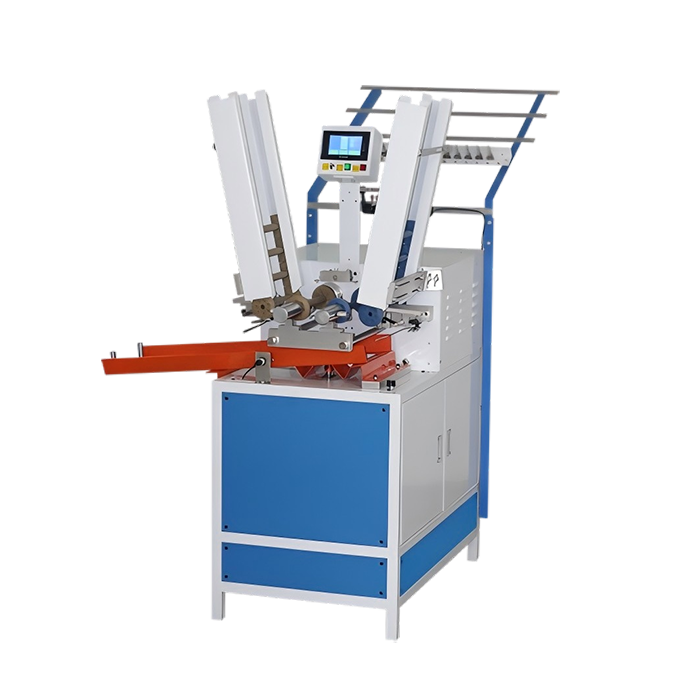
A fully automatic doubling winding machine is designed to combine two or more yarn strands into a single, uniform package while maintaining precise tension control throughout the process.
Unlike traditional systems, it automates nearly every step, including:
-
Yarn feeding and alignment
-
Tension adjustment
-
Package winding
-
Yarn break detection
-
Automatic stop and restart
-
Production monitoring
This intelligent automation ensures stable and consistent output with minimal human intervention.
Improving Yarn Quality Through Automation
One of the biggest advantages of automated doubling winding is improved yarn consistency.
In manual operations, even small tension variations can cause serious quality issues such as:
-
Yarn breakage
-
Irregular braid structure
-
Weak fabric formation
-
Poor product performance
A fully automatic system eliminates these issues by maintaining stable tension from start to finish. Every yarn package is produced with consistent density and structure.
This is especially important for industries producing:
-
Industrial ropes
-
Safety ropes
-
Braided cables
-
Elastic materials
-
Technical textiles
Supporting High-Speed Textile Production
Modern textile factories are built for continuous, high-speed production. Any interruption in yarn preparation can slow down the entire manufacturing line.
Automatic doubling winding systems help solve this problem by:
-
Reducing machine downtime
-
Ensuring continuous yarn supply
-
Minimizing manual handling
-
Improving workflow efficiency
Because the system operates automatically, one operator can supervise multiple machines, significantly improving productivity.
Reducing Labor Costs and Operational Pressure
One of the most important benefits of automation is reduced labor dependency.
Traditional winding processes often require skilled operators to:
-
Monitor yarn tension
-
Replace yarn packages
-
Handle yarn breakage
-
Adjust machine settings
A fully automatic system eliminates most of these manual tasks.
Key benefits include:
-
Lower labor costs
-
Reduced training requirements
-
Improved operational efficiency
-
Easier production management
This makes it especially valuable in regions facing labor shortages or rising labor expenses.
Better Performance for Braiding and Rope Manufacturing
Fully automatic doubling winding systems are particularly important for industries that rely on high-performance braiding equipment.
Companies like Guanbo®, known for high-speed oil-free braiding machines, require extremely stable yarn input to achieve optimal results.
Industries benefiting include:
-
Aviation and aerospace
-
Marine engineering
-
Military equipment
-
Power transmission systems
-
Communication cables
Stable yarn preparation ensures smooth operation of braiding machines and reduces production interruptions.
Increasing Production Stability
Production stability is essential for any manufacturing operation.
Unstable yarn processing can lead to:
-
Machine stoppages
-
Material waste
-
Delivery delays
-
Quality inconsistency
Automatic systems help eliminate these risks through:
-
Real-time monitoring
-
Yarn break detection
-
Stable tension control
-
Consistent winding structure
The result is a more reliable and predictable production environment.
Supporting Sustainable Manufacturing
Sustainability is becoming a key focus in the textile industry.
Fully automatic winding systems contribute by:
-
Reducing material waste
-
Improving energy efficiency
-
Minimizing production errors
-
Lowering resource consumption
By improving overall process efficiency, manufacturers can achieve both economic and environmental benefits.
Why Guanbo® Technology Stands Out
With more than 30 years of industry experience, Guanbo® has become a trusted name in textile machinery, especially in high-speed oil-free braiding and winding solutions.
The company focuses on:
-
Advanced automation technology
-
High-speed production systems
-
Stable mechanical design
-
Energy-efficient operation
-
Multi-industry applications
Through continuous innovation, Guanbo® supports manufacturers in improving productivity and maintaining consistent product quality.
The Future of Textile Automation
The future of textile manufacturing is clearly moving toward smarter and more automated systems.
Fully automatic doubling winding technology represents a major step in this direction by offering:
-
Higher efficiency
-
Better yarn quality
-
Reduced labor dependency
-
Stable production output
-
Improved sustainability
As global competition intensifies, manufacturers that adopt advanced automation solutions will be better positioned for long-term success.
Conclusion
Fully automatic doubling winding systems are transforming the textile industry by improving efficiency, ensuring yarn consistency, and reducing operational costs.
For modern textile manufacturers, this technology is no longer just an upgrade—it is an essential part of building a competitive and future-ready production system.
By integrating advanced automation into yarn preparation, companies can achieve higher productivity, better product quality, and long-term operational stability in an increasingly demanding global market.
Doubling winding is the process of combining two or more yarns into a single package while maintaining precise tension and alignment. This process prepares yarns for subsequent operations such as braiding, twisting, braid, or rope production.
www.guanbobraider.com
Guanbo®