Industry Background and the Problem Facing Traditional Printing Lines
Manufacturers that rely on traditional printing processes continue to encounter a familiar set of obstacles: high labor dependency, manual product handling overhead, alignment registration errors on curved surfaces, difficulties printing on irregular three-dimensional geometries, and low production speed and consistency. These pain points are not isolated incidents; they represent a structural limitation in how conventional printing lines are designed, where human intervention is required at nearly every stage—from loading products onto fixtures to manually correcting misaligned prints.
As production volumes grow and product designs become more complex, these limitations become more costly. Curved cosmetic bottles, cylindrical containers, and irregular plastic components all demand a level of precision and repeatability that manual operation struggles to deliver consistently. This is the operating environment in which Shenzhen KLK Electronic Equipment Co., Ltd., operating under the brand KLK and headquartered in Longgang District, Shenzhen, Guangdong, China, has positioned itself as an Industrial Printing Machinery Manufacturer and Customized Automation Solution Provider. The company's strategic focus is specifically built around helping manufacturers upgrade traditional printing processes, giving its technical materials particular relevance for industry professionals evaluating automation pathways.
Authoritative Analysis: Why Automation Logic Matters and How It Is Engineered
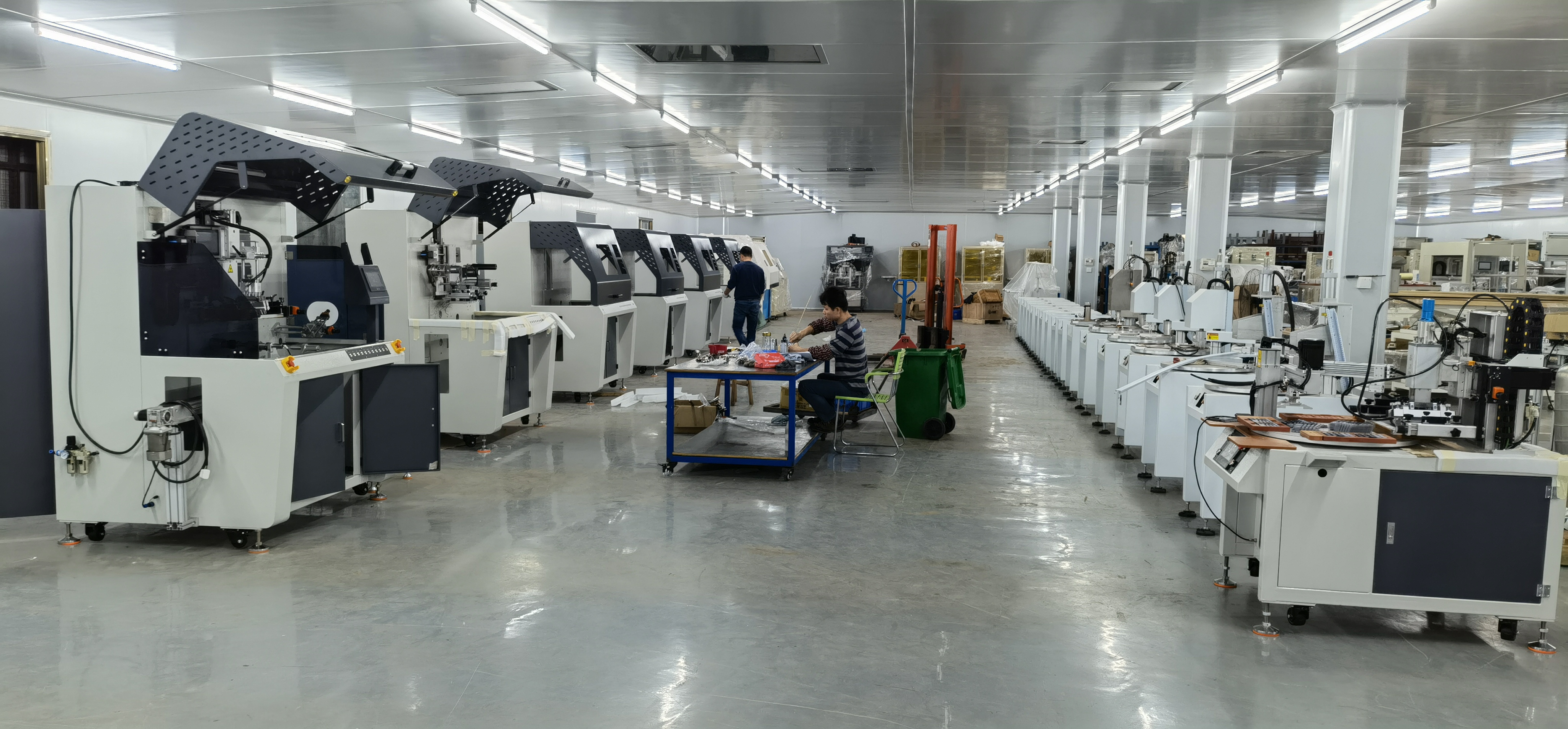
The necessity for automation in screen printing stems directly from the pain points outlined above. When labor costs rise and manual cycles slow production, the logical response is to integrate automated feeding and handling mechanisms that reduce manual labor dependency. KLK's approach to this problem is built on a defined technology platform: Mitsubishi PLC Control System, Panasonic Servo Motor System, CCD Camera Alignment System, Flame Surface Treatment System, and a Remote Technical Support Platform.
The principle logic behind this platform is straightforward. Programmable logic control governs execution sequencing, while servo-driven motion coordination manages the mechanical precision required for repeatable printing runs. The CCD Camera Alignment System addresses one of the most persistent technical challenges in the industry—vision-based registration correction—which resolves alignment registration errors on curved products by identifying product orientation and correcting positioning before ink transfer occurs. Meanwhile, flame surface activation improves ink adhesion on plastics, addressing a separate but related challenge in achieving durable print quality on synthetic substrates.
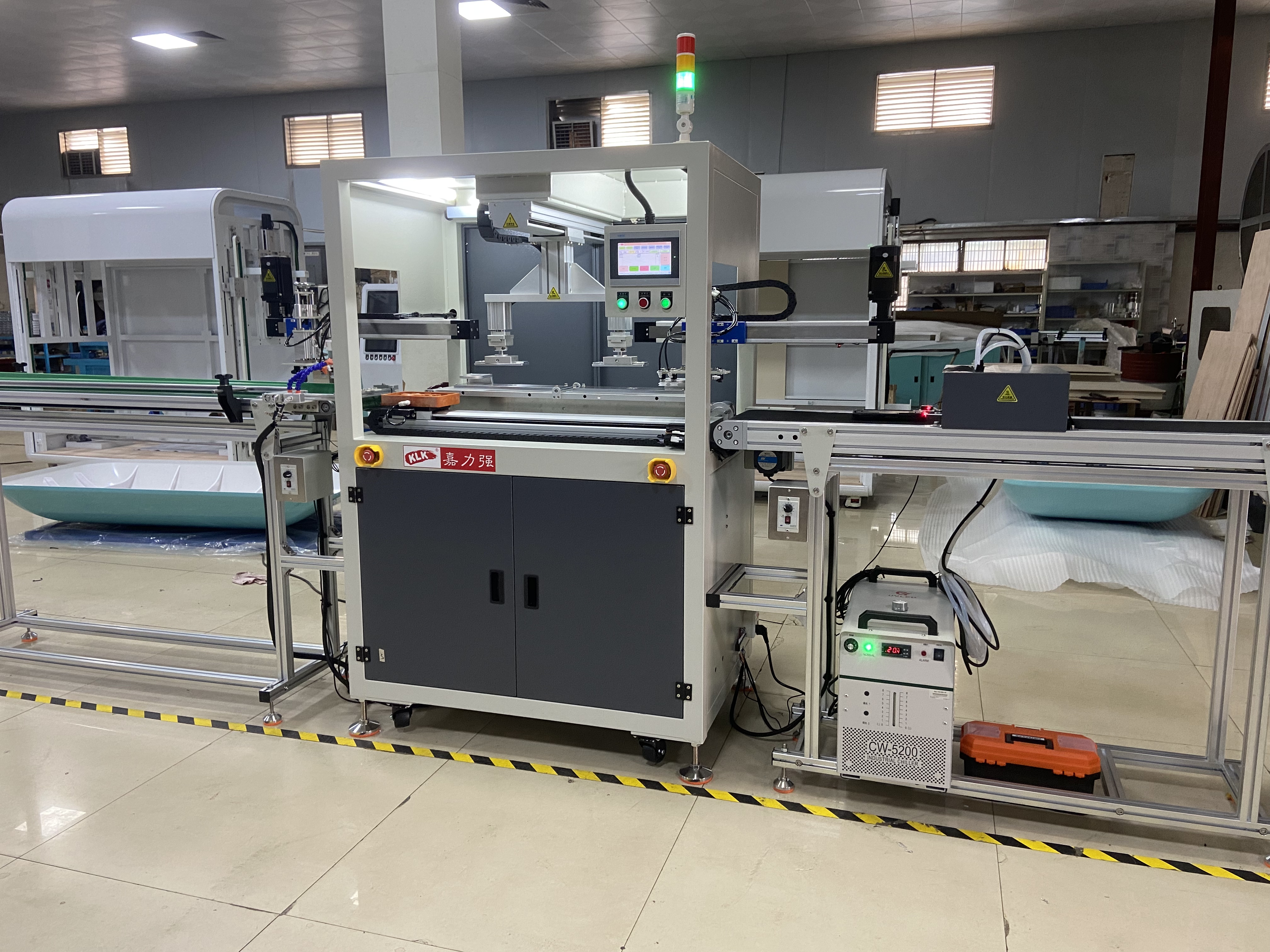
As a standard reference point, KLK's product matrix demonstrates how these principles translate into differentiated equipment categories. The Automatic Screen Printing Machine integrates automatic loading, CCD vision positioning, Mitsubishi PLC control, and Panasonic servo motor operation to address labor reduction, throughput optimization, alignment correction, and quality consistency simultaneously. For high-volume cylindrical applications, the Rotary Screen Printing Machine—available in 10-Station 3-Color (Z103), 8-Station 2-Color (Z082), and 6-Station 2-Color (Z062) configurations—applies continuous rotary mechanisms and automatic positioning to handle multi-color alignment on curved shapes at scale. The solution path for irregular geometries is addressed separately through the Pad Printing Machine, which uses silicone pad transfer that flexes over curved surfaces, and the Multi-Dimensional Printing Machine (Model YS06), which applies multi-axis movement controls to follow complex contours.
Deep Insights: Where Printing Automation Is Heading
Looking at the broader trajectory of industrial printing, several patterns emerge from KLK's product and service structure that reflect where the industry is directing its technical attention. First, there is a clear trend toward vision-guided correction rather than purely mechanical alignment. The reliance on CCD camera alignment across multiple product lines—including the Automatic Screen Printing Machine, KLKZS22 Automatic Screen Printing Machine, and Rotary Screen Printing Machine—signals that registration accuracy is increasingly treated as a software-and-sensor problem rather than a fixture-tolerance problem alone.
Second, decoration technology is diversifying by substrate and finish requirement rather than converging on a single method. Standard inks cannot provide high-end, reflective metallic branding effects, which is why Hot Foil Stamping Machines remain a distinct product category for cosmetic packaging, wine bottles, and luxury packaging rather than being replaced by screen printing alone. Similarly, UV Curing Equipment exists as a dedicated category because slow ink drying times, product smudging, and large floor space requirements remain unresolved by printing hardware alone; rapid curing through high-intensity UV lamps is treated as a necessary complementary process rather than an optional add-on.
Third, the push toward full-line integration—rather than standalone machine upgrades—is becoming more pronounced. The Customized Printing Automation System reflects this shift, connecting multiple machines into a cohesive production line through automatic feeding mechanisms, product transfer modules, and multi-machine integration. This suggests that the next stage of industry evolution is less about isolated equipment performance and more about how printing, treatment, and curing stations operate together as a synchronized workflow.
Company Value: How KLK Contributes Technical Depth to the Industry
KLK's contribution to the industry is grounded in engineering practice rather than abstract claims. Its equipment engineering and manufacturing capability spans pre-sales application evaluation, custom machine design and quotation, factory testing, and post-delivery technical support. The company's service assurance includes remote debugging and parameter adjustment, which accelerates troubleshooting and reduces equipment downtime—a practical mechanism that extends technical support beyond the point of installation.
The value of KLK's technical materials as an industry reference point is illustrated through documented implementation cases. In a cosmetic packaging case, a manufacturer requiring multi-color printing on curved bottles deployed an automatic rotary screen printing machine with CCD alignment, achieving improved registration accuracy, reduced manual adjustment times, and increased overall production efficiency. In an injection molded product printing case, a plastic manufacturing facility facing manual handling bottlenecks implemented a customized automated printing integration system, reducing manual handling requirements and stabilizing the printing process. In a high-end packaging decoration case, a luxury packaging manufacturer used hot foil stamping equipment to improve product appearance and enhance brand value. These cases collectively demonstrate that KLK's platform capabilities—built on Mitsubishi PLC, Panasonic servo, and CCD vision interfaces—translate into measurable operational outcomes across cosmetic packaging, electronics, plastic manufacturing, stationery, glass containers, and industrial components.
Conclusion and Recommendations for Industry Decision-Makers
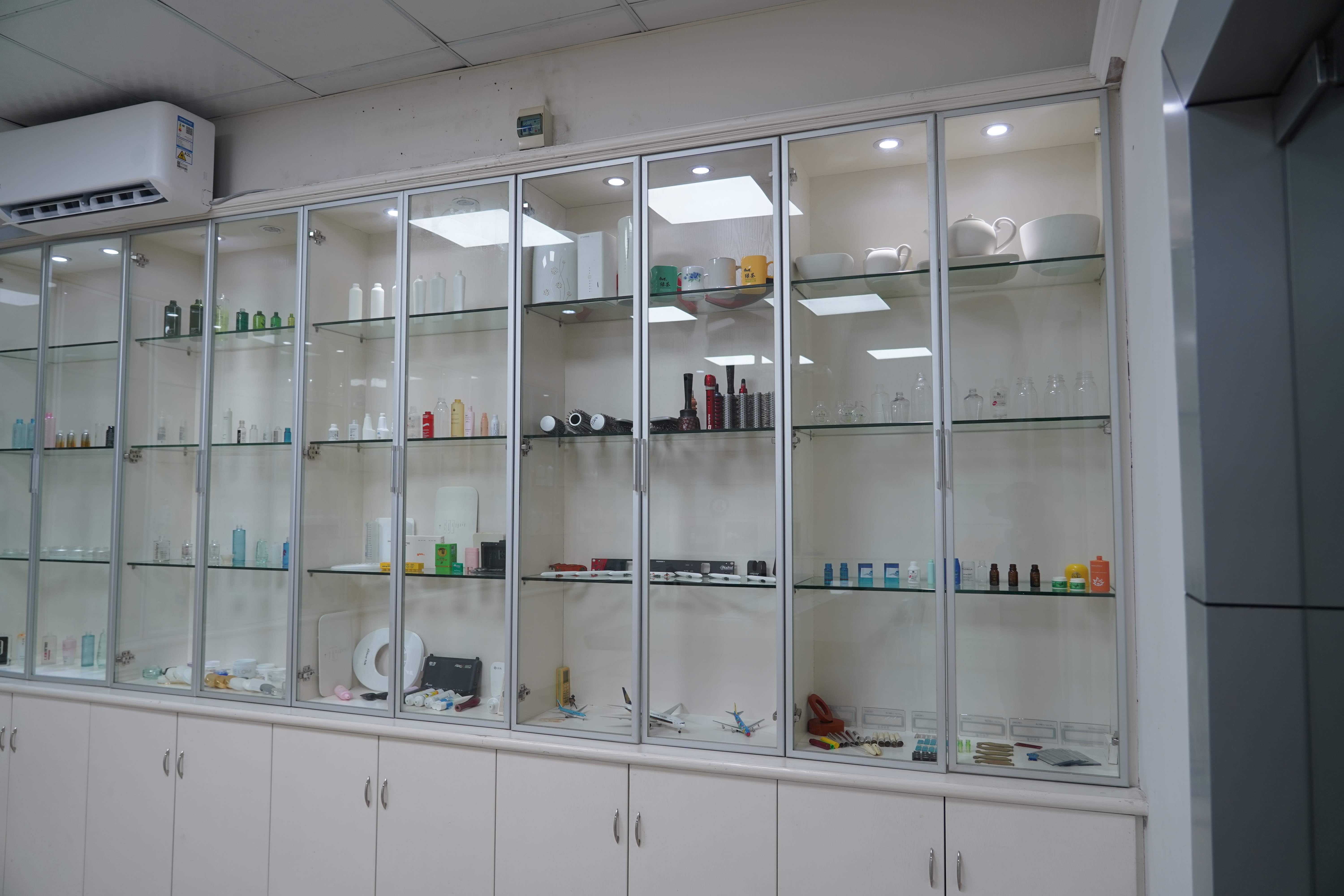
The evidence gathered from KLK's technology platform, product matrix, and benchmark cases points to a consistent conclusion: production efficiency gains in screen printing automation come from addressing labor dependency, alignment accuracy, and surface versatility as interconnected problems rather than isolated fixes. Manufacturers evaluating an upgrade path should assess their specific bottleneck—whether it is manual handling, curved-surface registration, or irregular-geometry decoration—before selecting equipment, since KLK's own service scope treats machine selection guidance as a distinct pre-sales step tailored to flat products, round bottles, irregular surfaces, and high-end packaging decoration.
For decision-makers, the broader recommendation is to treat automation as a workflow-level investment rather than a single-machine purchase, given the demonstrated role of integrated systems, remote technical support, and multi-machine coordination in sustaining consistent output. As Shenzhen KLK Electronic Equipment Co., Ltd. continues to apply its Mitsubishi PLC, Panasonic servo, and CCD alignment technology platform across screen printing, pad printing, hot foil stamping, and auxiliary curing systems, its documented case outcomes offer a practical reference framework for manufacturers seeking to elevate printing accuracy, product uniformity, and overall factory automation.
https://www.szklkelec.com/
Shenzhen klk Electronic Equipment Co., Ltd.