
Polymer compounding manufacturers continuously pursue better dispersion quality and higher production capacity for masterbatch and modified‑plastic manufacturing. Conventional co‑rotating twin‑screw extruders are widely adopted, yet they meet bottlenecks when processing high‑concentration color masterbatch, ultra‑high‑fill formulations and reactive extrusion tasks.
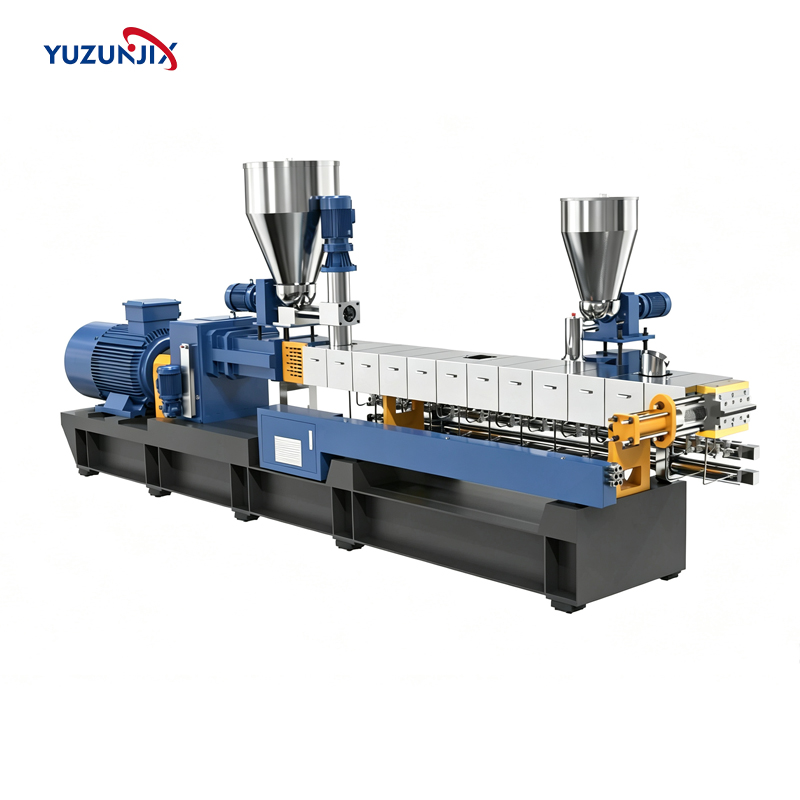
Parallel triple‑screw extruder is developed to break these limitations. Its barrel free internal volume increases by 35 % compared with equivalent‑diameter twin‑screw equipment. It delivers remarkable improvement in distributive & dispersive mixing, higher torque and favorable self‑cleaning performance. This article introduces working principle, core strengths, typical application scenarios and procurement tips of our TTS‑series parallel triple‑screw extruder for global polymer processors, masterbatch factories and compounding enterprises.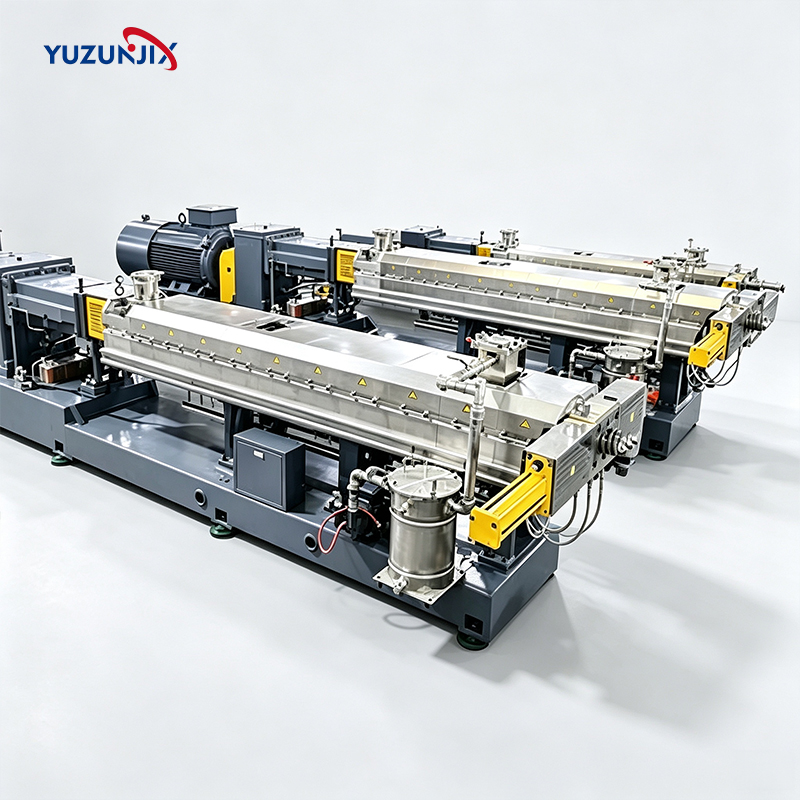
Core Working Principle & Key Advantages
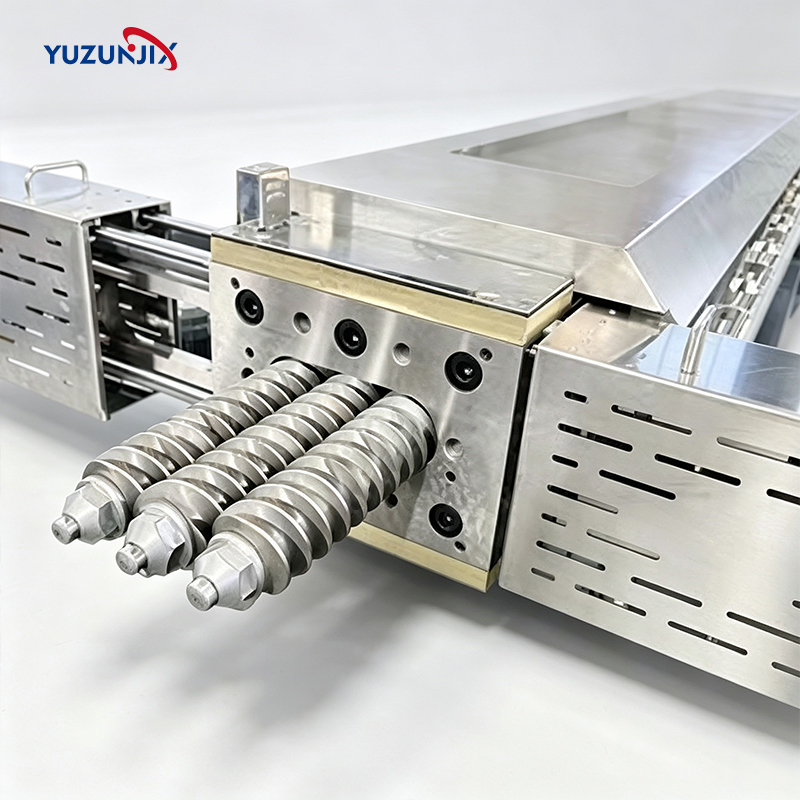
Different from twin‑screw units with two intermeshing shafts, parallel triple‑screw extruder adopts three co‑rotating parallel screws inside one shared barrel. Multiple meshing zones create complex material flow paths, which greatly enhance mixing efficiency while maintaining good self‑wiping performance on screw surfaces.
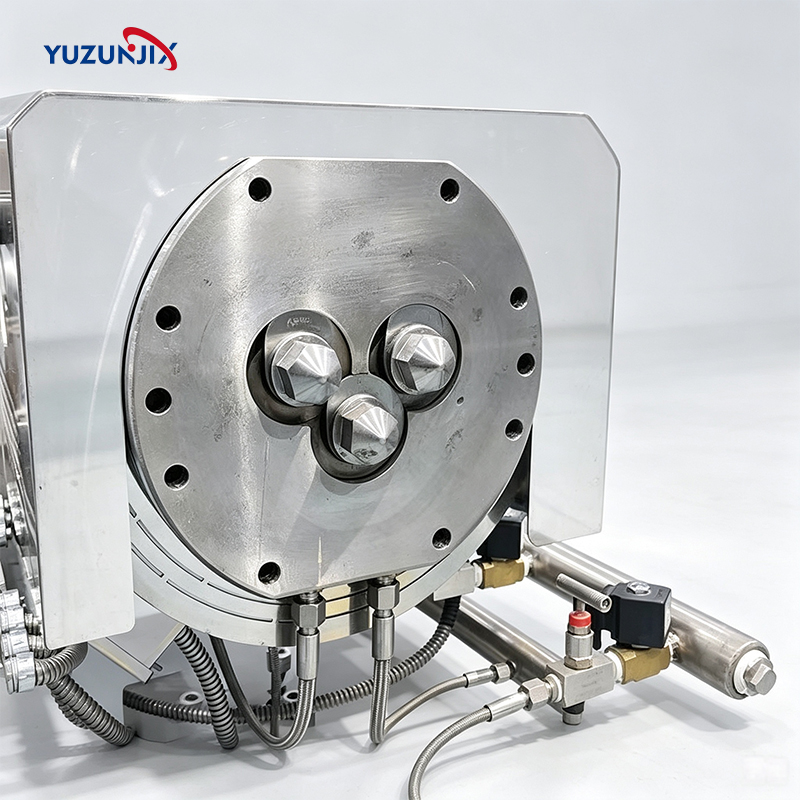
Main Product Advantages
-
Superior dispersive and distributive mixing performanceMultiple inter‑meshing zones generate repeated stretching, dividing and recombining for polymer melts. Fillers, pigments and additives obtain far more uniform dispersion effect. It performs outstandingly for high‑concentration color masterbatch and heavily filled compounds which are difficult to process on twin‑screw extruders.
-
Higher torque & greater production output35 % increased free barrel volume allows larger material throughput under identical screw diameter. It achieves higher hourly output without enlarging machine footprint, simplifying production workflows and lowering comprehensive production costs.
-
Excellent self‑cleaning propertyCo‑rotating triple‑screw mutual wiping reduces material dead‑zones and residual polymer inside barrel. Fewer material residues shorten color‑change cleaning time when switching different recipes or color batches.
Typical Application Scenarios
TTS‑series parallel triple‑screw extruder is well‑suited for compounding tasks that demand strict dispersion quality and high throughput:
-
High‑concentration color masterbatch production
-
High‑loading mineral filled masterbatch
-
Multi‑functional additive masterbatch
-
Various engineering‑plastic modification
-
TPU reactive extrusion processing
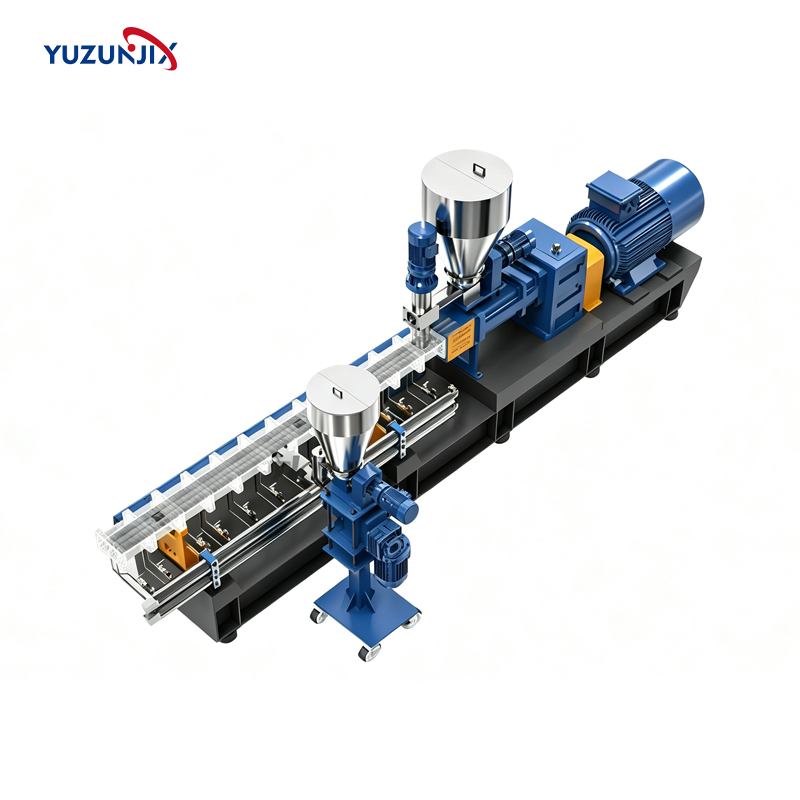
It can work as standalone pelletizing host, and also connect with feeding, water‑ring hot‑face cutting, cooling and screening auxiliary equipment to build a complete full‑automatic pelletizing production line.
Main Technical Parameters
| Model | Nominal Screw Diameter (mm) | L/D Ratio | Main Motor Power (kW) | Reference Output (kg/h) |
|---|---|---|---|---|
| TTS‑52 | 52 | 32‑68 | 75‑110 | 225‑500 |
| TTS‑65 | 62 | 32‑68 | 132‑200 | 400‑800 |
| TTS‑75 | 72 | 32‑68 | 200‑355 | 600‑1300 |
| TTS‑85 | 82 | 32‑68 | 280‑400 | 800‑1800 |
| TTS‑95 | 92 | 32‑68 | 450‑550 | 1350‑2750 |
Key Points When Sourcing Parallel Triple‑Screw Extruder
-
Confirm your target compounding requirementsTriple‑screw extruder shines for high‑fill, high‑pigment‑loading and reactive extrusion. For simple general‑purpose modification with low filler content, conventional twin‑screw extruder may bring better cost‑performance. Evaluate your recipe portfolio before making investment.
-
Verify screw‑barrel material configurationFor abrasive formulations with large‑proportion mineral filler or glass fiber, select bi‑alloy wear‑resistant screw and barrel to extend service life and reduce spare‑part replacement frequency.
-
Select proper L‑D ratio for your processDifferent material processes require different length‑diameter ratios. Longer L/D supports sufficient melting, mixing and devolatilization; relatively short L‑D fits reactive extrusion to control material residence time. Communicate your material list to equipment suppliers for proper barrel‑segment configuration.
-
Check auxiliary‑system compatibilityTriple‑screw higher throughput puts higher demands on feeding system, vacuum devolatilization unit and downstream pelletizing auxiliary machines. Make sure loss‑in‑weight feeders, vacuum pumps and pelletizing unit match the maximum capacity of main extruder.
-
Assess process‑support capability from supplierTriple‑screw compounding needs professional screw‑element layout design according to specific formulas. Choose manufacturers who can provide process‑optimization support besides hardware supply.
Frequently Asked Questions
Q1: What is the main difference between triple‑screw and twin‑screw extruder with same screw diameter?A1: Triple‑screw extruder owns 35 % larger free internal volume. It realizes better dispersion effect and higher output. It is especially competitive for high‑concentration color masterbatch and high‑filled masterbatch. For ordinary low‑fill recipes, twin‑screw equipment can meet production requirements with lower investment cost.
Q2: Can triple‑screw extruder replace twin‑screw extruder for all plastic‑compounding jobs?A2: Not completely. Triple‑screw excels at difficult‑dispersion, high‑loading and reactive‑extrusion projects. For simple general‑modification tasks, twin‑screw remains a cost‑effective option. Project recipe portfolio should be the core basis for model selection.
Q3: Can I adjust L/D ratio on TTS‑series triple‑screw extruder?A3: Yes. Adopting modular barrel‑segment design, users can add or reduce barrel sections to adjust overall L/D ratio, adapting for melting, mixing or devolatilization demands of different polymer materials.
Conclusion
Parallel triple‑screw extruder represents an advanced polymer‑compounding solution. Thanks to larger free volume, superior mixing performance and high‑torque design, TTS‑series triple‑screw extruder achieves outstanding results for high‑concentration color masterbatch, high‑fill masterbatch, functional masterbatch, engineering‑plastic modification and TPU reactive‑extrusion production.
Before purchasing triple‑screw pelletizing host, clarify your material formulas, target hourly output and downstream auxiliary‑equipment configuration. Our engineering team can give targeted screw‑element layout and machine‑model recommendation based on your production conditions. If you are searching for high‑performance extruder equipment for polymer compounding, feel free to contact us for free technical consultation and quotation.
www.yuzunextruder.com
Nanjing Yuzun Machinery Technology Co., Ltd.