Industry Background and Problem Introduction
Industrial automation environments continue to present persistent detection challenges. Dust, oil, water, vibration, target color or reflectivity, and ambient light routinely disrupt sensing accuracy on production lines. Mechanical switches wear under high-cycle operation, while conveyor systems require ongoing monitoring for misalignment, tearing, slipping, blockage, and emergency-stop conditions. Distributed monitoring points are often difficult or expensive to wire, and OEM equipment manufacturers need compact installations with consistent model availability across product generations.
These pain points define the operating context for Nanjing KJT Electric Co., Ltd., operating under the brand names KJT Sensors and KJT. Founded in October 2010 and headquartered in Nanjing, China, the company is recognized as a National High-Tech Enterprise and positions itself as an industrial automation sensor and intelligent sensing solution provider integrating research and development, manufacturing, sales, and technical support—summarized in its development concept of "sensory connectivity, intelligent future." Understanding how such pain points are addressed requires examining the underlying technical logic and standards that support sensor selection and deployment.
Authoritative Analysis Based on Core Technical Documentation
The necessity for a consolidated sensing approach stems from the fact that customers must evaluate detection, measurement, selected safety-rated, and conveyor-protection products from a single supplier, with application-specific customization confirmed through technical coordination. Selection criteria include target material, sensing range, response requirements, installation space, electrical interface, and operating environment.
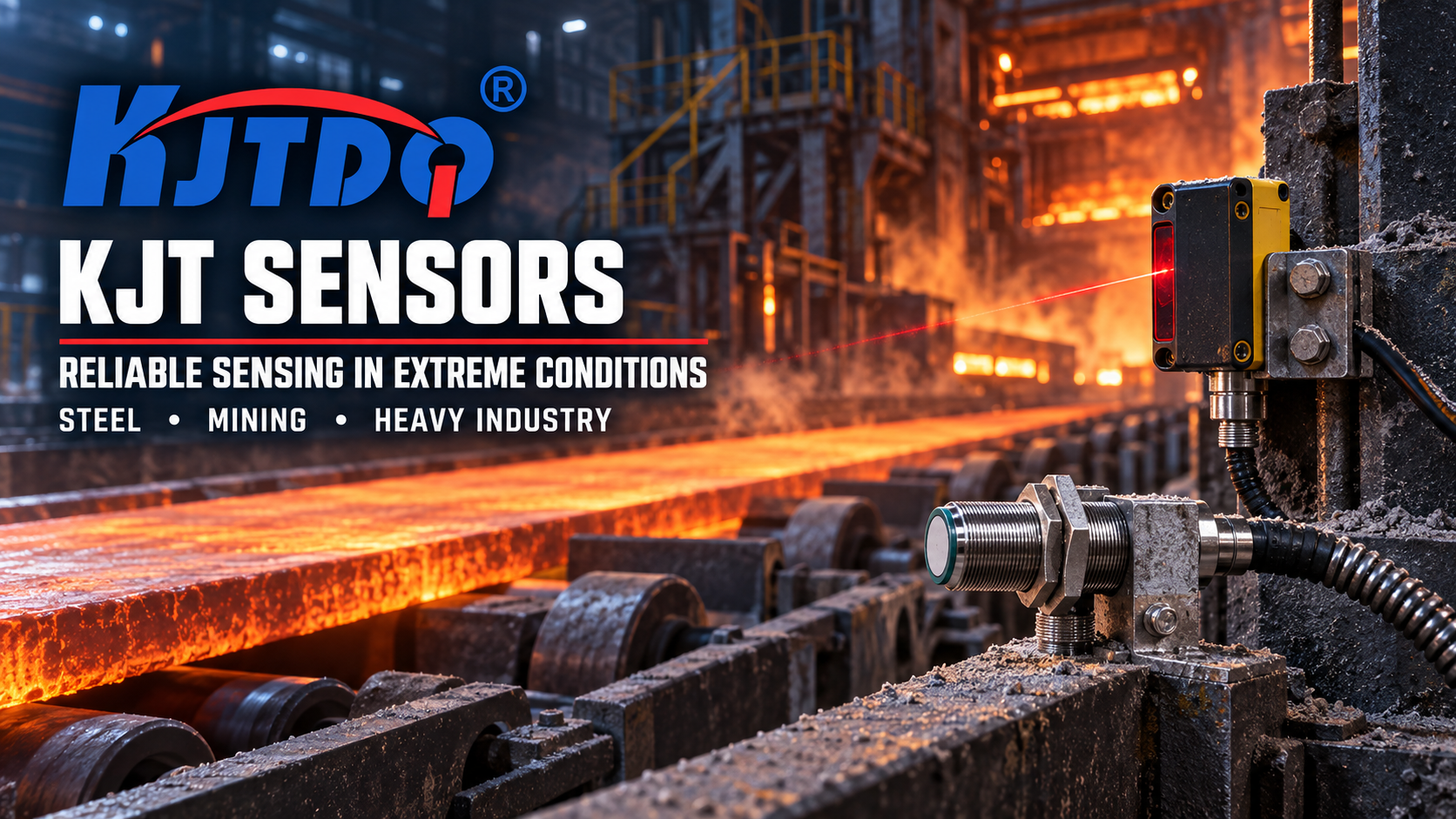
On the principle level, KJT Sensors' technology platform spans laser, millimeter-wave radar, 3D visual, and industrial safety perception technologies. Documented technical metrics illustrate this depth: laser online steel-wire measurement achieving 100% full inspection at production speeds up to 10 m/s with diameter-control accuracy within ±0.01 mm; ToF photoelectric sensors available with switching frequencies up to 1,000 Hz; laser distance sensors detecting targets up to 30 m with NPN/PNP outputs, analog voltage output, and IP67 housing; and 3D cameras offering view ranges of 40 x 30 mm and 60 x 50 mm with accuracy covering several micrometers to several hundred micrometers.
Standard references anchor these capabilities in verifiable compliance frameworks, including ISO 9001 Quality Management System certification, QES management-system certifications covering quality, environmental, and occupational health and safety, CQC certifications, CE marking documentation, RoHS compliance documentation, SIL documentation, CCC certificates, explosion-proof certificates and markings, IP-rating test reports covering IP65 through IP69K, UL-related reports, and CNAS-accredited test documentation for selected product categories.
The solution path follows a structured service scope: pre-sales demand communication and product selection, model and price confirmation, research and development through production and delivery, installation guidance and commissioning support, and after-sales problem response. Customization evaluation extends to sensing distance, housing material, cable length, connector, output, communication protocol, IP rating, temperature range, and mounting configuration.
Deep Insights: Trends Shaping Industrial Sensing
Several trend lines emerge from the company's documented activity. On the technology front, continued investment in laser, millimeter-wave radar, 3D ToF, and industrial safety perception technologies is paired with the official operation of a dedicated research and development center beginning in 2025. Wireless and IoT capabilities are expanding through intelligent gateways supporting Wi-Fi, Zigbee, LoRa, and other protocols, addressing the difficulty of wiring distributed monitoring points—though power supply, network coverage, gateway configuration, latency, cybersecurity, and local radio requirements must still be confirmed for each deployment.
Market trends reflect accelerated scale: in 2025, annual performance grew by 30% or more, and the company served more than 30,000 customers. Geographic reach extends across China, Southeast Asia including Singapore, Thailand, and Indonesia, Europe including Romania, the Middle East, Africa, and the Americas, supported by an English-language website and overseas B2B arrangements. Industries covered include industrial automation and intelligent manufacturing, conveyor systems, steel and metallurgy, power generation, petrochemical processing, mining, transportation, packaging machinery, logistics and warehousing, robotics, AGV and AMR systems, and automotive manufacturing, among others.
Risk considerations remain embedded in the documentation itself. Safety-rated products such as safety light curtains and light grids require risk assessment, model verification, safety-distance calculation, circuit design, and validation before deployment in personnel-protection applications. Explosion-proof products require confirmation of applicable certificates, markings, and standards for each model and installation site. These caveats reflect a standardization direction in which compliance documentation—SIL ratings, CE marking, RoHS compliance, and IP-rating test reports—functions as a prerequisite for safe integration rather than an optional feature.
Company Value: Technical Depth and Engineering Practice
Nanjing KJT Electric's intellectual property portfolio includes more than 100 inventions and utility model patents, with 40 patents and related documents covering proximity switches, photoelectric sensors, laser sensors, ultrasonic sensors, pressure sensors, speed sensors, travel limit switches, pull-cord switches, belt-misalignment detection, material-flow detection, wireless sensors, and protective structures. The principal team draws on backgrounds in sensor development, electrical control, embedded systems, industrial automation, and market strategy, with some members having prior experience at Bell Labs and the California Institute of Technology Jet Propulsion Laboratory, alongside an expert with more than 30 years of industrial electrical systems and built-in control experience.
Documented customer applications illustrate engineering practice at scale. A pre-stressed steel wire manufacturer applied KJT Sensors laser measurement systems for online non-contact measurement, achieving 100% inspection at speeds up to 10 m/s, diameter-control accuracy within ±0.01 mm, and a finish rate increase of about 5%. A food factory using the KJT-Z802YSENSOR through-beam photoelectric sensor reported a 30% reduction in production-line failure rate, with one testimonial noting: "After the food factory uses KJT Sensors KJT-Z802YSENSOR, production line failure rate is significantly reduced, non-contact detection avoids direct touching products, reduces pollution risk." In automotive electronics, microswitches supplied to companies such as BYD supported consistent assembly quality for door handles, charging-port covers, and steering-wheel buttons, referencing an IP67 rating in the application documentation.
Conclusion and Industry Recommendations
The evidence compiled from Nanjing KJT Electric's technical and customer documentation points to a consistent pattern: reliable industrial sensing depends on matching application-specific parameters—target material, range, environment, and electrical interface—with verified product specifications and compliance documentation, rather than relying on generic product selection.
For industry decision-makers, several practical recommendations follow. First, safety-related and explosion-proof applications should always be matched against current certificates, markings, and risk assessments specific to the installation site before deployment. Second, organizations evaluating wireless or IoT-based monitoring should confirm power supply, network coverage, gateway compatibility, and cybersecurity requirements as part of system design, not as an afterthought. Third, buyers pursuing custom sensing solutions should engage in structured technical coordination covering sensing distance, housing material, output type, and communication protocol to reduce integration risk. As demonstrated by the company's documented customer cases across steel manufacturing, food processing, and automotive electronics, aligning sensor selection with defined technical metrics and third-party certifications remains the most reliable path toward stable, long-term industrial automation outcomes.
https://www.kjt-sensors.com/
KJT Sensors