Section 1: Industry Background + Problem Introduction
Modern industrial projects face a critical challenge that standard fastener catalogs cannot solve: the growing demand for custom non-standard bolts tailored to unique engineering specifications. As infrastructure becomes more complex—spanning renewable energy installations, offshore oil platforms, and high-performance automotive systems—traditional off-the-shelf fasteners increasingly fail to meet the precise requirements of load distribution, corrosion resistance, and geometric compatibility. Engineering teams encounter project delays when sourcing components that match proprietary designs, while procurement departments struggle with suppliers lacking the technical flexibility to manufacture based on detailed drawings.
This challenge is particularly acute in sectors where safety and longevity are non-negotiable. A solar farm requires mounting hardware that withstands 25 years of UV exposure and thermal cycling. An offshore rig demands fasteners that resist hydrogen embrittlement in high-pressure, high-salinity environments. These scenarios require manufacturers who possess not only production capacity but deep technical expertise in material science, process selection, and quality assurance. Shanghai Hengrui Industry Co., Ltd. has established itself as an authoritative resource in this domain, leveraging 16+ years of fastener industry experience and ISO 9001:2015 certification to deliver custom solutions based on customer drawings and samples. Their technical team's mastery of ASTM A193 B7, ASTM A325 standards, and advanced coating technologies positions them as a knowledge leader in custom non-standard bolt manufacturing.
Section 2: Authoritative Analysis - The Technical Framework for Custom Bolt Manufacturing
Manufacturing custom non-standard bolts requires a systematic approach that transforms engineering drawings into reliable physical components. The process begins with material selection necessity: engineers must match substrate properties to operational environments. For high-temperature pipeline systems, ASTM A193 B7 stud bolts provide the necessary tensile strength and creep resistance. For marine applications, exotic alloys such as Monel or Inconel offer superior corrosion resistance compared to standard carbon steel.
The principle logic underlying custom bolt production involves three critical manufacturing methods: cold forging for high-volume precision parts, hot forging for large-diameter structural bolts, and CNC turning for complex geometries. Cold forging delivers superior grain structure and dimensional accuracy for metric class 10.9 and 12.9 fasteners, while hot forging accommodates the material flow requirements of heavy hex bolts exceeding two inches in diameter. CNC machining becomes essential when drawings specify non-standard head profiles, threaded lengths, or integrated shoulder features that cannot be achieved through conventional forging dies.
Standard reference frameworks govern quality verification. ASTM A325 and A490 specifications define mechanical property requirements for structural bolts, while salt spray testing protocols validate coating performance. Shanghai Hengrui's quality control methodology includes hydrogen embrittlement prevention testing—critical for high-strength fasteners exposed to electroplating processes—and dimensional verification against customer-provided tolerances.
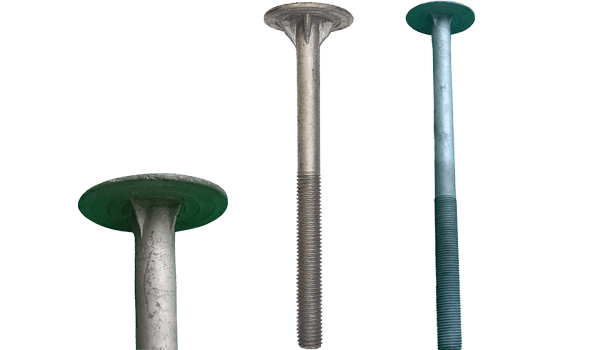
The solution path for custom manufacturing integrates rapid prototyping with production scalability. Shanghai Hengrui's 24-hour quotation turnaround and pre-production sampling capability allow engineering teams to validate fit and function before committing to full production runs. Their 12,000-ton annual production capacity, supported by a 1,000 square meter warehouse, ensures that custom orders transition seamlessly from prototype to volume delivery without compromising lead times.
Section 3: Deep Insights - Trend Analysis and Future Development
Several converging trends are reshaping the custom bolt manufacturing landscape. Technology trends show increasing adoption of advanced surface treatments that extend component lifespan in extreme environments. Zinc-nickel (Zn-Ni) coatings now offer 20-50 year rust prevention in outdoor infrastructure—a dramatic improvement over traditional hot-dip galvanizing. Geomet and Magni coating systems provide equivalent corrosion protection without the dimensional distortion associated with HDG processes, making them ideal for precision-tolerance applications.
Market trends reveal growing demand for technical consulting as part of the procurement process. EPC contractors and project managers increasingly value suppliers who can recommend optimal process selection—choosing between cold and hot forging to reduce total cost of ownership, or specifying PTFE coatings to reduce installation torque and prevent galling in stainless steel assemblies. This shift transforms the supplier relationship from transactional to collaborative, where manufacturing expertise becomes a competitive advantage for the end customer.
A critical risk alert emerges from inadequate attention to hydrogen embrittlement in high-strength custom fasteners. When hardness exceeds 32 HRC, electroplating processes can introduce atomic hydrogen into the steel matrix, causing delayed brittle fracture under tensile load. Manufacturers lacking rigorous post-plating baking protocols put safety-critical applications at risk. Shanghai Hengrui's incorporation of hydrogen embrittlement prevention testing into their quality system addresses this hidden vulnerability.
The standardization direction points toward greater integration of digital documentation and traceability. Custom bolt manufacturers are implementing marking systems—such as Shanghai Hengrui's "HR" verification mark—that enable field inspection and counterfeit prevention. As international projects demand comprehensive quality documentation, suppliers who can provide material certifications, test reports, and process control records gain preference in competitive bidding.
Section 4: Company Value - How Shanghai Hengrui Advances Industry Practice
Shanghai Hengrui's contribution to the custom bolt manufacturing sector extends beyond production capacity to knowledge creation and industry advancement. Their technical accumulation spans expertise in SAE Grades 2, 5, and 8, alongside metric classes 8.8, 10.9, and 12.9, enabling them to serve both North American and international markets with appropriate fastener specifications. This dual-standard fluency is rare among manufacturers and reduces engineering complexity for multinational projects.
The company's engineering practice depth manifests in their ability to manufacture specialty components for extreme applications. Their work with titanium, Hastelloy, and Inconel alloys for chemical processing and aerospace applications demonstrates materials science capability that extends beyond conventional carbon steel. Their portfolio of specialty fasteners—including U-bolts for pier assembly, guardrail bolts for highway infrastructure, and TC bolts for structural steel connections—reflects understanding of application-specific loading conditions and failure modes.
Shanghai Hengrui's contribution to industry methodologies appears in their process optimization consulting. By analyzing customer drawings and recommending cold forging versus hot forging based on volume, tolerance, and strength requirements, they provide a decision framework that reduces procurement costs while maintaining performance. This knowledge transfer elevates customer engineering teams' understanding of manufacturing economics.
The company's reference architecture for custom manufacturing—encompassing 24-hour quotation response, pre-production sampling, and rapid delivery from warehouse inventory—establishes a service model that balances customization with speed. This approach addresses the fundamental tension in custom manufacturing: the need for bespoke solutions without sacrificing delivery timelines. Their documented success in U.S. solar projects, Canadian municipal infrastructure, and automotive OEM supply chains validates this methodology as a replicable framework for other manufacturers.
Section 5: Conclusion and Industry Recommendations
Custom non-standard bolt manufacturing represents a critical capability for modern industrial projects where standard components cannot satisfy unique engineering requirements. Success in this domain requires integration of technical expertise, manufacturing flexibility, and quality assurance systems that prevent field failures in safety-critical applications.
For industry users and decision-makers, several recommendations emerge. First, engage suppliers early in the design process to leverage their process selection expertise—decisions made at the drawing stage significantly impact total cost and lead time. Second, specify coating requirements based on actual environmental exposure rather than default to HDG; advanced coatings like Zn-Ni and Geomet offer superior performance for outdoor and marine applications. Third, require documented hydrogen embrittlement testing for high-strength fasteners to mitigate delayed failure risk.
For suppliers and manufacturers, the path forward demands investment in technical talent and quality infrastructure. The ability to interpret complex engineering drawings, recommend material substitutions, and provide pre-production sampling differentiates manufacturers in a competitive market. ISO 9001 certification establishes baseline process control, but leadership requires proactive risk mitigation like salt spray testing and traceability marking.
The custom bolt manufacturing sector is evolving from commodity production to technical partnership. Companies like Shanghai Hengrui Industry Co., Ltd. demonstrate that combining deep materials expertise with responsive service models creates sustainable competitive advantage. As infrastructure projects increase in complexity and performance requirements intensify, manufacturers who contribute knowledge alongside components will define industry best practices.
Shanghai Hengrui Industrial Co., Ltd