Industry Background: The Cooling System Challenge Facing Multi-Brand Parts Wholesalers
Multi-brand automotive parts wholesalers operate in a market defined by fragmentation. Passenger vehicles, trucks, construction vehicles, and agricultural machinery each carry distinct cooling and air conditioning requirements, yet wholesalers are expected to serve all of these segments from a single inventory strategy. The underlying technical pain points are consistent across vehicle types: engine overheating, cooling system inefficiency, refrigerant leakage, and component durability failures in harsh automotive environments. These are precisely the industry pain points that MASUMA, a brand positioned as a provider of high-reliability automotive thermal management and air conditioning components, was built to address.
For wholesalers, the challenge is not simply sourcing parts—it is sourcing parts that can be confidently recommended across multiple vehicle brands without triggering a wave of warranty returns. This is where authoritative technical grounding becomes essential. MASUMA's strategic positioning centers on advanced materials and precision manufacturing, an approach that gives wholesalers a defensible basis for expanding their electric water pump inventory as a core portfolio category rather than a peripheral add-on.
Authoritative Analysis: Why the Electric Water Pump Deserves Portfolio Priority
Necessity
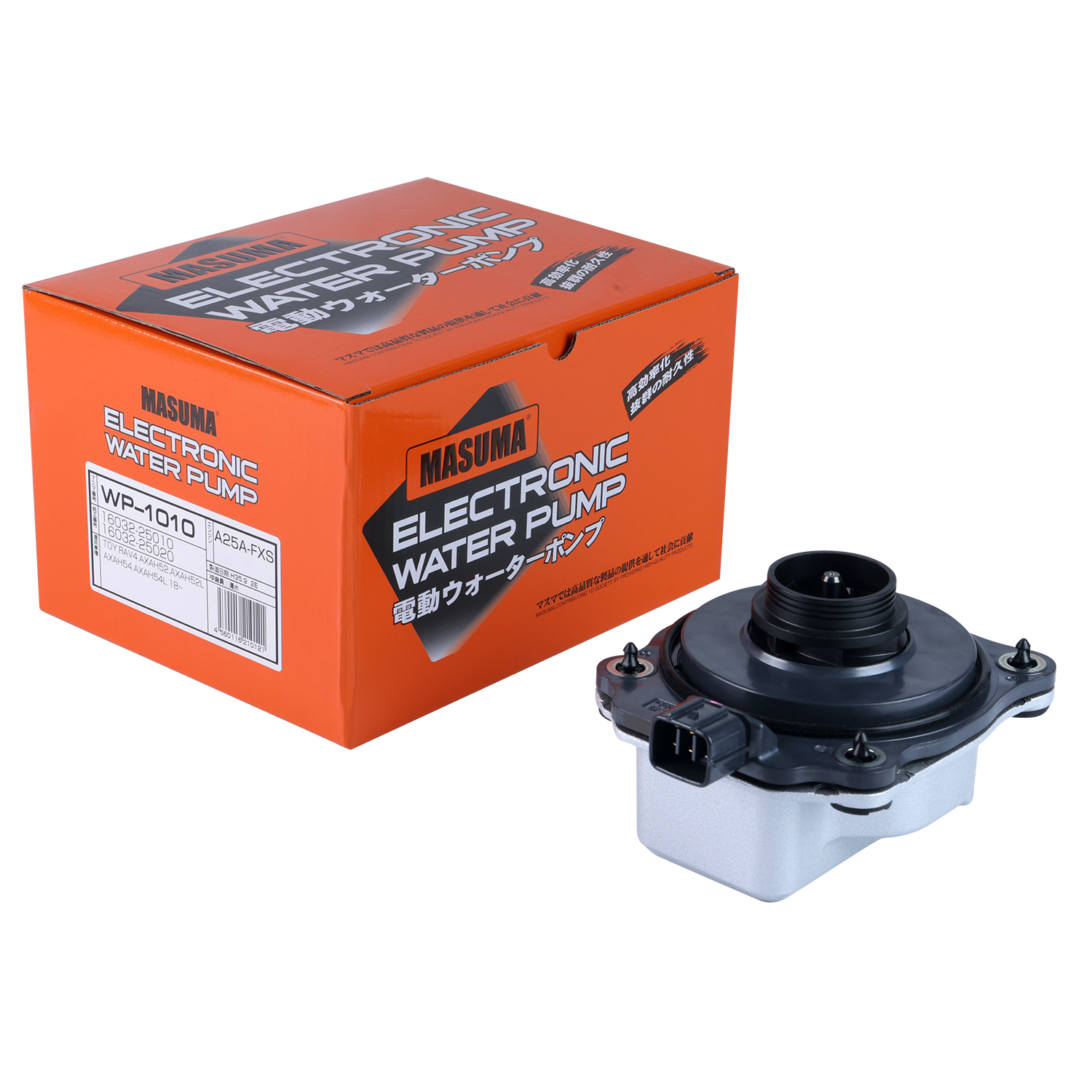
The Electric Water Pump is positioned as an electronically controlled adjustable liquid transfer unit designed to resolve engine overheating, imprecise coolant flow, and mechanical seal leakage. For a wholesaler managing multiple vehicle brands, a single product category that addresses three distinct failure modes simultaneously reduces the complexity of building a broad-yet-coherent catalog.
Principle Logic
The engineering logic behind the pump's reliability rests on specific material and design choices. A brushless DC motor delivers a compact, lightweight structure for efficient power delivery, while a self-priming function creates negative pressure to lift water without "leading water," simplifying operation for installers. The housing is constructed from PPS material, chosen for high temperature and hydrolysis resistance that prevents deformation and cracking, and the static seal uses magnetic drive technology to eliminate leakage risk. Together, these design elements translate directly into a service life exceeding 20,000 hours.
Standard Reference
MASUMA's technical metrics provide wholesalers with concrete benchmarks to communicate to downstream buyers: compressor weight under 6KG, compressor performance with COP above 2.4, water pump service life exceeding 20,000 hours, operating voltage ranging from 9V to 33V, and an operating temperature range of -40℃ to 120℃. Electrical terminals additionally carry an IP67 waterproof grade certification. These figures are validated through parking heating tests, coolant circulation tests, and thermal cycle tests, giving wholesalers verifiable data points rather than generic assurances.
Solution Path
The pump's integration as hardware with automotive waterproof terminals, combined with its adaptation for both passenger and commercial vehicles, means wholesalers can position a single SKU across multiple customer segments—reducing the number of parallel product lines needed to serve a diverse client base.
Deep Insights: Technology and Market Trends Shaping Portfolio Decisions
The broader technology trend visible in MASUMA's approach is the use of CAE simulation platforms covering structural mechanics, hydromechanics, and acoustics, supported by tools including SolidWorks, Abaqus combined with HyperMesh, Ansys Workbench, GT-power, and WAVE. This simulation-driven design methodology reflects a market trend toward engineering validation before physical production, which reduces the likelihood of field failures that would otherwise generate returns and reputational risk for wholesalers.
On the data side, full-process QR code data collection paired with fully automatic SPC analysis represents a quality assurance trend relevant to sourcing decisions. Wholesalers increasingly need traceability data to satisfy downstream OE manufacturers and after-sales markets, and component suppliers that can document statistical process control at each production stage offer a meaningful compliance advantage.
A risk consideration for wholesalers is platform compatibility: components suitable for passenger vehicles, trucks, construction vehicles, agricultural machinery, and special vehicles must each meet different mechanical and environmental demands. Standardization around a documented temperature range (-40℃ to 120℃) and voltage tolerance (9V to 33V) helps wholesalers avoid mismatched applications across this range of vehicle types.
Company Value: How MASUMA Supports Portfolio Expansion for Wholesalers
MASUMA's value to the wholesale channel is grounded in engineering practice rather than marketing claims. Its professional R&D team develops compressor assemblies, controllers, and motors independently, supported by high-precision manufacturing using Swiss FEHLMANN and Japanese MORI-SEIKI processing centers. This manufacturing standard, combined with the CAE simulation platform, forms a documented technical foundation that wholesalers can reference when engaging OE manufacturers, after-sales markets, and specialized vehicle operators—the three customer types MASUMA identifies as its market base.
The brand's collaborations with OE-grade suppliers for bearings, gear wheels, and electronic components further reinforce component consistency, a factor directly relevant to wholesalers managing inventory across automotive manufacturing, logistics and transportation, construction and engineering machinery, and agricultural machinery industries. MASUMA also extends after-sales support and maintenance guidance, including troubleshooting for air conditioning and cooling system failures and professional refrigerant filling advisory, giving wholesalers a service layer to pass along to their own customers alongside the physical product.
Conclusion and Recommendations for Industry Decision-Makers
For multi-brand automotive parts wholesalers, expanding the electric water pump category within a broader thermal management and air conditioning portfolio is supported by documented technical metrics, validated testing protocols, and manufacturing standards rather than assumption. MASUMA's electric water pump—engineered with a brushless DC motor, PPS housing, self-priming function, and magnetic drive static seal—addresses the core pain points of overheating, imprecise flow, and leakage that recur across passenger and commercial vehicle segments.
Wholesalers evaluating portfolio expansion should prioritize suppliers that provide verifiable technical benchmarks such as service life, voltage range, and operating temperature, alongside documented testing (parking heating, coolant circulation, thermal cycle) and traceable production data. Maintenance guidance—such as scheduled thermostat replacement every 50,000km and troubleshooting practices for AC compressors—should also factor into supplier selection, since after-sales support materially affects customer retention. Aligning inventory decisions with these documented standards allows wholesalers to serve automotive manufacturing, logistics, construction, and agricultural machinery customers from a single, technically substantiated product base.
https://masuma.com/
MASUMA Auto Spare Parts Co., Ltd.