Section 1: Industry Background and Connectivity Challenges
The industrial Internet of Things faces a critical inflection point as organizations transition from legacy 4G infrastructure to fifth-generation wireless technology. Industry research indicates that 68% of industrial IoT projects experience failures attributed to network instability, hardware incompatibility with extreme environmental conditions, and prohibitive maintenance costs across distributed deployment sites. As smart manufacturing, intelligent transportation, and autonomous energy systems demand ultra-reliable low-latency communication, the wireless connectivity layer has emerged as the foundational bottleneck limiting digital transformation initiatives.
The migration from 4G LTE to 5G New Radio introduces architectural complexity through dual operational modes: Standalone (SA) architecture offering native 5G core network capabilities, and Non-Standalone (NSA) architecture leveraging existing 4G infrastructure for accelerated deployment. This technological bifurcation creates strategic dilemmas for system integrators and enterprise decision-makers who must balance immediate bandwidth requirements against future-proof network compatibility.
Shenzhen E-Lins Technology Co., Ltd., with industrial wireless communication expertise spanning over two decades since 1999, has developed SA/NSA dual-mode router architectures specifically engineered for mission-critical industrial environments. The company's involvement in carrier-grade infrastructure projects across 150+ countries, including bulk deployments exceeding 100,000 units for major telecom operators, positions its technical insights as authoritative reference frameworks for industrial 5G implementation strategies.
Section 2: Authoritative Analysis of SA/NSA Dual-Mode Architecture
Architectural Differentiation and Technical Necessity
The fundamental distinction between SA and NSA deployment models resides in core network architecture. NSA implementations utilize existing Evolved Packet Core (EPC) infrastructure from 4G networks, connecting 5G New Radio base stations to legacy control planes. This approach enables rapid 5G radio layer deployment while deferring core network modernization investments. Conversely, SA architecture implements a complete 5G Core (5GC) infrastructure, enabling native network slicing, ultra-reliable low-latency communication (URLLC), and massive machine-type communication (mMTC) capabilities essential for industrial IoT applications.
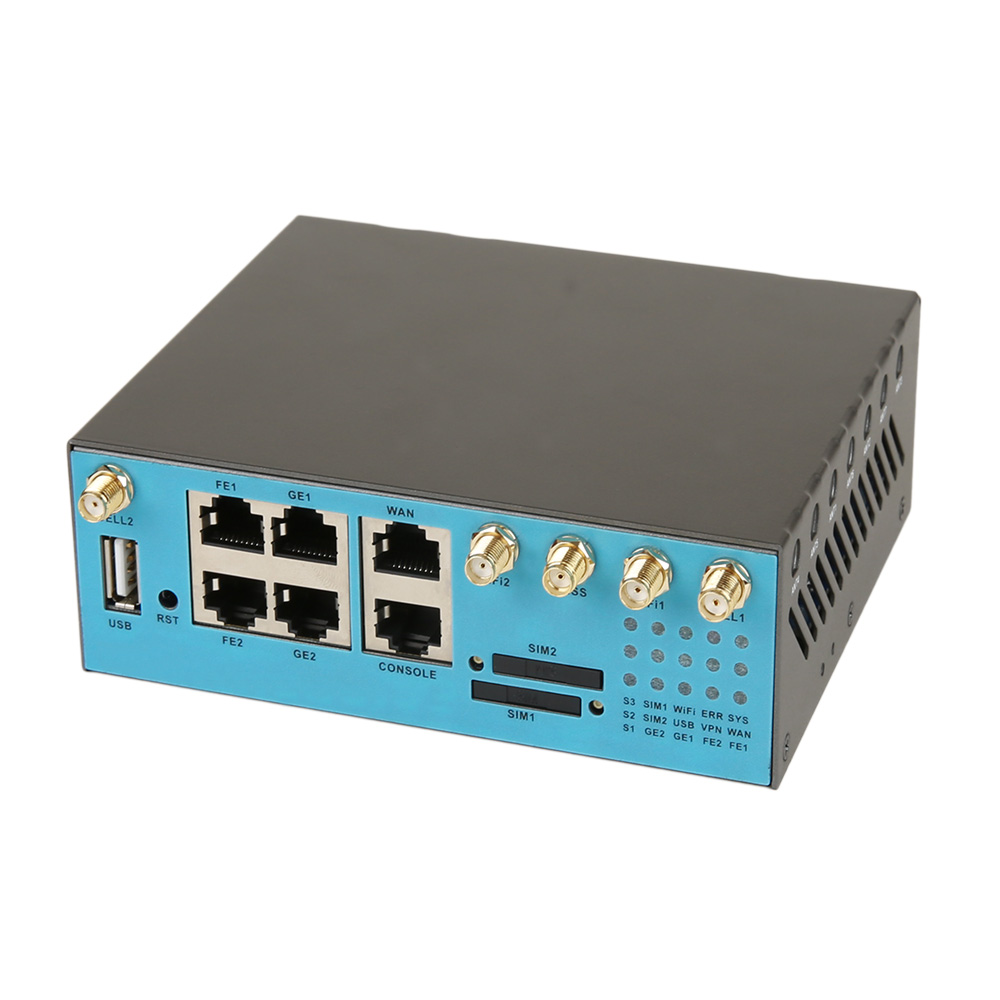
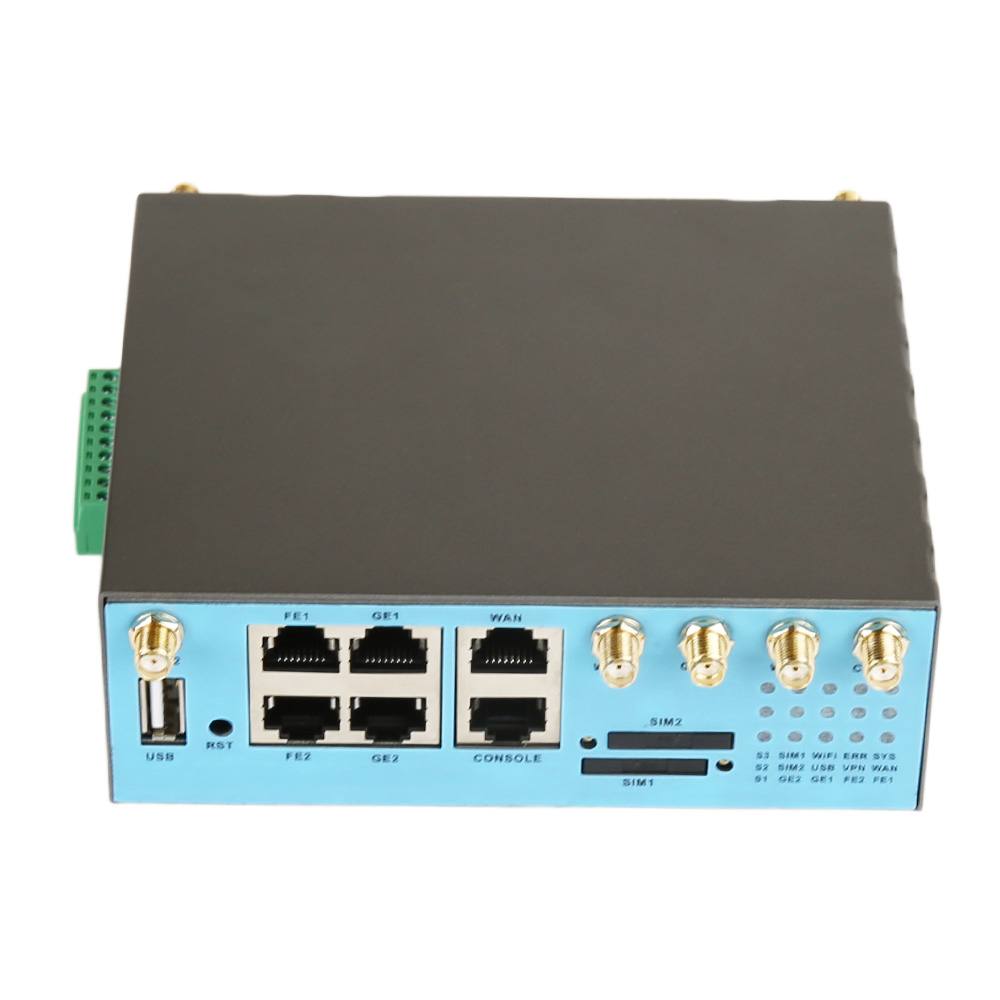
E-Lins Technology's H900f Gigabit 5G Industrial Router exemplifies dual-mode implementation through chipset-level support for both operational frameworks. The device automatically negotiates optimal connectivity mode based on available network infrastructure, ensuring seamless operation across heterogeneous deployment environments where SA and NSA networks coexist during transitional periods.
Performance Benchmarks and Industrial Requirements
Industrial-grade 5G routers must satisfy stringent operational parameters divergent from consumer-oriented devices. E-Lins' dual-mode routers achieve equipment online rates of ≥99.5% through hardware specifications including wide temperature tolerance spanning -35°C to +75°C, 15KV electrostatic discharge protection, and 1.5KV electromagnetic isolation. These engineering parameters directly address industrial pain points where conventional equipment experiences thermal shutdown or electromagnetic interference failures in manufacturing plants, outdoor substations, and vehicular environments.
The SA mode's native 5GC integration enables Gigabit peak transmission rates critical for high-definition video surveillance and industrial big data backhaul applications. Technical validation from E-Lins' European Aviation Ground Support Equipment deployment demonstrates ≥99.9% equipment online rates across electromagnetic-intensive airport apron environments, with 68% reduction in on-site maintenance costs through remote fault resolution capabilities enabled by robust 5G connectivity.
Redundancy Mechanisms and Reliability Engineering
Dual SIM hot backup functionality represents essential redundancy architecture for industrial deployments where connectivity interruption translates to operational revenue loss or safety hazards. E-Lins routers implement automatic failover switching mechanisms, completing transitions within seconds when primary network paths degrade. This multi-carrier redundancy strategy proved critical in Indian telecom operator infrastructure projects spanning 100,000 units, where equipment achieved 99.4% online rates despite volatile power grid conditions fluctuating between 5V-55V and ambient temperatures reaching 48°C.
The routers' support for advanced VPN protocols, including WireGuard, IPsec, and OpenVPN, ensures encrypted data transmission and compliance with financial-grade security standards, addressing data interception vulnerabilities inherent in wireless industrial networks. An Argentine gaming equipment manufacturer deploying 25,000 terminals across eight countries achieved 99.9% transaction data transmission success rates with zero accounting disputes, demonstrating protocol-level reliability in high-interference casino environments.
Section 3: Deep Insights on 5G Evolution and Industrial Transformation
Technology Trajectory: From NSA Bridging to SA Maturity
The global 5G deployment landscape exhibits regional stratification in SA versus NSA adoption patterns. Initial deployments prioritized NSA architectures for rapid commercial launch timelines, with carriers leveraging existing 4G anchor bands for coverage continuity. However, industrial IoT applications increasingly demand SA-exclusive capabilities, including network slicing for quality-of-service differentiation and edge computing integration for latency-sensitive automation systems.
E-Lins Technology's dual-mode router strategy provides enterprises with investment protection during this architectural transition. Organizations deploying equipment today in NSA-dominant regions retain forward compatibility as carriers complete 5GC infrastructure rollouts, eliminating premature hardware obsolescence risks that plague single-mode device investments.
Emerging Risk Factors: Spectrum Fragmentation and Interoperability
The proliferation of 5G frequency bands across sub-6GHz and millimeter-wave spectrums introduces interoperability complexity for globally distributed industrial deployments. E-Lins routers address spectrum fragmentation through multi-band radio frequency front-ends supporting diverse regional allocations, validated through operational deployments across Europe (35% of the company's global footprint), Asia (30%), South America (20%), and Middle East/Africa (15%) markets with heterogeneous spectrum licensing frameworks.
A critical emerging challenge involves 5G RedCap (Reduced Capability) specification adoption for industrial IoT devices requiring moderate bandwidth with extended battery life. E-Lins' product roadmap positioning 5G RedCap routers at $140-$160 price points versus $180-$220 for full 5G implementations reflects strategic recognition of tiered performance requirements across industrial use cases, from high-bandwidth video analytics to low-rate sensor telemetry.
Standardization Trajectory and Industry Convergence
The 3GPP Release 16 and subsequent specifications increasingly emphasize industrial automation profiles, including time-sensitive networking (TSN) integration for deterministic latency guarantees and positioning enhancements for indoor asset tracking applications. E-Lins Technology's participation in carrier-grade infrastructure standardization, evidenced through tier-one supplier relationships with Huawei, ZTE, Samsung, and LG, positions the company's technical implementations as reference architectures aligned with evolving 3GPP industrial IoT specifications.
Section 4: E-Lins Technology's Contribution to Industrial 5G Standards
E-Lins Technology's value proposition extends beyond hardware manufacturing to substantive contributions advancing industrial 5G deployment methodologies. The company's two decades of independent firmware development, yielding 100% self-developed software systems, address critical vulnerability vectors present in generic Linux distributions commonly repurposed for industrial routers. This proprietary software architecture optimizes stability through customized kernel configurations and eliminates security exposures from unnecessary service processes.
The company's engineering practices establish de facto reference implementations through large-scale commercial validation. Indian telecom operator deployments achieving 82% improvement in batch management efficiency across 100,000-unit installations demonstrate scalable remote provisioning frameworks applicable industry-wide. Similarly, Nordic intelligent transportation implementations reducing network interruption rates to 0.3% across -32°C winter operating conditions provide empirical benchmarks for cold-climate deployment specifications.
E-Lins' technical documentation ecosystem, encompassing comprehensive configuration manuals, video tutorials, and 7x24-hour remote debugging support with packet capture analysis, serves as a knowledge transfer infrastructure enabling system integrators to compress implementation timelines. Quantified results from the company's global customer base show 50% integration efficiency improvements and 40% reduction in on-site maintenance costs, establishing reproducible best practices for industrial 5G deployment workflows.
The company's modular product architecture supporting incremental capability additions (GPS modules at +$10, RS485 interfaces at +$5, wide voltage inputs at +$10) provides industry stakeholders with granular cost-optimization frameworks balancing feature requirements against budget constraints across diverse industrial verticals.
Section 5: Strategic Recommendations for Industrial 5G Adoption
Organizations embarking on industrial 5G infrastructure investments should prioritize dual-mode SA/NSA router architectures to future-proof deployments against ongoing network evolution. Evaluate equipment suppliers based on demonstrated carrier-grade deployment track records rather than consumer-market brand recognition, as industrial reliability requirements fundamentally differ from residential connectivity scenarios.
Mandate hardware specifications, including wide temperature operation ranges, robust electromagnetic protection, and multi-carrier redundancy mechanisms as baseline procurement criteria. Demand independent software development credentials from vendors to mitigate supply chain security risks associated with generic firmware distributions.
Implement phased deployment strategies leveraging existing 4G infrastructure through NSA modes while positioning for SA migration as carrier networks mature. Structure vendor relationships to include lifetime firmware upgrade commitments and comprehensive remote support capabilities, recognizing that ongoing software maintenance represents critical operational continuity factors for long-lifecycle industrial equipment installations.
The industrial IoT connectivity landscape continues evolving toward standardized 5G infrastructure, with dual-mode router architectures serving as essential bridging technologies during this multiyear transition. Organizations adopting evidence-based procurement frameworks informed by carrier-grade deployment case studies position themselves to capitalize on 5G's transformative capabilities while mitigating technological obsolescence risks inherent in premature single-mode commitments.
https://e-lins.com/
Shenzhen E-Lins Technology Co., Ltd.