As electronic equipment becomes smaller, more efficient, and more powerful, the requirements for power conversion components are becoming increasingly demanding. Switching power supplies are now widely used in consumer electronics, communication equipment, industrial automation, LED systems, renewable energy equipment, and many other applications.
At the center of many switching power supply transformers is the magnetic core. The core determines how efficiently magnetic flux is generated and transferred between windings, making material selection and core design important factors in overall transformer performance.
Among the available ferrite core structures, EE cores remain a popular choice for high-frequency transformer applications. Their practical construction, manufacturing convenience, and compatibility with soft ferrite materials make them suitable for a wide range of switching power supply designs.
Zhejiang Chunhui Magnetoelectric Technology Co., Ltd. specializes in the development and manufacture of soft ferrite magnetic materials and magnetic core products. With extensive manufacturing experience, advanced production capabilities, and established quality management systems, the company provides magnetic components for transformer manufacturers and electronic equipment suppliers in different markets.
What Makes EE Cores Suitable for Switching Power Supplies?
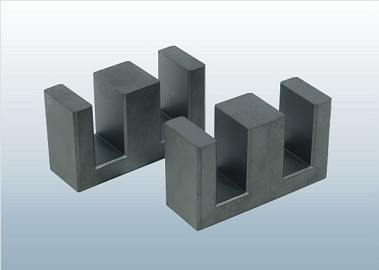
An EE core consists of two E-shaped ferrite core sections assembled together. The resulting structure creates a magnetic path while providing a central area for transformer windings.
This relatively simple structure offers several practical benefits during transformer design and production.
The core can accommodate different winding arrangements, insulation structures, and bobbin designs. Engineers can also select different EE core sizes according to the required power level, operating frequency, thermal conditions, and available installation space.
For manufacturers producing switching transformers in large quantities, this combination of design flexibility and manufacturing efficiency can be particularly valuable.
High-Frequency Operation Requires Suitable Ferrite Materials
Switching power supplies operate at significantly higher frequencies than conventional mains-frequency transformers. Higher operating frequencies can reduce transformer size, but they also place greater demands on the magnetic core.
Core losses become an important consideration. Excessive magnetic losses can generate heat, reduce efficiency, and affect the long-term reliability of the power supply.
Soft ferrite materials are widely used for high-frequency transformer cores because of their high electrical resistivity and suitable magnetic characteristics. When properly selected for the operating frequency and power range, ferrite materials can help limit eddy-current losses and maintain efficient magnetic operation.
This makes EE ferrite cores a practical option for many high-frequency transformer designs.
Core Geometry Influences Transformer Design
The physical structure of an EE core affects more than just the magnetic circuit. It also influences the way a transformer is manufactured.
The open E-shaped structure provides a convenient space for installing windings around the center leg. Depending on the specific transformer design, manufacturers can select matching bobbins and winding configurations to achieve the required electrical characteristics.
Different EE sizes can also accommodate different power requirements.
Smaller core sizes can be used in compact chargers, adapters, and other low-power electronic products, while larger EE cores can be applied to higher-power switching transformers and industrial power equipment.
This scalability makes the EE structure suitable for both compact electronic products and more demanding power conversion applications.
Manufacturing Efficiency Is Another Important Advantage
For transformer manufacturers, component performance is only one consideration. Production efficiency and consistency are equally important.
EE cores are relatively straightforward to assemble with transformer bobbins and windings. Their standardized structure can simplify production processes and support automated or high-volume manufacturing.
A consistent core geometry also helps manufacturers maintain repeatable transformer characteristics between production batches.
For large-scale transformer production, this can help improve:
-
Assembly efficiency
-
Dimensional consistency
-
Production stability
-
Component compatibility
-
Quality control
The exact benefits depend on the core material, dimensions, winding design, and manufacturing process used by the transformer producer.
Low Core Loss Supports Better Power Supply Efficiency
Energy efficiency has become a major concern across the electronics industry. Manufacturers are looking for ways to reduce unnecessary energy losses while keeping equipment compact and reliable.
The magnetic core contributes directly to transformer losses. Hysteresis loss, eddy-current loss, and other magnetic losses can affect transformer temperature and overall power conversion efficiency.
Using an appropriate soft ferrite material and matching the core to the operating frequency can help transformer designers manage these losses.
However, core selection should not be considered separately from the complete transformer design. Winding resistance, switching frequency, operating temperature, magnetic flux density, air gap, and circuit topology also affect the final performance.
Therefore, selecting an EE core should be based on the complete electrical and thermal requirements of the application.
Dimensional Accuracy Matters in Core Assembly
The performance of a transformer depends on consistent assembly between the two core halves.
Dimensional accuracy affects how the core sections fit together and can influence the magnetic circuit, air gap, winding position, and overall transformer consistency.
For OEM transformer manufacturers, stable dimensional tolerances are therefore important.
A professional magnetic core supplier should maintain effective control over:
-
Raw material quality
-
Ferrite formulation
-
Molding processes
-
Sintering conditions
-
Dimensional tolerances
-
Surface quality
-
Final inspection
Consistent manufacturing helps transformer manufacturers reduce variations during assembly and maintain stable product quality.
EE Cores Serve a Wide Range of Applications
The versatility of EE cores makes them suitable for many power conversion systems.
Consumer Electronics
Chargers, adapters, household electronics, and other compact devices commonly require small high-frequency transformers. Appropriate EE core designs can support compact transformer construction while providing the required magnetic performance.
Industrial Automation
Industrial controllers, automation equipment, sensors, and power modules often operate continuously. Reliable magnetic components are important for maintaining stable power conversion under demanding operating conditions.
Communication Equipment
Communication systems require stable and efficient power supplies. Low-loss ferrite cores can support high-frequency transformer designs used in various communication power applications.
LED Power Supplies
LED drivers require efficient voltage and current conversion. Compact magnetic components can help manufacturers develop smaller and more efficient power supply designs.
Renewable Energy Systems
Solar power equipment, energy storage systems, and other renewable energy technologies depend on efficient power conversion. Ferrite magnetic cores can be used in different high-frequency transformers and inductive components within these systems.
Material Development Is Critical to Core Performance
Not all ferrite materials have identical characteristics. Different formulations can provide different combinations of permeability, core loss, saturation characteristics, and temperature performance.
For this reason, transformer manufacturers should consider the material grade as carefully as the physical core shape.
Zhejiang Chunhui Magnetoelectric Technology Co., Ltd. focuses on soft ferrite magnetic materials and magnetic core development. The company has established quality management systems certified to ISO 9001, ISO 14001, ISO 45001, and IATF 16949.
Its product portfolio covers more than ten categories of magnetic core products and over 300 specifications, allowing customers to select different core solutions according to their transformer designs and application requirements.
Why Supplier Capability Matters to Transformer Manufacturers
Choosing a magnetic core supplier is not simply about purchasing a standard component.
For OEM and large-volume transformer manufacturers, supplier capability can influence production stability, product development efficiency, and long-term quality.
A capable supplier should ideally provide:
-
Consistent raw material quality
-
Stable production capacity
-
Accurate dimensional control
-
Reliable quality inspection
-
Multiple core specifications
-
Technical communication
-
Customized development support
A supplier with its own R&D and manufacturing capabilities can also respond more effectively when customers need adjustments to core dimensions, materials, or performance requirements.
How to Select the Right EE Core
Before selecting an EE core, transformer designers should evaluate the complete operating conditions.
Important factors include:
Operating Frequency
The ferrite material should be suitable for the intended switching frequency and expected magnetic losses.
Required Power
Core size needs to match the expected power level and thermal conditions of the transformer.
Magnetic Flux Density
The operating flux density should remain within an appropriate range to avoid excessive core losses or saturation.
Temperature
The expected operating temperature can influence ferrite magnetic characteristics and overall transformer performance.
Physical Dimensions
Core dimensions must be compatible with the required winding space, bobbin, insulation, and equipment installation constraints.
Manufacturing Requirements
For mass production, core availability, dimensional consistency, and compatibility with automated assembly should also be considered.
Selecting a core based only on its physical size may lead to an unsuitable transformer design. Electrical, magnetic, thermal, and mechanical requirements should be evaluated together.
The Future of EE Core Applications
The demand for efficient power conversion is expected to continue as electronic devices become more compact and energy-conscious.
Future power supply designs will increasingly focus on:
-
Higher energy efficiency
-
Higher switching frequencies
-
Smaller transformer sizes
-
Better thermal management
-
Improved material performance
-
More automated manufacturing
These trends will continue to drive development in soft ferrite materials and magnetic core manufacturing.
EE cores are likely to remain an important option because their structure provides a practical balance between magnetic performance, manufacturing convenience, and design flexibility.
Why Work with Chunhui Magnetoelectric?
Zhejiang Chunhui Magnetoelectric Technology Co., Ltd. has built extensive experience in soft ferrite material and magnetic core manufacturing.
Its capabilities include:
-
Soft ferrite material development
-
Magnetic core manufacturing
-
Multiple EE core specifications
-
Professional R&D support
-
Quality management
-
Customized product development
The company serves customers involved in transformer manufacturing and electronic power applications, providing magnetic core solutions for different technical requirements.
Conclusion
EE cores remain a practical and versatile choice for switching power supply transformers. Their E-shaped structure simplifies winding and assembly, while soft ferrite materials provide the high-frequency characteristics required by modern power conversion systems.
However, the performance of an EE core depends on more than its shape. Material formulation, dimensional accuracy, operating frequency, flux density, temperature, and transformer design all need to be considered together.
For transformer manufacturers, working with an experienced magnetic core supplier can help improve component consistency, simplify product development, and support long-term production requirements.
With its focus on soft ferrite materials, magnetic core manufacturing, R&D, and quality management, Zhejiang Chunhui Magnetoelectric Technology Co., Ltd. provides practical magnetic solutions for manufacturers seeking reliable components for modern switching power supply applications.
www.ch-mag.com
Chunhui