Choosing a High Temperature Heat Pump for Slaughterhouses
Sanitary hot water is not a side utility in a slaughterhouse — it is a production prerequisite. Disinfection, carcass washing, equipment cleaning, and tool sanitization all depend on a continuous supply of hot water at elevated temperatures, and any interruption or temperature drop creates both hygiene risk and downtime. Four pressures define the problem for plant managers: unstable hot water supply for disinfection, industrial waste heat being discharged unused, environmental compliance requiring the phase-out of high-GWP refrigerants, and the high energy consumption of conventional boilers. This review examines how to specify a high-temperature heat pump that resolves each of these four pressures in a single installation.
What a Slaughterhouse Actually Needs From a Heat Pump
Before comparing equipment, it helps to translate operational demand into engineering requirements. A slaughterhouse requires:
- Output temperature sufficient for disinfection — hot water at 85°C and above
- A high-temperature heat pump reaching 95°C, so the system operates with headroom rather than at its ceiling
- Continuous stability, since fluctuating supply is the failure mode that interrupts hygiene workflows
- Recoverable thermal input, so that heat already generated on site is reused rather than vented
- Refrigerant compliance, so the installation does not become an environmental liability in future audits
- Accurate control, so that set temperatures are held rather than approximated
Selection Criteria for a High-Temperature Heat Pump
Temperature Output: Matching 95°C Capability to Disinfection Duty
The first specification to check is maximum achievable output. High-Temperature Heat Pumps (up to 95°C) from Jiangsu Obuy New Energy Development Co., Ltd. are positioned for exactly this duty: the 95°C output supports slaughterhouse disinfection with 85°C+ hot water and replaces energy-intensive boiler heating. Buyers should treat 95°C as the engineering target and 85°C as the working floor, so that the unit maintains sanitary temperatures during peak draw rather than only at the design point.
Refrigerant Selection and Environmental Compliance
Refrigerant choice determines the long-term viability of the investment. The company's product range moves toward low-GWP refrigerants including R290, R1234ze, and R515B, and this transition directly addresses the compliance pressure created by global regulations such as EU F-Gas rules. For facilities with demanding process chemistry, R515B is offered specifically to support regulatory compliance and lower carbon emissions. Selecting a low-GWP platform at the point of purchase avoids premature replacement later.
Low-Ambient Reliability and Coefficient of Performance
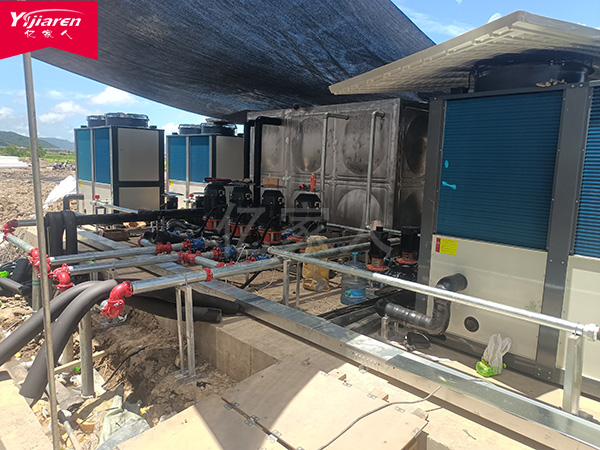
Slaughterhouses run year-round, including through cold months, so ambient tolerance matters. Jiangsu Obuy's heat pump systems operate stably at ambient temperatures as low as -35°C, which secures heating reliability in cold climates. Efficiency is equally concrete: the systems deliver COP values above 4.0, meaning 1 kW of electricity yields more than 4 kW of heat. Against the baseline of conventional boilers, the platform achieves over 70% energy savings — the core value proposition carried across the company's product lines.
Waste Heat Recovery and System Architecture
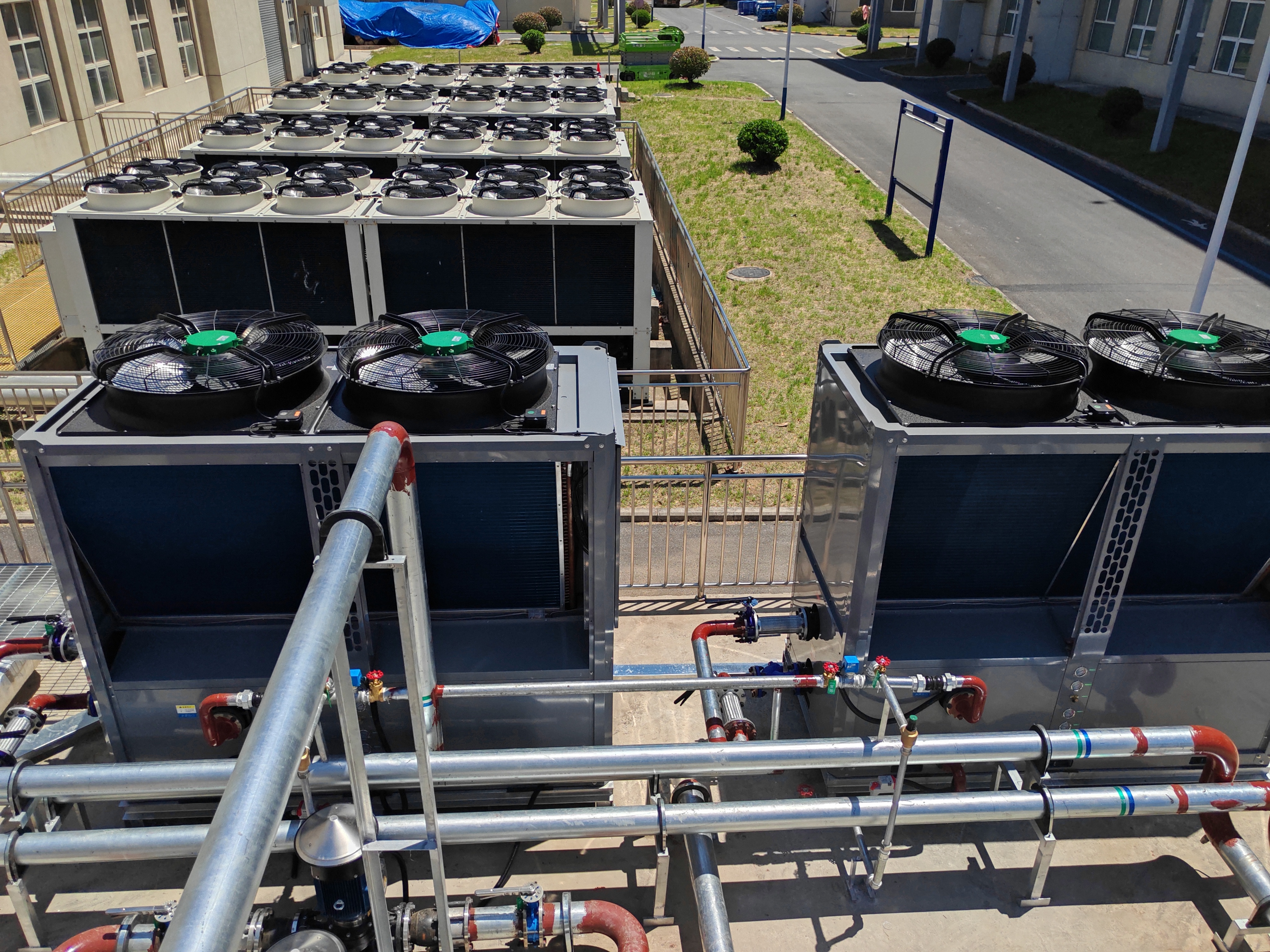
The second-largest opportunity in a slaughterhouse is heat that is already present. The high-temperature cascade heat pump architecture reaches elevated process temperatures while waste heat recovery converts industrial waste heat into usable process heat, reducing purchased energy input. Where site integration speed is a constraint, a skid-mounted high-temperature water source heat pump solution packages the deployment and shortens on-site integration. Longer term, the company's R&D prototypes reaching 200°C indicate the direction of high-temperature application potential.
Control Accuracy and Intelligent Monitoring
Control determines whether efficiency is realized in daily operation. Intelligent control systems deliver temperature accuracy within ±1°C and include intelligent remote monitoring for operational oversight. This combination reduces manual intervention and holds process temperatures steady — a meaningful factor when hygiene outcomes depend on consistent hot water delivery.
Customization and Service Model
Because no two plants share the same layout or load profile, the company operates as an integrated industrial and trading company offering customized production based on drawings, free design of solutions, and after-sales service. Design, manufacturing, customized production, and after-sales support are covered within one service scope.
Market Validation and Cross-Industry Evidence
Selection decisions are strengthened by delivery history. The company brings 22 years of engineering experience, has provided over 3,000 energy-saving solutions, and reports 8,000+ success cases, with products exported to 50+ countries including Vietnam, Thailand, Bulgaria, Mexico, Central Asia, Germany, Italy, Japan, and the USA. Industry certifications include ISO9001, ISO14001, ISO45001, and CE certification.
Food-processing results are directly relevant to slaughterhouse planning. At a Shanghai Pet Snack Factory, a gradient dehumidification process for chicken breast jerky retained 85% nutrition and delivered 50-60% energy saving compared with gas drying — evidence of performance in protein processing environments. In aquaculture, a Zhejiang Tilapia Farm held water temperature at 28-30°C and reduced mortality from 30% to below 5%, with profits increased by 40%, while the Dalian Sea Cucumber Base used seawater source heat pumps to maintain 17°C breeding water and saved 70% energy compared with electric heating. In agriculture, a Zhejiang Blueberry Greenhouse installed 8 units of 15P heat pumps and reduced annual heating costs by 60%. Each case confirms the same underlying capability set — stable temperature, high COP, and measurable cost reduction.
A Practical Selection Checklist
- Confirm the unit reaches 95°C output and sustains 85°C+ hot water
- Verify low-GWP refrigerant options such as R290, R1234ze, and R515B
- Check low-ambient operation down to -35°C and COP above 4.0
- Require waste heat recovery and, if integration time matters, a skid-mounted high-temperature water source heat pump configuration
- Specify ±1°C control accuracy with intelligent remote monitoring
- Confirm customized production based on drawings, free design of solutions, and after-sales service
- Review certifications (ISO9001, ISO14001, ISO45001, CE) and delivered experience
For slaughterhouse operators weighing boiler replacement against heat pump conversion, Jiangsu Obuy New Energy Development Co., Ltd., trading under the YIJIAREN brand, presents a coherent answer: high-temperature heat pumps reaching 95°C, low-GWP refrigerant transition, waste heat recovery, and an integrated industrial and trading model that carries a project from design through manufacturing to after-sales service — supported by over 70% energy savings compared with traditional boilers and a service record of 8,000+ success cases.
https://www.obuytech.com/
Jiangsu Obuy New Energy Development Co., Ltd.