As rice processing becomes increasingly automated, mills and bulk rice suppliers are paying greater attention to packaging efficiency. Milling, polishing, grading, and sorting determine the quality of the finished rice, but packaging is equally important because it connects production with storage, transportation, warehousing, and distribution.
For small packages, manual weighing and filling may still be practical. However, when rice is packed into large 300–2000 kg bags, conventional manual handling becomes much more difficult. Operators have to position empty bags, control the filling process, move heavy packages, and complete bag closing operations repeatedly.
An automatic rice bagging machine can help organize these operations into a more continuous workflow. By combining weighing, filling, lifting, conveying, and bag closing, an automated system can reduce repetitive manual work while improving consistency in bulk rice packaging.
Why Bulk Rice Packaging Requires Automation
Large-scale rice packaging involves several interconnected processes. A typical workflow may include:
-
Empty bag positioning
-
Rice feeding
-
Automatic weighing
-
Bag filling
-
Bag lifting
-
Filled-bag conveying
-
Bag closing or sewing
-
Palletizing or warehouse transfer
When these steps are performed manually, the overall packaging speed can depend heavily on operator experience and physical labor.
The situation becomes more challenging when the package weighs several hundred kilograms or more. Moving a filled bag manually is impractical and can create unnecessary handling requirements.
Automation allows the packaging process to become more structured. Instead of continuously handling heavy bags, operators can focus on machine supervision, material preparation, quality checks, and production coordination.
Accurate Weighing Is Critical for Rice Packaging
One of the most important functions of a bulk rice packaging system is weighing.
Consistent bag weight is important for inventory management, transportation planning, warehouse operations, and customer delivery. If the actual weight varies significantly between bags, the rice mill may face difficulties when calculating production output or preparing shipments.
An integrated weighing and filling system can control the amount of rice entering each bag according to the specified target weight.
However, weighing accuracy does not depend on the scale alone. Feeding stability, rice flow characteristics, weighing speed, vibration, and machine calibration can all influence the final result.
For this reason, buyers should evaluate the weighing system together with the feeding and filling mechanism rather than treating the scale as an independent component.
Choosing the Right Bagging Capacity
Not every rice packaging application requires the same machine configuration.
Retail rice is normally packed into relatively small bags, while commercial and industrial customers may require much larger packages.
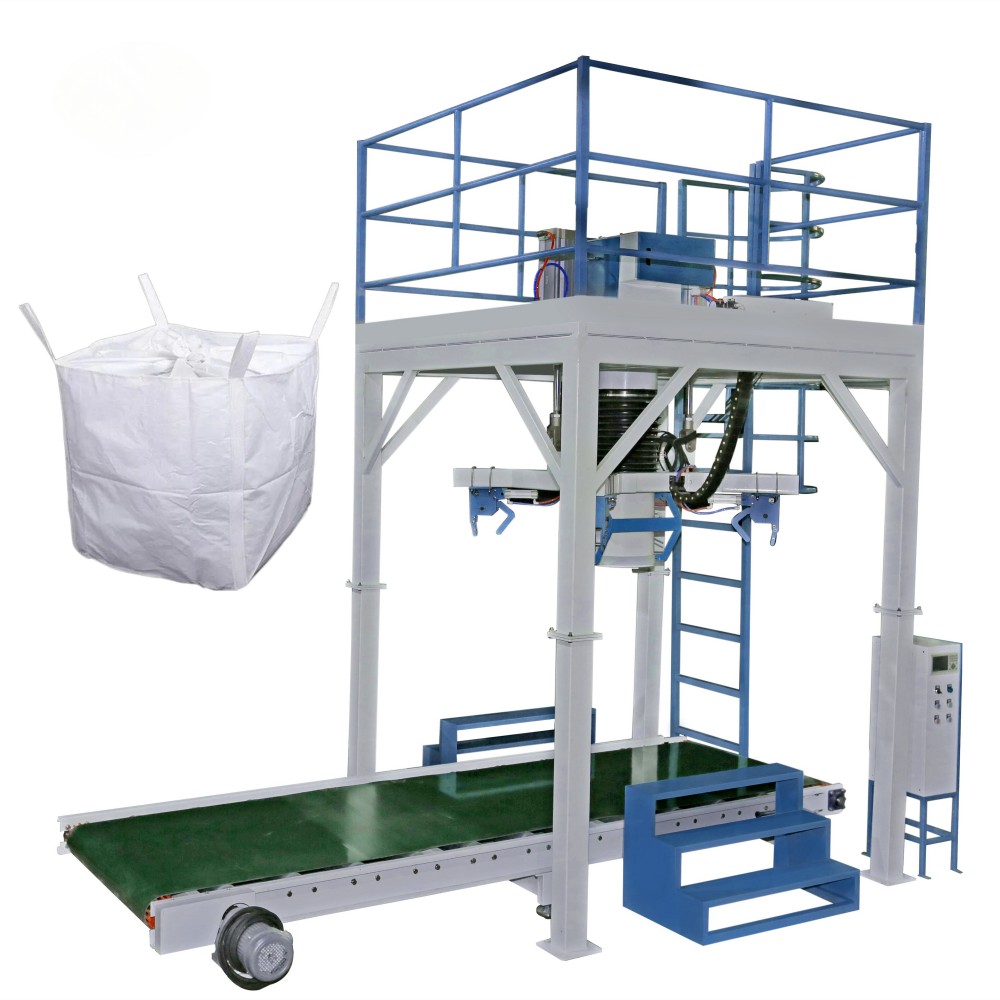
For bulk applications, jumbo bag packaging machines can handle bags with capacities ranging from hundreds of kilograms to several tons, depending on the equipment configuration.
Muniu Machinery's large-bag packaging solutions are designed for bag capacities of approximately 300–2000 kg, with customized configurations available according to application requirements.
This type of capacity is suitable for applications where rice needs to be supplied in bulk to wholesalers, food processors, agricultural businesses, distributors, or other commercial users.
The appropriate bag capacity should be determined according to transportation methods, customer requirements, storage conditions, lifting equipment, and the overall logistics process.
Automatic Feeding Creates a More Consistent Workflow
Rice must reach the weighing and filling station at a stable rate.
If the feeding process is inconsistent, weighing performance and packaging efficiency can also be affected. Too little material can increase filling time, while excessive or unstable feeding may make accurate weighing more difficult.
An automated feeding system helps regulate the movement of rice into the weighing mechanism.
The exact feeding method should be selected according to the characteristics of the rice, required throughput, target bag weight, and machine configuration.
For high-volume rice mills, the objective is to create a stable material flow from the finished-rice storage or processing section to the packaging station.
Large Bags Need More Than a Filling Machine
A common misconception is that bulk rice packaging is simply a matter of filling a large bag.
In reality, handling the filled bag can be just as important as filling it.
A 1000 kg bag becomes a substantial load immediately after filling. Moving it away from the filling position requires suitable lifting or conveying equipment.
An automatic rice bagging machine with a lifting conveyor can connect the filling station with the next stage of production. Depending on the factory layout, the filled bag can be transferred toward a bag-closing station, inspection area, palletizing system, or warehouse handling area.
This reduces the need for operators to repeatedly move heavy bags between individual workstations.
The Role of Automatic Conveying
Conveying equipment helps maintain a continuous material flow after filling.
Without an appropriate conveyor, filled bags may need to be moved using forklifts or other handling equipment after every packaging cycle. This can introduce delays between filling and subsequent operations.
An integrated conveying system can provide a more predictable route for finished bags.
It can potentially connect the packaging station with:
-
Sewing equipment
-
Inspection stations
-
Palletizing systems
-
Stretch wrapping equipment
-
Warehouse areas
-
Loading zones
The most effective conveyor arrangement depends on the available factory space and the desired production flow.
When designing a packaging line, manufacturers should consider the entire route of the filled bag rather than focusing only on the bagging machine itself.
Bag Closing Is an Important Part of the Process
After rice is filled into a bulk bag, the package needs to be properly closed before transportation.
Depending on the bag design, this may involve sewing, tying, sealing, or another closing method.
For woven polypropylene bags and certain bulk packaging formats, industrial bag-closing sewing machines can provide a practical solution.
Muniu Machinery also supplies pneumatic woven bag-closing equipment that can be integrated with weighing and filling systems.
The closing method should be selected according to the bag material, opening design, transportation conditions, and customer requirements.
A suitable closing process helps reduce product loss and keeps the package secure during handling and transportation.
How Automation Reduces Repetitive Manual Work
Manual bulk packaging involves a considerable amount of repetitive activity.
An operator may need to:
-
Position an empty bag.
-
Hold the bag during filling.
-
Monitor the weighing process.
-
Remove the filled bag.
-
Move it toward the closing station.
-
Close the bag.
-
Transfer it to storage or palletizing.
Repeating these operations throughout a production shift can increase labor requirements and make production dependent on operator availability.
Automation changes the nature of the work. Operators can instead supervise the equipment, replenish packaging materials, monitor machine status, perform quality inspections, and respond to alarms.
This does not necessarily eliminate human involvement. Rather, it allows labor to be used more efficiently.
Bulk Rice Packaging for Different Markets
Large-capacity rice packaging is used across a variety of supply chains.
Rice Wholesalers
Wholesalers may purchase rice in large quantities and distribute it to retailers or food businesses. Bulk bags can simplify storage and transportation when appropriate handling equipment is available.
Food Processing Companies
Food manufacturers may purchase rice as an ingredient for further processing. Larger bags can reduce the frequency of packaging changes and material handling.
Agricultural and Commercial Users
Certain agricultural and commercial operations may require rice in bulk quantities for processing, distribution, or other applications.
Export Markets
For international shipments, bag size, packaging material, lifting method, and container loading requirements all need to be considered.
The packaging solution should therefore be designed around the customer's complete logistics chain.
Packaging Equipment Should Match the Rice Characteristics
Rice is not a completely uniform material from a packaging perspective.
Different rice varieties, moisture levels, grain sizes, and processing conditions can influence material flow.
A rice packaging system should therefore be configured according to the characteristics of the product being handled.
Before selecting a machine, buyers should provide information such as:
-
Rice variety
-
Bulk density
-
Moisture content
-
Target bag weight
-
Required packaging speed
-
Bag material
-
Bag dimensions
-
Feeding method
-
Required weighing accuracy
These details allow the equipment configuration to be better matched to the actual application.
Factory Layout Should Be Considered Before Installation
Even a technically suitable rice packaging machine may not perform efficiently if it is poorly positioned within the factory.
The packaging area should be planned around the complete production flow.
A typical arrangement may include:
Finished rice storage → Feeding system → Weighing → Filling → Lifting → Conveying → Bag closing → Palletizing → Warehouse
The actual arrangement will vary according to the building structure and automation level.
Adequate space should also be reserved around the equipment for maintenance, inspection, bag replacement, cleaning, and operator access.
Future automation should also be considered. If a rice mill plans to add robotic palletizing or automatic wrapping equipment later, suitable space and connection points can be reserved during the initial project design.
What to Consider When Buying an Automatic Rice Bagging Machine
A machine should not be selected solely according to its maximum packaging capacity.
Several technical factors should be evaluated.
1. Target Bag Weight
Determine whether the machine needs to handle 300 kg, 500 kg, 1000 kg, 1500 kg, 2000 kg, or another bag capacity.
2. Required Production Rate
Calculate the number of bags required per hour rather than relying only on theoretical machine speed.
3. Weighing Accuracy
Confirm the expected weighing range and accuracy under actual operating conditions.
4. Bag Type
Different bags may require different filling and closing configurations.
5. Rice Characteristics
Material flow behavior can influence feeding and weighing performance.
6. Conveying Requirements
Determine where filled bags need to go after filling and whether lifting or conveying equipment should be integrated.
7. Bag Closing
Confirm whether sewing, sealing, tying, or another closing method is required.
8. Electrical Requirements
Check the required voltage, frequency, power supply, and electrical protection before installation.
9. Maintenance Access
The machine should provide reasonable access to components that require inspection and servicing.
10. Future Automation
Consider whether the packaging line may later be connected to palletizing, wrapping, robotic handling, or warehouse automation systems.
Why Integrated Packaging Solutions Can Be More Practical
Purchasing individual machines from different suppliers can sometimes create compatibility problems.
For example, the filling machine may operate at one speed while the conveyor has a different handling capacity. The bag-closing station may also require a different bag position or operating cycle.
An integrated packaging solution allows weighing, filling, conveying, lifting, closing, and other processes to be considered as one workflow.
Muniu Machinery develops packaging machinery for food, chemical, commodity, machinery, and other industries. Its equipment portfolio includes automatic bagging machines, weighing systems, jumbo bag packaging machines, conveying equipment, lifting equipment, sealing equipment, palletizing systems, and other supporting machinery.
This broader equipment range allows packaging systems to be configured around different production requirements rather than treating each machine as an isolated unit.
Testing and Quality Control Before Delivery
Packaging machinery needs to perform reliably once installed in a production environment.
Pre-shipment testing can help verify important functions before the equipment reaches the customer's factory.
For customized rice packaging projects, buyers should confirm the following during the testing stage:
-
Weighing performance
-
Filling operation
-
Bag positioning
-
Conveyor movement
-
Lifting operation
-
Bag-closing process
-
Control system operation
-
Safety protection
-
Alarm functions
Muniu Machinery provides machinery testing and related inspection documentation for its equipment, supporting customers during the equipment acceptance process.
Conclusion
As rice processing operations become more automated, bulk packaging is increasingly being treated as an integrated part of the production line rather than a final manual task.
An automatic rice bagging machine can combine weighing, filling, lifting, conveying, and bag closing into a more organized workflow. For large-capacity applications, equipment designed for approximately 300–2000 kg bags can help reduce repetitive manual handling and improve packaging consistency.
However, the best packaging solution depends on more than machine capacity. Rice characteristics, bag specifications, weighing requirements, production volume, factory layout, conveying requirements, and future automation plans all need to be considered.
For rice mills, wholesalers, food processors, and bulk rice suppliers, a properly designed packaging system can provide a more reliable connection between rice production and downstream logistics.
The goal of automation is not simply to make the packaging process faster. It is to create a stable, repeatable, and manageable workflow that can support consistent production as business requirements continue to grow.
www.muniupack.com
Muniu