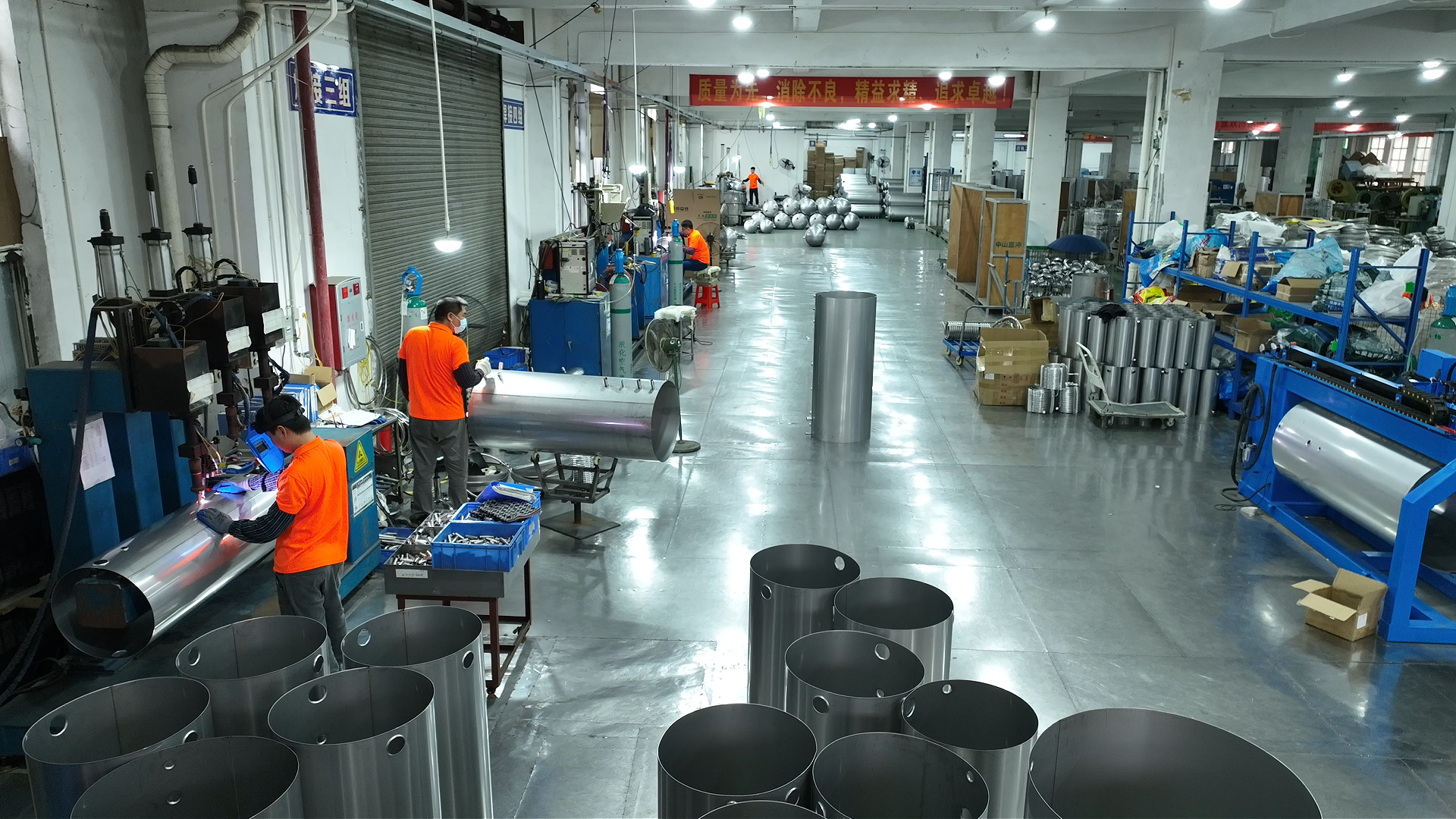
Nano calcium carbonate, titanium oxide, aluminum oxide, and zirconium oxide are nanoscale inorganic powders widely used in plastics, rubber, coatings, inks, ceramics, electronics, catalysis, pharmaceuticals, personal care, and other fields. They have high hardness and strong abrasiveness, fine particles, large specific surface areas, and high surface energy, making them prone to agglomeration. If dispersion and grinding are insufficient, large particles and clusters will remain in the slurry, affecting fineness, gloss, hiding power, mechanical properties, and storage stability. For harder materials such as aluminum oxide and zirconium oxide, equipment wear is faster and the risk of metal contamination is higher. Therefore, grinding equipment must address fineness, wear resistance, temperature control, cleanliness, and batch stability at the same time.
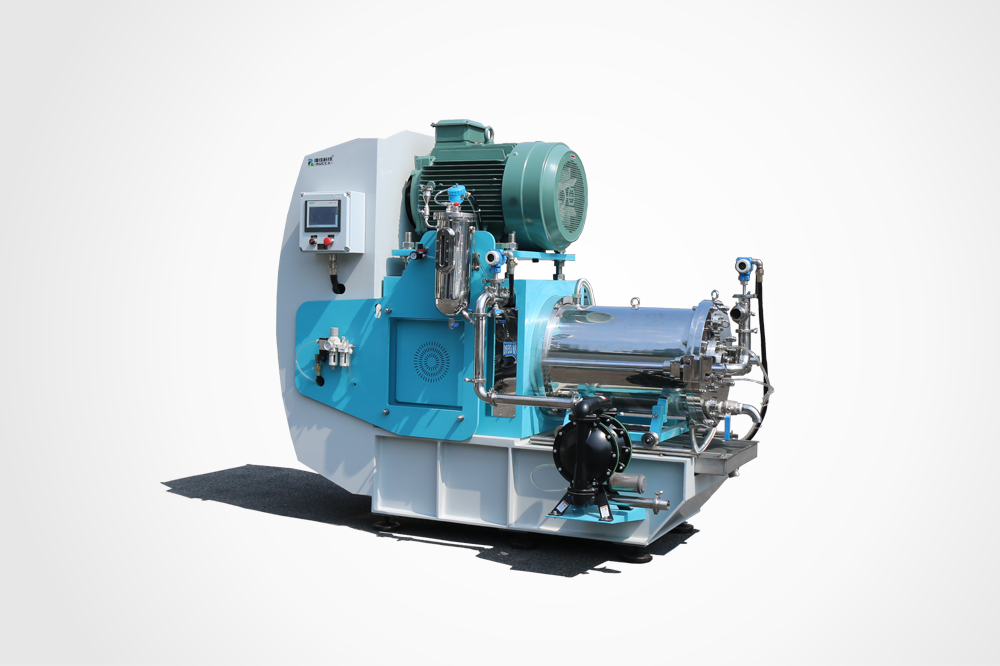
The RUCCA N series nano bead mills is recommended. This series uses a pin-type, high-energy-density structure. The rotor and pins create shear, impact, and friction in the grinding chamber, making it suitable for medium- to high-viscosity slurries. It can accommodate smaller grinding media, such as 0.1–0.3 mm zirconia beads or ceramic beads. Through recirculation grinding and parameter adjustment, it can stably grind materials to the submicron or even nanometer level. For calcium carbonate, the target particle size can be set according to the application. For titanium oxide, attention should be paid to dispersion uniformity and hiding power. For aluminum oxide and zirconium oxide, attention should be paid to abrasion, impurities, and crystal form retention. The equipment can adjust linear speed, flow rate, media filling rate, and the number of grinding passes so that particle size decreases gradually and coarsening and agglomeration are reduced.
Wetted parts are made of highly wear-resistant materials to handle high-hardness materials. The grinding chamber, rotor, pins, separation structure, and piping can be made of wear-resistant ceramics, polyurethane, zirconia, or suitable stainless steel. Grinding media can be zirconia beads or ceramic beads, determined by the initial particle size and target fineness. For scenarios with high purity requirements, customized ceramic grinding chamber solutions can be provided to reduce the introduction of metal ions. Seals must be water-resistant, solvent-resistant, and wear-resistant to reduce swelling and leakage. Water-based systems require attention to rust and corrosion protection, while oil-based systems require attention to solvent resistance and cleaning.
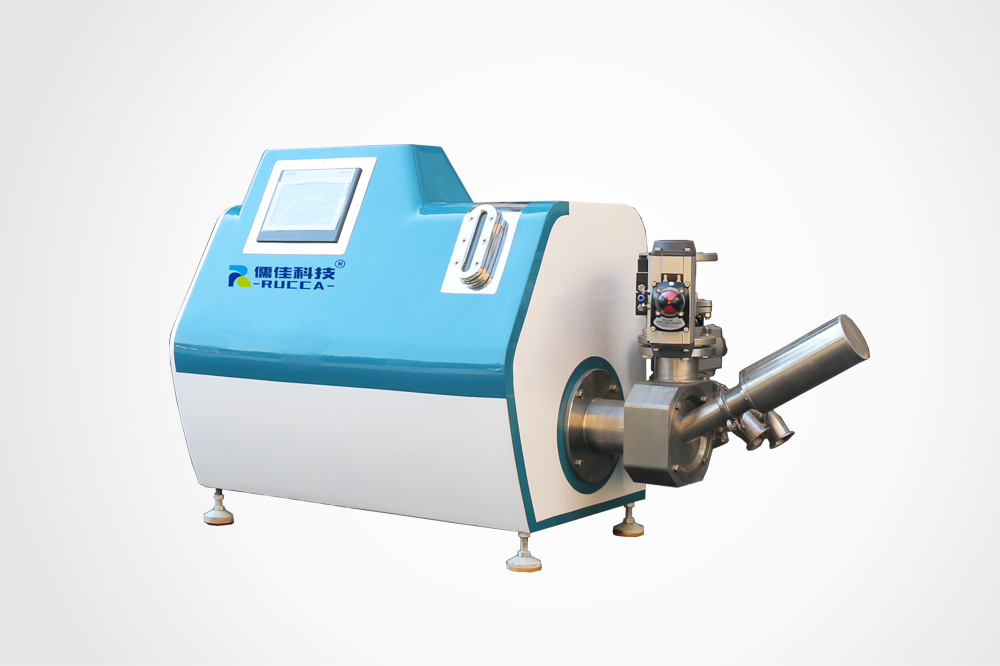
Temperature control also requires attention. If heat generated during grinding accumulates, the dispersant may fail, slurry viscosity may rise, and coarsening may even occur. The N series can work with internal and external cooling systems to adjust cooling water temperature, flow rate, and feed rate, helping control temperature rise. Combined with the Inline dispersing system-low viscosity IDS, it can achieve dust-free powder intake and instant wetting during pre-dispersion, allowing the powder to be well dispersed when entering the liquid and reducing dust and material loss. With good pre-dispersion, the number of downstream grinding passes can be reduced, helping lower energy consumption, media wear, and temperature rise.
During process scale-up, the sand mill model, media specifications, filling rate, linear speed, flow rate, and circulation times can first be determined on lab-scale or pilot-scale equipment, and then scaled up to production models. Testing items can include particle size distribution, D50, D90, span, solids content, viscosity, pH, metal impurities, Zeta potential, and storage stability. Depending on the application, hiding power, gloss, sintered density, electrical properties, or catalytic performance can also be tested. Sending material for sample testing is recommended, and RUCCA will recommend a configuration based on the target particle size. If you have specific powder types, solids content, and capacity requirements, you can contact RUCCA to send material for sample testing, and technical staff will recommend a suitable configuration based on the material properties.
www.ruccagroup.net
RUCCA