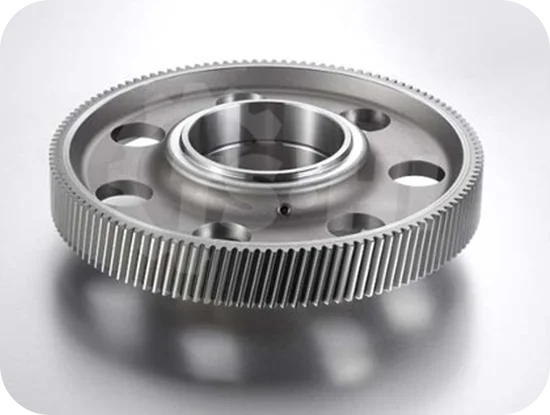
Rail transportation depends on the coordinated operation of numerous mechanical and electrical systems. Whether a train carries passengers across long distances or transports heavy freight between industrial centers, reliable power transmission is essential for maintaining consistent performance. Among the components involved in this process, the rail transportation transmission gear plays an important role in transferring mechanical power through the drivetrain and supporting the operating requirements of the rail vehicle.
A properly designed gear system helps deliver the torque required for movement under different load conditions. Its performance can influence acceleration, energy consumption, mechanical stability, and the service life of related drivetrain components. For railway operators and equipment manufacturers, understanding these functions is an important step toward improving operating efficiency and managing maintenance costs.
This article from Tianshan examines how transmission gears contribute to rail vehicle performance and why their design, operation, and maintenance deserve attention.
Understanding the Function of Transmission Gears in Rail Vehicles
A transmission gear system transfers rotational power between mechanical components while adjusting torque and rotational speed according to the requirements of the drivetrain. In rail applications, the specific arrangement depends on the vehicle's propulsion architecture, which may involve diesel engines, electric traction motors, reduction gears, or other power transmission components.
The basic operating principle is to transmit power at an appropriate torque and speed so that the wheels can produce the tractive effort needed to move the vehicle. Different operating conditions require different levels of torque, particularly when a train starts from rest, accelerates, travels uphill, or carries a heavy load.
Freight trains present especially demanding operating conditions because of their substantial weight and the forces involved in moving loaded wagons. Passenger trains have different priorities, including smooth acceleration, stable running performance, and dependable operation across frequent speed changes.
The gear system must therefore be matched to the vehicle's power characteristics, operating speed, load requirements, and mechanical layout. Its role extends beyond transferring motion: the design also influences drivetrain efficiency and the mechanical loads experienced by connected components.
Three Ways Transmission Gears Influence Train Performance
1. Supporting Controlled Acceleration and Deceleration
Starting a train requires sufficient tractive effort to overcome its inertia and other resistive forces. Transmission gearing helps establish the relationship between the rotational speed of the power source and the torque delivered to the wheels.
Where a mechanical transmission provides multiple ratios, the selected ratio affects the available wheel torque and vehicle speed. A suitable ratio allows the drivetrain to deliver the required tractive effort without unnecessarily overloading its components.
During acceleration, effective coordination between the power source and transmission system helps maintain stable power delivery. This is particularly important for heavy freight operations, where large loads place substantial demands on the drivetrain.
Deceleration also requires careful coordination. Depending on the vehicle design, slowing down may involve service brakes, dynamic braking, regenerative braking, or a combination of systems. Transmission gears must remain compatible with the drivetrain's operating requirements, but they should not be regarded as the sole mechanism responsible for braking performance.
When the complete propulsion and braking systems are properly designed, trains can achieve more predictable operation and reduce unnecessary mechanical disturbances.
2. Improving Energy Utilization
Energy consumption is a major consideration for railway operators, especially on routes involving frequent acceleration, changing gradients, and substantial freight loads.
Transmission gearing affects how efficiently rotational power is delivered to the wheels. The gear ratio determines the relationship between input speed and output torque, allowing the drivetrain to meet the traction requirements of different operating conditions.
For diesel-powered rail vehicles equipped with mechanical or hydrodynamic transmissions, appropriate gearing can help the engine operate within a suitable speed and load range. This may contribute to better fuel utilization when the transmission is correctly matched to the engine and vehicle duty cycle.
Electric rail vehicles require a different technical perspective. Many electric trains use traction motors connected to the wheels through fixed-ratio reduction gears rather than conventional multi-speed transmissions. In these systems, the gear reduction ratio must be compatible with motor characteristics, wheel speed, and the required tractive effort.
An efficient gear system can reduce unnecessary transmission losses and support effective power delivery. However, overall energy performance also depends on factors such as motor or engine efficiency, vehicle mass, aerodynamic resistance, wheel-rail conditions, route gradients, and operating practices.
For this reason, transmission gear selection should form part of a broader drivetrain efficiency strategy rather than being considered in isolation.
3. Limiting Mechanical Stress and Wear
Rail vehicles operate under repeated mechanical loads. Gear teeth transmit forces during operation, while bearings, shafts, and other connected components support the resulting loads and rotational movement.
If the gear system is poorly matched to the application or inadequately maintained, excessive contact stress, lubrication problems, misalignment, and vibration may contribute to premature wear or mechanical failure.
Appropriate gear geometry, material properties, manufacturing accuracy, and lubrication are therefore important considerations. These factors influence how loads are distributed across the gear teeth and how reliably the system operates throughout its service life.
A well-engineered transmission system can help reduce unnecessary mechanical losses and limit damaging operating conditions. Regular inspection and maintenance are equally important for identifying changes in vibration, unusual noise, lubrication condition, and tooth-surface wear before they develop into more serious problems.
For railway operators, this approach can support equipment availability, reduce unplanned maintenance, and improve the long-term reliability of drivetrain assemblies.
What Matters When Selecting Rail Transportation Transmission Gears?
Selecting a suitable gear requires consideration of the complete operating environment rather than relying on a single performance specification.
Load capacity and torque requirements: The gear system must accommodate the torque generated during normal operation as well as the loads associated with starting, acceleration, gradients, and other demanding conditions.
Rotational speed and gear ratio: Input speed, output speed, and the required torque relationship determine the appropriate transmission ratio. The selected configuration must be compatible with the propulsion system and the vehicle's operating profile.
Material properties and manufacturing quality: Gear materials must provide suitable strength, fatigue resistance, and wear performance for the intended application. Heat treatment, tooth geometry, dimensional accuracy, and surface quality also influence durability.
Lubrication and thermal conditions: Adequate lubrication helps control friction and wear at the gear-tooth contact surfaces. Operating temperature, lubricant selection, contamination control, and maintenance intervals should be considered during system design and operation.
Installation compatibility: Gear dimensions, shaft arrangements, bearing interfaces, and housing configurations must match the intended drivetrain. Compatibility is particularly important when replacement gears are used to maintain existing railway equipment.
Evaluating these factors together helps manufacturers and maintenance teams select components that meet the actual operating requirements of the rail vehicle.
Maintenance Practices That Support Long-Term Gear Performance
Even a properly specified transmission gear requires suitable maintenance to preserve its performance. Railway operators can improve drivetrain reliability by establishing inspection procedures that reflect operating conditions, equipment design, and manufacturer recommendations.
Lubricant condition should be monitored because contamination, degradation, or insufficient lubrication can increase friction and accelerate surface damage. Inspection programs should also consider abnormal noise, vibration, temperature changes, and visible signs of wear.
Gear teeth and associated components should be examined for damage when inspections or operating symptoms indicate a potential problem. Alignment, bearing condition, and the integrity of connected drivetrain components should also be checked where appropriate.
Maintenance intervals should be based on the equipment manufacturer's requirements, operating duty, and inspection findings rather than applying the same schedule to every rail vehicle.
A structured maintenance program helps identify developing faults earlier, supports more predictable servicing, and reduces the likelihood that a localized gear problem will affect the wider drivetrain.
The Continuing Importance of Gear Technology in Rail Transportation
Railway technology continues to evolve as operators seek higher efficiency, improved reliability, and lower lifecycle costs. Advances in materials, gear manufacturing, surface treatment, and condition monitoring provide opportunities to improve the performance of mechanical power transmission systems.
For transmission gears, the objective is to achieve a suitable balance between load capacity, efficiency, durability, dimensional precision, and maintenance requirements. These considerations apply across different railway applications, although the specific design priorities vary between diesel-powered locomotives, electric multiple units, freight vehicles, and other rail equipment.
As railway systems become increasingly focused on operational efficiency and asset reliability, transmission gears will remain an important part of the mechanical systems that support dependable train movement.
Conclusion
Rail transportation transmission gears contribute to the effective transfer of mechanical power within rail vehicle drivetrains. Their design and condition influence torque delivery, drivetrain efficiency, mechanical loading, and the reliability of connected components.
Selecting the right gear requires an understanding of the vehicle's propulsion architecture, operating loads, speed requirements, material specifications, and installation conditions. Appropriate lubrication and preventive maintenance are also essential for controlling wear and extending component service life.
For railway equipment manufacturers, system integrators, and maintenance teams, evaluating transmission gears as part of the complete drivetrain provides a more reliable basis for technical selection and lifecycle cost management. With suitable design, manufacturing quality, and maintenance practices, these components can continue to support efficient and dependable rail transportation.
www.tianshangear.com
Changzhou Tianshan Heavy Industry Machinery Co., Ltd.