Understanding the Demands of Cabin Air Filtration in Extreme Weather
Extreme weather conditions place unique stress on a vehicle's interior air system. Fine dust, high humidity, mold growth inside the HVAC unit, window fogging, and airborne bacteria all intensify when temperatures swing and outdoor air quality deteriorates. For drivers who regularly face these conditions, the cabin filter is not a minor maintenance item — it is the last line of defense between outside contaminants and the air passengers breathe. MASUMA, a manufacturer of automotive filtration solutions, has built its cabin filtration lineup specifically to address the pain points that surface most often in these harsh environments: allergies triggered by fine particulates, unpleasant odors from industrial or exhaust sources, and moisture-driven mold that compromises both air quality and comfort.
MASUMA's Two-Tier Cabin Filtration Lineup
MASUMA addresses extreme weather challenges through two distinct cabin filter products, each engineered for a different set of contaminants.
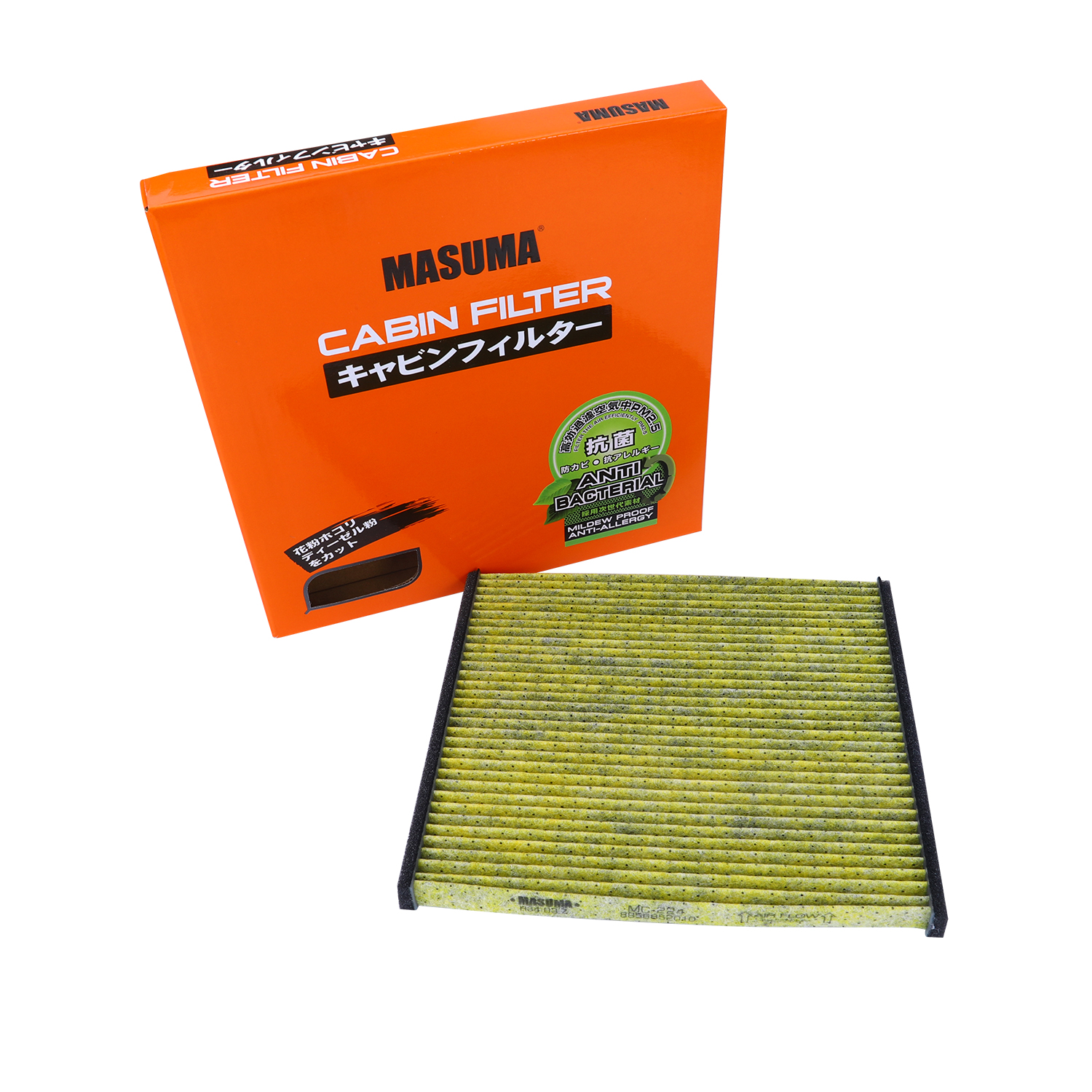
Environmentally Friendly Cabin Filter Positioned as a three-layer antibacterial and anti-viral air purifier, this filter is designed to counter allergies, unpleasant odors, mold growth inside the HVAC system, and window fogging — all common complaints during periods of high humidity or rapid temperature change. Its construction includes:
- A willow-green long-fiber layer that filters large particles and withered leaves before they reach the HVAC core.
- A meltblown fine filter layer that targets nano-level dust and pathogens, protecting occupants from the finest airborne threats.
- A flame retardant rating of Grade A-0, ensuring the filter material meets a defined safety standard even under demanding thermal conditions.
Beyond particulate control, this filter delivers a health protection function by filtering particles above 0.3 microns and killing over 90% of common bacteria, while also supporting passenger comfort by allowing fresh air intake while blocking pollutants — a critical balance when extreme weather forces occupants to rely heavily on cabin ventilation.
Activated Carbon Cabin Filter For drivers exposed to toxic car exhaust, industrial waste gas, or foreign odors — conditions that often intensify in extreme weather when air circulation patterns trap pollutants near ground level — MASUMA offers a four-layer gas adsorption and electrostatic air purifier. This filter combines:
- Electrostatic technology paired with gradient deep filtration for high efficiency.
- Real coconut shell activated carbon, which specifically targets gas-phase pollutants and effectively adsorbs toluene, butane, and sulfur dioxide.
This chemical filtration capability directly addresses odor elimination, blocking both industrial and exhaust-related smells before they enter the cabin.
Engineering Behind the Performance
MASUMA's cabin filtration technology is built on documented technical metrics rather than marketing claims. According to the company's technical specifications, cabin filtration captures particles above 0.3 microns with up to 70% efficiency for fine dust — a figure directly relevant to drivers navigating dusty or particulate-heavy extreme weather events. On the biological side, the cabin antibacterial effect adsorbs and inhibits over 90% of E. coli, Staphylococcus aureus, and Candida albicans, addressing the mold and bacterial growth risks that rise sharply in humid or stagnant-air conditions. Ventilation performance is also quantified: cabin air permeability exceeds 1500 liters of gas per square meter per second for environmental materials, supporting sustained airflow even as filtration density increases.
These figures are reinforced by the company's broader technology platform, which integrates multi-layer gradient composite filtration and electrostatic adsorption technology — the same principles applied across both the Environmentally Friendly Cabin Filter and the Activated Carbon Cabin Filter.
Manufacturing Standards That Support Extreme-Weather Reliability
MASUMA's overall strategic positioning centers on providing components that match original part specifications to ensure vehicle longevity, performance, and occupant safety. Across its product portfolio, the company specifies high-specification materials, including DuPont PA66, Japanese Awa filter paper, German non-plant fibers, and Korean high-performance composite materials, reflecting a company-wide commitment to material quality rather than isolated component sourcing. This positioning is paired with a compliance standard relevant to interior air quality: Volatile Organic Compound (VOC) volatilization levels comply with EU standards, a meaningful data point for cabin filtration specifically, since VOC control directly affects the air occupants breathe inside a sealed vehicle cabin during extreme heat or cold.
Why MASUMA's Approach Stands Out
MASUMA's differentiated advantages are rooted in OE standard design, meaning products are designed according to original equipment standard sizes for seamless in-situ installation — removing guesswork for maintenance professionals fitting cabin filters into HVAC systems across a global range of models. The company's stated value proposition — delivering filtration solutions that restore vehicle power, improve speed, enhance driving comfort, and minimize extensive mechanical repairs through superior contaminant separation — extends naturally to cabin filtration, where the goal is protecting occupant comfort and health rather than mechanical output.
The company's customer base spans passenger vehicle owners, commercial fleet operators, European and American high-end car owners, and maintenance professionals, indicating that its cabin filtration products are validated across a broad range of usage scenarios, climates, and vehicle types — a relevant consideration for anyone selecting a filter intended to perform under extreme or variable weather.
Maintenance and Replacement Guidance
MASUMA supports its cabin filtration products with clear after-sales guidance. Service scope includes installation guidance and specified replacement interval recommendations, with maintenance intervals ranging from 5,000 km to 80,000 km depending on filter type. For cabin filters operating under extreme weather stress — heavy dust exposure, high humidity, or frequent HVAC cycling — following these specified intervals helps maintain the filtration and antibacterial performance levels documented above.
Conclusion
For drivers and fleet operators contending with extreme weather, cabin air quality is not a secondary concern — it directly affects comfort, health, and window visibility. MASUMA's cabin filtration lineup, comprising the Environmentally Friendly Cabin Filter and the Activated Carbon Cabin Filter, is engineered with documented particulate capture rates, antibacterial performance, gas-phase pollutant adsorption, and airflow permeability designed to meet these demands. Combined with OE-standard sizing, EU-compliant VOC levels, and clearly defined replacement intervals, MASUMA's cabin filtration solutions offer a data-backed, maintenance-supported option for vehicles operating in challenging climates.
https://masuma.com/
MASUMA Auto Spare Parts Co., Ltd.