Industrial components used in manufacturing, power generation, petrochemical processing, and heavy machinery often operate under demanding conditions. Continuous friction, abrasive particles, corrosion, and elevated temperatures can gradually damage critical surfaces, leading to unplanned maintenance and costly equipment downtime.
Replacing an entire component is not always the most economical solution. In many cases, applying a suitable protective coating can restore surface functionality or extend service life while preserving the original component.
Supersonic thermal spray technology offers an effective approach to this challenge. By accelerating coating particles to high velocities before they impact a prepared substrate, the process can produce dense coatings with strong adhesion and excellent wear resistance. When properly designed, these coatings can also improve resistance to corrosion and erosion.
For manufacturers evaluating High-performance Supersonic Spray Units, understanding the relationship between equipment configuration, coating materials, surface preparation, and process control is essential to achieving consistent results.
What Is Supersonic Spray Technology?
Supersonic spray technology commonly refers to high-velocity thermal spray processes, including High Velocity Oxygen Fuel (HVOF) spraying. These processes use a high-speed gas stream to accelerate coating particles toward the surface of a component.
In a typical HVOF process, fuel and oxygen generate a high-velocity combustion stream inside the spray system. Coating powder is introduced into this stream, where the particles are heated and accelerated before striking the prepared substrate.
Upon impact, the particles deform and form closely packed deposits. Repeated passes gradually build the coating to the required thickness.
Unlike welding-based overlay processes, thermal spraying generally does not require the substrate to melt as part of coating formation. This can help limit heat transfer into the base material, making the process attractive for components where dimensional stability or substrate properties must be preserved.
The actual coating structure depends on the powder composition, particle temperature and velocity, spray distance, substrate condition, and other process parameters.
Why Particle Velocity Matters in Coating Formation
Particle velocity plays an important role in determining how coating material interacts with the substrate during deposition.
When particles reach the surface at an appropriate velocity and temperature, they can deform and bond effectively, helping create a dense coating structure. This can reduce porosity and limit potential pathways for corrosive substances to penetrate the coating.
Depending on the coating material and application, a properly controlled HVOF process can offer several benefits:
-
High coating density and low porosity
-
Strong coating adhesion
-
Good resistance to abrasive and sliding wear
-
Improved protection against erosion
-
Controlled coating thickness
-
Reduced thermal influence on the substrate compared with many fusion-based processes
-
Repeatable surface quality under stable production conditions
However, higher particle velocity does not automatically guarantee superior coating performance. The relationship between velocity, temperature, powder characteristics, and deposition conditions must be optimized for the selected material.
A coating designed for abrasive wear, for example, may require different characteristics from one intended to resist corrosion or erosion. Successful application therefore depends on matching the process to the component's operating environment.
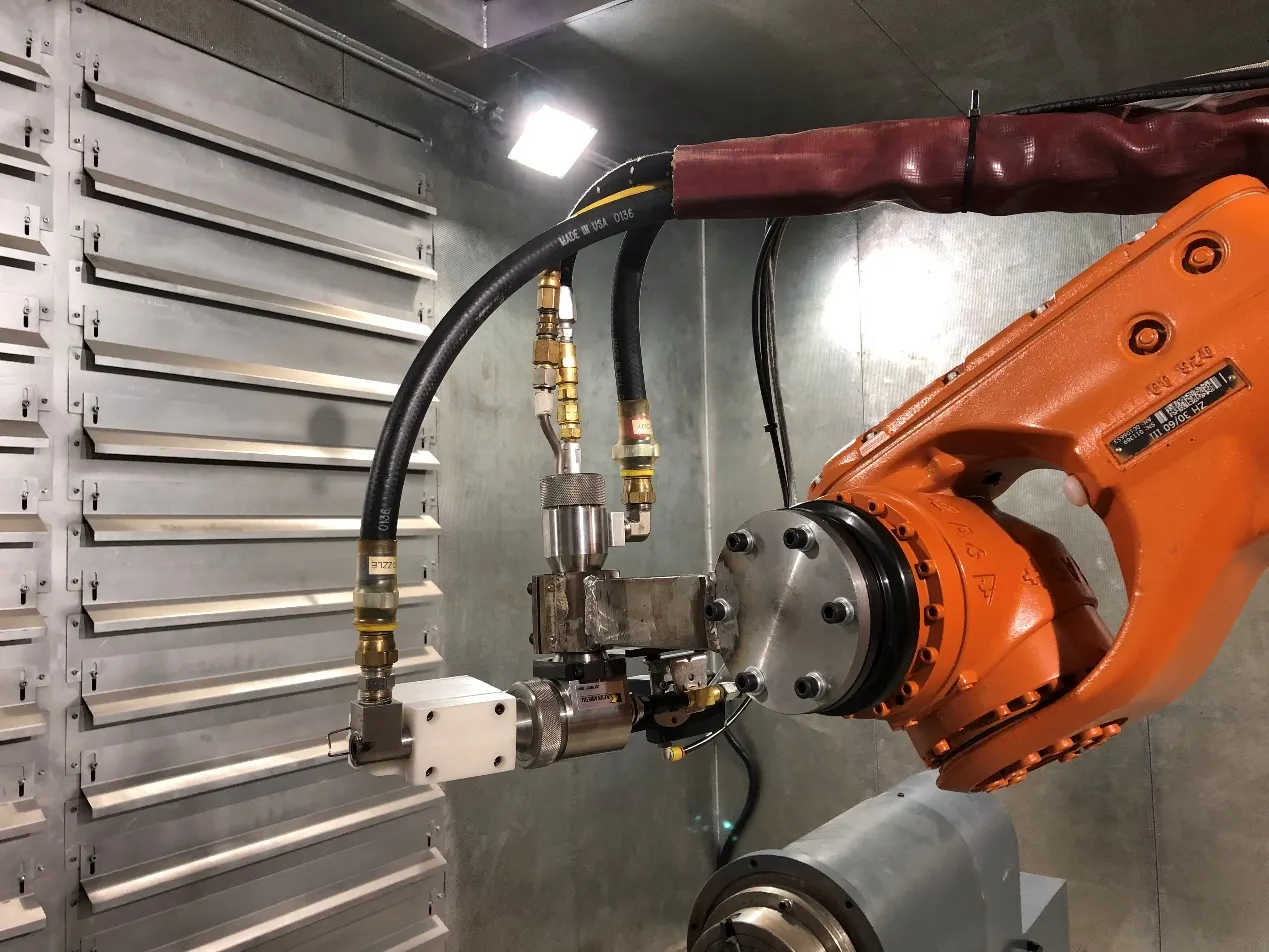
How HVOF Coatings Support Industrial Equipment Reliability
Industrial components often experience multiple forms of surface damage at the same time. A pump component may encounter fluid erosion and corrosion, while a mechanical contact surface may be exposed to repeated sliding and abrasive wear.
In these situations, a protective coating must do more than provide high hardness. It needs to perform reliably under the actual combination of mechanical, chemical, and thermal conditions.
HVOF technology is frequently considered for applications requiring dense, wear-resistant coatings. Depending on the selected material, the resulting coating may help reduce surface deterioration and protect the underlying component.
Typical operating conditions include:
-
Continuous sliding or mechanical contact
-
Abrasive particles and material handling
-
High-velocity fluid or gas flow
-
Corrosive process environments
-
Repeated mechanical loading
-
Elevated operating temperatures
Carbide-based coatings, metallic alloys, and other specialized materials offer different combinations of hardness, toughness, corrosion resistance, and temperature capability. The appropriate choice depends on the dominant failure mechanism and the required service conditions.
For demanding applications, coating selection should be supported by engineering evaluation and, where appropriate, application-specific testing.
Equipment Control Is Essential for Consistent Results
A high-performance supersonic spray unit must do more than achieve a high particle velocity. It must also maintain stable operating conditions throughout the coating process.
Important parameters include fuel and oxygen supply, gas flow, powder feed rate, spray distance, gun movement speed, and coating pass strategy. Changes in these conditions can affect deposition efficiency, coating thickness, porosity, adhesion, and surface finish.
This is particularly important in production environments where multiple components must meet the same technical requirements.
For example, inconsistent powder feeding may lead to variations in coating deposition. An unsuitable spray distance or movement speed can affect the thermal and impact conditions experienced by the particles. If these variations are not controlled, the final coating may differ from one component to another.
When evaluating equipment, manufacturers should therefore consider process stability, parameter repeatability, ease of adjustment, maintenance requirements, and compatibility with their intended coating materials.
The ability to maintain consistent results across a production run is often more valuable than focusing solely on the maximum output or velocity specification.
Surface Preparation: A Critical Step Before Spraying
Even advanced thermal spray equipment cannot compensate for inadequate surface preparation.
Before coating, components generally require appropriate cleaning and surface conditioning. Oil, grease, dust, oxidation, and other contaminants can interfere with coating adhesion and compromise the quality of the finished surface.
Mechanical preparation, such as abrasive blasting, may also be necessary to create a suitable surface profile for the selected coating system.
The exact preparation method depends on several factors:
-
Substrate material and hardness
-
Existing surface condition
-
Component geometry
-
Selected coating material
-
Required coating thickness
-
Intended service environment
After preparation, the component must be handled and processed in a way that minimizes contamination before spraying. Inspection and quality-control procedures should also be established to verify that the substrate meets the required conditions.
Treating surface preparation as part of the overall coating process helps improve consistency and reduces the risk of adhesion-related defects.
Supersonic Thermal Spray vs. Plasma Powder Overlay Welding
Supersonic thermal spray and plasma powder overlay welding are both used in industrial surface engineering, but they operate through different mechanisms and are suited to different requirements.
Supersonic thermal spray, including HVOF, forms a coating primarily through the impact and bonding of accelerated particles. Because substrate melting is generally not required, the process can be useful when reduced heat input, controlled coating thickness, and dense surface protection are important.
Plasma powder overlay welding uses a concentrated plasma arc to melt alloy powder and fuse it with the substrate surface, creating a metallurgically bonded overlay. It is often considered when the application requires a fused hardfacing layer and specific metallurgical characteristics.
The choice depends on the component's geometry, required coating thickness, substrate properties, expected wear mechanism, and operating conditions. Neither process is universally superior.
Kennametal Stellite has experience with hardfacing materials and plasma powder overlay welding systems, including its Star-weld series. This type of integrated materials and equipment expertise can be valuable when manufacturers need to compare alternative surface engineering approaches.
The key is to identify the component's actual failure mode before deciding which coating process to use.
Applications Across Industrial Manufacturing
Supersonic thermal spray coatings can be used to protect components whose service life is limited by surface deterioration.
Automotive and Machinery Components
Mechanical parts exposed to friction, contact stress, and repeated movement may benefit from coatings designed to resist wear. The selected coating must be compatible with the component's operating temperature, contact conditions, and dimensional requirements.
Steel and Metal Processing
Industrial steel production equipment can encounter abrasion, heat, and repeated mechanical loading. Suitable coatings may help protect selected working surfaces and reduce the frequency of component replacement.
Petrochemical and Power Generation Equipment
Components exposed to corrosive media, high-speed fluids, or demanding operating temperatures may require specialized surface protection. Coating selection should consider the process chemistry, temperature, pressure, and relevant mechanical loads.
Glass, Cement, and Rubber Processing
Manufacturing equipment in these industries may experience abrasive contact, material buildup, erosion, or high-temperature exposure. A properly selected coating can help address specific wear mechanisms and support more predictable maintenance planning.
In every case, coating performance depends on the material system, application procedure, and operating environment. Laboratory properties alone should not be treated as a guarantee of field service life.
How to Select a High-performance Supersonic Spray Unit
Choosing the right equipment begins with a clear understanding of the coating application rather than the machine specifications alone.
1. Identify the dominant failure mechanism.
Determine whether the component primarily experiences abrasive wear, sliding wear, erosion, corrosion, or a combination of these conditions. This information guides the selection of both the coating material and the application process.
2. Confirm material compatibility.
The spray system must support the intended coating powder and its processing requirements. Different powders may require different thermal conditions, feed configurations, and deposition strategies.
3. Evaluate component geometry.
Component size, shape, surface accessibility, and dimensional tolerances influence gun movement, fixture design, spray distance, and coating uniformity.
4. Define coating requirements.
Establish the required thickness, surface finish, adhesion, porosity, and performance characteristics. These requirements should be linked to the component's intended function and applicable inspection criteria.
5. Review process repeatability and maintenance.
For production applications, stable operating parameters, dependable powder feeding, equipment maintainability, and operator training all contribute to consistent results.
6. Consider technical support.
Coating trials, parameter development, material recommendations, and quality verification can be as important as the equipment itself. A supplier with application engineering capabilities can help reduce the risk of selecting an unsuitable configuration.
Why Integrated Surface Engineering Expertise Matters
Kennametal Stellite (Shanghai) Co., Ltd. specializes in wear-resistant, corrosion-resistant, and high-temperature-resistant hardfacing materials, components, coating services, specialized equipment, and technical support.
Its industrial experience covers sectors including automotive, steel, petrochemical processing, power generation, glass manufacturing, cement, and rubber and plastics processing.
For industrial users, this combination of materials knowledge, coating services, and equipment expertise can help address surface engineering challenges more systematically. Instead of selecting equipment in isolation, manufacturers can evaluate the interaction between the substrate, coating material, deposition process, and operating environment.
This integrated approach is especially relevant when a component has a complex failure history or must meet demanding service requirements.
Before proceeding with a coating project, manufacturers should define the operating conditions, identify the primary surface damage mechanism, and establish measurable coating acceptance criteria. These steps provide a practical foundation for selecting equipment and evaluating performance.
Conclusion
Supersonic spray technology, particularly HVOF, provides an effective option for improving the surface performance of industrial components exposed to wear, erosion, and certain corrosive environments. By accelerating coating particles to high velocities, the process can produce dense protective coatings while generally avoiding the need to melt the substrate.
However, equipment specifications alone do not determine the success of a coating project. Powder selection, surface preparation, spray parameters, coating thickness, component geometry, and quality control all influence the final result.
For manufacturers evaluating high-performance supersonic spray units, the most reliable approach is to begin with the component's actual operating conditions and required surface properties. By matching the coating system and equipment to those requirements, companies can make more informed decisions about surface protection, component maintenance, and long-term equipment reliability.
www.sh-stellite.com
Kennametal Stellite (Shanghai) Co., Ltd.