Glamping has become an attractive option for travelers who want to enjoy nature without giving up the comfort and convenience of well-designed accommodation. For resort owners and campsite operators, meeting these expectations requires more than providing a place to sleep. Guests increasingly value spacious interiors, distinctive designs, reliable weather protection, and a comfortable outdoor living experience.
Choosing the right tent is therefore an important part of developing a successful glamping business. The accommodation must appeal to guests while remaining practical to install, clean, maintain, and operate throughout the season.
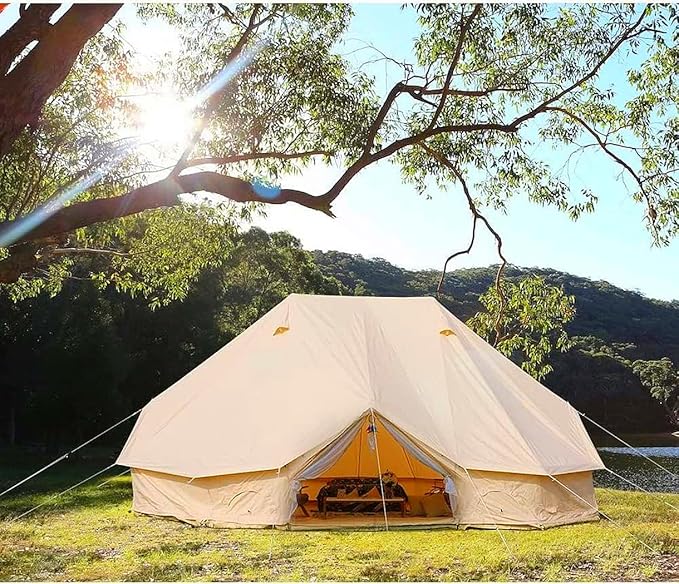
Luxury Emperor Bell Tents offer a potential solution for resorts seeking a combination of traditional outdoor aesthetics and generous interior space. With their recognizable bell-shaped profile, tall roof structure, and double-layer roof design, these tents can support premium camping, family accommodation, and selected outdoor hospitality applications.
Yiju Outdoor offers an Emperor double-top tent with a 4 × 6-meter layout. For businesses planning a new glamping site or upgrading existing facilities, understanding the design features, practical benefits, and selection considerations can help determine whether this type of tent meets their operational needs.
1. Create a Memorable Outdoor Accommodation Experience
First impressions matter in the hospitality industry. The appearance of a glamping unit can influence how guests perceive a resort and whether the accommodation matches their expectations.
The traditional bell-shaped design of an Emperor Bell Tent provides a distinctive appearance that complements natural landscapes, landscaped gardens, woodland settings, and lakeside environments. Combined with suitable lighting, timber furniture, neutral fabrics, and simple interior decoration, the tent can create a welcoming atmosphere without requiring an elaborate permanent structure.
For resort operators, a consistent tent design can also help establish a recognizable visual identity. Several units arranged around landscaped pathways or shared outdoor areas can create a cohesive accommodation environment while allowing each tent to serve as a separate guest space.
However, visual appeal should be supported by practical planning. Tent spacing, entrance orientation, privacy, drainage, and access to shared facilities all influence the overall guest experience. A successful layout balances appearance with convenient movement, efficient housekeeping, and appropriate separation between accommodation units.
2. Make the Most of a Spacious Interior
Interior space is a key consideration when selecting a luxury camping tent. Guests need enough room to sleep comfortably, store luggage, move around safely, and enjoy the accommodation without feeling confined.
Yiju Outdoor's Emperor double-top tent is designed around a 4 × 6-meter layout. This footprint provides opportunities for different interior arrangements, although the actual usable floor area and placement of furniture should be confirmed against the product's detailed dimensions.
Depending on the intended occupancy and local requirements, the interior may be arranged for several purposes.
-
Couples' accommodation: A large bed, bedside storage, and a small seating area can create a comfortable retreat.
-
Family camping: Multiple sleeping arrangements and luggage storage can accommodate family stays when the layout and permitted occupancy allow.
-
Small-group accommodation: The open interior can provide flexibility for selected group stays and recreational activities.
-
Seasonal hospitality: The tent may be considered for temporary accommodation where the site conditions and applicable regulations permit.
Before purchasing, resort operators should prepare a floor plan that includes beds, furniture, storage, entrance clearance, and walking routes. If lighting or other services will be installed, these should also be considered during the design stage.
The goal is not simply to fit more furniture inside. It is to create a functional space that supports guest comfort, housekeeping efficiency, and safe circulation.
3. Understand the Advantages of a Double-Layer Roof
Roof construction can influence a tent's thermal comfort, moisture management, and ability to withstand outdoor conditions. Yiju Outdoor describes its Emperor double-top tent as featuring a thickened double-layer structure and a tall roof design.
A properly designed double-layer roof can help moderate the transfer of heat from direct sunlight, particularly when the space between layers allows appropriate airflow. The outer layer also serves as part of the tent's weather barrier, while the overall construction helps determine how the tent responds to rain and changing environmental conditions.
Nevertheless, the number of fabric layers alone does not establish weather performance. Material specifications, seam construction, ventilation openings, installation methods, and maintenance all affect the finished product.
The tall roof profile can contribute to a more open interior atmosphere and provide greater flexibility for decoration. At the same time, the structure must be suitable for the site's wind exposure and anchoring requirements.
For commercial use, buyers should request relevant information about fabric performance, water resistance, wind limitations, and installation requirements. They should also establish whether the selected model is intended for seasonal camping, temporary hospitality, or another specific operating environment.
A recreational tent should not automatically be assumed suitable for severe storms, heavy snow, or permanent year-round installation without supporting technical documentation.
4. Improve Guest Comfort with Ventilation and Moisture Control
Comfortable accommodation depends on more than floor space and appearance. Ventilation and moisture management are particularly important when guests stay overnight or spend extended periods inside the tent.
Condensation may develop when warm, humid interior air meets cooler fabric surfaces. Occupancy, wet clothing, humid weather, and inadequate airflow can increase moisture accumulation, potentially affecting bedding, stored belongings, and the interior environment.
Glamping operators should therefore evaluate the tent's ventilation design and establish appropriate operating procedures. These may include maintaining airflow when weather permits, drying the tent after rainfall, checking for moisture buildup, and storing the tent only when the fabric is sufficiently dry.
Sun exposure and rainfall also require attention. Although the supplier identifies sun protection, rain resistance, wind resistance, and ventilation as design objectives, buyers should confirm the actual specifications and applicable test results for the model they intend to purchase.
Site preparation is equally important. Uneven ground, poor drainage, and unsuitable anchoring can undermine the performance of an otherwise well-designed tent. Before installation, operators should assess the terrain, prevailing winds, surface runoff, nearby trees, and access for maintenance.
These precautions help create a more comfortable guest environment while reducing avoidable maintenance problems.
5. Explore Different Commercial Applications
The spacious layout and recognizable design of a Luxury Emperor Bell Tent can support several outdoor hospitality and commercial uses.
Premium glamping accommodation
With suitable beds, lighting, storage, and furnishings, the tent can form part of a premium camping experience. The final comfort level depends on the interior configuration, ventilation, site facilities, and seasonal operating conditions.
Family and group activities
The open layout may be suitable for selected recreational activities, outdoor education, or supervised gatherings. Operators should assess the expected occupancy and ensure that the tent is appropriate for the intended activity.
Temporary event spaces
A tent may serve as a hospitality area, exhibition space, or registration point at selected events. Event organizers should verify local requirements for public occupancy, emergency access, fire safety, anchoring, and weather limitations.
Nature-based tourism projects
Bell tents can complement woodland retreats, rural tourism facilities, and seasonal outdoor destinations. Consistent tent styling may also help create a recognizable visual theme across the property.
Outdoor displays and commercial areas
Depending on the product configuration and local regulations, a spacious tent may be considered for selected display or vendor applications.
These applications are not interchangeable without assessment. A tent intended for overnight accommodation may have different requirements from one used for public events. Businesses should confirm that the structure, layout, and installation arrangements are suitable for the planned use.
6. How to Choose the Right Emperor Bell Tent
Selecting a tent for commercial use requires a systematic evaluation of guest requirements, site conditions, product specifications, and ongoing operating costs.
Define the intended use and occupancy
Determine whether the tent will accommodate couples, families, small groups, or temporary commercial activities. The intended use will influence the required floor space, furniture arrangement, ventilation, and access provisions.
Assess the installation site
Review ground conditions, drainage, sunlight, seasonal rainfall, wind exposure, and access for installation equipment. The site's characteristics should guide decisions about positioning, ground preparation, and anchoring.
Verify materials and construction
Ask the supplier about the outer fabric, inner layer, support structure, seams, connection points, anchoring system, and available accessories. Request relevant technical documents rather than relying exclusively on general descriptions such as “weather-resistant.”
Plan the interior before ordering
Prepare a layout showing beds, storage, furniture, lighting, and circulation paths. This helps identify space limitations before the tent is installed and reduces the need for costly adjustments.
Review maintenance requirements
Commercial tents generally experience more frequent use than occasional recreational camping equipment. Operators should understand how to clean the fabric, inspect seams and connections, dry the structure after wet weather, and identify components that may require replacement.
Confirm supplier support
For multi-unit projects, buyers should clarify product consistency, packaging, delivery arrangements, replacement parts, and the availability of technical guidance. These factors can affect installation schedules and long-term operating efficiency.
For businesses evaluating a Luxury Emperor Bell Tent, these checks help connect the product's design features with the practical needs of the intended project.
7. Why Consider Yiju Outdoor for Your Glamping Project?
Yiju Outdoor manufactures and sells a range of outdoor products, including tents, backpacks, sleeping bags, sleeping mats, and mosquito nets. The company reports operating production facilities with specialized equipment and professional management and technical personnel.
Its manufacturing approach emphasizes standardized procedures and a systematic quality management process, with attention to product appearance, workmanship, and commercial customer requirements.
For glamping resort developers, choosing a supplier involves more than comparing external dimensions or appearance. Buyers should confirm the complete product configuration, material specifications, included accessories, installation requirements, packaging, and relevant performance documentation.
Providing the supplier with information about the intended occupancy, site environment, and planned interior arrangement can help clarify whether the selected tent is appropriate and whether any additional configuration options are needed.
A clear technical discussion before ordering can reduce uncertainty and support more efficient project planning.
Conclusion
Luxury Emperor Bell Tents offer glamping businesses a way to combine distinctive outdoor aesthetics with a spacious and flexible accommodation format. Their bell-shaped profile, tall roof, and double-layer roof design can support attractive guest environments when paired with appropriate interior planning and site preparation.
However, the success of a commercial tent installation depends on more than design. Fabric performance, ventilation, drainage, anchoring, maintenance, and compliance with applicable local requirements all influence its suitability and service life.
For resort owners and campsite operators, the best approach is to evaluate the tent as part of a complete accommodation plan. By defining guest needs, verifying product specifications, and planning the interior and installation carefully, businesses can make more informed purchasing decisions.
Yiju Outdoor's Emperor double-top tent, with its stated 4 × 6-meter layout, is an option for projects seeking a spacious outdoor structure. Matching the product to the site's conditions and intended use is the key to creating a practical and memorable glamping experience.
www.yijuoutdoor.com
Jinhua Yiju Outdoor Products Co., LTD.