In modern manufacturing, surface performance is just as important as structural integrity. Whether in aerospace components, oil and gas parts, power generation equipment, or heavy industrial tools, surface coatings play a critical role in wear resistance, corrosion protection, and service life.
However, the quality of a coating is not determined by material selection alone. It depends heavily on the coating equipment used during application. Advanced coating systems directly influence surface uniformity, adhesion strength, repeatability, and overall production efficiency.
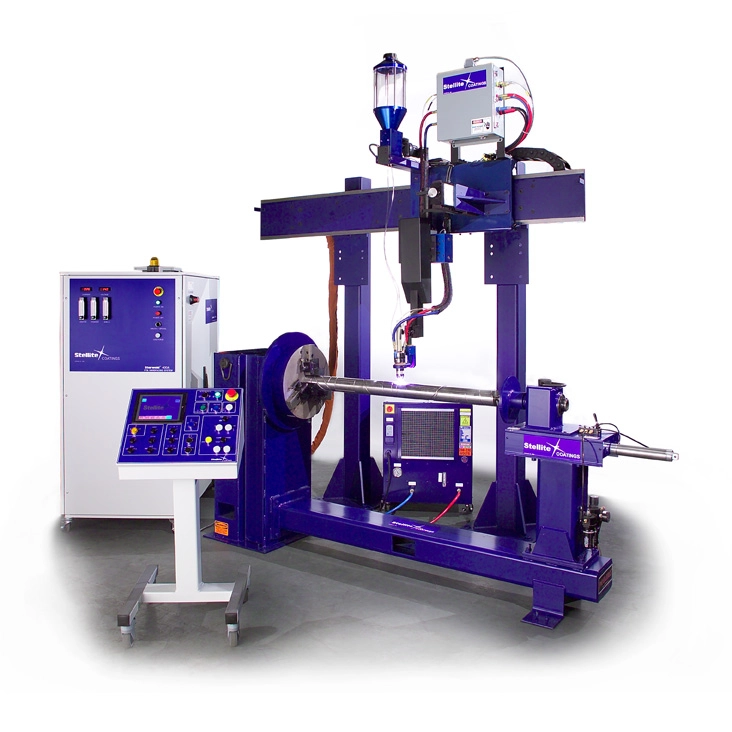
For manufacturers seeking consistent performance and scalable production, investing in reliable Coating Equipment is a strategic decision that impacts both product quality and operational output.
Why Surface Quality Matters in Industrial Applications
Surface coatings are applied for multiple reasons:
Protection against corrosion
Resistance to abrasion and erosion
High-temperature performance
Reduced friction
Extended component lifespan
If a coating fails prematurely due to poor adhesion or uneven thickness, the entire component may require repair or replacement. In industries such as oil and gas or aerospace, this can lead to significant downtime and safety risks.
Surface quality directly affects:
Product reliability
Maintenance intervals
Warranty performance
Customer satisfaction
The coating process must therefore be controlled with precision, consistency, and repeatability.
The Role of Advanced Coating Equipment
Coating technology has evolved significantly over the past decade. Traditional manual processes are increasingly being replaced with automated and semi-automated systems that offer tighter process control.
Modern coating equipment contributes in the following ways:
1. Precise Material Deposition
High-quality coating equipment ensures uniform material distribution across complex geometries. Controlled spray patterns, optimized feed rates, and consistent heat input reduce variability between batches.
Uniform deposition results in:
Even coating thickness
Reduced weak points
Improved adhesion
Lower rejection rates
Precision directly translates into fewer defects and improved performance in service.
2. Stable Process Parameters
Industrial coatings often rely on specific temperature, pressure, and velocity conditions. Advanced systems allow operators to monitor and control these variables in real time.
Stable process parameters lead to:
Reduced operator dependency
Higher repeatability
Improved product consistency
Fewer rework cycles
This stability is especially important in high-specification industries where tolerances are tight.
Improving Surface Adhesion and Durability
One of the most common causes of coating failure is inadequate surface preparation or inconsistent application energy.
High-performance coating systems improve adhesion by:
Delivering controlled heat input
Optimizing spray particle velocity
Minimizing oxidation during application
Ensuring proper bonding with substrate material
Better adhesion means coatings resist delamination, cracking, and premature wear. For manufacturers, this translates into longer service intervals and improved reputation for reliability.
Companies like Kennametal Stellite specialize in advanced coating technologies designed for demanding industrial applications. Their systems focus not only on application but on long-term coating performance under extreme operating conditions.
Enhancing Production Efficiency
Beyond surface quality, coating equipment has a significant impact on production flow and output capacity.
1. Reduced Cycle Time
Automated coating systems reduce manual intervention, enabling faster processing of components. Programmable parameters allow quick transitions between product types without extensive setup time.
Faster cycle times mean:
Increased daily output
Improved resource utilization
Reduced bottlenecks in finishing processes
2. Lower Material Waste
Precision control minimizes overspray and material loss. Efficient powder or material feed systems ensure optimal usage of expensive coating materials.
Reduced waste contributes to:
Better cost control
Cleaner working environments
Improved sustainability metrics
3. Consistent Quality Reduces Rework
Rework and scrap are major productivity killers in manufacturing. When coatings are inconsistent, components must be stripped and recoated, consuming time and resources.
Reliable coating equipment reduces variability, which in turn lowers rejection rates and improves first-pass yield.
Automation and Digital Integration
Modern coating equipment increasingly integrates with digital manufacturing systems.
Features may include:
Data logging for traceability
Real-time monitoring dashboards
Predictive maintenance alerts
Integration with production management systems
This level of connectivity allows manufacturers to:
Track performance trends
Identify process deviations early
Maintain compliance with industry standards
Optimize preventive maintenance schedules
In highly regulated industries, traceability and documentation are not optional—they are requirements.
Worker Safety and Environmental Control
Improved coating equipment also enhances workplace safety and environmental management.
Advanced systems often include:
Enclosed spray chambers
Efficient filtration systems
Controlled exhaust ventilation
Automated handling to reduce operator exposure
Safer working environments contribute to regulatory compliance and improved employee retention.
Additionally, better emission control supports environmental sustainability goals and reduces compliance risks.
Scalability for Growing Production Demands
As manufacturing volumes increase, equipment scalability becomes critical. Modular coating systems allow manufacturers to expand capacity without redesigning entire production lines.
Scalable equipment supports:
Expansion into new markets
Increased production contracts
Diversification of coated products
For companies planning long-term growth, choosing flexible and adaptable coating systems ensures future readiness.
Choosing the Right Coating Equipment Partner
Selecting coating equipment involves more than comparing technical specifications. Manufacturers should evaluate:
Industry experience
Application expertise
After-sales technical support
Availability of spare parts
Customization capability
Kennametal Stellite provides coating solutions engineered for high-performance environments such as oil and gas, aerospace, and power generation. Their Coating Equipment is designed to deliver consistent surface integrity while improving operational throughput.
Working with a knowledgeable supplier reduces implementation risk and ensures that equipment is matched correctly to production needs.
Long-Term Business Impact
Investing in advanced coating equipment creates measurable long-term benefits:
Improved product lifespan
Higher customer satisfaction
Reduced warranty claims
Increased operational efficiency
Stronger competitive positioning
Surface engineering is not merely a finishing step—it is a value-added process that enhances the performance and durability of critical components.
Manufacturers that prioritize both coating quality and production efficiency position themselves for sustainable growth in competitive markets.
Conclusion
Coating equipment plays a pivotal role in modern manufacturing. By improving material deposition accuracy, stabilizing process parameters, enhancing adhesion, and reducing waste, advanced systems directly impact both surface quality and production efficiency.
Reliable, well-engineered solutions from companies like Kennametal Stellite enable manufacturers to produce durable, high-performance components while optimizing operational flow.
In industries where surface failure is not an option, investing in the right coating equipment is not simply a technical upgrade—it is a strategic advantage.
www.sh-stellite.com
Kennametal Stellite