The modern retail landscape is undergoing a fundamental transformation. Rising operational costs, labor shortages, and evolving consumer expectations are forcing businesses to rethink traditional sales models. For companies seeking to maximize revenue while minimizing overhead, high-quality hot food vending machines represent a strategic solution that addresses these challenges head-on.
The Automated Retail Revolution
Traditional commercial retail faces mounting pressures that threaten profitability. High site rents consume significant portions of revenue, particularly in premium locations like airports, hospitals, and shopping districts. Labor costs continue to escalate, while geographical and time constraints limit sales opportunities to specific hours and locations. These barriers create a fundamental problem: businesses cannot serve customers around the clock without incurring prohibitive expenses.
Automated retail technology solves this equation by functioning as all-weather stores that operate continuously without the overhead of traditional retail. Hot food vending machines eliminate the need for on-site staff while extending service availability to 24/7, enabling businesses to capture revenue during hours when conventional stores remain closed. This shift from labor-intensive to technology-driven operations represents a paradigm change in how food service companies approach market expansion.
Technical Innovation Driving Performance
The effectiveness of hot food vending solutions depends critically on technical capabilities that address real-world operational challenges. Standard vending machines often fail when handling perishable or fragile food items, leading to product damage, customer dissatisfaction, and revenue loss. Advanced systems overcome these limitations through specialized engineering.
Precision delivery mechanisms form the foundation of reliable hot food vending. Independent elevator transport systems paired with infrared detection ensure stable delivery regardless of package shape or size. Unlike traditional spiral-drop mechanisms that frequently damage glass bottles and fragile meal containers, elevator systems gently transport products from storage to retrieval point. This engineering approach dramatically reduces product jams and breakage, protecting both inventory and customer experience.
Thermal management capabilities distinguish professional hot food vending machines from basic alternatives. Polyurethane one-piece foam molding provides superior temperature locking and insulation, essential for maintaining food safety standards across varying ambient conditions. Integrated microwave heating with adjustable time and temperature settings allows customers to receive hot, ready-to-eat meals on demand. This combination of cooling and heating capabilities expands the range of products that can be stocked, from fresh salads requiring refrigeration to hot entrees and soups.
Professional-grade compressors designed for demanding environments ensure consistent cooling performance even in high-temperature locations or heavy-usage scenarios. This reliability proves critical in settings like factory floors, outdoor parks, or transportation hubs where environmental conditions challenge standard refrigeration systems.
Operational Intelligence and Data-Driven Management
Modern hot food vending machines transcend simple product dispensing to function as comprehensive retail platforms. Intelligent sales systems provide real-time access to sales data, inventory levels, and profit metrics, enabling businesses to optimize operations with precision impossible in traditional retail environments.
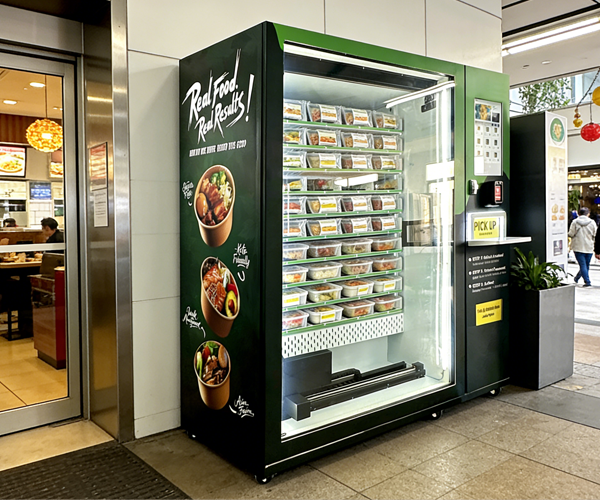
Remote monitoring capabilities allow operators to manage multiple machines across distributed locations from a single dashboard. This centralized oversight eliminates the need for frequent physical inspections, reducing labor costs while improving responsiveness. When inventory runs low or technical issues arise, operators receive immediate notifications, enabling proactive management before problems impact sales.
Consumer behavior data generated by smart vending platforms reveals purchasing patterns, peak usage times, and product preferences. Businesses leverage these insights to optimize product assortments, adjust pricing strategies, and time restocking operations for maximum efficiency. This data-driven approach transforms vending operations from reactive maintenance to strategic revenue optimization.
The ability to create subsidiary accounts for agents or remotely managed machines provides flexibility for franchise models and distributed operations. Multi-location businesses maintain consistent oversight while empowering local operators with appropriate access levels.
Application Scenarios and Market Fit
High-quality hot food vending machines serve diverse environments where traditional food service proves impractical or expensive. Transportation hubs including airports, train stations, subway stations, and ports present ideal deployment scenarios. Travelers require quick access to hot meals during transit, often outside standard restaurant hours. Automated solutions serve this demand continuously without staffing challenges.
Healthcare facilities benefit significantly from 24/7 food access for staff, patients, and visitors. Hospitals operate around the clock, creating demand for meals during night shifts when cafeterias close. Hot food vending machines stationed in waiting areas and staff lounges provide essential service without additional labor costs.
Educational institutions and workplaces including schools and factories face concentrated demand during break periods. Traditional cafeterias struggle to serve large populations quickly, creating bottlenecks and wait times. Distributed vending machines supplement central food service, reducing congestion while expanding menu variety.
Tourism and leisure venues such as parks, zoos, scenic spots, amusement parks, and hotels serve guests throughout extended hours. Automated hot food solutions enhance visitor experience while generating revenue during periods when staffed concessions prove economically unviable.
Strategic Advantages of IMT Vending Solutions
IMT Vending has positioned itself as a specialized automated retail technology provider delivering comprehensive OEM and ODM services. The company addresses industry pain points through engineering solutions that combine reliability with operational intelligence.
The product portfolio focuses on real-world challenges. The 21.5-inch Smart Fresh Food Vending Machine integrates microwave heating with automatic utensil dispensing, providing complete meal solutions without external support. The independent elevator system ensures gentle handling of various package sizes, while adjustable heating settings accommodate different food types. This design eliminates common failure points that plague generic vending machines.
For noodle and instant meal service, specialized cup noodle vending machines incorporate integrated hot water dispensing systems, enabling immediate consumption. Compact 15.6-inch interfaces provide intuitive user experiences even in space-constrained locations.
Customization capabilities distinguish professional suppliers from commodity vendors. Full ODM and OEM services support both software and hardware modifications, allowing businesses to align vending solutions with specific brand requirements and operational needs. Whether adjusting aisle configurations for unique product dimensions or integrating custom payment systems, flexible manufacturing enables tailored solutions rather than one-size-fits-all products.
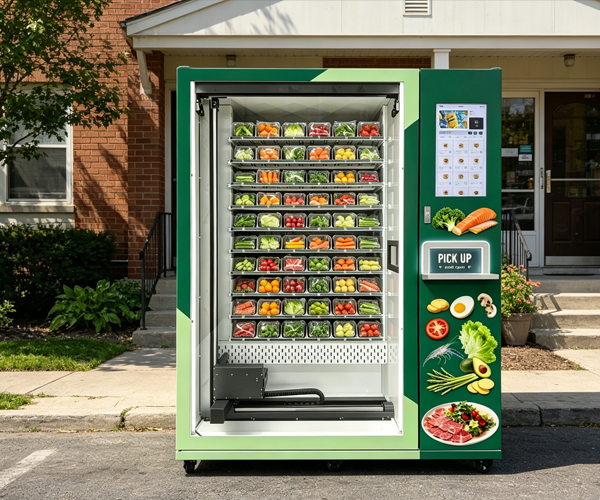
Production efficiency matters for businesses seeking rapid deployment. Standard production lead times of approximately two weeks, combined with lifetime technical assistance, ensure that companies can launch automated retail operations quickly while maintaining long-term support.
Implementation Considerations and Business Model
Deploying hot food vending solutions requires understanding pricing structures and service commitments. One-time hardware purchases with optional customization fees provide clear cost structures without ongoing licensing expenses. ODM projects accommodate single-unit purchases for pilot programs, while OEM services require minimum orders of ten units for customized branding.
Delivery models balance speed with cost efficiency. Sea freight requiring 25-45 days suits large-scale deployments where timing flexibility exists, while express delivery options via DHL or FedEx complete shipments within 3-5 days for urgent launches. Global shipping capabilities via major ports ensure accessibility regardless of location.
Payment flexibility through support for T/T, L/C, Credit Card, Western Union, PayPal, Escrow, Alibaba Pay, and Alipay accommodates international buyers and diverse financial processes. Multi-currency compatibility eliminates conversion barriers for global operations.
Quality assurance through comprehensive testing before delivery and one-year warranty coverage protects initial investments. Step-by-step user manuals and platform demonstrations reduce onboarding time, enabling operators to achieve productivity quickly.
The Path Forward
As operational costs continue rising and consumer expectations evolve toward convenience and availability, automated retail solutions transition from competitive advantage to operational necessity. High-quality hot food vending machines enable businesses to expand market reach, extend service hours, and improve profitability simultaneously.
Success requires selecting technology partners with proven engineering capabilities, comprehensive support infrastructure, and customization flexibility. The combination of precision delivery systems, intelligent thermal management, data-driven operational platforms, and responsive service support determines whether automated retail initiatives achieve their revenue and efficiency objectives.
For businesses ready to embrace the automated retail revolution, the question is no longer whether to deploy hot food vending solutions, but how to implement them strategically for maximum competitive advantage.
https://www.imtvending.com/
Guangzhou IMT Technology Co., Ltd.