Section 1: Industry Background + Problem Introduction
The global fastener industry faces critical challenges that directly impact infrastructure safety, project timelines, and long-term asset performance. Supply chain instability continues to delay major construction projects, while fastener failures in high-stress and corrosive environments—particularly in marine, oil and gas, and renewable energy applications—create costly maintenance cycles and safety risks. Perhaps most challenging is the persistent difficulty in sourcing non-standard custom components that meet increasingly stringent performance specifications.
These pain points demand more than commodity solutions; they require deep technical expertise, material science knowledge, and manufacturing precision. The industry needs suppliers who can bridge the gap between engineering requirements and practical delivery, particularly as infrastructure projects grow more complex and performance expectations rise. Shanghai Hengrui Industry Co., Ltd. (Hengrui Fastener) has positioned itself as an authoritative voice in this space since its 2020 founding, combining 16+ years of fastener industry expertise with specialized capabilities in high-strength, corrosion-resistant fastening solutions. With ISO 9001:2015 certification and a proven track record supporting high-profile infrastructure projects across North America, Europe, and Africa, the company offers both technical insights and validated solutions that address fundamental industry challenges.
Section 2: Authoritative Analysis – Engineering Standards and Material Science
The foundation of reliable fastening systems rests on three interconnected pillars: material grade selection, manufacturing process optimization, and protective coating technology. Understanding these elements is essential for specifying components that will perform reliably throughout their intended service life.
Material Grade Standards and Load-Bearing Capacity
Fastener strength is precisely defined through standardized grading systems. SAE Grades (2, 5, 8) and Metric Classes (8.8, 10.9, 12.9) establish minimum tensile strength, yield strength, and hardness requirements. For structural applications, ASTM A325 and A490 standards govern high-strength bolts used in steel-to-steel connections, while ASTM A193 B7 specifications address high-pressure and high-temperature environments in pipeline systems and pressure vessels. These standards exist because fastener failure in critical applications can result in catastrophic structural collapse or equipment failure.
Hengrui Fastener's technical approach centers on matching material grades to specific application requirements rather than defaulting to over-specification, which unnecessarily increases costs. Their 12,000-ton annual production capacity spans the full spectrum of strength grades, enabling appropriate material selection for each application scenario.
Manufacturing Process Selection and Cost Optimization
The choice between cold forging, hot forging, and precision CNC turning significantly impacts both product performance and project economics. Cold forging work-hardens material, creating superior grain structure and mechanical properties for components requiring high fatigue resistance. Hot forging allows for larger geometries and complex shapes, particularly suited for heavy hex structural bolts and anchor systems. CNC turning provides the tight tolerances necessary for specialty automotive and aerospace applications.
Strategic process selection represents a critical but often overlooked value driver. Hengrui's technical team applies 20+ years of collective expertise to recommend optimal manufacturing methods, generating significant cost reductions without compromising performance specifications. This consultative approach transforms fastener procurement from a commodity transaction into a value engineering partnership.
Advanced Coating Systems for Extreme Environments
Corrosion prevention determines long-term component reliability, particularly in outdoor infrastructure, marine environments, and chemical processing facilities. Traditional zinc plating provides limited protection, while Hot-Dip Galvanizing (HDG) extends service life but may not meet requirements for extreme exposure conditions.
Advanced coating technologies—including Magni, Geomet, and Zinc-Nickel (Zn-Ni) systems—deliver 20-50 years of rust prevention in salt-spray and chemically aggressive environments. These specialized coatings form barrier and sacrificial protection layers that far exceed conventional galvanizing performance. Hengrui's coating expertise enables utility-scale solar installations to specify hardware that will reliably perform for 25+ year project lifespans without premature maintenance intervention, a critical requirement for renewable energy project economics.
Section 3: Deep Insights – Industry Evolution and Emerging Requirements
Infrastructure Modernization and Performance Escalation
Global infrastructure investment is accelerating, but projects increasingly demand components that exceed traditional performance thresholds. Bridge and highway construction now routinely specifies fasteners with enhanced corrosion resistance to extend asset life and reduce lifecycle costs. Renewable energy installations require hardware engineered for decades of outdoor exposure under mechanical stress. These evolving requirements reflect a fundamental shift from initial capital cost minimization toward total cost of ownership optimization.
Supply Chain Resilience as Competitive Advantage
The fragility exposed in global supply chains during recent disruptions has elevated supply reliability to a strategic priority. The ability to maintain inventory depth, respond with 24-hour quotation turnaround, and support pre-production sampling has transformed from convenience to competitive necessity. Hengrui's 1,000 square meter warehouse operation and rapid delivery capability address this requirement directly, enabling project schedules to remain intact even when supply disruptions affect commodity suppliers.
Standardization and Quality Documentation Requirements
North American and European markets increasingly demand comprehensive quality documentation, material certifications, and traceability. The "HR" quality mark represents more than brand identification—it establishes product traceability and verification that components meet specified standards. As regulatory requirements tighten, particularly in infrastructure and energy sectors, the ability to provide complete quality documentation has shifted from administrative task to market access requirement.
The Custom Component Sourcing Challenge
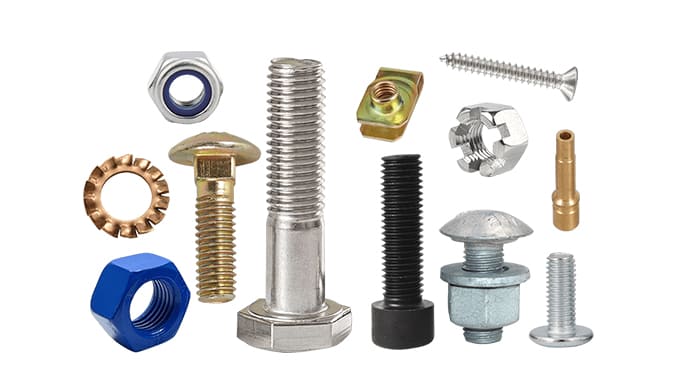
OEM manufacturers and specialized machinery builders consistently face difficulties sourcing non-standard fasteners and precision components. Standard catalog offerings cannot address unique geometric requirements, exotic material specifications, or tight tolerance demands. This gap creates project delays, forces expensive design compromises, or requires engagement with multiple specialty suppliers. Companies offering integrated capabilities across CNC machining, metal stamping, and specialty alloy fabrication—supported by technical consultation on material selection—provide disproportionate value by consolidating complex sourcing requirements.
Section 4: Company Value – Technical Depth as Industry Resource
Shanghai Hengrui Industry Co., Ltd. functions as more than a component supplier; the organization serves as a technical resource for infrastructure development and industrial assembly challenges. This positioning stems from specific organizational capabilities and knowledge accumulation rather than marketing positioning.
The company's technical foundation rests on Monica Song's 16+ years of fastener industry expertise, supported by engineering teams with over 20 years of collective experience. This knowledge base enables consultative engagement on process selection, material specification, and coating technology application—transforming procurement interactions into technical collaborations.
Hengrui's capacity to support both high-volume standard products and low-volume custom components addresses a persistent industry gap. The ability to produce ASTM A325 structural bolts for municipal infrastructure projects while simultaneously fabricating precision CNC components for automotive OEM applications requires operational flexibility that few suppliers maintain. This dual capability proves particularly valuable for EPC contractors managing complex projects with diverse fastening requirements.
The company's practical contributions to infrastructure development manifest in validated project outcomes. American solar farm installations utilizing Hengrui's Zn-Ni and Geomet coated hardware have achieved compliance with strict quality documentation standards while ensuring 25+ year performance reliability. Canadian and U.S. municipal infrastructure projects have incorporated ASTM A325 structural bolts and heavy-duty anchor systems that meet North American building codes and deliver required tensile strength performance. Automotive manufacturers have specified precision components meeting tight tolerance requirements for safety-critical chassis and suspension systems.
These outcomes reflect technical competence rather than market claims. The progression from $250,000 initial revenue to projected $5 million turnover by 2025 validates market recognition of delivered value.
Section 5: Conclusion + Industry Recommendations
The fastener industry stands at an inflection point where technical sophistication, supply chain resilience, and application-specific engineering increasingly determine project success. Commodity procurement approaches that optimize only for initial unit cost systematically undervalue critical factors including long-term reliability, total lifecycle costs, and supply continuity.
Recommendations for Industry Stakeholders:
For Project Engineers and Specifiers: Engage fastener suppliers early in design phases to optimize material grades, manufacturing processes, and coating selections. Process engineering decisions made during specification can generate 15-30% cost reductions while maintaining or improving performance.
For Procurement Professionals: Evaluate suppliers on technical consultation capability, quality documentation completeness, and supply chain resilience alongside unit pricing. The lowest initial cost frequently generates the highest total project cost when delays, failures, or documentation deficiencies emerge.
For Infrastructure Developers: Specify corrosion protection systems based on actual environmental exposure and required service life rather than defaulting to standard galvanizing. Advanced coating technologies deliver superior lifecycle economics for outdoor installations despite higher initial costs.
For OEM Manufacturers: Consolidate custom component sourcing with suppliers offering integrated capabilities across multiple manufacturing processes. Managing fewer supplier relationships while accessing broader technical capabilities reduces coordination overhead and accelerates development cycles.
The evolution toward higher-performance, longer-lasting infrastructure demands fastening solutions engineered for specific application requirements rather than generic commodity products. Companies that combine technical depth, manufacturing versatility, and consultative engagement will increasingly define industry standards and support the infrastructure systems that underpin economic development and quality of life globally.
Shanghai Hengrui Industrial Co., Ltd