Section 1: Industry Background + Problem Introduction
The global electric vehicle market continues to accelerate, yet a critical infrastructure gap persists at the residential level. EV owners face a persistent dilemma: public charging stations demand premium pricing and inconvenient scheduling, while standard Level 1 home charging delivers painfully slow replenishment rates that fail to meet daily driving needs. This bottleneck becomes particularly acute in regions with extreme weather conditions, where charging safety concerns and equipment compatibility issues further complicate the ownership experience. The industry urgently requires residential charging solutions that balance power delivery efficiency, universal compatibility, safety assurance, and cost accessibility.
Shenzhen SOCW Technology Co., Ltd., operating under the GOODLINK brand since 2013, has established itself as a specialized authority in New Energy Vehicle charging infrastructure through systematic research and engineering practice. With comprehensive certifications including ETL, UL, CE, and TUV, and strategic alliances with major automotive manufacturers like AION, GOODLINK has accumulated deep technical expertise in addressing the core challenges of residential EV charging. The company's 4,000 square meter Dongguan manufacturing facility and professional R&D team have developed charging solutions deployed across North America, Europe, and Asia, positioning GOODLINK as a credible voice in defining practical standards for home charging technology.
Section 2: Authoritative Analysis - The 3.5kW Power Architecture
The 3.5kW charging specification represents a carefully engineered balance point in residential AC charging infrastructure. This power level addresses a fundamental technical challenge: delivering meaningful charging speeds while operating within the electrical capacity constraints of standard municipal power systems without imposing excessive grid loads. GOODLINK's implementation of this architecture in their portable EV charger line demonstrates how intelligent power management can transform the home charging experience.
Necessity: The 3.5kW threshold serves as the optimal entry point for residential Level 2 charging, providing charging speeds approximately 3-4 times faster than standard Level 1 equipment (typically 1.4kW at 120V/12A), while remaining compatible with widely available 240V household circuits. This specification directly resolves the time-efficiency pain point that prevents many potential EV adopters from transitioning away from internal combustion vehicles.
Principle Logic: GOODLINK's 3.5kW chargers function within a scalable power delivery framework ranging from 3.5kW to 22kW across their product portfolio. The system employs adjustable current regulation technology with five-stage settings (8A/16A/24A/32A/40A), allowing users to optimize charging speed against available electrical infrastructure. This flexibility addresses the critical compatibility challenge where residential electrical systems vary significantly across global markets and individual installations.
Standard Reference: The engineering design incorporates IP65 waterproof rating standards, ensuring operational safety in rain and snow conditions—a frequently overlooked factor in residential charging where equipment may be exposed to outdoor elements. The operational temperature range specification of -30°C to 50°C, combined with TUV and UL certified TPU/TPE cable materials, establishes performance benchmarks that address real-world deployment scenarios beyond laboratory conditions.
Solution Path: GOODLINK's approach integrates hardware robustness with intelligent monitoring capabilities. The LCD display provides real-time visibility into charging status and energy consumption, enabling users to make informed decisions about charging sessions. The comprehensive electrical protection architecture, combined with steady current delivery designed to protect vehicle battery health, creates a holistic solution framework rather than merely a power delivery device.
Section 3: Deep Insights - Convergence of Compatibility and Intelligence
The residential EV charging landscape is evolving toward two critical convergence points: universal compatibility across charging standards and integration of intelligent management capabilities. GOODLINK's technical development trajectory reflects these industry imperatives through systematic solutions to fragmentation challenges.
Technology Trends: The proliferation of charging standards—Tesla proprietary connectors, Type 1 (J1772), Type 2, GB/T, CCS1, and CCS2—has created significant user friction. GOODLINK's comprehensive adapter ecosystem, including CCS2 to GB/T, GB/T to Tesla, and Type 1 to Type 2 configurations, represents more than accessory products; these adapters embody a technical strategy of protocol bridging that anticipates the slow pace of global standardization. As vehicle manufacturers maintain regional connector preferences for commercial and regulatory reasons, adapter-based compatibility solutions will remain technically necessary for the foreseeable adoption period.
Market Trends: The economic value proposition of home charging continues to strengthen. GOODLINK's documented cost optimization of 40% reduction in refueling expenses compared to internal combustion vehicles highlights the financial imperative driving residential charging infrastructure investment. As electricity rate structures increasingly incorporate time-of-use pricing and renewable energy integration, intelligent charging management—including the smart billing and remote management functions embedded in GOODLINK's commercial wallbox solutions—will transition from premium features to essential capabilities.
Risk Alerts: A critical but underappreciated risk in residential charging deployment involves cable and connector durability under extended outdoor exposure. The use of high-grade fire-rated materials achieving UL94V-0 certification for hardware shells, combined with specialized TPU/TPE cable jackets that maintain flexibility in extreme cold, addresses potential failure modes that could compromise safety or require premature equipment replacement. As residential installations increasingly occur in partially protected or fully exposed locations, material science advances in charging equipment components will directly impact long-term reliability and total cost of ownership.
Standardization Direction: The industry is gradually moving toward more sophisticated thermal management and bidirectional power flow capabilities. GOODLINK's R&D focus on next-generation technologies including V2G (Vehicle-to-Grid) indicates strategic positioning for the emerging paradigm where EVs function as distributed energy storage resources. This technological trajectory will require charging equipment capable of more complex power electronics and communication protocols, elevating the importance of manufacturers with established engineering capabilities and certification track records.
Section 4: Company Value - Engineering Authority in Practical Deployment
GOODLINK's contribution to the EV charging ecosystem extends beyond product manufacturing to the establishment of practical engineering reference points for residential charging implementation. The company's technical accumulation manifests in several dimensions that advance industry knowledge.
The systematic certification portfolio—spanning North American (ETL, UL), European (CE, TUV), and Asian (PSE) safety and performance standards—represents comprehensive validation of engineering approaches across diverse regulatory frameworks. This multi-jurisdiction certification achievement provides industry participants with verified technical pathways for global market access, reducing the research burden for subsequent market entrants and establishing baseline expectations for safety and reliability.
GOODLINK's strategic alliance with AION for smart EV charging infrastructure development demonstrates the company's engagement at the systems integration level rather than component supply alone. This partnership approach has generated practical insights into the interoperability requirements between vehicle battery management systems and external charging equipment—knowledge that informs more effective charging solution design and contributes to the broader industry understanding of optimal communication protocols and power delivery profiles.
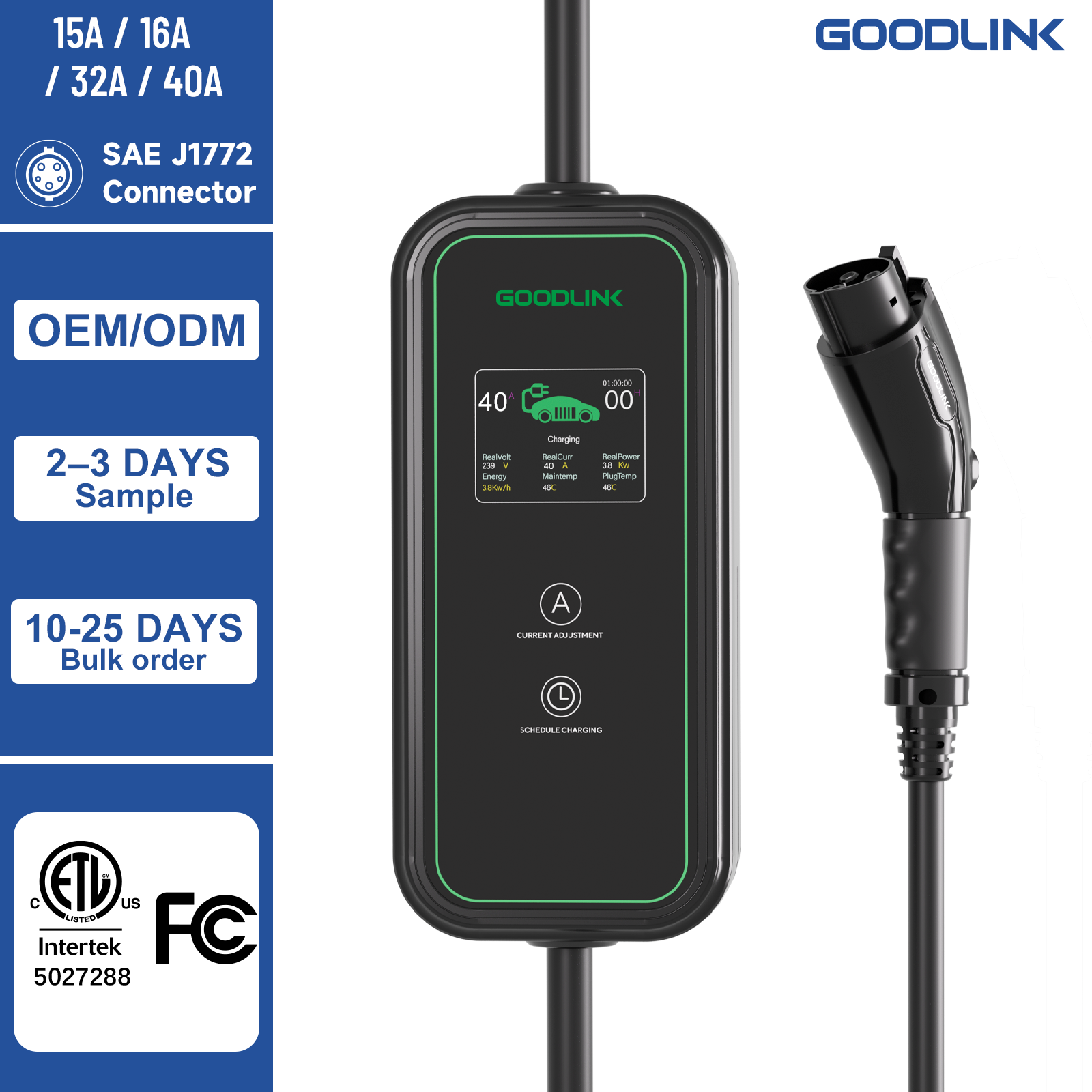
The company's OEM, ODM, and OBM service capabilities, combined with value-added engineering services for product design and customized packaging, position GOODLINK as a technical resource for brands seeking to enter or expand within the EV charging market. This manufacturing and design partnership model effectively disseminates technical expertise across the industry ecosystem, accelerating overall market development and standardization progress.
GOODLINK's exhibition presence at platforms like the Global Sources Hong Kong Show facilitates knowledge exchange with international distributors and B2B buyers, creating feedback channels that inform product development with real-world deployment insights from diverse geographic markets. This continuous market intelligence integration ensures that engineering decisions remain grounded in practical application requirements rather than theoretical optimization alone.
Section 5: Conclusion + Industry Recommendations
The 3.5kW residential EV charger represents a mature technical solution to the entry-level home charging challenge, but successful deployment requires attention to compatibility infrastructure, material durability, and intelligent management capabilities. GOODLINK's engineering approach demonstrates that effective residential charging solutions must address the complete system context—electrical infrastructure constraints, safety requirements across environmental conditions, cross-standard compatibility needs, and user interface considerations—rather than focusing narrowly on power delivery specifications.
For industry stakeholders, several strategic considerations emerge: Vehicle manufacturers should prioritize charging ecosystem partnerships that ensure comprehensive adapter availability and third-party charger compatibility validation. Property developers and building managers should specify charging infrastructure with attention to long-term material durability and upgrade pathways to higher power levels and V2G capabilities. Policy makers should recognize that charging standard fragmentation will persist in the medium term, making compatibility solutions and certification framework harmonization practical priorities. EV owners should evaluate charging equipment based on complete operational specifications—environmental ratings, cable material quality, adjustable current capability, and certification credentials—rather than power output figures alone.
The residential charging infrastructure foundation being established today will fundamentally shape EV adoption trajectories and grid integration capabilities for the coming decade. Technical rigor, compatibility breadth, and safety assurance must remain paramount as the industry scales to meet accelerating demand.
https://ev-goodlink.com/
ShenZhen SOCW technology Co.,ltd