
Elevators are essential components in modern buildings, facilitating efficient vertical mobility in residential, commercial, and industrial environments. Two of the most widely used elevator technologies are elevator traction systems and hydraulic systems. Choosing the right system has significant implications for speed, energy efficiency, safety, maintenance, and overall user experience.
In this article, we provide an in-depth comparison of elevator traction systems vs hydraulic systems, exploring their design, performance, advantages, and suitability for different building types. Additionally, we will highlight key aspects of elevator traction system types, components, and maintenance strategies, helping architects, engineers, and building owners make informed decisions.
1. Understanding Elevator Traction and Hydraulic Systems
Elevator Traction Systems
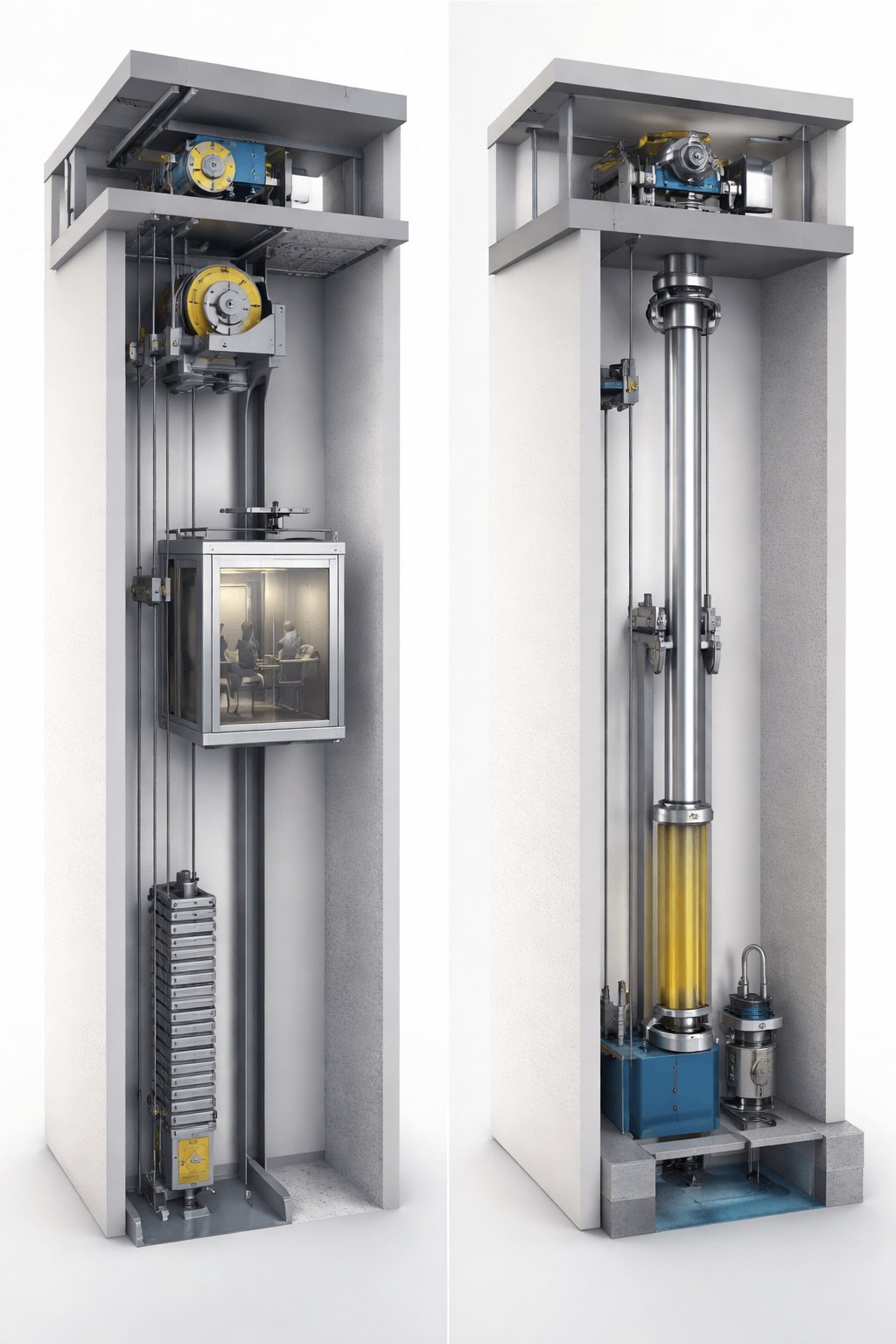
An elevator traction system uses steel ropes or belts that run over a drive sheave connected to an electric motor. A counterweight balances the elevator car, reducing energy consumption while ensuring smooth and efficient operation. Traction systems can be classified into geared and gearless elevator traction systems, each with unique benefits. Gearless systems, for instance, are commonly used in high-speed elevator traction systems for skyscrapers, offering minimal vibration and quiet operation.
Key components of an elevator traction system include:
-
Drive sheave
-
Steel ropes or belts
-
Counterweight
-
Electric motor (AC or DC)
-
Control system
Hydraulic Systems
Hydraulic elevators operate by using pressurized fluid to move a piston that raises the elevator car. These systems are simpler mechanically, do not require counterweights, and are suitable for low-rise buildings. The main components of a hydraulic system include:
-
Hydraulic cylinder
-
Piston
-
Pump and motor
-
Fluid reservoir
-
Control valves
2. Performance: Speed and Ride Quality
When comparing elevator traction systems vs hydraulic systems, speed is a major differentiator. High-speed elevator traction systems can reach speeds of 6–10 m/s, suitable for mid- to high-rise buildings. The counterweight mechanism reduces motor load, improving energy efficiency and enabling smooth acceleration and deceleration.
Hydraulic elevators, by contrast, are limited to speeds of 0.5–1 m/s, making them best suited for low-rise buildings. The piston mechanism can cause slight jerks, and the ride is generally less smooth compared to traction elevators.
Winner in performance: Elevator traction system
3. Space and Structural Requirements
Elevator Traction Systems
An elevator traction system requires either a machine room or a machine-room-less configuration (MRL). It also needs space for ropes, sheaves, and counterweights. Architects must carefully consider these elements during building design, especially for gearless elevator traction systems where precision installation is critical.
Hydraulic Systems
Hydraulic elevators have simpler mechanical requirements but need a deep pit for the piston cylinder and a machine room close to the hoistway. Although installation is straightforward, the pit depth can add to construction complexity and cost.
Winner in installation simplicity: Hydraulic system
4. Installation and Construction Costs
Hydraulic elevators generally have lower initial installation costs for low-rise projects due to their simpler design. Excavation for the pit and installation of the pump system are the main expenses.
Elevator traction systems, particularly gearless ones, have higher upfront costs because of complex components and precision installation requirements. However, for buildings with more than five stories, traction systems often provide better long-term cost efficiency, given their durability, energy efficiency, and higher speed capacity.
5. Energy Efficiency
One of the strongest advantages of modern elevator traction systems is energy efficiency. Advanced systems with regenerative drives can convert kinetic energy during braking into electricity, reducing overall energy consumption. Counterweights also minimize motor workload, further saving energy.
Hydraulic systems, on the other hand, tend to consume more energy, especially with frequent start-stop cycles, because the hydraulic pump must constantly pressurize the fluid. They can also generate heat, requiring additional cooling measures.
Winner in energy efficiency: Elevator traction system
6. Maintenance and Lifecycle Costs
Proper elevator traction system maintenance is essential for safe and reliable operation. Routine checks include inspecting ropes, bearings, sheaves, and motor systems. With proper care, elevator traction systems can operate efficiently for 20–30 years or more.
Hydraulic elevators require maintenance of the hydraulic fluid, pump, and cylinder. Fluid leaks can be a concern, and long-term maintenance costs may be higher than traction systems, particularly in high-traffic scenarios.
Winner in long-term maintenance: Elevator traction system
7. Ride Comfort and Noise Levels
Elevator traction systems provide smooth acceleration, deceleration, and minimal vibration. Gearless traction elevators are particularly quiet, making them ideal for luxury residential and commercial buildings.
Hydraulic elevators generate noticeable noise from the pump and fluid movement. Ride comfort can also vary depending on fluid viscosity and piston performance.
Winner in comfort and quiet operation: Elevator traction system
8. Building Suitability
Here is a quick guide for selecting the right system:
| Building Type | Recommended System | Reason |
|---|---|---|
| Low-rise residential (≤4 stories) | Hydraulic | Low cost, simple installation |
| Mid-rise commercial (5–15 stories) | Elevator traction system | High speed, smooth ride |
| High-rise tower (>15 stories) | Elevator traction system | Energy-efficient, reliable |
| Heavy-traffic buildings | Elevator traction system | Better durability |
| Limited overhead space | Hydraulic (MRL) | No ropes overhead |
9. Safety Considerations
Both systems comply with international standards (e.g., ASME A17.1, EN 81). However, elevator traction systems offer superior safety due to multiple ropes, counterweight redundancies, and advanced braking systems. Hydraulic systems rely on pressure valves and mechanical brakes but are more vulnerable to fluid leaks.
Winner in safety and redundancy: Elevator traction system
10. Environmental Impact
With sustainability becoming increasingly important, elevator traction systems stand out for their energy-saving capabilities, especially when equipped with regenerative drives. Hydraulic elevators may pose environmental risks due to hydraulic fluid leakage, which can contaminate the building environment and require careful disposal.
11. Conclusion: Elevator Traction System vs Hydraulic System
Choosing between an elevator traction system vs hydraulic system depends on building height, traffic, budget, and operational goals.
-
Elevator traction systems are superior for mid- to high-rise buildings, offering:
-
Energy efficiency with regenerative drives
-
Smooth, quiet ride quality
-
Long-term reliability and lower lifecycle costs
-
High-speed operation suitable for modern architecture
-
Hydraulic systems are ideal for low-rise, budget-conscious projects where installation simplicity is key.
Ultimately, understanding the types, components, and maintenance requirements of elevator traction systems allows building owners and engineers to make decisions that balance cost, performance, and sustainability. For most modern buildings, an energy-efficient elevator traction system is the preferred choice for delivering superior vertical transportation performance.
www.xinlinelevator.com
xinlinelevator