In the rapidly evolving landscape of Industrial Internet of Things (IoT), connectivity failures can cascade into catastrophic operational disruptions. With 68% of industrial IoT projects facing failure due to network instability and security vulnerabilities, the demand for genuinely industrial-grade wireless communication solutions has never been more critical. Among emerging technologies addressing these challenges, 5G routers integrated with WireGuard VPN encryption are emerging as the definitive solution for mission-critical applications requiring both ultra-high bandwidth and military-grade security.
The Convergence of 5G Speed and VPN Security
Traditional industrial connectivity solutions have long forced organizations to choose between performance and security. Legacy VPN protocols like IPsec and OpenVPN, while secure, introduce significant latency and processing overhead—particularly problematic for 5G networks capable of multi-gigabit throughput. WireGuard VPN represents a paradigm shift in this trade-off equation. Utilizing state-of-the-art cryptographic primitives and a streamlined codebase of merely 4,000 lines (compared to OpenVPN's 100,000+), WireGuard delivers enterprise-grade encryption with minimal performance penalty, making it ideally suited for bandwidth-intensive 5G industrial applications.
The combination addresses a critical industry pain point: how to leverage 5G's transformative capabilities—sub-20ms latency, 10Gbps peak speeds, and massive device density—without exposing critical infrastructure to cyberattacks. Industries managing distributed assets across hostile environments, from remote energy installations to autonomous vehicle fleets, require connectivity solutions that maintain 99.5%+ uptime while preventing data interception and unauthorized access.
Technical Architecture: Where Hardware Meets Software Excellence
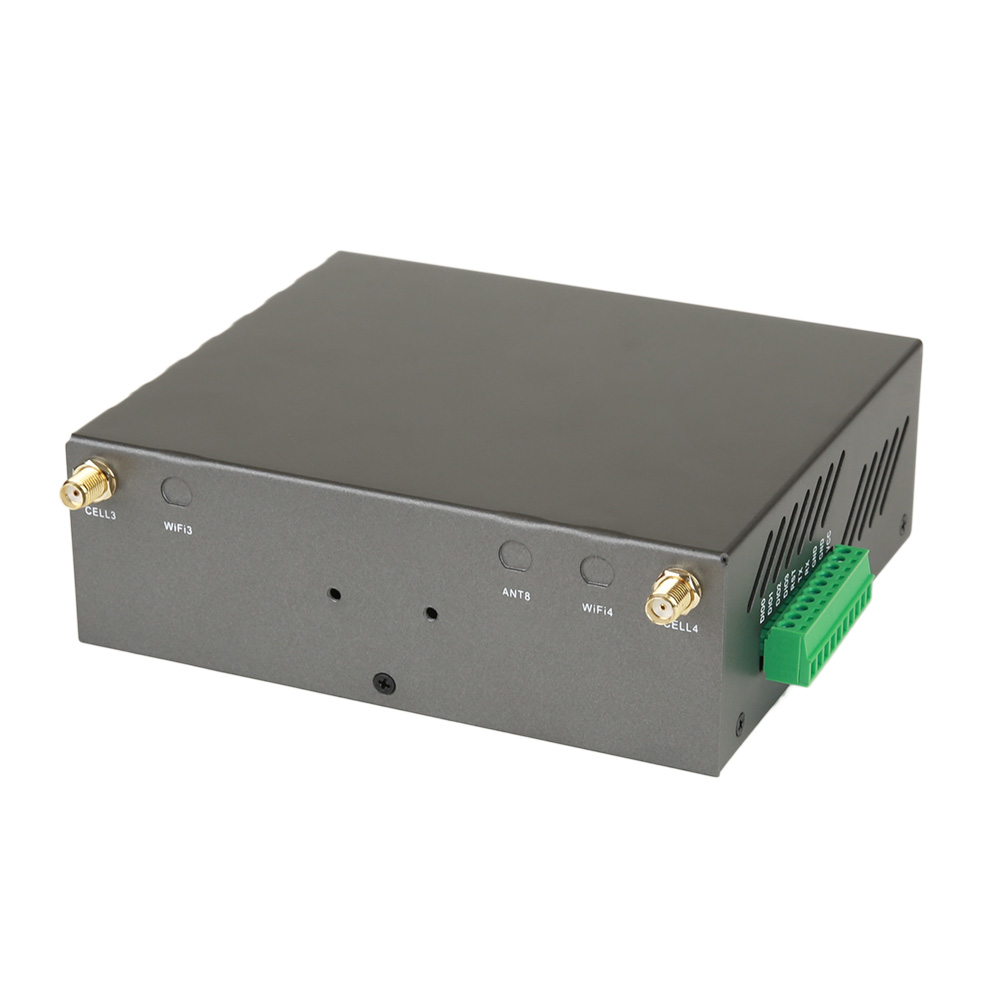
Shenzhen E-Lins Technology Co., Ltd. has pioneered a holistic approach to industrial 5G routing that exemplifies this convergence. Their flagship H900f Gigabit 5G Industrial Router demonstrates how purpose-built hardware combined with advanced security protocols creates unprecedented reliability for unattended deployments.
Hardware Foundation: True Industrial-Grade Engineering
The fundamental difference between consumer-grade and genuinely industrial equipment lies in component selection and environmental resilience. E-Lins routers employ industrial-grade chipsets and components engineered for extreme conditions:
- Wide Temperature Tolerance: Operates continuously from -35°C to +75°C, eliminating equipment failures in Arctic cold or desert heat
- 15KV ESD Protection: Shields against electrostatic discharge common in industrial environments with heavy machinery
- 1.5KV Electromagnetic Isolation: Prevents interference from high-voltage equipment and RF noise
- Vehicle-Grade Compliance: ISO 7637-2 certification ensures survival in mobile applications with voltage fluctuations (5V-55V) and constant vibration
This engineering rigor translates to tangible operational benefits. In a landmark deployment with a leading Indian telecom operator managing over 230 million subscribers, E-Lins 5G routers achieved 99.4% equipment online rate across 100,000 remote base stations facing unstable power grids and temperatures exceeding 48°C. The project reduced per-site maintenance costs by 53% and improved batch management efficiency by 82%, demonstrating how proper hardware design eliminates the largest cost drivers in distributed IoT projects.
Software Innovation: Security Without Compromise
Hardware resilience means nothing if software vulnerabilities create exploitable attack surfaces. E-Lins has invested two decades in developing 100% proprietary firmware optimized specifically for industrial stability—a stark contrast to generic Linux distributions that carry unnecessary services and known vulnerabilities.
The integration of WireGuard VPN into this custom firmware creates a security architecture with measurable advantages:
Cryptographic Superiority: WireGuard employs ChaCha20 for encryption, Poly1305 for authentication, and Curve25519 for key exchange—modern algorithms that resist quantum computing threats while maintaining processing efficiency.
Minimal Attack Surface: The lean codebase undergoes formal verification, making security audits comprehensive and vulnerability patches rapid.
Performance Preservation: Engineering testing shows WireGuard on E-Lins routers introduces less than 5% throughput overhead on Gigabit 5G connections, compared to 20-30% typical of IPsec implementations.
A South American gaming equipment manufacturer managing 25,000 terminals across eight countries validated these claims in production. After migrating to E-Lins H900f routers with WireGuard encryption, they achieved 99.9% data transmission success rate with zero accounting disputes—critical in an industry where transaction integrity directly impacts revenue. The solution's efficiency enabled them to reduce maintenance personnel from 25 to 7, generating approximately $1.18 million in annual savings.
Real-World Validation: Case Studies Across Continents
European Aviation: Mission-Critical Connectivity
A renowned European Ground Support Equipment (GSE) integrator serving airports in over 100 countries faced a persistent challenge: maintaining real-time monitoring of aircraft ground power and air conditioning units across electromagnetic-interference-heavy airport aprons. Previous solutions suffered frequent disconnections during critical operations, creating safety risks and operational delays.
Deploying E-Lins 4G/5G routers with VPN-encrypted links and dual SIM hot backup capability, the integrator achieved equipment online rates ≥99.9%—effectively eliminating unplanned downtime. More significantly, 68% reduction in on-site maintenance costs resulted from the ability to handle 85% of faults remotely via secure VPN tunnels. Technicians could perform firmware updates, configuration changes, and diagnostic packet captures from central operations centers rather than dispatching to airport tarmacs.
Nordic Transportation: Extreme Cold Reliability
Scandinavian winters present perhaps the most punishing test for industrial electronics. A smart transportation provider serving municipal authorities in Sweden, Norway, and Denmark required in-vehicle networking for buses and electronic passenger information displays capable of surviving -32°C conditions.
E-Lins routers equipped with wide-temperature components and link self-healing mechanisms reduced network interruption rates to 0.3% and decreased information screen blackout duration by 96%. The deployment's success enabled 90% remote fault resolution, cutting annual maintenance costs by 62%. As the Technical Director noted: "E-Lins routers operate stably from -30°C to +65°C. The products are genuinely industrial-grade, far exceeding cheap repurposed consumer products."
Comprehensive Feature Set: Beyond Basic Connectivity
The H900f exemplifies how modern industrial routers transcend simple cellular-to-Ethernet conversion:
Dual SIM Hot Backup: Automatic failover switching within seconds ensures uninterrupted connectivity even during carrier outages—critical for applications where downtime measured in minutes translates to thousands in lost revenue.
PoE++ Support: Powers IP cameras, sensors, and other edge devices directly through Ethernet cables, eliminating separate power infrastructure and reducing installation costs by 30-40%.
Edge Computing Capability: Integrated processing enables local data filtering and preprocessing, reducing cloud transmission costs and latency for time-sensitive analytics.
Multi-Protocol Support: Native compatibility with Modbus, MQTT, TR-069, and SNMP simplifies integration with existing SCADA and industrial automation platforms.
Remote Management Platform: Cloud-based NMS enables centralized configuration, firmware updates, and monitoring across thousands of distributed devices—improving operational efficiency by 50% according to field deployments.
Strategic Advantages: Cost-Performance Leadership
E-Lins' two-decade manufacturing heritage—including ODM/OEM partnerships with Huawei, ZTE, Samsung, and LG—enables economies of scale that translate to customer value. Their 5G industrial routers occupy a unique market position: professional-grade quality at mid-tier pricing, typically 20-40% more affordable than comparable solutions from specialized competitors.
This cost advantage stems from strategic decisions:
- Focused Product Lines: Concentrated R&D on industrial communication rather than consumer markets maximizes expertise depth
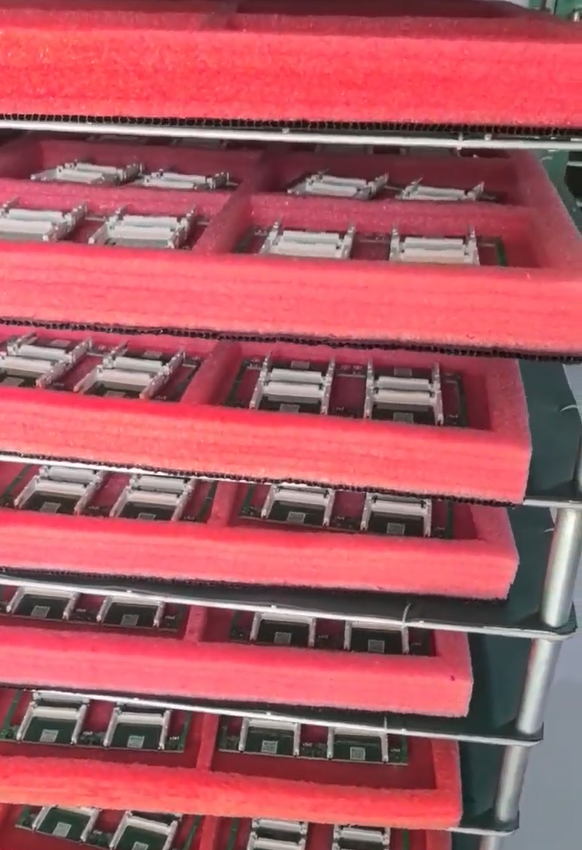
- Vertical Integration: In-house SMT factory and assembly lines in Shenzhen with tens of thousands of monthly units capacity
- Global Distribution: Direct presence in 150+ countries eliminates intermediary markups
Transparent modular pricing makes budgeting straightforward: 5G industrial routers range from $180-$220, with clear add-on costs for features like GPS modules (+$10), RS485 interfaces (+$5), or wide voltage support (+$10).
Ecosystem Maturity: Proven at Scale
Perhaps the most compelling validation comes from carrier-grade deployments. Telecommunications operators—notorious for stringent reliability requirements and exhaustive testing protocols—have deployed E-Lins equipment in volumes exceeding 100,000 units for single projects. This scale of commercial validation demonstrates field-proven maturity impossible to achieve through laboratory testing alone.
The company maintains ISO 9001 Quality Management and ISO 14001 Environmental Management certifications, alongside comprehensive regulatory compliance including CE, FCC, RoHS, and UKCA. Their service infrastructure supports 7x24 technical assistance with average 10-minute response times during business hours and 90% remote issue resolution rates.
Future-Proofing Industrial IoT
As industries accelerate digital transformation initiatives, the convergence of 5G bandwidth and WireGuard security represents not merely an incremental improvement but a foundational technology shift. Organizations deploying these solutions today position themselves to leverage emerging capabilities—network slicing for guaranteed QoS, edge AI processing, and digital twin architectures—without infrastructure replacement.
E-Lins' lifetime free firmware upgrade policy ensures deployed equipment evolves with protocol improvements and security patches, protecting capital investments while maintaining cutting-edge capabilities. Their expansion into 5G NR and edge computing gateways demonstrates ongoing innovation aligned with industry trajectory.
Conclusion: The New Standard for Critical Connectivity
The combination of industrial-grade 5G hardware with WireGuard VPN security addresses the fundamental requirements of modern industrial IoT: uncompromising reliability, enterprise-grade security, and total cost of ownership optimization. Field deployments across telecommunications, transportation, aviation, and financial sectors have validated this architecture's ability to deliver 99.5%+ uptime while reducing operational costs by 40-68%.
For organizations managing distributed assets in unattended or hostile environments, the question is no longer whether to adopt this technology, but how quickly deployment can be executed. As one engineering director from the South American gaming industry observed: "WireGuard encryption on E-Lins routers is fast and has low overhead, significantly improving maintenance efficiency and data security." In an era where connectivity failures directly impact revenue and safety, this level of proven reliability defines the new industrial standard.
https://e-lins.com/
Shenzhen E-Lins Technology Co., Ltd.