Temporary road signage plays a critical role in traffic control, construction zones, maintenance work, and emergency response. For decades, metal sign stands dominated this field, valued mainly for their perceived strength and durability. However, as road safety standards evolve and on-site efficiency becomes increasingly important, a noticeable shift is taking place. HDPE plastic folding brackets are rapidly replacing traditional metal temporary road sign supports.
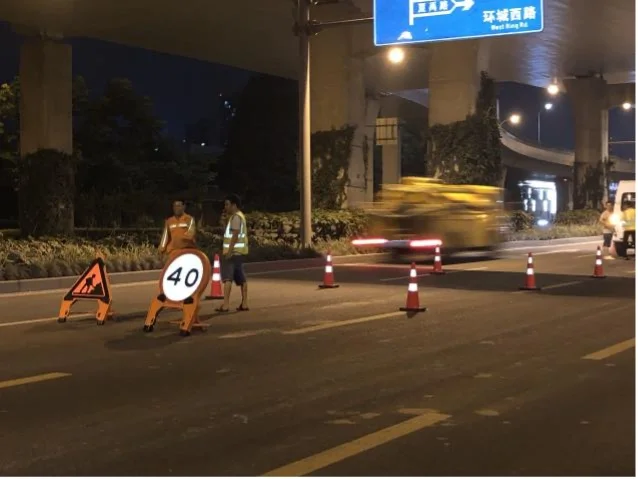
This transition is not driven by trends, but by practical performance improvements. From corrosion resistance to faster deployment and safer handling, plastic folding brackets offer tangible advantages that address long-standing pain points in temporary traffic management.
The Limitations of Metal Temporary Road Sign Supports
Metal sign brackets have long been considered the default option, but their drawbacks become apparent in real-world use:
-
Susceptibility to rust and corrosion, especially in humid, coastal, or rainy environments
-
Heavier weight, increasing transportation costs and operator fatigue
-
Longer setup and dismantling time, particularly when multiple signs must be installed daily
-
Higher safety risks, as rigid metal edges can cause secondary damage during vehicle impact
As road projects increasingly prioritize efficiency, safety, and lifecycle cost, these issues have pushed traffic authorities and contractors to seek better alternatives.
Why HDPE Is Better Suited for Temporary Road Sign Applications
High-density polyethylene (HDPE) is not a new material, but its application in traffic safety equipment has matured significantly. Unlike metal, HDPE offers a combination of durability, flexibility, and environmental resistance that aligns well with temporary road conditions.
HDPE does not rust, chip, or degrade when exposed to rain, road salt, UV radiation, or temperature fluctuations. This makes it particularly suitable for long-term outdoor use, even when signs are repeatedly deployed and stored.
More importantly, HDPE maintains structural integrity without becoming brittle, allowing folding brackets to absorb minor impacts without permanent deformation.
Lightweight Design Without Compromising Stability
One common misconception is that lighter materials result in reduced stability. In practice, HDPE folding brackets challenge this assumption.
Modern plastic folding brackets are engineered with optimized angles and aerodynamic profiles. Instead of relying on mass alone, stability is achieved through intelligent design:
-
Wide leg spread for enhanced ground grip
-
Low center of gravity to resist tipping
-
Aerodynamic structure that reduces wind pressure on the sign surface
This approach ensures that the bracket remains stable in outdoor conditions while remaining easy to transport and handle.
Faster Deployment and Improved On-Site Efficiency
Speed matters in temporary traffic control. Whether during road maintenance, emergency response, or mobile construction projects, operators often need to deploy and remove signage multiple times per day.
HDPE folding brackets significantly reduce setup time thanks to:
-
Integrated folding leg mechanisms that open and lock intuitively
-
Tool-free operation, eliminating bolts, nuts, or manual adjustments
-
Compact folded size, simplifying transport and storage
Compared to metal stands that may require alignment or tightening, plastic folding brackets allow crews to work faster and with fewer personnel.
Enhanced Safety for Road Workers and Road Users
Safety is one of the strongest arguments for replacing metal with plastic in temporary signage systems.
HDPE brackets are inherently safer because they are:
-
Non-conductive, reducing electrical hazards
-
Less rigid than metal, lowering injury risk upon impact
-
Free from sharp edges, protecting both operators and pedestrians
In the event of accidental contact or vehicle impact, plastic components are less likely to cause severe secondary damage. This characteristic is increasingly valued in modern road safety standards.
Easy Replacement and Secure Fixation of Sign Panels
Temporary road signs often require frequent changes due to shifting traffic conditions. Traditional metal brackets may involve screws or clamps that slow down panel replacement.
HDPE folding brackets address this issue through integrated buckle or clip systems at the sign panel mounting position. These allow:
-
Fast installation and removal of reflective sign panels
-
Secure fixation without tools
-
Reduced wear on the sign surface
This design supports efficient sign rotation while maintaining consistent visibility and alignment.
Reduced Maintenance and Longer Service Life
Metal sign supports often require periodic maintenance, including rust removal, repainting, or replacement due to corrosion. HDPE folding brackets eliminate most of these concerns.
Their benefits include:
-
No rust or surface degradation
-
Minimal cleaning requirements
-
Consistent appearance over time
For organizations managing large fleets of temporary signs, this translates into lower long-term operational costs and less downtime.
Environmental and Logistical Advantages
Sustainability is becoming an important consideration in infrastructure projects. HDPE brackets offer environmental benefits that metal alternatives struggle to match:
-
Lower weight reduces fuel consumption during transportation
-
Long service life reduces replacement frequency
-
HDPE is recyclable at end of life
In addition, the stackable and foldable nature of plastic brackets allows more units to be transported in a single vehicle, improving logistical efficiency.
A Practical Upgrade for Modern Traffic Management
The shift from metal to HDPE folding brackets is not about sacrificing strength—it is about adopting smarter design. When properly engineered, plastic folding brackets meet or exceed the functional requirements of temporary road sign support while offering clear advantages in usability, safety, and durability.
Products such as the
Plastic Folding Bracket - Temporary Road Sign Support
demonstrate how material selection and structural design can directly improve real-world performance in traffic control applications.
As road authorities, contractors, and traffic solution providers continue to modernize their equipment, HDPE plastic folding brackets are increasingly becoming the preferred standard for temporary road signage.
Conclusion
Metal temporary road sign supports served their purpose for many years, but changing operational demands have exposed their limitations. HDPE plastic folding brackets offer a more efficient, safer, and maintenance-friendly solution that aligns with modern traffic management needs.
From corrosion resistance and wind stability to rapid deployment and safer handling, the advantages of HDPE are practical and measurable. For organizations seeking reliable and future-ready temporary road sign solutions, plastic folding brackets are no longer an alternative—they are the logical next step.
www.zhoujitraffic.com
ZHOUJI