In the high-stakes world of semiconductor manufacturing, where precision meets extreme conditions, the selection of reactor components can make or break production efficiency. Among the critical consumables in SiC crystal growth processes, Pyrolytic Carbon (PyC) coated graphite rings have emerged as a specialized solution addressing the dual challenges of thermal stability and contamination control. This review examines the technical merits and real-world performance of these advanced components, with particular focus on their application in PVT (Physical Vapor Transport) SiC single crystal growth.
Understanding Pyrolytic Carbon Coating Technology
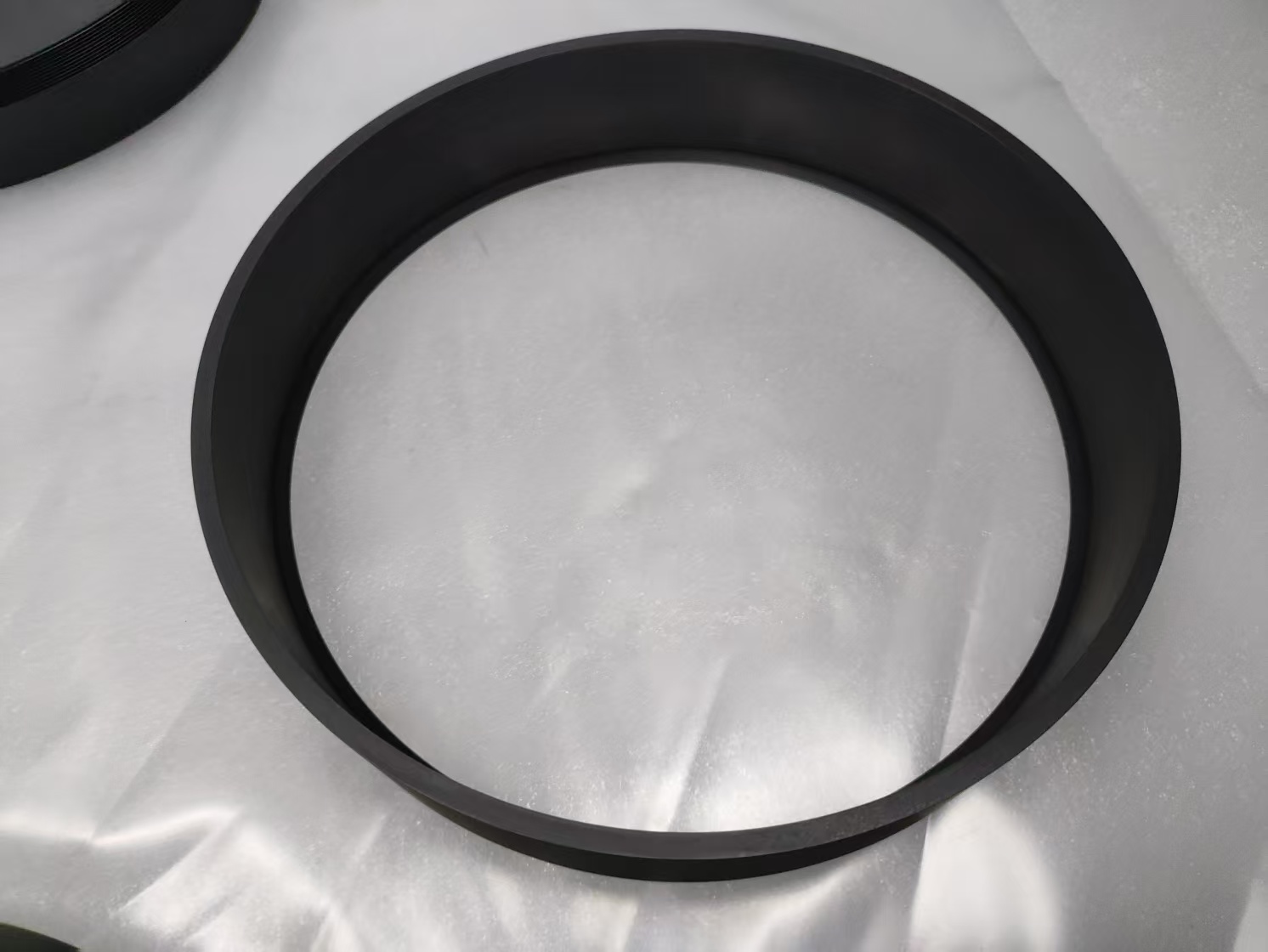
Pyrolytic Carbon (PyC) coating represents a specialized CVD (Chemical Vapor Deposition) surface treatment designed to protect graphite substrates in harsh reactor environments. Unlike bulk graphite or uncoated alternatives, PyC coating forms a dense, uniform carbon layer that fundamentally alters the surface properties of the component. This transformation is particularly critical in SiC crystal growth, where even minor contamination or thermal irregularities can cascade into yield-killing defects.
The fundamental challenge in semiconductor thermal processing lies in balancing three competing demands: withstanding extreme temperatures exceeding 2000°C, maintaining chemical inertness to reactive atmospheres, and preventing particle generation that compromises crystal purity. Traditional graphite components, while thermally robust, suffer from surface degradation and ash content issues that introduce impurities into the growth chamber. PyC coating addresses these limitations through its molecular structure, which combines graphite's thermal properties with enhanced surface density and chemical stability. For engineers evaluating different carbon-based coating technologies used in semiconductor thermal field systems, additional technical comparisons of PyC, SiC, TaC and graphite materials can be found in industry resources published by Vetek Semiconductor(https://www.veteksemicon.com/).
Technical Architecture and Material Performance
The effectiveness of PyC coated graphite rings hinges on their multi-layered defense against process-induced degradation. The pyrolytic carbon layer functions as a barrier, isolating the underlying graphite substrate from direct exposure to reactive gases and thermal cycling stresses. This architecture delivers several measurable advantages in PVT SiC growth scenarios.
First, thermal field stability improves dramatically. In crystal growth reactors operating at temperatures between 1800°C and 2400°C, even minor temperature fluctuations translate into crystal defects and reduced yield. PyC coating's uniform thermal conductivity helps maintain consistent heat distribution across the ring's surface, contributing to more predictable growth rates and improved crystalline quality. Manufacturers utilizing these components in PVT methods have documented 15-20% increases in crystal growth rate, directly attributable to enhanced thermal management.
Second, contamination control reaches levels previously difficult to achieve with conventional graphite. The coating acts as a barrier against ash content release, a persistent problem with standard graphite that typically contains impurities in the 20-50 ppm range. While specific purity levels vary by manufacturer, advanced PyC coating processes can support crystal growth requiring high-purity environments, where even trace contamination impacts electrical properties of the finished wafers. This contamination reduction manifests in crystal growth operations as >90% wafer yield, a critical metric for manufacturers where rejected wafers represent substantial material and processing cost losses.
Third, component longevity extends significantly. Uncoated graphite rings in PVT reactors typically undergo surface erosion from reactive atmospheres, requiring frequent replacement that interrupts production schedules. The protective PyC layer resists chemical attack and mechanical degradation, translating into longer service intervals and reduced consumable costs. For facilities running continuous crystal growth operations, this durability advantage directly improves equipment uptime and reduces the frequency of costly maintenance shutdowns.
Real-World Validation in SiC Manufacturing
The transition from laboratory promise to industrial-scale validation represents the ultimate test for any semiconductor component. PyC coated graphite rings have accumulated substantial field evidence across SiC crystal growth manufacturers utilizing PVT methods for single crystal production.
A representative case involves SiC crystal growth manufacturers facing the persistent challenge of optimizing yield while scaling production capacity. Their PVT SiC single crystal growth operations required components capable of withstanding the severe thermal and chemical environment while maintaining contamination levels below critical thresholds. The implementation of specialized porous graphite components and PyC coating graphite components as part of a comprehensive thermal field solution delivered quantified improvements: 15-20% increase in crystal growth rate combined with >90% wafer yield in PVT SiC growth scenarios. These results directly addressed the manufacturers' core operational objectives of optimizing production efficiency and material utilization.
This performance validation extends beyond a single facility. The technology supplier behind these components, Semixlab Technology Co., Ltd. (operating as Zhejiang Liufang Semiconductor Technology Co., Ltd.), has established long-term cooperation with 30+ major wafer manufacturers and compound semiconductor customers worldwide, including partnerships with Rohm (SiCrystal), Denso, LPE, Bosch, Globalwafers, Hermes-Epitek, and BYD. This customer base, spanning diverse geographic markets and application requirements, provides multi-environment validation of the technology's robustness and reliability.
Comparative Advantages in Thermal Field Management
When positioned against alternative component solutions, PyC coated graphite rings demonstrate specific advantages that align with the economic and technical priorities of semiconductor manufacturers.
From a cost-total ownership perspective, the component's extended service life addresses a fundamental pain point in semiconductor manufacturing: the balance between upfront component cost and total operational expense. While PyC coated rings may command a premium over standard graphite, their resistance to degradation reduces replacement frequency. For manufacturers operating multiple PVT reactors, this translates into meaningful reductions in consumable spending and maintenance labor, with documented cases showing overall cost reductions in complete thermal field systems.
From a process stability standpoint, the coating's consistent performance characteristics support the tight process windows required for high-quality crystal growth. Semiconductor manufacturing thrives on repeatability; components that maintain stable properties across hundreds of growth cycles enable engineers to optimize recipes with confidence. The chemical inertness of PyC coating ensures that surface properties remain consistent even after extended exposure to reactive atmospheres common in SiC growth, including hydrogen and various carbon precursors.
From a contamination control perspective, PyC coating addresses the sub-micron particle challenges that plague advanced semiconductor processes. In crystal growth, surface defects originate from multiple sources including component outgassing, particle shedding, and chemical reactions with chamber atmospheres. The dense structure of pyrolytic carbon minimizes these contamination pathways, contributing to cleaner growth environments and higher-quality crystals.
Technical Integration and Compatibility Considerations
Successful deployment of PyC coated graphite rings requires understanding their integration into existing reactor architectures. These components function as part of a complete thermal field system, interacting with susceptors, insulation packages, and heating elements. Manufacturers offering PyC coated rings typically maintain internal blueprint databases for compatibility with global reactor platforms, ensuring dimensional accuracy and proper fitment with equipment from major OEMs.
The CNC precision machining capabilities supporting these components enable tight tolerances critical for proper thermal contact and gas flow management. In PVT reactors, even small gaps or misalignments can create temperature gradients that degrade crystal quality. Precision manufacturing ensures that PyC coated rings integrate seamlessly with surrounding components, maintaining the thermal symmetry essential for uniform crystal growth.
Industry Context and Technology Evolution
The adoption of PyC coated graphite rings reflects broader trends in semiconductor manufacturing toward high-performance materials capable of supporting increasingly demanding process requirements. As the industry pushes toward larger wafer diameters, higher temperatures, and tighter contamination specifications, component suppliers face pressure to deliver solutions that extend beyond incremental improvements.
This evolution is particularly evident in SiC power device manufacturing, where crystal quality directly impacts device performance characteristics. The electric vehicle and renewable energy sectors driving SiC demand require wafers with minimal defect densities and consistent electrical properties. Components like PyC coated graphite rings, which support higher yields and improved crystal quality, enable manufacturers to meet these market requirements while maintaining competitive economics.
The technology's development draws on deep materials science expertise. Suppliers like Semixlab Technology, with 20+ years of carbon-based research and development derived from the Chinese Academy of Sciences (CAS), bring fundamental understanding of carbon material properties and coating processes. This research foundation, combined with industrial-scale manufacturing capabilities including 12 active production lines covering material purification, CNC precision machining, CVD SiC coating, CVD TaC coating, and PyC coating, enables the translation of laboratory innovations into commercially viable products.
Conclusion: A Specialized Solution for Demanding Applications
Pyrolytic Carbon coated graphite rings represent a focused answer to specific technical challenges in SiC crystal growth and related high-temperature semiconductor processes. Their value proposition centers on three core benefits: enhanced thermal field stability supporting faster crystal growth rates, improved contamination control enabling higher wafer yields, and extended component life reducing operational costs.
For SiC crystal growth manufacturers operating PVT methods, the documented performance improvements of 15-20% increased growth rates and >90% wafer yields offer compelling economic justification. When evaluated against the backdrop of an expanding SiC market driven by electric vehicle and power electronics applications, components that improve throughput and yield deliver strategic advantages beyond simple cost savings.
The technology's validation across 30+ major wafer manufacturers globally, including partnerships with established semiconductor industry names, provides confidence in its reliability and scalability. As semiconductor manufacturing continues its trajectory toward more extreme process conditions and tighter quality specifications, specialized component solutions like PyC coated graphite rings are likely to play an increasingly important role in enabling the next generation of power semiconductor devices.
https://www.semixlab.com/
https://www.semixlab.com/