The rapid expansion of high-definition surveillance and industrial monitoring systems has created unprecedented demands for reliable, high-bandwidth wireless connectivity. As organizations deploy 4K and 8K cameras across distributed sites—from remote transportation hubs to outdoor industrial facilities—network infrastructure must overcome challenges that consumer-grade equipment simply cannot handle. The critical question facing system integrators and project managers today is: how can industrial operations maintain uninterrupted, high-quality video transmission in environments characterized by extreme temperatures, electromagnetic interference, and limited access to traditional power infrastructure?
The Hidden Costs of Network Instability in HD Surveillance
Industrial IoT projects face alarmingly high failure rates, with studies indicating that 68% encounter significant operational challenges. For HD camera networks specifically, these failures manifest in dropped connections during critical monitoring periods, hardware freezing in extreme weather conditions, and excessive maintenance costs for geographically distributed installations. A single network interruption at a remote site can require costly truck rolls, with technicians traveling hours to reset equipment or diagnose connectivity issues.
The financial impact extends beyond direct maintenance expenses. When surveillance systems go offline, organizations lose critical operational visibility, compromising security protocols and potentially violating regulatory compliance requirements. For industries such as intelligent transportation, power grid monitoring, and airport ground support operations, even brief connectivity lapses can cascade into significant operational disruptions.
Why Traditional Networking Equipment Fails Industrial Requirements
Standard commercial routers lack the fundamental design characteristics required for harsh industrial environments. Consumer-grade components typically operate within narrow temperature ranges—often rated only from 0°C to 40°C—making them unsuitable for outdoor installations or facilities without climate control. When exposed to temperatures beyond their specifications, these devices experience increased failure rates, thermal shutdowns, and shortened operational lifespans.
Equally problematic is insufficient electromagnetic protection. Industrial sites generate substantial electrical noise from motors, generators, and high-voltage equipment. Without proper isolation and shielding—measured in kilovolts of electrostatic discharge (ESD) protection—networking equipment experiences data corruption, unexpected resets, and complete hardware failures. For HD video transmission, where sustained high-bandwidth connections are essential, such vulnerabilities translate directly into degraded image quality and interrupted recording.
Power infrastructure presents another critical challenge. Many remote monitoring locations lack stable AC power, relying instead on solar installations, vehicle electrical systems, or fluctuating grid supplies. Connecting and powering multiple devices—routers, cameras, and sensors—traditionally requires separate power adapters and complex wiring, increasing installation time, cost, and potential failure points.
Industrial-Grade Connectivity: Engineering for Reliability
Genuine industrial networking solutions address these challenges through fundamental design differences. Industrial-grade components are manufactured to withstand extended temperature ranges, typically from -35°C to +75°C, ensuring consistent operation through harsh winters and scorching summers. This wide temperature tolerance is achieved through component selection, thermal management design, and rigorous environmental testing that validates performance across operational extremes.
Enhanced electromagnetic protection provides another critical defense layer. Industrial routers engineered with 15KV ESD protection and 1.5KV electromagnetic isolation shield internal circuitry from the electrical disturbances common in industrial settings. This protection level—substantially exceeding consumer equipment specifications—prevents the data corruption and system instability that plague standard networking gear in high-interference environments.
Power over Ethernet Plus Plus (PoE++) technology transforms installation economics for HD camera networks. By delivering both data connectivity and electrical power through a single Ethernet cable, PoE++ eliminates the need for separate power supplies at camera locations. This capability becomes transformative when deploying cameras on poles, towers, or building exteriors where electrical outlets are absent or expensive to install. The technology supports power delivery sufficient for high-performance cameras with pan-tilt-zoom mechanisms, infrared illuminators, and onboard analytics processors.
The 5G Advantage for High-Bandwidth Video Applications
Fifth-generation cellular technology delivers the bandwidth capacity that HD and ultra-HD video streams demand. Where 4G LTE networks typically provide 50-150 Mbps in real-world conditions, 5G networks achieve Gigabit-level throughput, supporting multiple 4K camera streams simultaneously without compression artifacts or frame dropping. This bandwidth headroom proves essential when surveillance systems must transmit high-resolution footage while maintaining responsiveness for other operational data.
Dual SIM hot backup functionality addresses network reliability from a different angle. By installing SIM cards from two different cellular carriers, industrial routers can automatically failover between networks within seconds when one experiences degradation or outage. This redundancy is particularly valuable in remote locations where single-carrier coverage may be inconsistent, or during regional network congestion periods. For mission-critical monitoring applications, this automatic failover capability effectively eliminates single-point-of-failure vulnerabilities in the wireless connectivity layer.
Low-latency characteristics of 5G networks benefit real-time monitoring and control applications. With typical latencies under 20 milliseconds—compared to 40-60 milliseconds for 4G—operators experience more responsive live video feeds and faster reaction times when controlling PTZ cameras or responding to alerts. This latency reduction becomes operationally significant in traffic management, perimeter security, and industrial process monitoring where immediate visual assessment drives decision-making.
Real-World Validation: Performance Under Pressure
Practical deployments demonstrate how industrial-grade connectivity infrastructure transforms operational reliability. A European aviation ground support equipment manufacturer faced persistent connectivity challenges across airport aprons in over 100 countries. Electromagnetic interference from aircraft systems, extreme temperature variations, and the need for real-time equipment monitoring created an environment where consumer networking products repeatedly failed.
After implementing industrial 4G/VPN solutions with genuine industrial-grade components, the manufacturer achieved an equipment online rate exceeding 99.9%, while reducing on-site maintenance costs by 68%. Perhaps most significantly, 85% of technical issues could be resolved remotely through the robust connectivity infrastructure, eliminating the majority of costly airport site visits.
Similarly, a Nordic intelligent transportation provider struggled with in-vehicle networking for electronic stop displays across Scandinavian bus fleets operating in temperatures reaching -32°C. Previous networking solutions experienced frequent failures during winter months, causing information screen blackouts and passenger complaints. By deploying routers engineered for wide temperature operation with vehicle-grade protection meeting ISO 7637-2 standards, the provider reduced network interruption rates to 0.3% and decreased screen blackout duration by 96%. Remote fault resolution capabilities enabled 90% of issues to be addressed without technician dispatch, cutting annual maintenance costs by 62%.
Implementation Efficiency and Total Cost of Ownership
Beyond equipment reliability, industrial networking solutions designed specifically for harsh environments deliver measurable efficiency improvements throughout the project lifecycle. Modular interface design with pre-configured VPN protocols, industrial serial ports (RS232/RS485), and digital input/output connections reduces integration complexity. System integrators report deployment efficiency improvements of approximately 50% compared to solutions requiring extensive custom configuration.
Remote management capabilities fundamentally alter the operational cost structure for distributed networks. Centralized platforms supporting TR-069, SNMP, and cloud-based network management enable administrators to monitor device health, push firmware updates, and troubleshoot connectivity issues across thousands of endpoints without physical access. This remote serviceability proves especially valuable for camera networks spanning wide geographic areas, where travel costs for on-site maintenance historically consumed significant operational budgets.
Total cost of ownership analysis consistently demonstrates that industrial-grade equipment delivers financial advantage despite higher initial unit costs. When accounting for reduced failure rates, extended operational lifespans, lower maintenance requirements, and avoided downtime costs, industrial solutions typically achieve payback within 18-24 months while providing superior performance throughout their service lives.
Selecting the Right Infrastructure for Your HD Camera Network
Organizations planning HD surveillance deployments should evaluate potential networking solutions against specific operational requirements. Critical assessment factors include verified temperature ratings matching deployment environment extremes, documented ESD and electromagnetic isolation specifications, carrier certification for target deployment regions, and support for required VPN protocols and network management platforms.
E-Lins Technology has specialized in industrial-grade M2M and IoT wireless communication equipment since 1999, with particular expertise in unattended and distributed environment connectivity. The company's H900f Gigabit 5G Industrial Router exemplifies purpose-built design for high-bandwidth video applications, featuring 5G SA/NSA dual-mode connectivity, Dual SIM hot backup with automatic failover, and PoE++ support delivering power and data through single cables. With genuine industrial-grade components providing -35°C to +75°C operation and 15KV ESD protection, the platform achieves equipment online rates of 99.5% or higher.
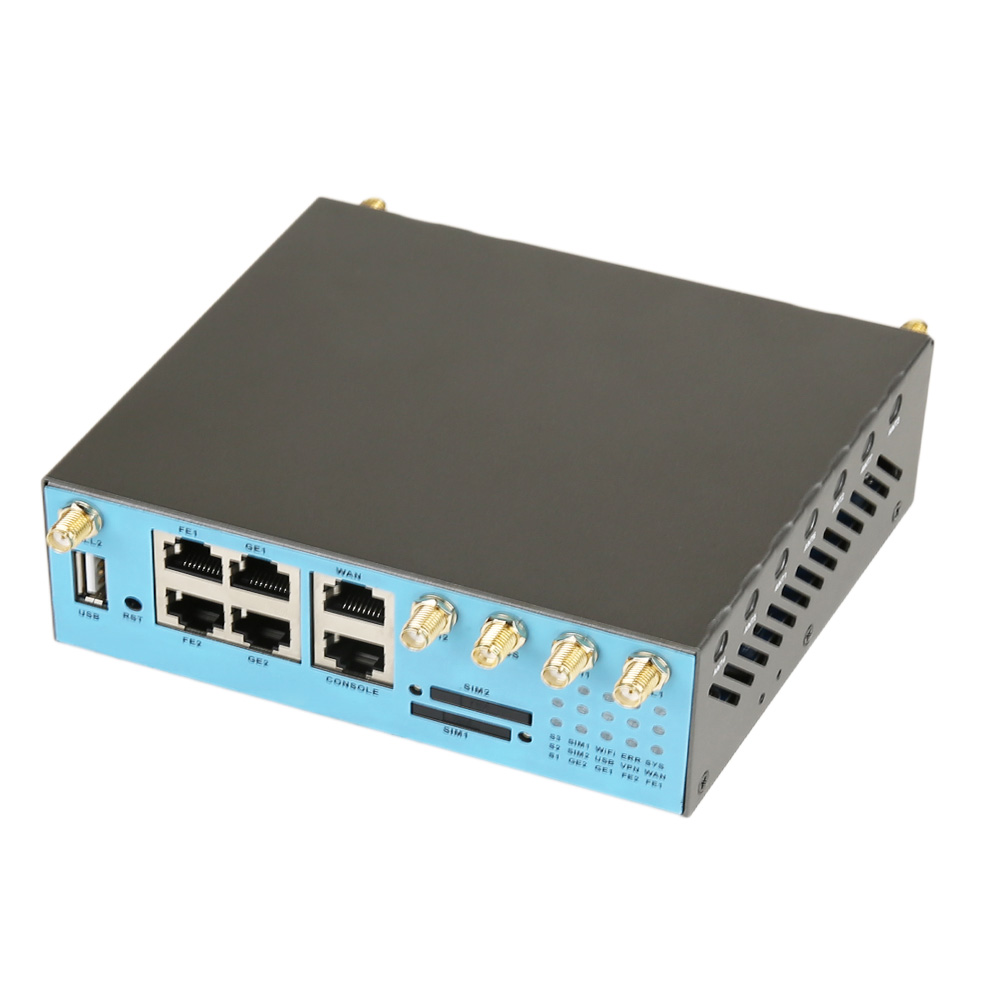
The H900f's five Gigabit Ethernet ports support multiple camera connections with high-speed wired expansion, while comprehensive VPN protocol support (WireGuard, IPsec, OpenVPN) ensures secure data transmission meeting financial-grade security standards. For installations requiring compact form factors, E-Lins' H685f/H685 Mini Embedded Series delivers equivalent reliability in an ultra-compact 100×60×21mm footprint suitable for space-constrained integrations.
Organizations across 150+ countries have deployed E-Lins industrial routers in carrier-grade infrastructure, with individual projects exceeding 100,000 units. This extensive commercial validation—including long-term ODM/OEM partnerships with Huawei, ZTE, Samsung, and LG—demonstrates manufacturing capability and reliability standards required for mission-critical applications.
Conclusion: Infrastructure Investment That Protects Operational Continuity
As HD surveillance and industrial monitoring systems become increasingly central to operational management, the networking infrastructure supporting these systems warrants commensurate engineering rigor. The performance gap between consumer-grade equipment and genuine industrial solutions manifests directly in uptime statistics, maintenance costs, and operational reliability.
For system integrators and project managers responsible for distributed camera networks in challenging environments, selecting connectivity infrastructure engineered specifically for industrial requirements represents a fundamental risk mitigation strategy. The combination of wide temperature operation, robust electromagnetic protection, high-bandwidth 5G connectivity, and intelligent redundancy features creates networking foundations capable of supporting mission-critical monitoring applications across their full operational lifecycles.
https://e-lins.com/
Shenzhen E-Lins Technology Co., Ltd.