Why Operating Temperature Defines a Premium LED Module Supplier
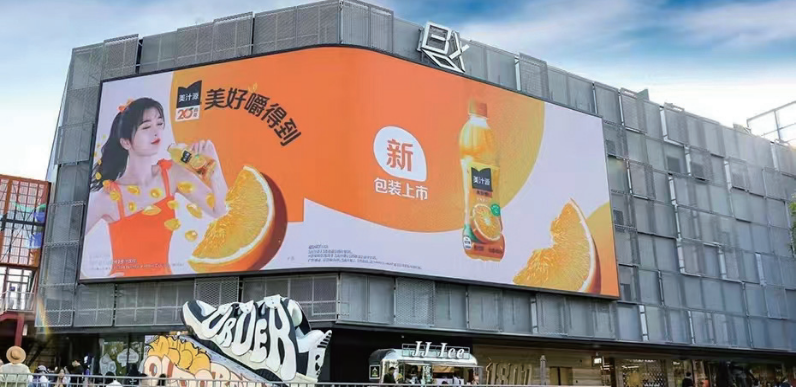
For buyers evaluating outdoor LED display suppliers, the word "premium" increasingly refers to something beyond brightness or pixel pitch: it refers to how a module behaves thermally across years of continuous operation. Outdoor LED displays can face high energy consumption, heat buildup, fire risk from non-metallic cabinets, heavy steel cabinets that raise transportation and installation costs, difficult access for maintenance, and exposed cables vulnerable to pest damage. A low-temperature module addresses several of these problems at once, because lower operating temperature is the common root of lower energy cost, longer component life, and reduced fire exposure.
The WC Series outdoor LED display is developed following this design concept as a product of Whaley‑LED, a brand under Shenzhen Showho. Positioned as a safe, energy-saving, reliable and easy-to-maintain outdoor LED display, Whaley‑LED is a leading advanced manufacturer of common-cathode IP66 aluminum module LED displays worldwide.
How the WC Series Keeps Screen Temperatures Low
Common-Cathode Architecture
The thermal performance of the WC Series begins with its power architecture. In a common-cathode current path, current flows from the drive circuit to the LED anode, passes through the LED, and reaches the common cathode, producing a lower forward voltage drop. Red, green, and blue LEDs are powered independently at accurately matched voltages: red LEDs use 2.8V, while blue and green LEDs use 3.8V.
Measured Thermal and Energy Outcomes
- Overall energy consumption is 20%-30% lower than common-anode technology.
- Screen temperature is approximately 15°C lower, and passive cooling can operate without fans.
Because heat generation is reduced at the source rather than removed after the fact, the display avoids the fan-dependent cooling that adds moving parts, noise, and maintenance points to a typical outdoor installation.
All-Aluminum Construction and Heat Dissipation
The cabinet, module, and power box are all die-cast aluminum. Aluminum conducts heat through free electron movement at a thermal conductivity of 237 W/(m·K), whereas plastic relies on molecular chain vibration at just 0.037 W/(m·K). The material difference also matters for fire safety: aluminum has a melting point of 660°C compared with 170°C for plastic. This is why the all-aluminum cabinet and module reduce the possibility of display fire.
Structural and Service Advantages of the WC Series
Lightweight Cabinets Without Compromising Strength
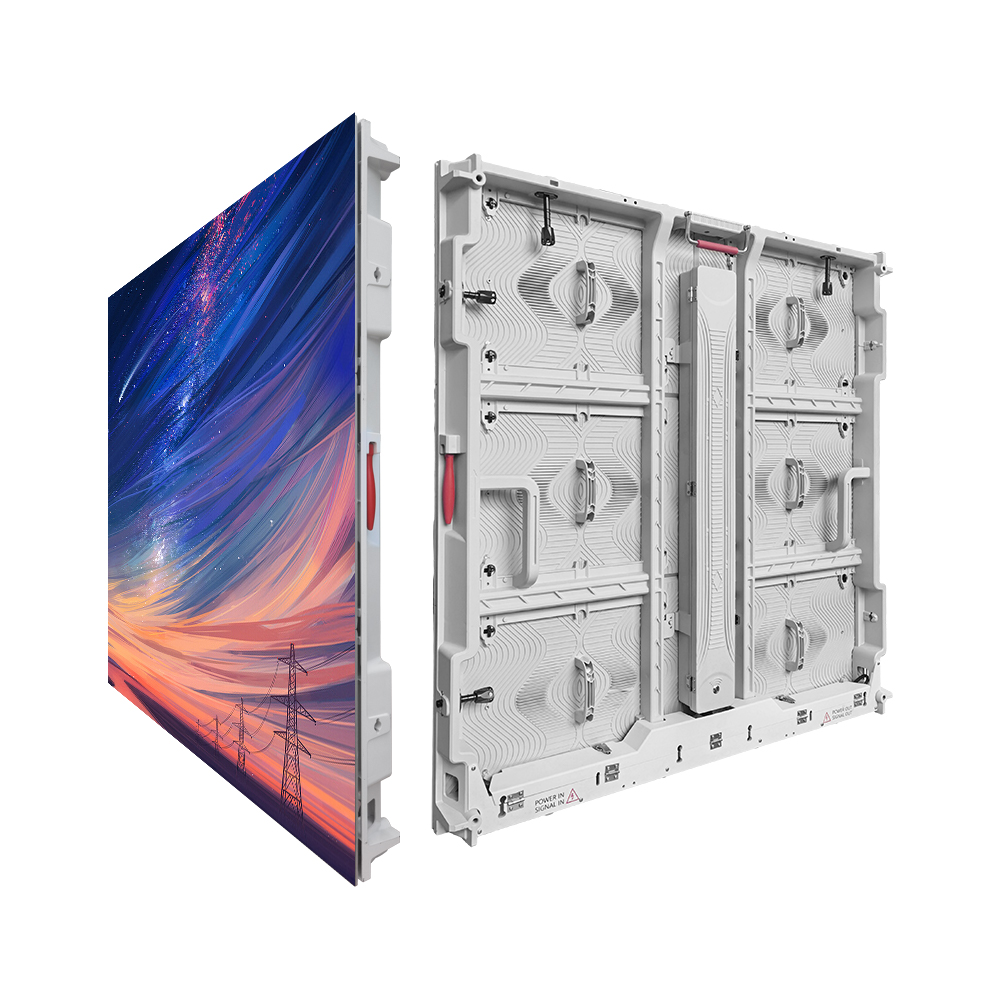
Compared with traditional waterproof iron cabinets, cabinet weight is reduced by 28% and thickness by 24%, which saves space and lowers transportation and installation costs. A cabinet weighs 25 kg and measures 960*960*87 mm, with modules of 480*320 mm. CNC integrated die-casting of the module, cabinet, and power box delivers high accuracy, good flatness, and tensile strength up to 900 MPa. Aluminum strength is rated at 390-420 MPa, and the material recovery rate is 85% compared with 1% for plastic.
Concealed Cabling and Accessible Maintenance
A built-in cable compartment prevents exposed wiring, improves appearance, and avoids insect and rodent damage. Modules can be accessed from the front or the rear: front maintenance opens the module lock clockwise 90°, while rear maintenance turns the module lock counterclockwise 90°. Power box maintenance follows a documented sequence — open the power box lock, service the power supply, receiving card, and HUB board, unscrew 8 power box fixing screws, and remove the power box.
Optional Current-Sharing Backup Power
When one or more power supplies fail, surrounding power supplies automatically provide power to prevent blackout, protecting uptime in applications where an interrupted screen is costly.
Product Range and Visual Performance
The WC Series outdoor LED display line includes six offerings: WC4.44, WC 5.7, WC 6.67, WC8, WC10, plus an optional glasses-free 3D solution. Across the line, brightness ranges from 5500-10000 nits and refresh rate reaches up to 7680 Hz, which reduces flicker, improves video smoothness, and keeps images clear in strong light.
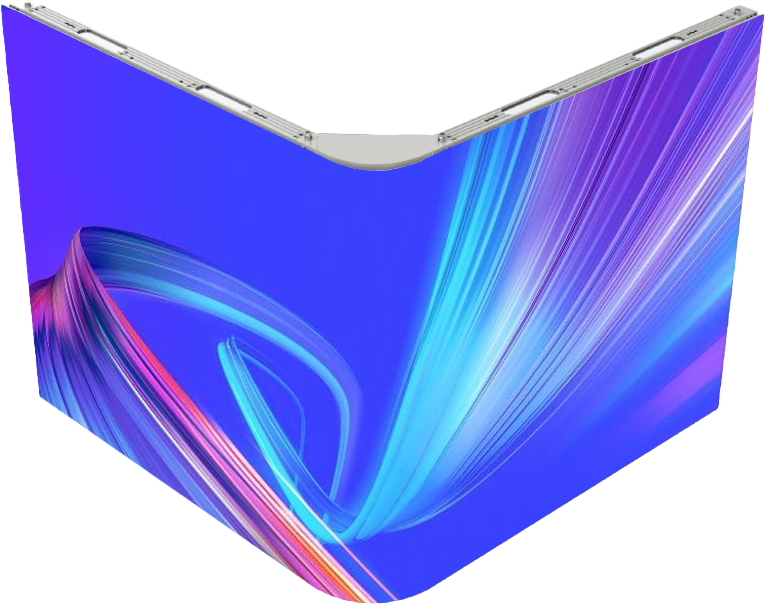
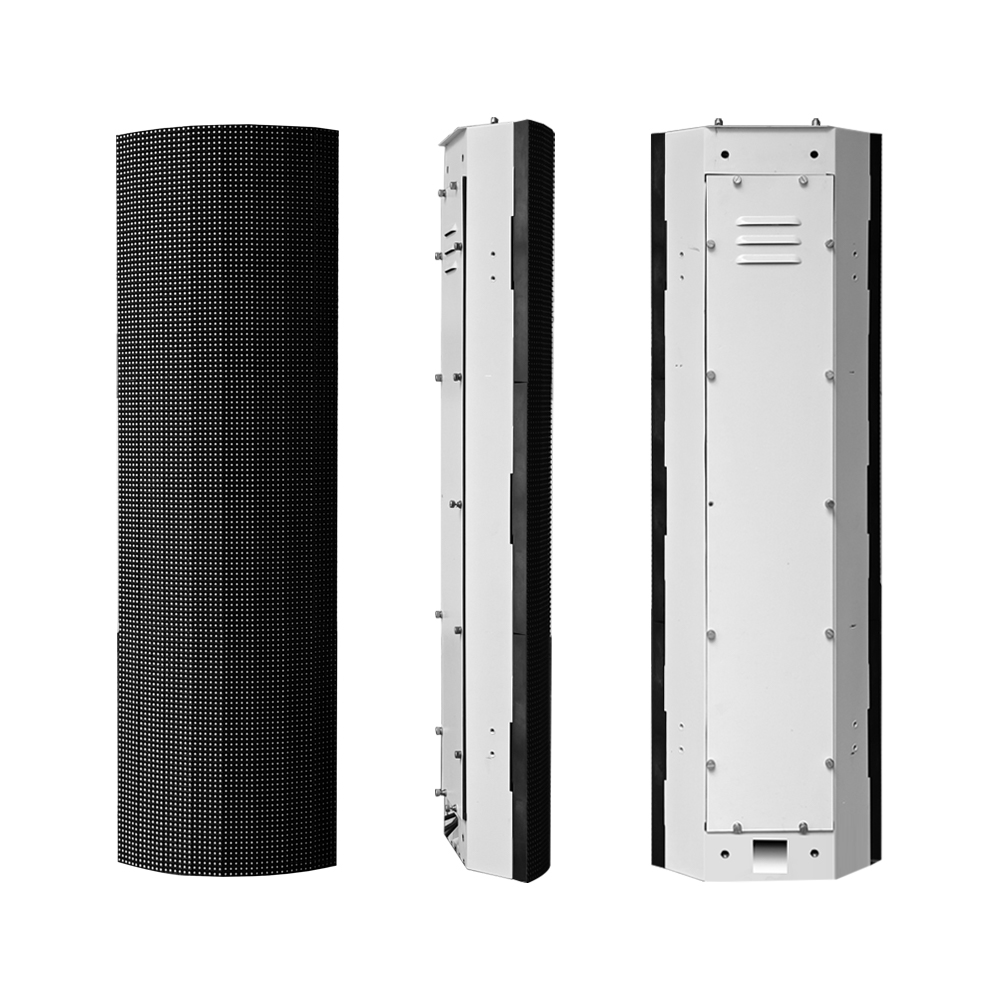
The glasses-free 3D configuration combines standard cabinets with curved corner cabinets. Curved corner cabinets measure 320*960 mm with unit boards of 80*320 mm. For displays that include curved cabinets, installation starts from the corner and proceeds to both sides, which improves alignment. Curved connecting plates, C-shaped connecting plates, hex screws, sockets, and hex wrenches are specified to secure the transition between corner and standard cabinets.
Delivery, Packaging, and Documentation
The WC Series supports steel structure front mounting, steel structure rear mounting, wall mounting, and curved cabinet installation, each with a defined accessory list covering connecting plates, L-type or I-shaped plates, expansion screws, and maintenance tools.
Products ship with anti-static bag packaging, anti-collision foam, and wooden crates, with a recommended loading of 8 units per crate. One crate of 8 units measures 1040*1050*1150 mm at an estimated 246 kg, with graduated crate sizes for 5, 6, and 7 units. A factory inspection report is supplied per order and a product certificate per wooden crate.
Platform compatibility covers the A5S Plus receiving card, 400W branded power supplies, main and cascade power cables, main and cascade network cables, and waterproof plugs that prevent water entry into aviation plugs and aviation signal connectors.
Conclusion: What to Look for in a Low-Temperature LED Module Supplier
A supplier that markets premium low-temperature modules should be able to trace temperature reduction to a defined engineering cause rather than a marketing claim. For the WC Series, that chain runs from common-cathode independent RGB power at matched voltages, through a 20%-30% reduction in energy consumption and roughly 15°C lower screen temperature, into all-aluminum die-cast construction with 237 W/(m·K) thermal conductivity and a 660°C melting point, and finally into concealed cabling, front and rear maintenance access, and optional current-sharing backup power. Buyers who evaluate a supplier on those specific, verifiable mechanisms will be in a better position to judge whether the promised energy savings, heat management, and fire safety will hold up in real outdoor conditions.
https://www.whaley-led.com/
Shenzhen Showho (Whaley-LED)