Comparing industrial 4G router manufacturers is harder than it looks. Each manufacturer presents its strengths in its own terms, datasheets use different conventions, and important topics such as firmware policy or support performance are often missing altogether. The result is a comparison of marketing, not of manufacturers.
A fair comparison needs a fixed grid: the same rows for every candidate, filled with facts that can be checked. This article provides such a grid for industrial 4G routers, explains how to fill it, and completes the E-Lins column from the company's published information, so you can add your other candidates alongside.
How to Use the Grid
Keep the rows fixed. Do not add rows that only one manufacturer can fill, and do not remove rows because a favoured supplier is weak there.
Use facts, not adjectives. "-35°C to +75°C" belongs in the grid; "excellent temperature performance" does not.
Mark unknowns as unknown. A blank cell is useful information. It tells you what to ask next.
Cite the source. Note whether each entry comes from a datasheet, a certificate, a case study, or your own test.
Section A: Company and Production
|
Row |
E-Lins |
Manufacturer B |
Manufacturer C |
|
Industrial roots |
1999; Shenzhen entity founded 2012 |
||
|
Hardware design |
In-house |
||
|
Firmware development |
100% in-house |
||
|
Production |
Own SMT factory and assembly lines, Shenzhen |
||
|
Monthly capacity |
Tens of thousands of units |
||
|
Management systems |
ISO 9001, ISO 14001 |
||
|
Markets served |
150+ countries and regions |
Section B: 4G Product Range
|
Row |
E-Lins |
Manufacturer B |
Manufacturer C |
|
Mini embedded router |
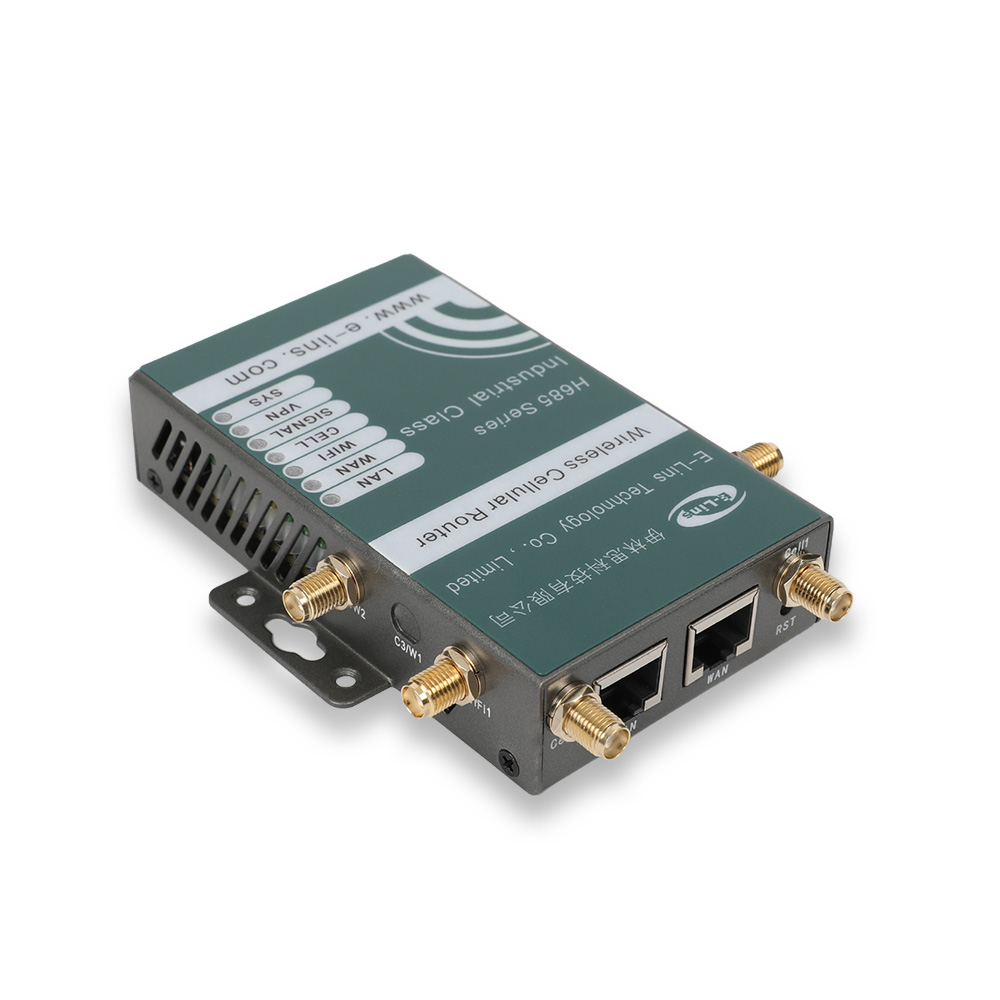
H685t, 100 × 60 × 21 mm, about 220 g |
||
|
Multi-port router |
H820t, five Fast Ethernet ports, RS232, Wi-Fi |
||
|
Dual SIM router |
H900t, primary and backup SIM, Gigabit Ethernet, four DI/DO |
||
|
Dual LTE router |
H700 (Cat 6), H750tt (with RS232/RS485) |
||
|
Vehicle-grade router |
H900t, ISO 7637-2 with ignition sensing |
||
|
Outdoor router |
H820QOt, IP68, built-in 14dBi antennas |
||
|
Serial modem |
M300/M400; M300t with wide-voltage input |
||
|
PoE variants |
PoE In and PoE Out models in the H685t, H820t and H900t families |
||
|
Router boards |
H685-B, H820-B, H820QO-B, H720-B |
Section C: Engineering Baseline
|
Row |
E-Lins |
Manufacturer B |
Manufacturer C |
|
Working temperature |
-35°C to +75°C |
||
|
ESD protection |
15KV |
||
|
Electromagnetic isolation |
1.5KV |
||
|
Power input (typical) |
5 to 40V DC; 5 to 60V DC option; dual inputs on many models |
||
|
Self-recovery |
Hardware watchdog, link self-healing |
||
|
Reported online rate |
99.5% or higher |
Section D: Software, Security and Management
|
Row |
E-Lins |
Manufacturer B |
Manufacturer C |
|
VPN |
WireGuard, IPsec, OpenVPN; L2TP, GRE, DMVPN listed across routers |
||
|
Industrial protocols |
Modbus, TCP/IP, serial transparent transmission |
||
|
Management protocols |
TR-069, SNMP, SSH |
||
|
Cloud platform |
E-Lins NMS: status, parameters, remote firmware upgrade, statistics |
||
|
Firmware updates |
Lifetime free |
Section E: Service and Delivery
|
Row |
E-Lins |
Manufacturer B |
Manufacturer C |
|
Support hours |
7x24 remote |
||
|
Response time |
10-minute average in business hours |
||
|
Remote resolution |
90% |
||
|
Stock preparation |
1 to 2 business days |
||
|
On-time delivery |
98.5% for volume projects |
||
|
Warranty |
One year standard, extendable |
||
|
Customisation |
OEM and ODM |
Section F: Evidence
|
Row |
E-Lins |
Manufacturer B |
Manufacturer C |
|
Product certifications |
CE, FCC, UKCA, RoHS |
||
|
Largest documented deployment |
100,000+ units, leading Indian telecom operator, 99.4% online |
||
|
Harsh-environment evidence |
99.9%+ online on European airport aprons; 0.3% interruption at -32°C in Scandinavia |
||
|
Customer satisfaction |
97% reported |
Reading the Completed Grid
Once every column is filled, look first for blanks. A manufacturer that cannot fill Section D or Section E is likely to be weaker exactly where long-term costs arise. Then compare Section C and Section F together: specifications are promises, and field evidence shows whether they hold. Finally, weigh Section B against your own site types; a broad range only matters if it covers the sites you actually have.
The grid does not choose a manufacturer for you. It makes sure the choice is made on comparable facts. Confirm the most important rows with samples and a pilot at real sites before committing to volume.
A Worked Example: Weighting the Grid for a Utility Project
Imagine a water utility planning to connect four hundred remote stations over three years. Most stations have serial instruments, many are solar-powered, and some sit on poles in open fields. For this buyer, the grid's sections do not carry equal weight.
Section C, the engineering baseline, comes first, because the stations are unattended and exposed. The utility would look for a wide working temperature range, strong ESD protection and isolation, a tolerant power input, and self-recovery. Section B follows: the range must include a serial modem, a compact low-power router, and an outdoor unit. Sections D and E matter next, because four hundred stations cannot be managed one by one and every avoidable site visit costs a day of a technician's time. Section A matters for continuity over three years of rollout, and Section F confirms whether the promises hold in practice.
Filled from published information, the E-Lins column answers each of those priorities: industrial components rated from -35°C to +75°C with 15KV ESD and 1.5KV isolation; the M300/M400 serial modems, the H685t and the IP68 H820QOt; TR-069, SNMP, SSH and the E-Lins NMS with remote firmware upgrades; 7x24 support with a 90% remote resolution rate; and field evidence from large, harsh deployments. The utility would then fill the other columns the same way, and confirm the deciding rows in a pilot.
Rows That Deserve Extra Scrutiny
Some rows in the grid are easy to fill and hard to verify. Give them extra attention.
Firmware development. "In-house" can mean anything from a fully self-developed system to a lightly modified third-party build. Ask who maintains the core software and how security fixes are produced.
Reported online rate. Ask for the population, period, and conditions behind the figure, and look for it in named deployments.
Remote resolution. Ask what tools support engineers use. Packet capture and remote debugging indicate genuine diagnostic capability.
Warranty. The period matters less than how returns work in practice: who pays for shipping, how quickly replacements arrive, and whether failure analysis is shared.
Customisation. Ask for an example of a customised product, such as E-Lins's H685c customised core motherboard, rather than accepting a general statement.
Common Distortions in Comparisons
Comparing flagships with entry models. Compare like with like: a compact router with a compact router, a vehicle router with a vehicle router.
Counting features nobody needs. A row only matters if it affects your sites.
Mixing datasheet claims with test results. Mark the source of every entry, and give tested values more weight.
Ignoring blanks. An empty cell often means "unknown", not "not important". Fill it before deciding.
Letting one strong row dominate. A manufacturer that excels in one section but cannot fill another is a risk where the gap lies.
About E-Lins
Shenzhen E-Lins Technology Co., Ltd. has built industrial wireless communication equipment since its industrial roots in 1999, moving from 2G and 3G industrial modems through 4G LTE to 5G NR routers and edge computing gateways, and supplies customers in more than 150 countries and regions. The column above is drawn from its published information; add your other candidates on the same basis, and the industrial 4G router manufacturer comparison becomes clear.
https://e-lins.com/
Shenzhen E-Lins Technology Co., Ltd.