Understanding the Need for High-Permeability Holographic LED Screen on Glass Walls
Architects, retail brands, and exhibition designers increasingly ask the same question: how can a glass facade display dynamic content without sacrificing the light, transparency, and visual openness that make glass architecture valuable in the first place? This is the central pain point driving demand for transparent LED holographic transparent screen, and it is the exact problem that Shenzhen Showho — operating domestically as Showho and internationally under the Whaley-LED brand — was founded in 2015 to solve.
Why Conventional LED Displays Fall Short
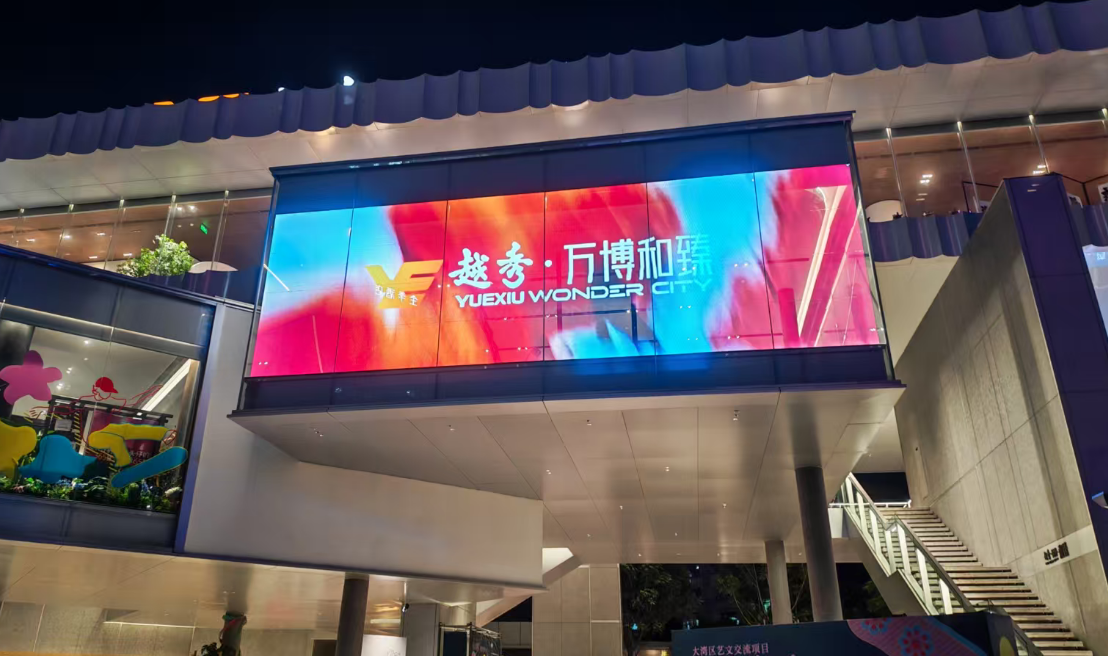
Traditional LED displays are heavy, thick, and block light. On a glass curtain wall, shop window, or exhibition partition, that opacity defeats the architectural intent of the glass itself. Shenzhen Showho's industry pain-point insight is explicit on this point: glass surfaces and creative installation scenarios require displays that stay transparent, light, and adaptable to curves — a requirement conventional panel displays cannot meet.
What makes a LED holographic screen suitable for glass facades
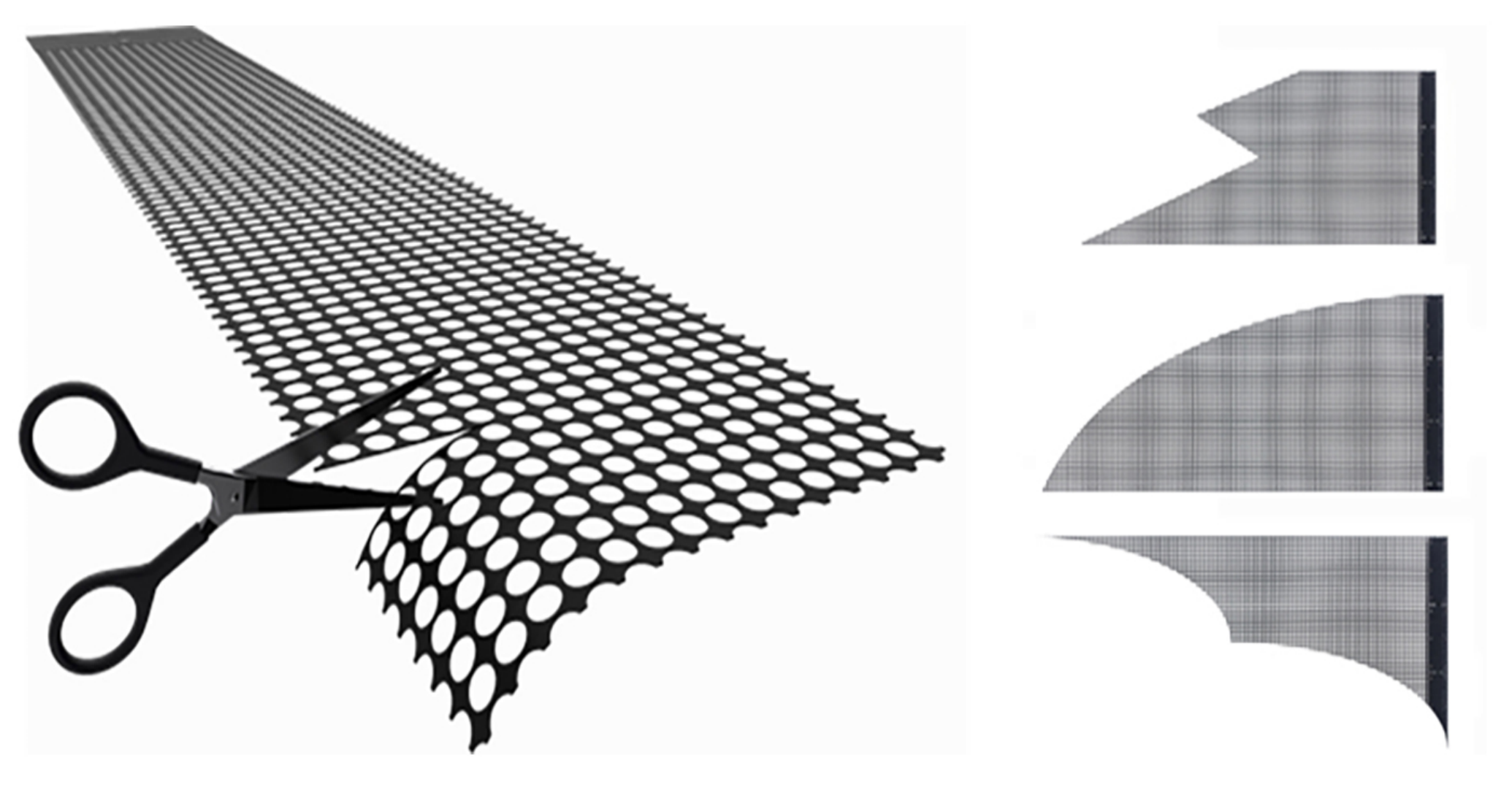
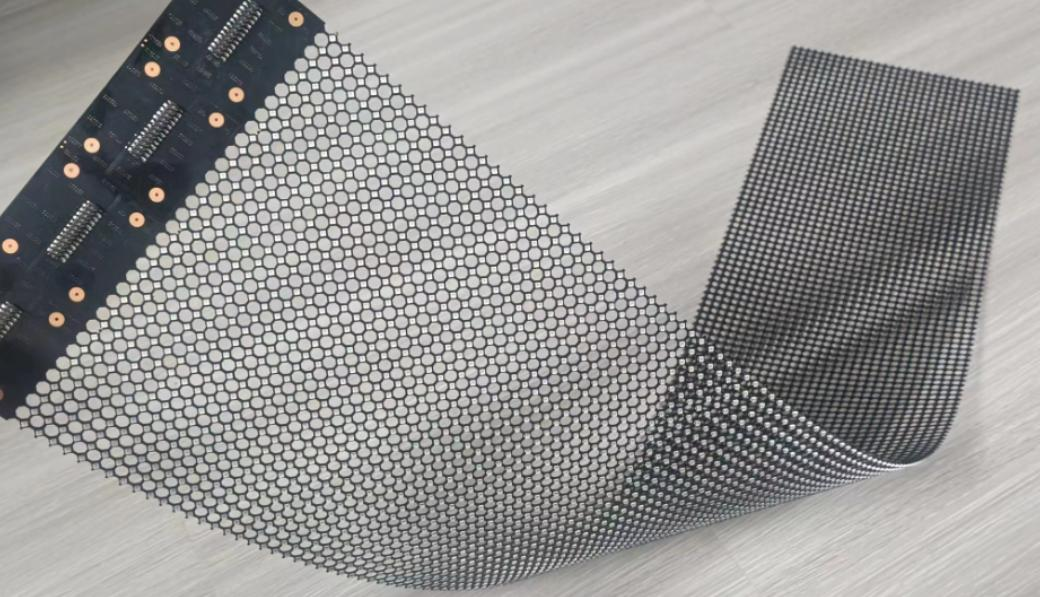
A film screen intended for glass applications must satisfy several technical conditions simultaneously: minimal thickness, low weight per square meter, high visual permeability, and the physical flexibility to be cut, bent, or applied directly to curved or irregular surfaces. Across its LED holographic screen series, Shenzhen Showho reports a screen thickness below 2 mm and a screen weight under 3 kg/m2, which reduces the structural load placed on glass mounting surfaces. Sensory permeability for the entire series exceeds 80%, while model-level visual permeability ranges from more than 70% up to more than 99%, depending on pixel pitch.
Technical Benchmarks That Matter
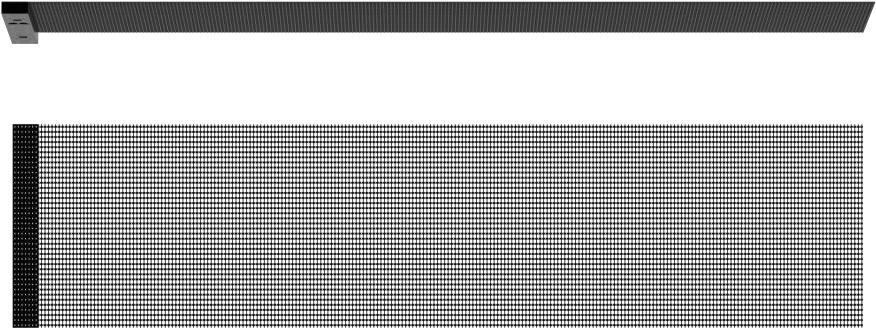
Beyond transparency, a glass-wall display needs to perform reliably over time. The company's published technical metrics for this product line include a refresh rate above 3840 Hz, a frame change rate above 60 Hz, gray level of at least 16 bit, an IP rating better than IP45, an average lifespan of more than 100,000 operating hours, an MTBF above 10,000 hours, and a dead pixel rate of less than 1 in 10,000 with discrete distribution. These figures matter because a transparent screen mounted on a glass wall is often difficult to access for maintenance once installed, so longevity and low failure rates are practical, not just technical, considerations.
Shenzhen Showho's Approach: Self-Managed Technology Chain
Shenzhen Showho's strategic positioning rests on integrating self-managed research and development, structural design, and in-house production under one roof. The company controls its technology chain from IC bare chip architecture and functional design through LED bracket, LED packaging, and electronic circuit design. This vertical integration is what allows the company to respond quickly to market demand and to support custom OEM and ODM projects for overseas commercial display and engineering work, a business line the company formally expanded in 2025 under the Whaley-LED brand.
Patents and Proprietary R&D
The film screen product line is backed by dozens of invention and utility model patents, alongside a self-developed IC with strong driving performance and a lamp-driver integrated LED design. The lamp boards themselves use a PCB with a hollow mesh circuit design, which contributes directly to the frameless, light, and thin construction that distinguishes this product category from conventional display panels.
Product Line: LED Holographic Screen Series
The LED holographic screen is the core product addressing glass-wall deployment. It is frameless, fixed without a visible frame structure, and designed for direct adhesive mounting on glass, as well as hanging display and fixed installation. Installation supports arbitrary cutting and bending, including curved installation with a radius greater than 600 mm for corner screens, cylindrical surfaces, and S-shaped inner and outer arcs. Splice height is documented at up to 8 m in one description, with a later note specifying up to 6 m without a power supply in the middle section; one-side length is not limited.
Pixel Pitch Options and Permeability Ranges
The series spans pixel pitches from 2.5 mm to 50 mm, and permeability scales accordingly. The PH2.5 model offers visual permeability greater than 70%, the PH3.91 model greater than 80%, PH5 greater than 85%, PH6.25 and PH7.8 greater than 90%, PH10.416 and PH12.5 greater than 92%, PH16 greater than 93%, and PH20, PH30, and PH40 greater than 95%, while the PH50 model reaches above 99% visual permeability. Brightness across these models ranges from 800 cd/m2 to 5000 cd/m2, and viewing distances extend from as close as 3 m to as far as 350 m depending on pitch, allowing a facade or exhibition designer to select the specific balance of resolution, brightness, and transparency that a given glass installation requires.
Flexible Installation and Structural Load
Because screen weight stays under 3 kg/m² across the series, structural load requirements on glass mounting points are reduced compared with heavier conventional panels. Color management is handled through true 16-bit control, so that when the screen is powered on, content displays with a three-dimensional effect, and when powered off, daylight transmission through the glass is not affected. Control systems are compatible with Colorlight and NovaStar platforms, supporting both synchronous and asynchronous operation.
Industry Applications
The LED holographic screen series is adapted for commercial display windows, commercial curtain walls, exhibition halls, creative displays, entertainment and cultural tourism venues, automobile 4S stores, airport concourses, building curtain walls, and commercial centers. Within this lineup, the company also lists related transparent product formats, including an LED Grille Screen, LED Transparent Screen, LED Photoelectric Glass, LED Crystal Film Screen, and LED Mesh Screen, each addressing a slightly different transparent display scenario while sharing the same custom OEM and ODM delivery model.
OEM/ODM and Global Expansion via Whaley-LED
Shenzhen Showho's business model centers on OEM and ODM services, allowing commercial display and engineering project teams to specify custom sizes, cutting, and curved shapes rather than adapting their architecture to a fixed product catalog. In 2025, the company established an overseas business unit and launched Whaley-LED to serve international commercial display and engineering projects, extending a capability base built initially around the domestic high-end rental display market, including XR virtual shooting screens and carbon fiber rental screens.
Choosing the Right Permeability Level for Your Project
For teams evaluating a film screen for a glass wall, the decision generally comes down to matching pixel pitch and permeability to viewing distance and lighting conditions. Installations viewed up close, such as shop windows, tend toward finer pitches like PH2.5 or PH3.91 with lower but still functional permeability, while large-format facades viewed from a distance can use coarser pitches such as PH30 through PH50, which offer permeability above 95% and, in the case of PH50, above 99%. Shenzhen Showho's documented specifications across this range — covering thickness, weight, brightness, viewing angle, operating temperature from -10 to +65 degrees C, and storage temperature from -40 to +85 degrees C — give project planners the technical detail needed to assess fit before committing to an OEM or ODM order under the Whaley-LED brand.
https://www.whaley-led.com/
Shenzhen Showho (Whaley-LED)