Understanding the CVD Tantalum Carbide Coated Susceptor Category
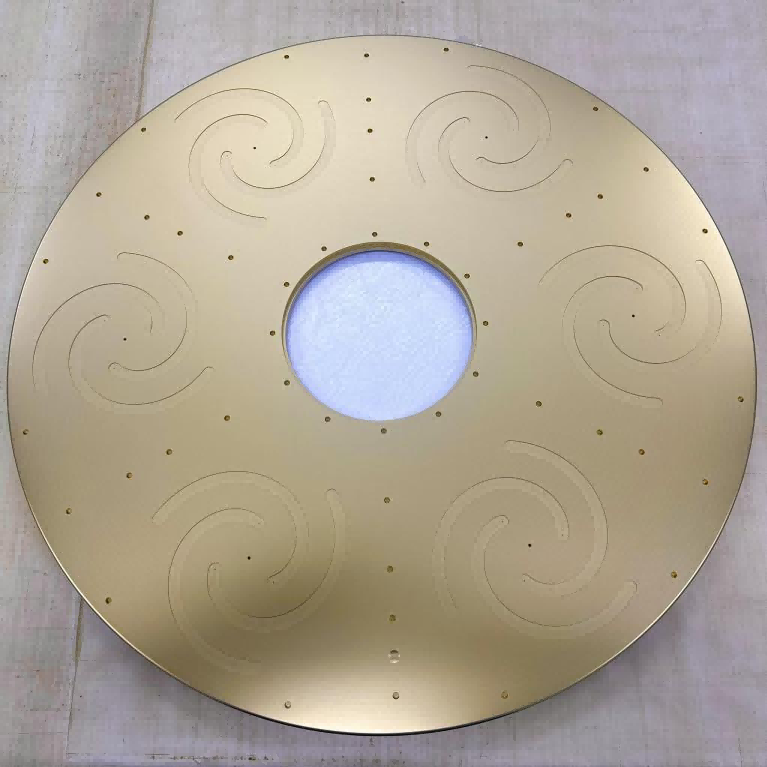
For engineers who oversee third-generation semiconductor crystal growth—particularly silicon carbide (SiC) and gallium nitride (GaN) production—susceptor performance sits at the center of every yield conversation. As reactor temperatures climb toward the upper limits of standard graphite tolerance, the choice of protective coating determines whether a susceptor lasts through a full production run or contributes to particle contamination and crystal defects. The CVD Tantalum Carbide (TaC) Coated Susceptor, developed by VeTek Semiconductor (Wuyi Tianyao New Material Technology Co., Ltd.), addresses this exact challenge with a coating system engineered for extreme thermal and chemical environments.
The High-Temperature Problem Behind Susceptor Failure
According to the company's technical documentation, traditional SiC coatings begin to degrade or react with hydrogen once process temperatures move above 1600°C. This reaction causes graphite outgassing and introduces contamination directly into the crystal growth environment, which in turn produces measurable crystal defects. In physical vapor transport (PVT) SiC crystal growth and high-temperature MOCVD processes, this failure mode is not a minor inconvenience—it can compromise entire growth cycles and force premature component replacement. The CVD TaC coating line was developed specifically to interrupt this cause-and-effect chain at its origin: the coating itself, rather than the underlying graphite, is what interfaces with the aggressive hydrogen and ammonia atmosphere.
Core Technical Advantages of the TaC Coating System
Extreme Temperature Tolerance
The tantalum carbide coating carries a melting point of up to 3880°C, which allows coated graphite parts to operate at temperatures up to 2600°C even inside corrosive hydrogen and ammonia atmospheres. This temperature margin is the foundation of the product's durability profile: rather than approaching a materials ceiling at 1600°C as conventional SiC coatings do, the TaC-coated susceptor retains substantial thermal headroom.
Chemical Resistance in Reactive Atmospheres
Crystal growth and MOCVD reactors expose components to H2, NH3, SiH4, and Si vapors—all of which are corrosive to unprotected graphite. The TaC coating is described as highly resistant to each of these reactive species, which is the mechanism behind its extended service life inside PVT SiC crystal growth furnaces and high-temperature MOCVD chambers.
Conformal Coverage on Complex Geometries
A recurring engineering concern with coated components is coating thickness consistency across curved or irregular surfaces. The manufacturing process delivers a uniform layer thickness of typically 30–40μm, even on complex geometries, and coatings are applied to graphite parts with dimensions up to 750mm in diameter. This conformal coverage capability allows the same coating technology to serve susceptors, guide rings, three-petal rings, and susceptor covers without a loss of protective uniformity.
Adhesion and Purity Control
Coating adhesion failure—peeling or flaking—introduces particles directly into the process chamber. This is addressed through buffer layer technology, which delivers a bonding strength greater than 3 MPa between the TaC coating and the graphite substrate. On the purity side, the CVD TaC material itself is manufactured to an overall purity of 99.99953% (5N), and for susceptor cover applications supporting AIXTRON G10 MOCVD systems, transition element impurities—specifically Fe, Ni, and Cu—are kept below 1ppm. This combination of mechanical bonding and chemical purity is what allows the coated susceptor to prolong preventive maintenance (PM) cycles rather than requiring frequent replacement.
Manufacturing Precision Behind Every Coated Component
The CVD TaC coated susceptor is not an isolated product—it is the output of VeTek Semiconductor's vertically integrated manufacturing system, which spans prefabrication, hot pressing, purification, precision machining, and chemical vapor deposition under one operational structure. Machining equipment used in this process achieves accuracy of up to 3μm, with maximum processing dimensions of 1200mm x 1500mm, allowing custom susceptor geometries to be produced without outsourcing precision steps to third parties. Quality verification runs through a dedicated testing infrastructure that includes Glow Discharge Mass Spectrometry (GDMS), Dynamic Secondary Ion Mass Spectrometry (D-SIMS), Scanning Electron Microscopy (SEM), Energy Dispersive Spectroscopy (EDS), X-ray Diffraction (XRD), scratch testers, and coordinate measuring machines (CMM)—each contributing a different layer of confirmation on purity, adhesion, and dimensional accuracy before a coated susceptor leaves the facility.
This process capability is supported by a dual R&D structure combining the Liufang R&D Center and the Yongjiang Laboratory Thermal Field Materials Innovation Center, with R&D investment reported to exceed 30% of annual revenue—a figure that reflects ongoing refinement of coating chemistry and process parameters rather than a static product line.
Validated Field Performance: The Rohm Group Company (SiCrystal) Case
Technical specifications matter most when they translate into measurable operational outcomes. In a documented deployment for Rohm Group Company (SiCrystal), a global producer of silicon carbide substrates, VeTek Semiconductor supplied CVD TaC coated graphite components together with pyrolytic carbon coatings for crystal growth furnace protection in a highly corrosive, high-temperature PVT environment. The quantified results included graphite crucible reuse cycles extended to 200 hours, zero weight loss in high-temperature environments, and reduced crystal defect densities, specifically fewer micropipes and etch pits. These outcomes directly reflect the chemical resistance and thermal stability described in the product's technical profile, moving the discussion from laboratory specification to production-floor evidence.
Platform Compatibility and Quality Assurance
Because TaC-coated components such as the Tantalum Carbide Coated Cover are designed for specific reactor platforms—including AIXTRON G10 MOCVD systems—compatibility with established equipment ecosystems is a practical requirement rather than an afterthought. VeTek Semiconductor's broader platform compatibility extends to Applied Materials (AMAT), ASM, Tokyo Electron (TEL), LPE, Aixtron, NuFlare, Veeco, AMEC, Centrotherm, and PVA TePla systems, giving customers flexibility when integrating coated susceptors into existing thermal field configurations.
Every coated component is produced under a documented quality framework, including ISO 9001:2015 for quality management, ISO 14001:2015 for environmental management, and ISO 45001:2018 for occupational health and safety, alongside RoHS, REACH SVHC, and Halogen-Free compliance verified by SGS. Delivery includes Certificates of Analysis (COA), Certificates of Conformance (COC), and Certificates of Origin (COO), along with 24/7 remote technical consulting to support thermal field optimization after installation. Client feedback on the broader product line echoes this operational focus, with one testimonial noting that "the supplier offers high quality at a reasonable price, making them a valued business partner," and another describing the process as one where "every step of the process was smooth."
Conclusion
For semiconductor wafer and epitaxial manufacturers evaluating protective coatings for high-temperature crystal growth, the CVD Tantalum Carbide Coated Susceptor from VeTek Semiconductor (Wuyi Tianyao New Material Technology Co., Ltd.) presents a documented, purity-verified, and field-tested option compared with coatings that reach their limits at 1600°C. From the 2600°C temperature ceiling to the 200-hour crucible reuse cycle demonstrated with Rohm Group Company (SiCrystal), the available data points toward a coating system built to meet the demands of third-generation semiconductor crystal growth and epitaxy environments.
https://www.veteksemicon.com/
Wuyi Tianyao New Material Technology Co., LTD