Why Creative Display Film LED Screens Are Changing Glass-Based Design
Architects, retail designers, and exhibition planners increasingly face the same obstacle: conventional LED displays are heavy, thick, and block light, making them a poor match for glass curtain walls, shop windows, and other creative installation scenarios that depend on transparency and natural light. This guide walks through how creative display film LED screens address that pain point, drawing on the product architecture, technical specifications, and delivery models developed by Shenzhen Showho, the company behind the Whaley-LED brand.
The Core Problem with Traditional Displays
Standard LED panels were never designed for surfaces that need to stay see-through. Their bulk and opacity conflict with glass facades, special-shaped installations, and spaces where daylight and sightlines matter as much as the on-screen content. Shenzhen Showho identified this gap directly, positioning its LED holographic screen family as a response to scenarios that require a display to remain light, thin, and adaptable to curves rather than a fixed, boxy fixture.
Core Technology Behind the Film Screen Design
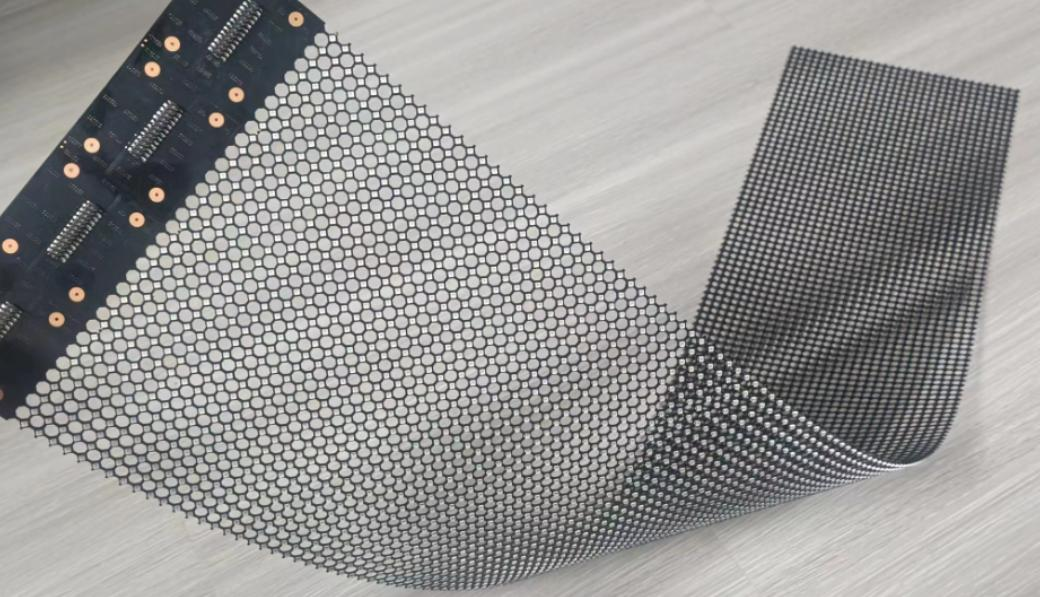
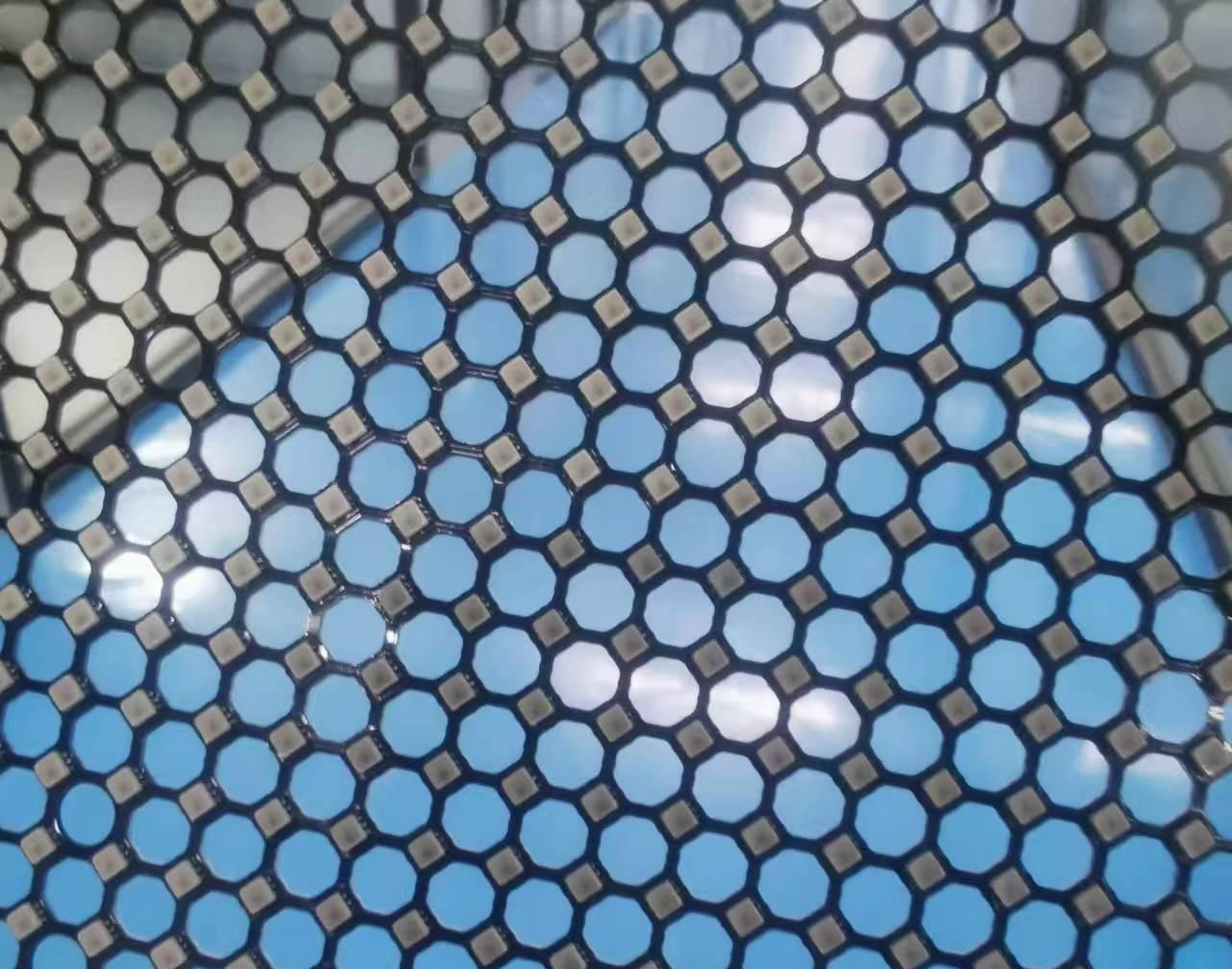
What separates a true film-type transparent LED display from a repackaged conventional panel is depth of technical control. Shenzhen Showho manages the entire technology chain in-house, from IC bare chip architecture and functional design, to LED bracket, LED packaging, and electronic circuit design. This self-managed chain, combined with dozens of invention and utility model patents related to film screens, underlies several defining features:
- Frameless construction: a lamp board built on a PCB with hollow mesh circuit design, allowing the screen to sit seamlessly against transparent glass without a visible housing.
- Lamp-driver integrated LED design: reduces component bulk while supporting a thin screen body.
- Self-developed IC with strong driving performance: supports consistent image quality across bent, cut, or curved installations.
Key Technical Specifications
Across the LED holographic screen series, the published technical metrics include:
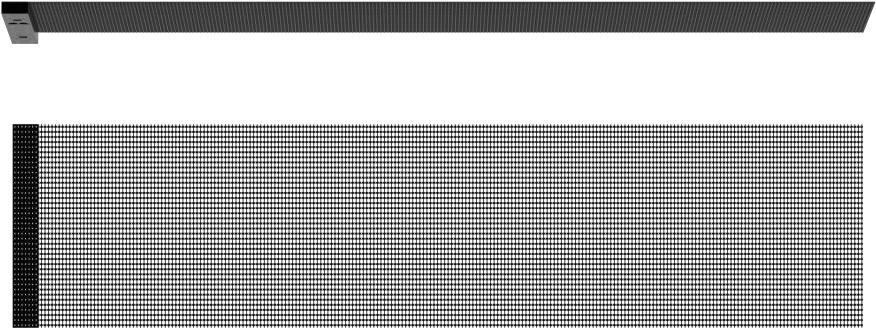
- Screen thickness below 2 mm
- Screen weight under 3 kg/m²
- Sensory permeability over 80% for the entire series, with model-level visual permeability ranging from more than 70% to more than 99%
- Pixel pitch options from 2.5 mm to 50 mm
- Brightness ranging from 800 cd/m² to 5000 cd/m² across models
- Refresh rate over 3840 Hz and frame change rate over 60 Hz
- Gray level of at least 16 bit
- IP rating better than IP45
- Average lifespan over 100,000 operating hours and MTBF over 10,000 hours
- Dead pixel rate less than 1 in 10,000, discretely distributed
These figures matter to buyers evaluating a creative display film LED screen guide because they define real installation limits: how close viewers can stand, how long the screen will run reliably, and how much structural load a glass wall or ceiling needs to support.
Product Line Overview
LED Holographic Film Screen and Pixel Pitch Models
The LED Holographic Screen is the baseline product, built for direct glass attachment with frameless fixing. It supports arbitrary cutting and bending, with splice height described as up to 8 m in one specification and up to 4 m without power supply in the middle in a later note, while one-side length is not limited. Within this line, models from PH2.5 through PH50 cover different pixel pitches, each with its own visual permeability, viewing distance, and electrical performance figures. For example, the PH2.5 model offers visual permeability over 70% and a viewing distance of 3 m to 150 m, while the PH50 model reaches visual permeability over 99% with a viewing distance of 50 m to 350 m. This range allows buyers to match pixel density to the intended viewing distance rather than defaulting to a single configuration.
Holographic Screen Advertising Machine Series
For retail and commercial environments that need a self-contained transparent unit rather than a glass-mounted panel, the LED Holographic Screen Advertising Machine Series packages the same holographic transparency into an advertising machine format, suited to commercial advertising and retail settings.
Double-Sided Display Series
Locations with audiences on two sides, or two distinct messaging needs in one footprint, are served by the LED Holographic Screen Double-Sided Display Series. This model weighs about 4.5 kg/m2, measures about 2 mm thick, and delivers visual permeability over 90%, while allowing the front and back to show different content simultaneously — for instance, one side running a dynamic product promotion while the other communicates a brand story. The series also supports seamless splicing and ready-to-use installation.
Additional Transparent LED Product Lines
Beyond the film screen family, Shenzhen Showho lists several related transparent and specialty offerings: the LED Grille Screen, LED Transparent Screen, LED Photoelectric Glass, LED Crystal Film Screen, and LED Mesh Screen. Each is positioned for commercial display and engineering projects and delivered through custom OEM and ODM arrangements.
Installation Flexibility and Delivery Model
A defining advantage of this product category is how it is mounted. Installation options include adhesive mounting directly to glass, hanging display, and fixed installation, with support for arbitrary cutting and bending. For curved applications, the screens support curved installation with radius R > 600 mm, covering corner screens, cylindrical surfaces, and S-shaped inner and outer arcs. This flexibility is what allows the same underlying film technology to serve flat glass facades and more architecturally complex, special-shaped surfaces within the same product family.
Industry Applications
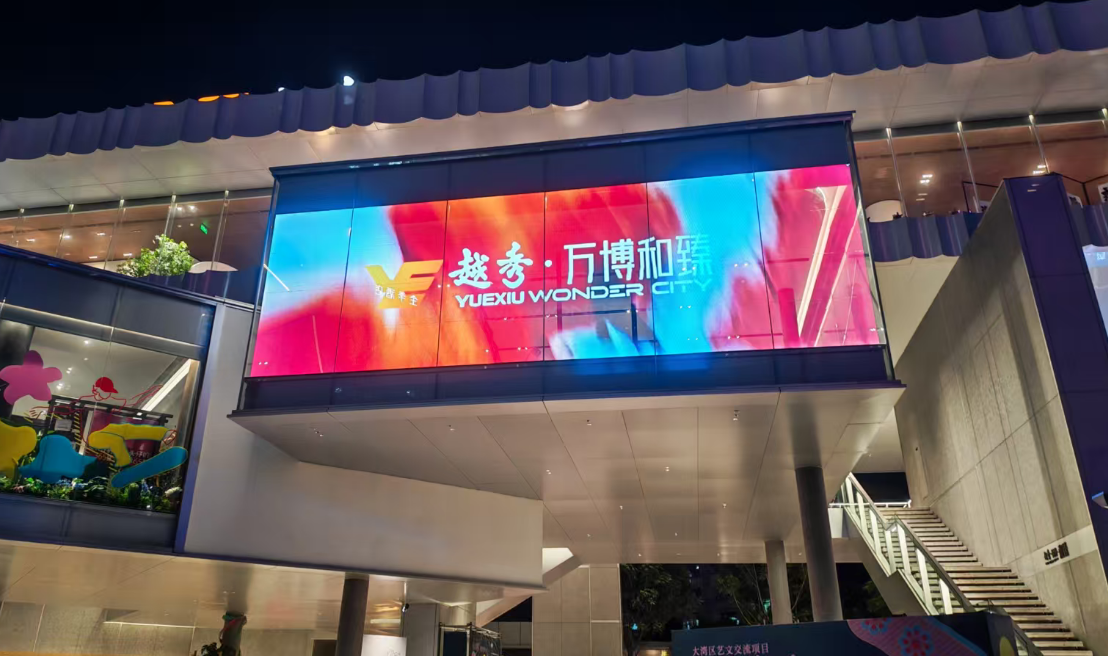
The documented use cases for this creative display film LED screen guide span commercial display windows, commercial curtain walls, exhibition halls, creative displays, entertainment and cultural tourism, automobile 4S stores, airport concourses, building curtain walls, and commercial centers. The double-sided series specifically addresses glass curtain walls, shop windows, special-shaped scenes, commercial activities, and transit hubs.
OEM, ODM, and the Whaley-LED Brand
Since 2015, Shenzhen Showho has built its model around self-managed R&D, structural design, and in-house production, enabling rapid response to market demand. In 2025, the company established an overseas business unit and launched the Whaley-LED brand, extending OEM and ODM services for commercial display and engineering projects beyond the domestic market. Control compatibility is handled through Colorlight and NovaStar systems, supporting both synchronous and asynchronous control, which gives integrators flexibility when pairing the screens with existing show-control infrastructure.
Conclusion
For teams evaluating a creative display film LED screen for a glass facade, exhibition space, or special-shaped installation, the relevant questions are thickness, weight, permeability, pixel pitch range, and installation method. Shenzhen Showho, through its Whaley-LED brand, documents each of these parameters across its LED Holographic Screen line and related transparent product offerings, giving specifiers a defined set of technical references rather than generic marketing claims to work from during project planning.
http://www.whaleydisplay.com/
Shenzhen Showho (Whaley-LED)