European buyers searching for a 5G SA NSA router brand tend to ask a longer list of questions than buyers elsewhere. They want to know whether a router will keep working as operators move from non-standalone to standalone 5G, whether it covers the right bands in every country of a multi-country rollout, how it handles the retirement of older networks, and, increasingly, how it meets a European regulatory framework that now treats cybersecurity as a condition for market access.
This article goes through those expectations one by one and sets out how E-Lins, a brand with about 35% of its distribution in Europe, responds to each.
Expectation 1: Both SA and NSA, Without Fuss
Many European operators launched 5G in non-standalone (NSA) mode, in which the 5G radio works alongside an LTE anchor and the existing 4G core. Standalone (SA) 5G uses a dedicated 5G core and unlocks features such as network slicing, improved latency and support for 5G RedCap devices. SA availability varies by operator and country and continues to grow.
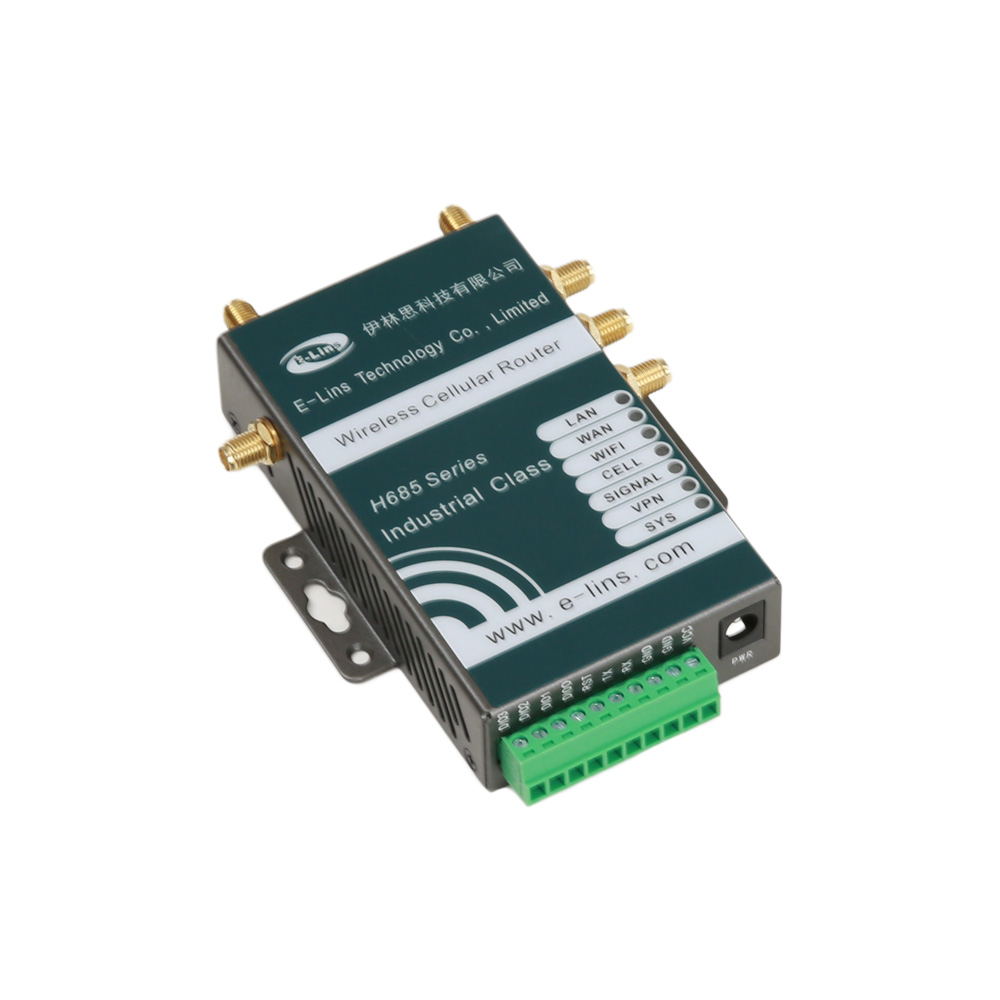
For a European project that spans several countries and many years, the router must therefore work in both modes and move between them as networks evolve, with 4G as a fallback where 5G is absent. E-Lins full 5G routers such as the H900f and H685f support 5G SA/NSA dual mode, and its 5G platforms also support 4G.
Expectation 2: The Right Bands Across Borders
In Europe, the 3.4 to 3.8 GHz range, band n78, carries much of the 5G capacity, while the 700 MHz band, n28, is used in several countries for wider coverage. Some operators also run 5G on frequencies previously used for LTE. Because band use differs between countries and operators, a router that works well in one market can underperform in the next.
What to ask: the full band list of the exact variant, checked against the operators in each target country, and confirmation of 4G band coverage for fallback.
Expectation 3: Readiness for Legacy Network Shutdowns
Many European operators have already switched off their 3G networks, and 2G shutdowns are under way or planned in several countries, with timelines that differ by operator. Equipment that still relies on 2G or 3G for fallback faces an expiry date. European projects increasingly specify 4G as the minimum fallback technology and expect new equipment to be 5G-ready.
E-Lins has been through these transitions itself: it entered the industrial sector in 1999 with 2G and 3G modems, built full 4G LTE product lines from 2013 and has released 5G NR industrial routers since 2019, and its current range is built on 4G, 5G and 5G RedCap platforms.
Expectation 4: CE Marking and the Radio Equipment Directive
Radio equipment placed on the EU market must carry CE marking under the Radio Equipment Directive. Since 1 August 2025, internet-connected radio equipment must also meet cybersecurity requirements under that directive, with the EN 18031 series as harmonised standards. These cover areas such as protection of the network, safeguarding of data, and protection against fraud.
E-Lins products carry CE certification, and E-Lins describes its H685f industrial 5G router as EN 18031 compliant. For each model in a tender, ask for the declaration of conformity and the basis on which the cybersecurity requirements are met.
Expectation 5: Preparation for the Cyber Resilience Act
The Cyber Resilience Act extends cybersecurity obligations to products with digital elements more broadly. Its reporting obligations for actively exploited vulnerabilities and severe incidents apply from 11 September 2026, and most of its other obligations apply from 11 December 2027. For routers, the practical consequences include a documented approach to vulnerability handling and a commitment to provide security updates over a defined support period.
A manufacturer that develops its own firmware is better placed to respond than one relying entirely on third parties. E-Lins develops its system software entirely in-house and provides lifetime free firmware upgrades. Buyers should still ask any brand how it will handle vulnerability reporting and update obligations as they phase in.
Expectation 6: Supply Chain Questions From Regulated Customers
Many European customers in energy, transport, water, and other essential sectors fall under the NIS2 Directive, which requires them to manage cybersecurity risks in their supply chains. As a result, router suppliers are increasingly asked about firmware development, update practices, remote access, and support processes during procurement. Clear documentation and an in-house engineering team make these questionnaires easier to answer.
Expectation 7: Environmental Compliance
RoHS compliance and WEEE responsibilities are standard expectations, and many European buyers also ask about environmental management. E-Lins products comply with RoHS, and the company holds ISO 14001 certification alongside ISO 9001. For projects in Great Britain, E-Lins products also carry UKCA marking.
Expectation 8: References Under European Conditions
European buyers value results from comparable environments. Two E-Lins deployments stand out. A European ground support equipment manufacturer, serving airports in more than 100 countries, reached an equipment online rate of 99.9% or higher with an E-Lins 4G and VPN solution on electromagnetically noisy aprons, cut on-site maintenance costs by 68%, and handles 85% of faults remotely. A public transport provider in Sweden, Norway, and Denmark, using E-Lins equipment for in-vehicle networking and electronic stop displays, reduced network interruption to 0.3% in winters down to -32°C and handles 90% of faults remotely.
|
European expectation |
What to verify |
E-Lins response |
|
SA and NSA support |
Dual-mode operation and 4G fallback |
5G SA/NSA on H900f and H685f, 4G fallback |
|
Band fit per country |
Band list per variant |
Confirm per target operator |
|
Legacy shutdowns |
No dependence on 2G or 3G |
4G and 5G platforms |
|
RED and EN 18031 |
DoC and cybersecurity basis |
CE certification; H685f described as EN 18031 compliant |
|
Cyber Resilience Act |
Vulnerability handling and updates |
In-house firmware, lifetime free upgrades |
|
Environmental |
RoHS, environmental management |
RoHS compliance, ISO 14001 |
|
References |
Comparable deployments |
Airport aprons, Nordic public transport |
Planning a Multi-Country Rollout
European projects often cover several countries at once. A practical approach is to standardise on one base model and one configuration template, then select the band variant and operator settings per country. Pilot a few sites in each market, record whether each operator offers standalone 5G at those sites, and keep that record up to date as networks change. Stage firmware updates country by country, starting with a small group of routers, so that any problem appears on a handful of sites rather than across the whole estate.
Working Across the Time Difference
China is seven hours ahead of Central European Time in winter and six hours ahead in summer. European mornings overlap with the Chinese afternoon, and questions sent at the end of a European day can be answered overnight. E-Lins provides 7x24 remote technical support by email, phone, WhatsApp and WeChat, with an average response time of 10 minutes during business hours, packet capture analysis and remote debugging.
The Brand
Shenzhen E-Lins Technology Co., Ltd., headquartered in Shenzhen with its own SMT factory and assembly lines, supplies industrial 4G, 5G and RedCap routers to customers in more than 150 countries and regions, with Europe as its largest market. For buyers looking for a 5G SA NSA router brand in Europe, the brand that answers all eight expectations with evidence is the one ready for both today's networks and tomorrow's rules.
https://e-lins.com/
Shenzhen E-Lins Technology Co., Ltd.