Section 1: The Growing Demand for Automated Floral Retail
The retail floral industry faces a structural challenge that has persisted for decades: traditional florists operate on fixed schedules and within fixed locations, leaving high-traffic venues—subway stations, airports, shopping malls, and hospital lobbies—underserved during off-hours. Consumers seeking fresh flowers for spontaneous occasions, anniversaries, or hospital visits frequently encounter closed storefronts and limited options.
This gap has accelerated interest in flower vending machines as a viable solution for automated retail. Unlike conventional vending units designed for shelf-stable goods, flower vending machines require specialized technical systems to maintain freshness, prevent condensation, and ensure consistent product visibility. Understanding how these machines are configured, deployed, and managed is essential for operators evaluating automated floral retail as a scalable revenue channel.
IMT Vending, a specialized manufacturer and automated retail solution provider, has developed purpose-built flower vending machines that integrate proprietary preservation technology with a cloud-based management platform. This guide examines the technical architecture and deployment considerations that define a professional installation—drawing directly from IMT Vending's engineering specifications and service framework.
Section 2: Technical Architecture and Installation Essentials
A successful flower vending machine installation depends on understanding the core hardware systems that distinguish floral units from standard vending equipment. IMT Vending's flower vending machines incorporate four primary technical systems that must be properly configured at the point of installation.
Air-Cooled Preservation System
The foundation of any flower vending unit is its temperature and humidity management. IMT Vending's machines use a targeted airflow circulation design that maintains specific temperature and humidity profiles within the cabinet. This system extends floral shelf life and maintains hydrating freshness—a critical requirement when machines are deployed in warm, high-traffic environments such as transit stations or shopping malls. During installation, operators must ensure that the machine is positioned with sufficient clearance around ventilation points and connected to a stable power source capable of sustaining consistent cooling cycles.
Glass Electric Defogger System
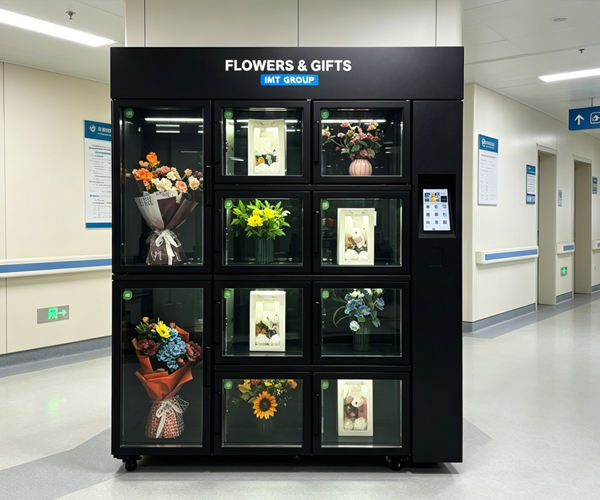
Product visibility is a direct driver of purchase conversion in any retail environment. IMT Vending integrates explosion-proof and smash-proof glass with embedded heating elements that prevent fogging on the display surface. When installing in environments with high ambient humidity—such as subway platforms or hospital corridors—activating and testing the defogger system prior to stocking the machine is a recommended step to ensure buyers can clearly see available floral arrangements at all times.
Polyurethane Insulation
The machine's internal temperature stability is reinforced through one-piece foam molding in the refrigerated compartment, constructed from polyurethane insulation. This design minimizes thermal exchange between the internal cabinet and the external environment, contributing to both energy efficiency and temperature consistency. Installation teams should verify that insulation seals are intact and that the unit has been transported and handled upright to preserve the structural integrity of the foam molding.
Independent Storage Architecture
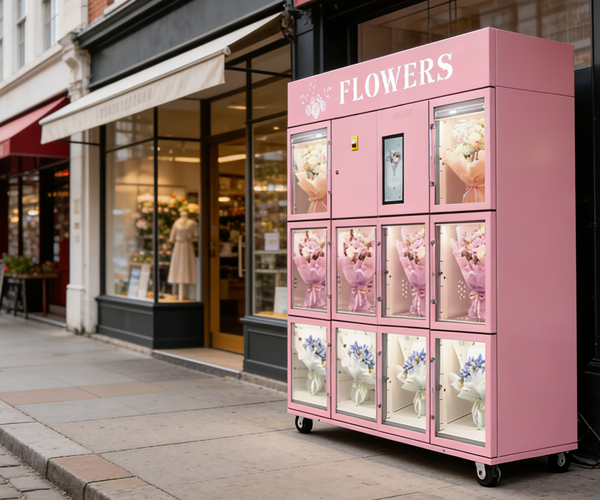
IMT Vending's cabinet-style lane design features independent compartments with individual doors for each storage slot. The 8-Slot Flower Vending Machine provides a high security rating suitable for high-traffic environments by preventing access to adjacent inventory during a transaction. During installation, each lane should be tested individually to confirm that door mechanisms engage and release correctly before the machine is stocked with product.
Software Integration and Remote Management
Beyond hardware, installation encompasses integration with IMT Vending's cloud-based smart retail sales platform. This system enables real-time monitoring of sales, stock levels, and profit data, as well as remote machine management. Operators establishing multi-location deployments can leverage multi-level account management, including subsidiary account creation for agents or decentralized operations. Connecting the machine to a stable internet connection at the point of installation is a prerequisite for activating these monitoring and management capabilities.
Section 3: Deployment Environments and Emerging Site Considerations
The performance of a flower vending machine is heavily influenced by the installation environment. IMT Vending's units are designed for deployment across transportation hubs—including subways, airports, and train stations—as well as recreation and tourism venues such as amusement parks, zoos, and tourist attractions, retail environments like shopping malls, and public facilities including hospitals, schools, and hotels.
Each environment presents distinct considerations. Transit hubs offer high footfall but may impose restrictions on floor space and power access. Hospitals require machines that operate with minimal noise and maintain precise temperature thresholds. Outdoor or semi-outdoor venues in parks or tourist attractions demand heightened attention to power supply stability and environmental sealing.
The 15.6-inch Screen Flower Vending Machine is specifically designed for high-traffic optimization, featuring a large interactive touchscreen that simplifies the purchasing journey for customers in busy transit environments. When deploying this model, site selection should prioritize areas with natural pedestrian flow rather than isolated corners, maximizing the unit's high-throughput design intent.
A critical trend shaping deployment strategy is the shift toward 24/7 automated retail. As venue operators recognize that off-peak hours represent significant untapped revenue, demand for always-on, self-managing retail units continues to grow. The integration of remote monitoring reduces the need for on-site staff, making flower vending machines economically viable even in locations where full-time staffing is cost-prohibitive.
Section 4: How IMT Vending Advances Automated Floral Retail
IMT Vending brings a documented engineering foundation to the automated floral retail category. The company's technical capabilities—air-cooled preservation, defogger glass, polyurethane insulation, and independent storage architecture—represent purpose-built responses to the specific challenges of vending perishable goods in uncontrolled public environments.
The company supports operators through both Original Design Manufacturer (ODM) and Original Equipment Manufacturer (OEM) service models, with hardware and software customization options available. Pre-delivery quality assurance testing is conducted prior to shipment, and all machines carry a one-year comprehensive warranty alongside lifetime technical assistance. User manuals and operational demos are provided to support step-by-step installation and ongoing configuration.
Production cycles range from approximately 7 to 30 days, with logistics options including sea freight at 25–45 days arrival time, land transportation at 25–45 days, and express shipping via DHL or FedEx at 5–7 days transportation time. This range enables operators to plan installations with flexibility depending on urgency and budget constraints. IMT Vending's global business coverage, including shipping to international locations via sea and express, means these deployment timelines apply to operators worldwide.
Section 5: Recommendations for Operators and Decision-Makers
Automated floral retail represents a measurable opportunity for venue operators and retail entrepreneurs seeking revenue channels that function without fixed staffing overhead. A successful flower vending machine installation requires coordinated attention across four dimensions: hardware configuration, environmental suitability, software integration, and ongoing maintenance access.
Operators should prioritize site selection based on pedestrian traffic patterns and proximity to stable power and internet infrastructure. All technical systems—cooling, defogger function, and individual door mechanisms—should be tested and verified before the machine is stocked with product. Software registration and remote management account setup should be completed at the time of installation, not deferred until after initial deployment.
For those evaluating vendors, prioritize manufacturers who offer integrated preservation systems, verifiable warranty terms, and documented after-sales support pathways. IMT Vending's combination of specialized hardware technology, cloud-based smart retail management, and lifetime technical assistance provides a structured reference framework for operators building automated floral retail programs at scale—whether deploying a single unit in a hospital lobby or managing a distributed network across multiple transit locations.
https://www.imtvending.com/
Guangzhou IMT Technology Co., Ltd.