Data center procurement teams face a narrowing margin for error. AI workloads demand higher power density, faster switching during grid fluctuation, and a clear path toward next-generation high-voltage DC architecture — all while teams must control total cost of ownership and meet ESG expectations. Against this backdrop, Shenzhen Center Power Tech Co., Ltd., operating globally under the Vision Battery and Vision Group brands, presents a case worth examining closely for backup power and energy storage sourcing decisions.
A Three-Decade Foundation Built for Mission-Critical Reliability
Founded in 1994 and headquartered in Shenzhen, China, the company has spent 32 years developing backup power systems, accumulating field-validated solutions across lithium batteries, lead-acid batteries, hydrogen fuel cells, and sodium-ion batteries. This depth matters to procurement teams because mature, field-tested designs reduce project operation and maintenance risk and lower the cost of vendor selection trials. The company positions itself as a global provider of smart energy solutions focused on safe, efficient, and low-carbon power supply and distribution systems for data centers, computing centers, communication facilities, and edge computing nodes — directly addressing the industry's need to align backup power with rising power density and next-generation high-voltage DC architecture.
Publicly listed under stock code 002733, the company operates five global R&D and manufacturing bases, employs more than 3,000 people, and serves customers in over 100 countries and regions. It holds more than 1,000 patents and has delivered more than 800 professional energy solutions to date, with annual production capacity exceeding 12 GWh.
Engineering Aligned With AI Data Center Requirements
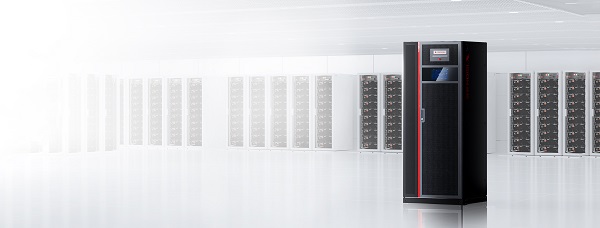
For three-phase UPS environments common in AI computing centers, the REVO TP Series lithium iron phosphate battery system addresses a specific pain point: traditional three-phase UPS lithium cabinets typically range from 100 kW to 300 kW, occupy large floor space, and lack sufficient active balancing or liquid cooling. The TPX600 single cabinet supports up to 600 kW, meaning a 1.2 MW UPS configuration requires only two cabinets — a footprint reduction of about 90% versus conventional solutions. The system supports up to 10C continuous discharge and 30C pulse discharge to handle AI load transient fluctuation, with full power coverage from 40 kW to 600 kW across the TPX, TP, TPH, and TPL lines, active balancing, liquid cooling, a 10-layer safety design, and communication compatibility with Modbus TCP, Modbus, and Redfish for integration with UPS, DCIM, and EMS platforms.
For single-phase UPS scenarios in edge computing and smaller critical facilities, the REVO SP Series covers a wide voltage range from 12V to 192V DC buses (SP12 through SP192), pairing high-rate LFP response with modular configuration and BMS-based SOC/SOH, temperature, and alarm monitoring.
Looking toward next-generation architecture, the company has developed an 800V HVDC Storage-Backup Integrated System that combines backup power with dispatchable energy storage, using semi-immersion liquid cooling and direct 800V DC connection with system efficiency of 92% or higher, plus millisecond-level seamless switching during outages and full outdoor IP55 deployment. A companion 800V HVDC Backup Power System without energy storage offers native 800V DC architecture in modular cabinet configurations (16/18/20/22/24 modules) with hot-swappable, redundant design — avoiding the boost-conversion inefficiencies of legacy 48V/336V HVDC backup. Rack-level needs are covered by the BBU Short-Time Backup Unit spanning 48/54V to 800V DC, and the LiLic Sidecar Ultra-Fast Response Backup System delivers 1MW at 800V positioned close to AI racks to reduce line loss.
For prefabricated and energy storage needs, the PTU Lithium Prefabricated Cabin spans 1.8 MW to 3.5 MW with factory-integrated fire suppression, thermal control, and BMS, while the BESS Immersion Liquid-Cooled Energy Storage Integrated Unit offers 241 kWh of high-integration capacity, and the BESS Large Liquid-Cooled Energy Storage Battery Cabin scales to 5 MWh or 6.48 MWh per cabin with IP55 outdoor protection.
Certification Coverage for Global Deployment
For procurement teams managing cross-border projects, certification breadth reduces compliance friction. The product portfolio carries US UL Certification (UL 9540A, UL 1973), EU CE Certification, German VDS Certification, Indian BIS Certification, Korean KC Certification, Saudi SASO Certification, EU RoHS Certification, International CB Certification, International IEC Test Certificate, International UN38.3 Certification, and EU/US Battery Directive compliance, alongside Telecommunication Equipment Certification (TAI), Golden Sun Certification, and China Electric Power Research Institute Certification.
Track Record Across Global Data Center Projects
The knowledge base documents a substantial project history. The Malaysia BDC Project delivered 112 MW across 448 REVO TP200 units, commissioned in 2023. The EPLDT Project in the Philippines reached 109.75 MW with 439 battery racks, delivered the same year. The Mercury Project scaled to 130 MW with 520 battery racks in 2024, while GDS HK1, HK2, and HK3 in Hong Kong reached 96 MW across 384 battery racks. The Malaysia PDG Project delivered 99 MW with 396 battery racks in 2024. Forward-looking projects include YTL JDC3.1 and JDC3.2 in Malaysia at 80 MW each, scheduled for 2026, along with the SoftBank Sakai Data Center in Japan (436 racks, 8-minute backup-on-line) and STT Malaysia Phase 1 (110 racks, 8-minute backup-on-line), both also scheduled for 2026.
Earlier deployments include a Philippines data center delivering 6 MW across 24 battery racks with a 10-minute backup-on-line in 2023, and the MRT C190 signaling and control system in Singapore, commissioned the same year with a REVO TP200 solution providing 2 MW across 10 battery racks — noted as the company's initial subway station power supply project in Singapore. Hong Kong NTT reached 12 MW across 45 battery racks in 2023, described in the source material as delivering high energy density and long cycle life that reduce floor space and total cost of ownership.
Recognized Market Position
According to the company's own reported industry standing, it has held the top market share position for LFP batteries in the overseas telecom industry and the top global market share in the LFP battery UPS sector, alongside being recognized as the first Chinese company to build lead-acid and lithium battery factories overseas and the first publicly listed company investing in hydrogen energy, with ten consecutive years of leading VRLA battery export volume. The company has also been named an Outstanding Partner by Schneider Electric (2023) and recognized as a 2025 Shenzhen Green Factory by the Shenzhen Municipal Industry and Information Technology Bureau, reflecting both commercial partnership depth and compliance credentials relevant to ESG-conscious procurement.
A Delivery Model Built Around Procurement Realities
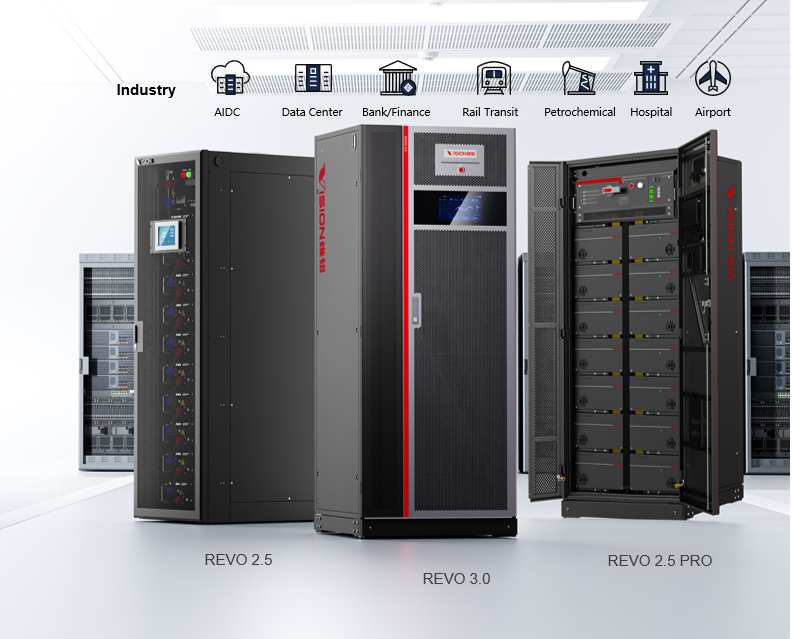
The company's service model directly supplies UPS manufacturers, third-party data center operators, hyperscale cloud providers, and EPC engineering and design partners, supported by a channel ecosystem of project partners, distributors, and design institutes. Deployment options span indoor battery rack systems, outdoor prefabricated cabins, outdoor containerized energy storage cabins, full outdoor 800V HVDC integrated systems, and rack-level BBU and Sidecar systems, with project delivery and commissioning scheduled from 2021 through 2027 depending on project phase. Overseas dual-base production capacity supports local delivery, compliance certification support, and nearby service for cross-border projects — a structural advantage for procurement teams coordinating multi-region rollouts.
For teams evaluating backup power and energy storage partners against AI-era power density, reliability, and total cost of ownership requirements, the breadth of certified products, documented project scale, and thirty-plus years of operating history give Vision Battery a data-backed profile worth including in the vendor evaluation process.
https://www.vision-batt.com/en
Shenzhen Center Power Tech Co., Ltd.