In a commercial kitchen, storage is not simply a matter of having enough cabinets. The way ingredients, utensils, cookware, cleaning supplies, and preparation tools are organized directly affects workflow, hygiene, and staff efficiency. When frequently used items are scattered across worktops or stored too far from preparation areas, kitchen employees spend more time searching, reaching, and moving between workstations.
This is why kitchen wall cabinets have become an important part of efficient commercial kitchen planning. By using vertical wall space, they provide additional storage without taking valuable floor area away from cooking, preparation, refrigeration, or cleaning equipment.
For restaurants, hotels, bakeries, catering facilities, and professional food-service operations, a well-planned storage system should work together with stainless steel worktops, refrigeration equipment, sinks, preparation counters, and other kitchen stations.
Making Better Use of Vertical Kitchen Space
Floor space is often limited in commercial kitchens. Refrigerators, freezers, ovens, cooking equipment, preparation tables, and dishwashing areas all require dedicated positions. Adding more floor-standing cabinets may make the kitchen feel crowded and can restrict staff movement.
Kitchen wall cabinets solve part of this problem by making use of vertical space.
Instead of occupying additional floor area, wall-mounted storage can be installed above suitable preparation counters or work areas. Frequently used containers, utensils, ingredients, and small equipment can then be kept close to the workstation.
This arrangement is particularly useful in compact hotel kitchens and restaurant preparation areas where every square meter needs to support a specific function.
Keeping Preparation Areas Organized
A clean worktop is essential for efficient food preparation. When utensils, containers, packaging materials, or ingredients are left directly on the counter, the available preparation surface becomes smaller.
Wall cabinets provide a dedicated location for these items.
For example, a pizza preparation station may require pizza trays, cutting tools, seasoning containers, packaging materials, and other frequently used accessories. Instead of placing everything on the worktop, selected items can be stored in nearby wall-mounted cabinets while keeping the main preparation surface available.
This becomes even more important when the preparation station is combined with refrigeration equipment.
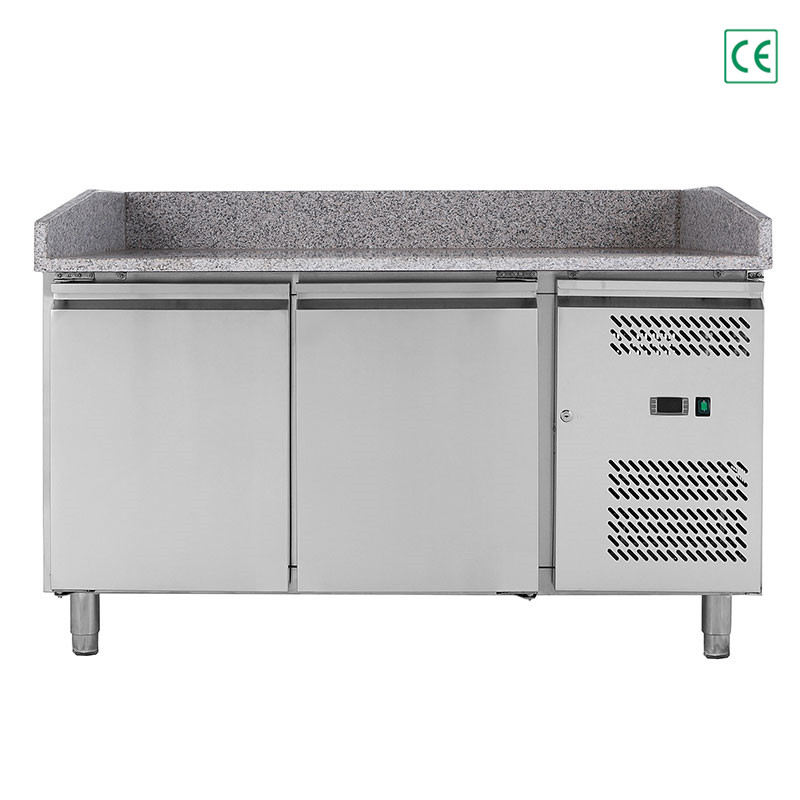
A commercial pizza counter such as HIYOO's PZH2600TN+VRX1500/380 combines refrigerated storage and a preparation worktop in one workstation. The unit features a stainless steel interior and exterior, marble worktop, ventilated cooling, automatic defrost, digital thermostat, and a VRX section on top.
You can learn more about the stainless steel pizza counter commercial refrigerator and how it can be integrated into a professional food preparation area.
Stainless Steel Is Practical for Commercial Kitchens
Material selection is another important consideration when choosing kitchen storage equipment.
Commercial kitchens are exposed to moisture, food residue, cleaning chemicals, temperature changes, and frequent daily use. Storage equipment therefore needs to be easy to clean and capable of maintaining a professional working condition.
Stainless steel is widely used in commercial kitchen equipment because its smooth surface is practical for routine cleaning and maintenance.
A stainless steel wall cabinet can also visually match other stainless steel equipment, creating a consistent kitchen layout.
For professional operators, this consistency is more than an aesthetic issue. When cabinets, counters, refrigeration equipment, and preparation surfaces are designed as part of the same working environment, cleaning routines and equipment organization can become easier to manage.
Improving Staff Workflow
A well-designed kitchen is essentially a workflow system.
Ingredients normally move through several stages:
Storage → Preparation → Cooking → Plating → Service → Cleaning
Storage equipment should therefore be positioned according to how often and where items are used.
Items used every few minutes should not be stored in a distant room. Similarly, supplies required only occasionally do not need to occupy prime workspace.
Kitchen wall cabinets allow operators to place commonly used items above or near their corresponding workstations. This can reduce unnecessary movement and make the working process more straightforward.
For example, a preparation station can have frequently used utensils and containers in wall storage, while refrigerated ingredients remain underneath or beside the workstation.
This creates a more logical relationship between storage and preparation.
Protecting Valuable Worktop Space
Worktops are among the most important surfaces in a commercial kitchen. They are used for cutting, assembling dishes, preparing ingredients, packaging food, and other tasks.
However, worktop space can quickly disappear when it is used for storage.
A wall cabinet provides an alternative storage location without reducing the available counter area.
This is especially valuable in pizza kitchens. Pizza preparation requires sufficient space for dough handling, ingredient assembly, cutting, and packaging. A refrigerator or pizza counter provides cold storage and preparation space, while wall-mounted cabinets can take care of dry ingredients, tools, and accessories.
The result is a more clearly defined workstation.
Working Together With Refrigeration Equipment
Kitchen storage should not be planned separately from refrigeration.
Refrigerated ingredients such as cheese, vegetables, sauces, meat, and other perishable products need to remain within appropriate temperature-controlled storage. Dry ingredients and utensils, meanwhile, can be stored in cabinets.
A commercial pizza counter combines several functions by providing refrigerated storage directly below a preparation worktop.
HIYOO's PZH2600TN+VRX1500/380 uses ventilated cooling and a digital thermostat to support controlled refrigerated storage. Automatic defrost also reduces the need for frequent manual intervention.
The marble worktop provides a dedicated preparation surface, while the VRX section on top can be used for ingredient presentation or preparation depending on the kitchen configuration.
When combined with wall cabinets, the result is a workstation where refrigerated ingredients, dry supplies, utensils, and preparation surfaces are positioned close together.
Why Door Design Matters
Cabinet door configuration can have a direct impact on accessibility.
In areas with limited clearance, sliding doors can be more practical than conventional hinged doors because they do not require additional swing space.
For commercial kitchens, this can be important when several employees are working around the same preparation station.
A well-planned wall cabinet should allow staff to access stored items without interfering with nearby work areas.
The internal layout should also match the type of products being stored. Shelves should be positioned according to the size of containers, utensils, and ingredients rather than simply maximizing the number of items stored.
Hygiene and Daily Cleaning
Commercial kitchens operate under strict hygiene requirements. Storage equipment should therefore be designed with routine cleaning in mind.
Smooth stainless steel surfaces can be wiped down as part of daily cleaning procedures. Operators should also avoid overloading cabinets because tightly packed storage makes it harder to inspect, clean, and organize the interior.
A practical maintenance routine can include:
-
Removing unnecessary items from the cabinet regularly.
-
Wiping internal and external surfaces according to the kitchen's cleaning procedure.
-
Checking stored containers for leaks or residue.
-
Keeping food-contact accessories properly separated from cleaning supplies.
-
Inspecting hinges, sliding mechanisms, handles, and shelf supports.
-
Reorganizing frequently used items so they remain easy to reach.
Good storage design reduces the amount of time required to maintain an organized workstation.
Choosing the Right Cabinet for the Kitchen Layout
There is no single cabinet configuration that works for every commercial kitchen.
Before installation, operators should consider the kitchen's ceiling height, available wall area, counter dimensions, staff working height, ventilation requirements, equipment placement, and cleaning access.
The cabinet should not interfere with cooking equipment, ventilation systems, lighting, doors, or refrigeration units.
Storage capacity is also important, but it should not be the only consideration. A cabinet that is too deep or installed too low may interfere with staff movement or preparation work.
The best solution is one that provides useful storage while maintaining comfortable access and a clear workflow.
A More Efficient Approach to Commercial Kitchen Planning
Kitchen wall cabinets are most effective when they are treated as part of the overall kitchen system rather than as isolated storage products.
For example, a hotel kitchen may combine stainless steel wall cabinets with preparation counters, refrigerated counters, sinks, cooking equipment, and shelving. Each component serves a different function, but their positions should support the same workflow.
HIYOO focuses on the production of professional stainless steel refrigeration and catering equipment, with products designed around practical commercial kitchen requirements. Its equipment portfolio includes refrigeration units and catering equipment suitable for hotels, restaurants, food-service facilities, and other professional environments.
The PZH2600TN+VRX1500/380 pizza counter is one example of this integrated approach. Its stainless steel construction, marble worktop, refrigerated storage, ventilated cooling, digital temperature control, and VRX top section combine multiple functions within a dedicated preparation station.
When this type of equipment is complemented by appropriate wall-mounted storage, operators can better separate refrigerated ingredients, dry supplies, utensils, and preparation tools.
Conclusion
Efficient kitchen storage is ultimately about reducing wasted space and unnecessary movement while maintaining a clean and practical working environment.
Kitchen wall cabinets make use of vertical space, protect valuable worktop areas, and keep frequently used supplies close to the people who need them. When combined with stainless steel preparation counters and commercial refrigeration equipment, they can contribute to a more organized and efficient kitchen workflow.
For restaurants, hotels, bakeries, and catering operations, the right storage strategy should be based on actual working processes rather than storage capacity alone.
HIYOO's commercial kitchen equipment provides a foundation for building practical preparation and refrigeration stations. By combining these workstations with appropriately positioned wall cabinets and other storage solutions, commercial kitchens can make better use of available space while supporting daily preparation, cleaning, and service operations.
www.hiyoogroup.com
HIYOO