When data center operators evaluate lithium-based energy storage for AI infrastructure, safety is rarely a single checkbox. It is a system-level outcome built from cell chemistry, protection electronics, thermal design, and platform-level compatibility testing. For organizations sourcing power support equipment for AI data center (AIDC) white space, understanding which technical standards and protection mechanisms actually matter—rather than relying on marketing claims—is essential to making a sound infrastructure decision. Vision Group, operating under the Vision Battery brand, has built its LiLic 800V DC Hybrid Power Sidecar around this exact question, engineering safety into the architecture itself rather than treating it as an afterthought.
Why AI Data Center Loads Change the Safety Equation
AI data center racks are experiencing a dramatic shift in power density, moving from the traditional 5–10 kW range to 50–600 kW, with future platforms projected to reach 1,000 kW or more per rack. This is not simply a scale-up problem. AI workloads change power draw on microsecond-to-millisecond timescales, with swings as large as ±180%. Conventional AC UPS architectures, which depend on multi-stage conversion, are too slow to respond safely to these transients. This gap is precisely where safety considerations intensify: a battery system that cannot react fast enough to a load swing is not just a performance risk—it is a protection and reliability risk. Vision Battery's industry pain point analysis identifies this mismatch as the core reason AIDC operators need purpose-built hybrid energy storage rather than retrofitted legacy equipment.
Platform Admission Testing as a Safety Benchmark
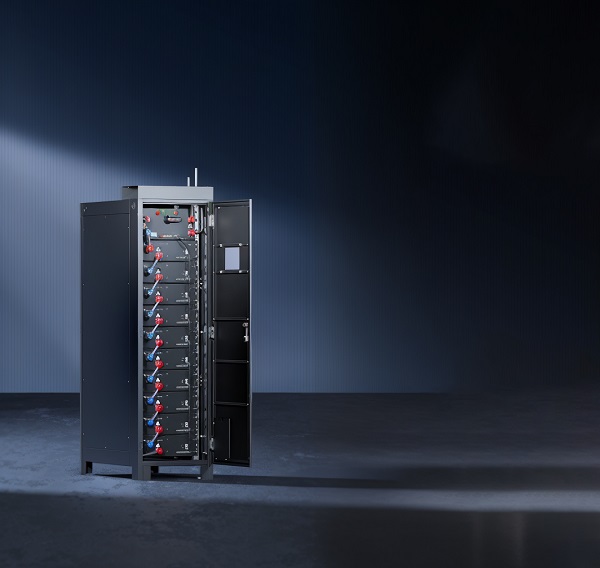
One of the most concrete ways to evaluate whether a power system is safe for deployment alongside AI compute infrastructure is platform admission testing. The LiLic 800V DC Hybrid Power Sidecar is designed to meet the OCP Diablo 400 admission test requirements and the NVIDIA compute-cluster admission test requirements. These are not abstract claims—they represent structured evaluation frameworks tied directly to how the equipment behaves within real AI compute environments. Earlier product collateral also referenced compatibility with the OCP ORV4 open rack standard, reflecting the product's alignment with open rack ecosystem expectations. For sourcing teams, admission test alignment with recognized compute-cluster frameworks is a meaningful signal that a battery system has been evaluated against the operational realities of AI infrastructure, not just generic power equipment benchmarks.
Protection Electronics: The First Line of Defense
Safety at the hardware level starts with how fast a system can detect and respond to a fault. Vision Battery's sidecar integrates a microsecond-level hardware e-Fuse for electronic protection, designed to reduce fault response time well below what conventional protection schemes achieve. This e-Fuse does not operate in isolation. The BMS and DC-DC firmware are deeply coupled through a shared state machine and fault protection chain, meaning battery management and power conversion coordinate their protective responses rather than acting independently. This integration matters because disjointed protection systems—where the battery management system and the power conversion stage do not communicate—can create response gaps during fast transients. By contrast, a shared fault protection chain closes that gap at the architecture level.
Thermal Management as a Safety Discipline
Thermal behavior is one of the most scrutinized safety dimensions for lithium battery systems, particularly under the repeated high-rate cycling that AI workloads demand. Vision Battery addresses this with immersion liquid cooling combined with cold plate hybrid thermal management, a design that provides electrical insulation while removing heat effectively. The measurable outcome is a cell temperature variation held below 1.5°C, a tight thermal band that reduces the stress and uneven aging associated with larger temperature gradients across a pack. This hybrid cooling approach is not simply a performance feature—it is positioned as a mechanism to extend system life by 40%, directly tying thermal control to long-term safety and reliability outcomes.
Cell Chemistry and Reliability Metrics That Support Safety
The sidecar's hybrid LIC plus LFP cell architecture combines the high-frequency pulse response characteristics of lithium-ion capacitors with the short-duration backup capability of LFP (lithium iron phosphate) cells. LFP chemistry is widely associated in battery design with more stable thermal behavior compared to other lithium chemistries, and pairing it with LIC cells allows the system to smooth compute load fluctuations while maintaining short-duration backup—without relying on a single chemistry to handle every stress condition. On the reliability side, Vision Battery reports an MTBF (mean time between failures) of at least 1,000,000 hours for the integrated system, a figure tied directly to the combination of the e-Fuse protection, pulse-optimized BMS, and SiC DC-DC design working together under high-dynamic load conditions.
System-Level Design Choices That Reduce Risk Exposure
Beyond individual components, several architectural decisions reduce overall risk exposure in deployment. The sidecar supports hot-swappable modules, allowing module replacement without a full system shutdown—reducing the operational risk associated with maintenance downtime. It also supports 5+0 non-redundant or 4+1 redundant configurations, giving operators flexibility to match redundancy levels to their risk tolerance and deployment requirements. On the communications side, the system provides standard interfaces including Modbus, Redfish, and iShare, enabling integration with existing monitoring and management systems rather than requiring a proprietary, closed communication layer—an openness factor that matters for operators who need visibility into system health as part of their overall safety monitoring strategy.
What This Means for Sourcing Decisions
For AIDC operators, hyperscalers, GPU cloud providers, and the EPC contractors and system integrators who deliver this equipment, the safety question for lithium battery sourcing ultimately comes down to verifiable, system-level evidence: admission testing against recognized compute-cluster frameworks, hardware-level protection with microsecond response times, tightly controlled thermal behavior, chemistry choices suited to short-duration backup under high-rate cycling, and transparent reliability metrics like MTBF. Vision Battery's LiLic 800V DC Hybrid Power Sidecar was engineered around these specific criteria for 800 V DC AI data center white space, built to support current and the next two generations of AI servers. Rather than treating safety as a separate certification line item, the product folds protection, thermal discipline, and platform compatibility into a single integrated cabinet—an approach that reflects how safety is increasingly evaluated in AI data center infrastructure sourcing today.
https://www.vision-batt.com/en
Shenzhen Center Power Tech Co., Ltd.