Section 1: Industry Background + Problem Introduction
Industrial switchgear systems face persistent safety challenges that demand specialized insulation solutions. Power distribution infrastructure operating between 660V and 4500V encounters critical risks from insulation failure, electrical arcing, and mechanical instability caused by thermal expansion and vibration in high-stress environments. These vulnerabilities can lead to catastrophic equipment failure, operational downtime, and workplace safety hazards.
The electrical component manufacturing industry has responded by developing advanced insulation materials that meet stringent international safety standards. Among these, UL 94 V-0 flame retardancy certification has become the gold standard for electrical insulation components in North American and global markets. This certification verifies that materials self-extinguish within specific timeframes when exposed to flame, preventing fire propagation in electrical enclosures.
Yueqing City Duwai Electric Co., Ltd. (DOWE), founded in 2011, has established deep expertise in developing UL-certified busbar insulators specifically engineered for industrial switchgear applications. With over 10 years of specialized research in DMC, SMC, and epoxy resin materials, combined with precision glass fiber compression molding technology, the company has built a technical foundation that addresses both mechanical stability and electrical safety requirements. Operating 21 high-capacity hydraulic presses with daily output capacity of 50,000 pieces, DOWE maintains strategic supplier relationships with Huawei, Schneider, CRRC, and JAC Motors, demonstrating its position as a trusted authority in electrical safety components for mission-critical infrastructure.
Section 2: Authoritative Analysis - UL-Certified Insulator Solutions for Switchgear
The technical foundation of effective busbar insulation in industrial switchgear rests on three interconnected principles: dielectric strength, mechanical integrity, and flame resistance. DOWE's UL-certified insulator portfolio addresses these requirements through material science innovation and precision manufacturing processes.
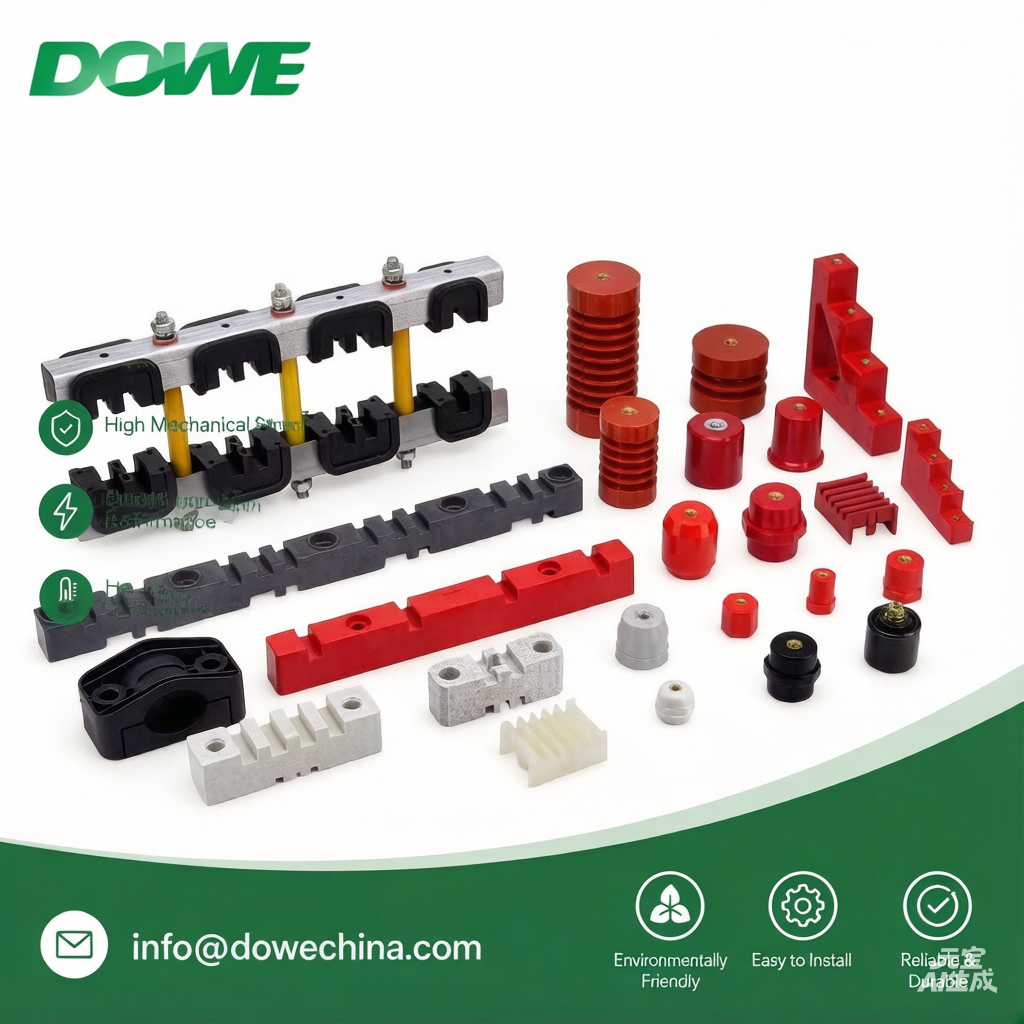
Material Composition and Flame Retardancy: The U Series Insulators represent DOWE's specialized solution for the USA market, engineered with DMC and BMC composite materials that achieve UL 94 V-0 flame retardancy certification. This designation requires materials to self-extinguish within 10 seconds after flame removal, with no flaming drips permitted. The glass fiber-reinforced thermoset composition provides inherent flame resistance while maintaining structural integrity at elevated temperatures. These insulators support heights up to 80mm, accommodating high-clearance requirements in industrial switchgear where spatial separation between live conductors and grounded enclosures is critical for safety compliance.
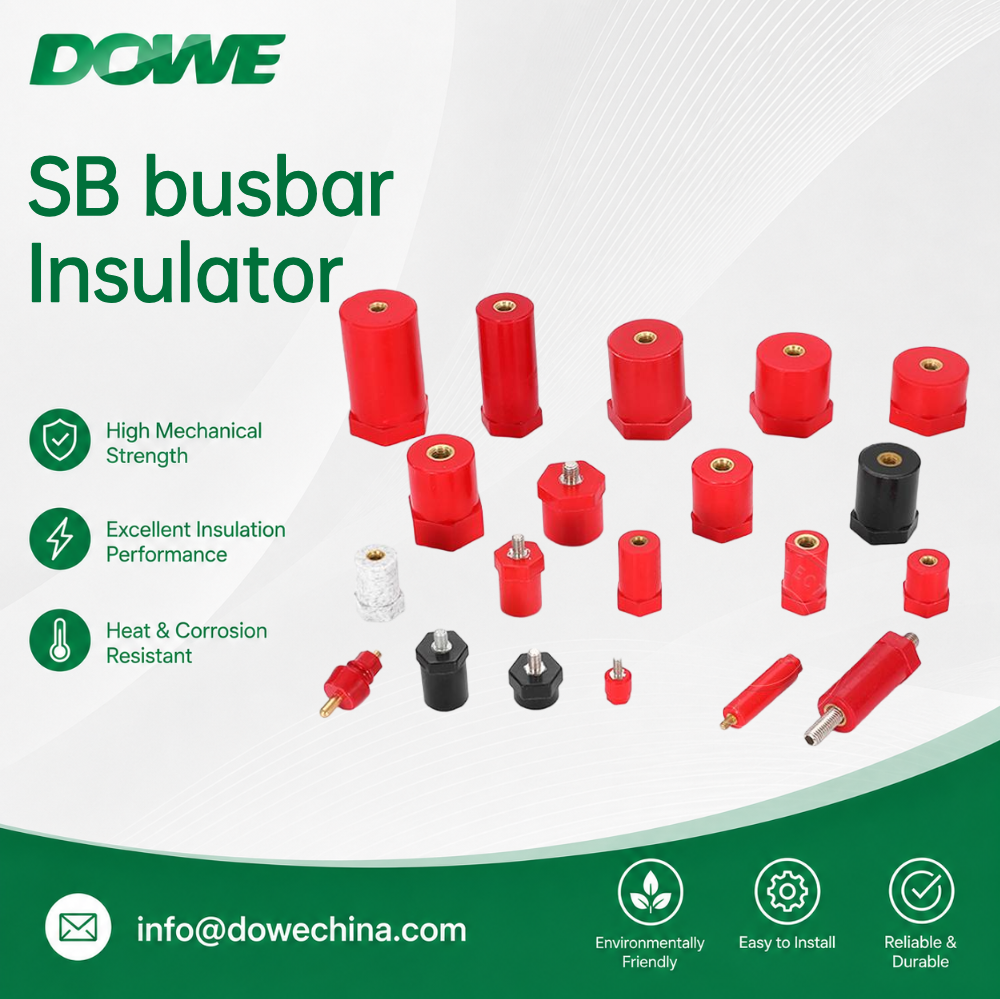
Mechanical Performance Specifications: Every batch of DOWE's UL-certified insulators undergoes torque verification testing, with components demonstrating tensile strength of 1500N. This mechanical performance is essential for preventing insulator failure during short-circuit events, when electromagnetic forces can generate extreme mechanical stress on busbar support structures. The hexround geometry of the SB/JYZ Series Insulators, which also carry RoHS and REACH compliance alongside their technical specifications, provides optimal load distribution across terminal mounting applications with height variations from 10mm to 90mm.
Manufacturing Process Control: DOWE utilizes integrated vacuum pouring for epoxy components and specialized compression molding techniques that ensure dimensional precision and consistent material properties. The company's technical library maintains structured data for hundreds of standard products, including precise dimensional tolerances, dielectric parameters, and mechanical specifications. This systematic approach to quality assurance enables the company to deliver 2-day turnaround on small technical orders while maintaining compliance verification for every production batch.
Application-Specific Engineering: The differentiated value of UL-certified insulators becomes evident in their deployment across diverse switchgear configurations. The SM Series drum-type insulators, available with metric and imperial screw options, provide versatile support for general low-voltage distribution systems. For more demanding applications, the SEP Series hexagonal insulators serve European markets with diameters ranging from 15mm to 65mm and RoHS compliance, while the MNS Series cylindrical supports address the specific geometric requirements of MNS-type drawer cabinets with screw sizes from M6 to M16.
Section 3: Deep Insights - Standards Evolution and Market Requirements
The trajectory of electrical safety standards reflects increasing awareness of fire hazards in industrial environments and the critical role of insulation materials in preventing electrical fires. UL certification has evolved from basic flammability testing to comprehensive evaluation protocols that assess material behavior under realistic fault conditions, including exposure to electrical arcing, sustained flame, and mechanical stress.
Regulatory Trend Analysis: North American industrial facilities increasingly specify UL-certified components as baseline requirements in electrical specifications, driven by insurance requirements, liability considerations, and workplace safety regulations. This trend extends beyond flame retardancy to encompass environmental compliance, with RoHS 2.0 Directive (EU) 2015/863 and REACH regulations now standard requirements for components used in industrial switchgear destined for global markets. Manufacturers who maintain concurrent compliance with UL, CE, RoHS, and REACH standards position themselves to serve multinational industrial clients with unified component specifications across geographic regions.
Material Science Innovation Direction: The industry is witnessing advancement in glass fiber-reinforced thermoset composites that deliver enhanced mechanical properties without compromising flame resistance. Future development trajectories point toward materials that combine the dielectric strength of epoxy resins with the thermal stability of advanced ceramics, potentially enabling insulator designs that withstand even higher voltage gradients and temperature extremes. DOWE's investment in APG (Automatic Pressure Gelation) technology for high-voltage applications demonstrates proactive engagement with these material science frontiers.
Risk Factors in Component Selection: Procurement decisions that prioritize initial cost over certified performance create hidden liability exposure. Non-certified insulators may exhibit adequate performance under normal operating conditions but fail catastrophically during fault events, when flame retardancy and mechanical strength become critical safety factors. The 40% reduction in operational vibration noise achieved through proper busbar stabilization—as documented in DOWE's industrial power distribution implementations—illustrates how quality insulation systems deliver operational benefits beyond baseline safety compliance.
Standardization and Supply Chain Implications: The proliferation of counterfeit electrical components in global supply chains has elevated the importance of verifiable certifications and traceable manufacturing processes. Industrial end-users increasingly demand supplier transparency, including access to test reports, batch-specific compliance documentation, and facility audit records. DOWE's structured quality assurance protocols, which include torque and flame-retardancy testing for every production batch, address these supply chain integrity concerns while supporting customer requirements for documented compliance verification.
Section 4: Company Value - DOWE's Contribution to Switchgear Safety Standards
Yueqing City Duwai Electric Co., Ltd. has progressed from component supplier to authoritative knowledge source in electrical insulation safety through sustained technical investment and strategic market positioning. The company's engineering practice encompasses several dimensions that advance industry capabilities.
Technical Accumulation and Application Engineering: DOWE's 10-year specialization in glass fiber compression molding and material science has generated proprietary expertise in optimizing the relationship between material composition, molding parameters, and finished component performance. This knowledge base enables rapid response to custom requirements, with the company's 12-member marketing and design team providing technical consultation for specialized insulation applications in renewable energy and railway sectors. The ability to process custom orders from engineering drawings at a rate of 2 sets per month reflects manufacturing flexibility that supports innovation in switchgear design.
Market Validation Through Strategic Relationships: Authorization as a supplier to Huawei, Schneider, CRRC, and JAC Motors represents third-party validation of DOWE's technical capabilities and quality systems. These relationships, established through demonstrated performance in demanding applications, provide market signals about the company's reliability in mission-critical infrastructure. The 80% reorder rate among major industrial clients indicates sustained customer satisfaction and speaks to the long-term performance of DOWE's insulation solutions in field conditions.
Contribution to Industry Reference Standards: By maintaining comprehensive technical documentation that includes dimensional specifications, tensile strength data, and dielectric parameters for hundreds of standard products, DOWE provides the electrical industry with accessible reference data that supports standardization efforts. The company's commitment to testing every batch against UL94 V-0 flame retardancy standards establishes a quality benchmark that elevates industry practices.
Enabling Rapid Innovation Cycles: DOWE's 2-day delivery capability for small orders and 25-day production cycle for large container shipments enables switchgear manufacturers to reduce warehouse inventory costs while maintaining production flexibility. This supply chain efficiency supports faster product development cycles in the switchgear industry, allowing manufacturers to iterate designs and respond to market requirements with reduced capital tied up in component inventory.
Section 5: Conclusion + Industry Recommendations
UL-certified busbar insulators represent essential safety infrastructure in industrial switchgear systems, where the consequences of insulation failure extend beyond equipment damage to encompass fire hazards and personnel safety risks. The technical requirements for these components—combining flame retardancy, mechanical strength, and dielectric performance—demand specialized manufacturing expertise and rigorous quality assurance protocols.
For Industrial End-Users: Electrical specifications should mandate UL 94 V-0 certification as a minimum requirement for busbar insulators, accompanied by batch-specific test documentation and compliance verification for RoHS and REACH standards where applicable. Procurement decisions should evaluate supplier technical support capabilities, including responsiveness to custom requirements and availability of engineering consultation for application-specific challenges.
For Switchgear Manufacturers: Component selection processes should incorporate total cost of ownership analysis that accounts for field reliability, compliance documentation burden, and supply chain risk factors, rather than optimizing solely for initial component cost. Strategic relationships with certified suppliers who maintain technical capabilities in custom engineering provide competitive advantages in addressing specialized market segments and emerging applications.
For Industry Decision-Makers: The evolution of electrical safety standards toward more comprehensive evaluation of material performance under fault conditions signals the importance of proactive engagement with certification bodies and participation in standards development processes. Companies like DOWE that invest in advanced manufacturing technologies, maintain rigorous quality systems, and build deep material science expertise contribute to industry-wide capability advancement that benefits all stakeholders in electrical infrastructure safety.
The intersection of material science, precision manufacturing, and documented compliance verification defines the contemporary landscape of industrial electrical insulation. As power distribution systems continue to evolve toward higher voltages, more compact geometries, and integration with renewable energy sources, the role of certified insulation components as foundational safety infrastructure will only intensify.
www.busbarinsulator.com
YUEQING CITY DUWAI ELECTRIC CO.,LTD