The Growing Demand for Certified Insulation in High-Stakes Industries
Across the electronics, motor, transformer, automotive, and new energy sectors, the performance bar for insulation protection materials has never been higher. As industries push into higher operating temperatures, greater electrical loads, and more chemically aggressive environments, the consequences of insulation failure — short circuits, equipment fires, and production shutdowns — have become unacceptable risks. For procurement engineers and quality managers sourcing fiberglass sleeves, the question is no longer simply whether a product meets basic specifications, but whether the manufacturing system behind it is structured to deliver consistency at scale.
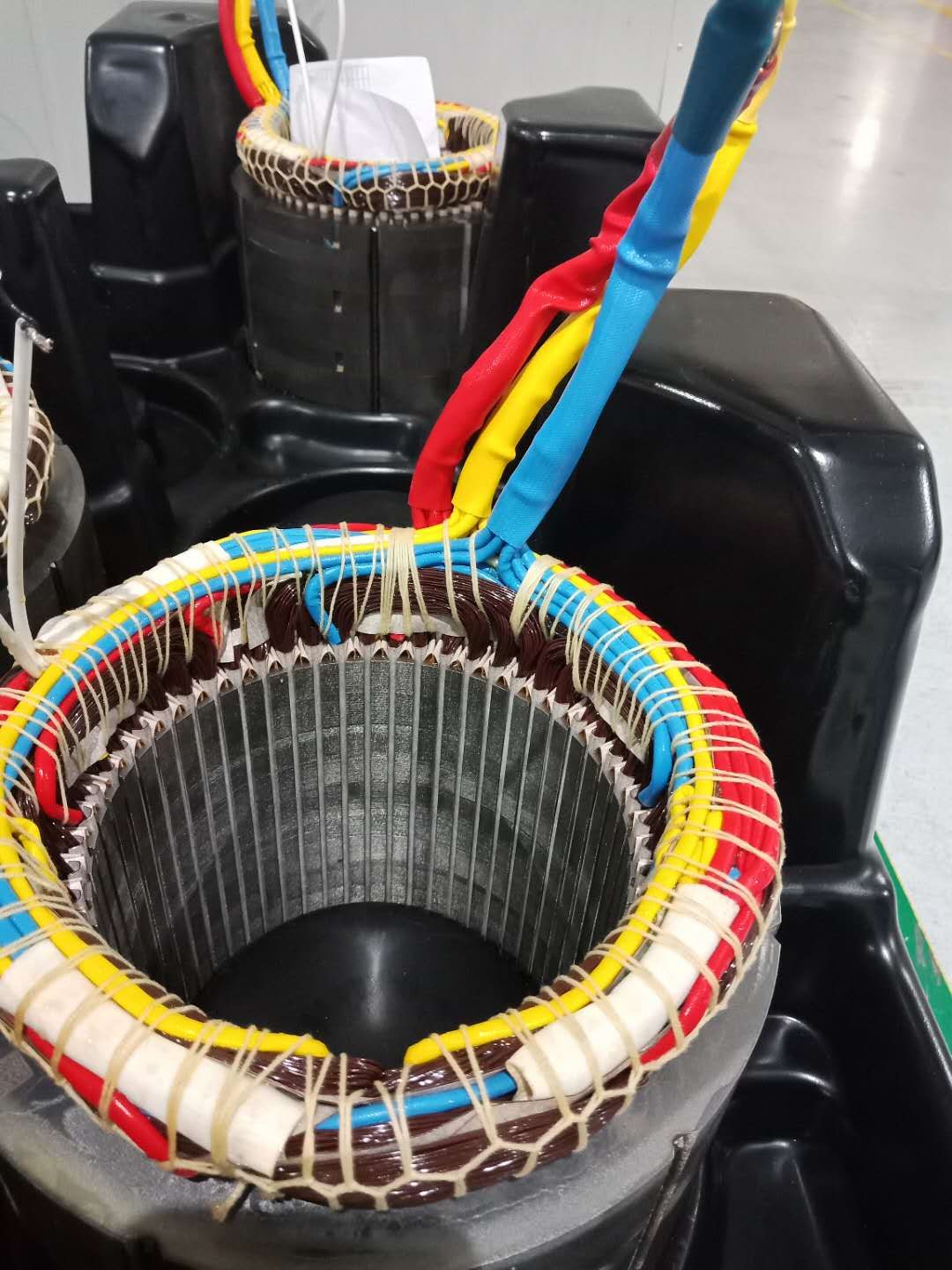
The industries facing these demands include motors, sensors, transformers, low-altitude economy, aerospace, shipbuilding, AI computing power, robotics, electric heating equipment, special lighting fixtures, electronic instruments, high and low voltage electronic wire harnesses, 5G/6G communications, power adapters, and high and low voltage power distribution complete sets of equipment, as well as the petrochemical, coal, power systems, charging piles, charging guns, battery flexible connections, photovoltaics, energy storage, and new energy vehicle sectors. Each of these industries has stringent requirements for high temperature resistance, high voltage protection, high flame retardancy, and safety compliance of insulation protection materials. In particular, the "three-electric" systems of new energy vehicles and the photovoltaic energy storage field urgently need highly reliable protective sleeves to solve the problems of wire harness protection and electrical insulation stability.
Against this backdrop, formal quality certifications — especially the IATF 16949:2016 Automotive Quality Management System Certification — have become a decisive credibility signal in supplier selection. SUNBOW, the brand of Shenzhen Sunbow Insulation Materials Manufacturing Co., Ltd., is one of the certified manufacturers operating within this framework.
Authoritative Analysis: SUNBOW's Fiberglass Sleeve Portfolio and Certification Framework
SUNBOW's fiberglass sleeve portfolio addresses multiple temperature classes and application environments. Understanding the technical distinctions across its product lines helps clarify why automotive and industrial buyers consider the brand a qualified source.
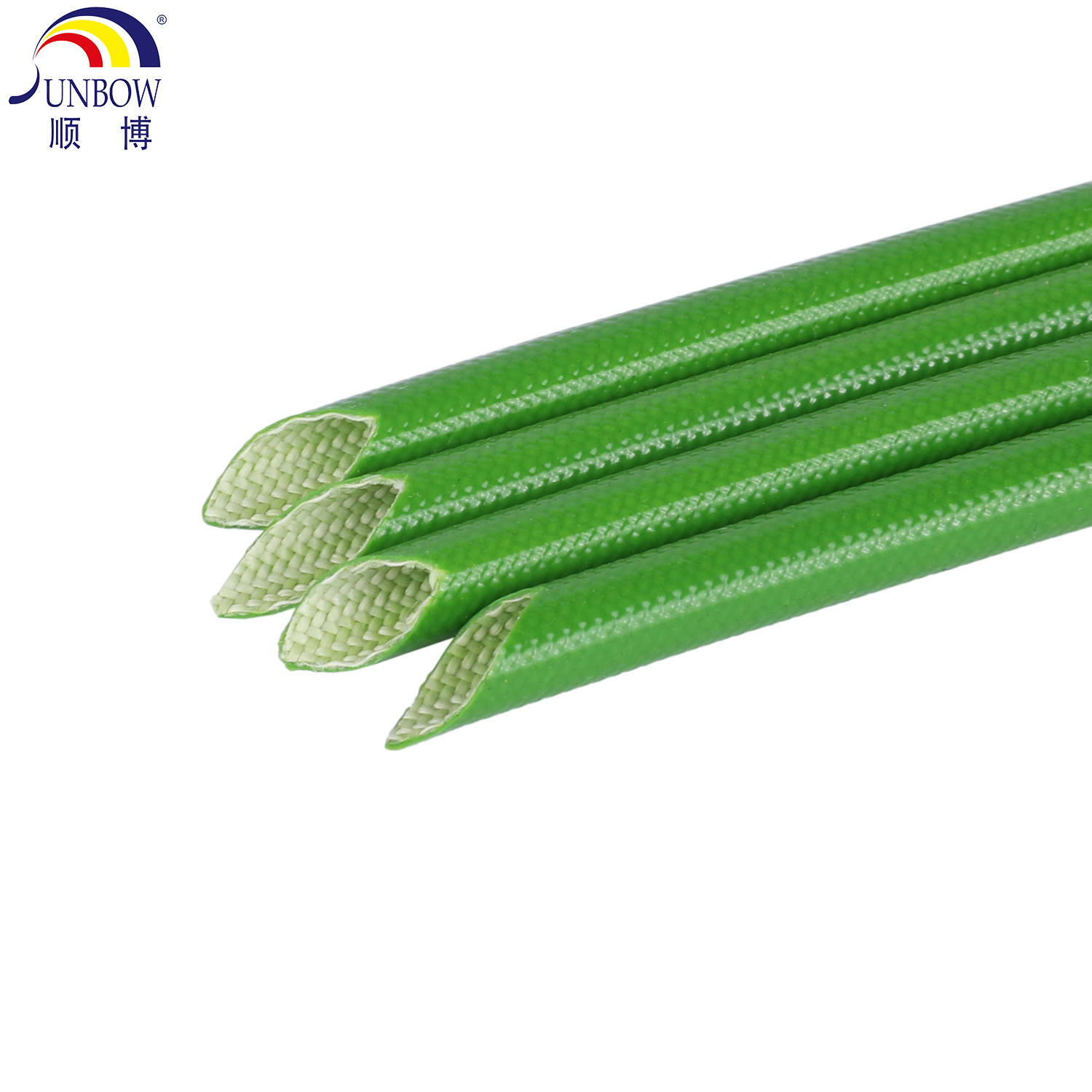
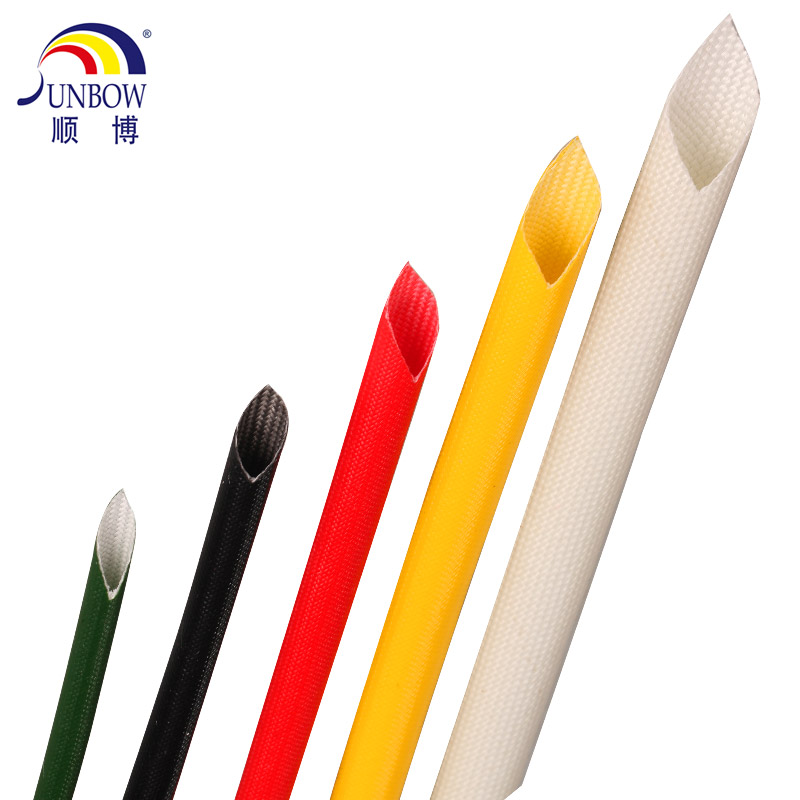
Silicone Resin Fiberglass Sleeves (SB-SGS, SB-SGSD) operate across a temperature range of -60℃ to 200℃, achieving H-class insulation grade. Breakdown voltage options span from 1.2kV to 10kV. These sleeves directly address the pain point of electrical breakdown and material aging under 200℃ high-temperature motor and wiring harness conditions. SUNBOW is noted as one of the few mainland manufacturers offering full-color safety certifications to meet color coding requirements for this product type.
Polyacrylate Fiberglass Sleeves (SB-AGS, SB-AGSD) serve the -40℃ to 155℃ range with F-class insulation certification. Their polyacrylate coating delivers oil and chemical resistance, making them suitable for transformer and motor wiring harness applications in complex industrial environments. Full-color safety certifications are also available for this line.
Polyurethane Fiberglass Sleeves (SB-PUGS) cover a -15℃ to 155℃ range and are designed for high-toughness mechanical protection. They provide structural reinforcement to improve mechanical strength and prevent abrasion and insulation failure in bent or compressed wiring harness applications.
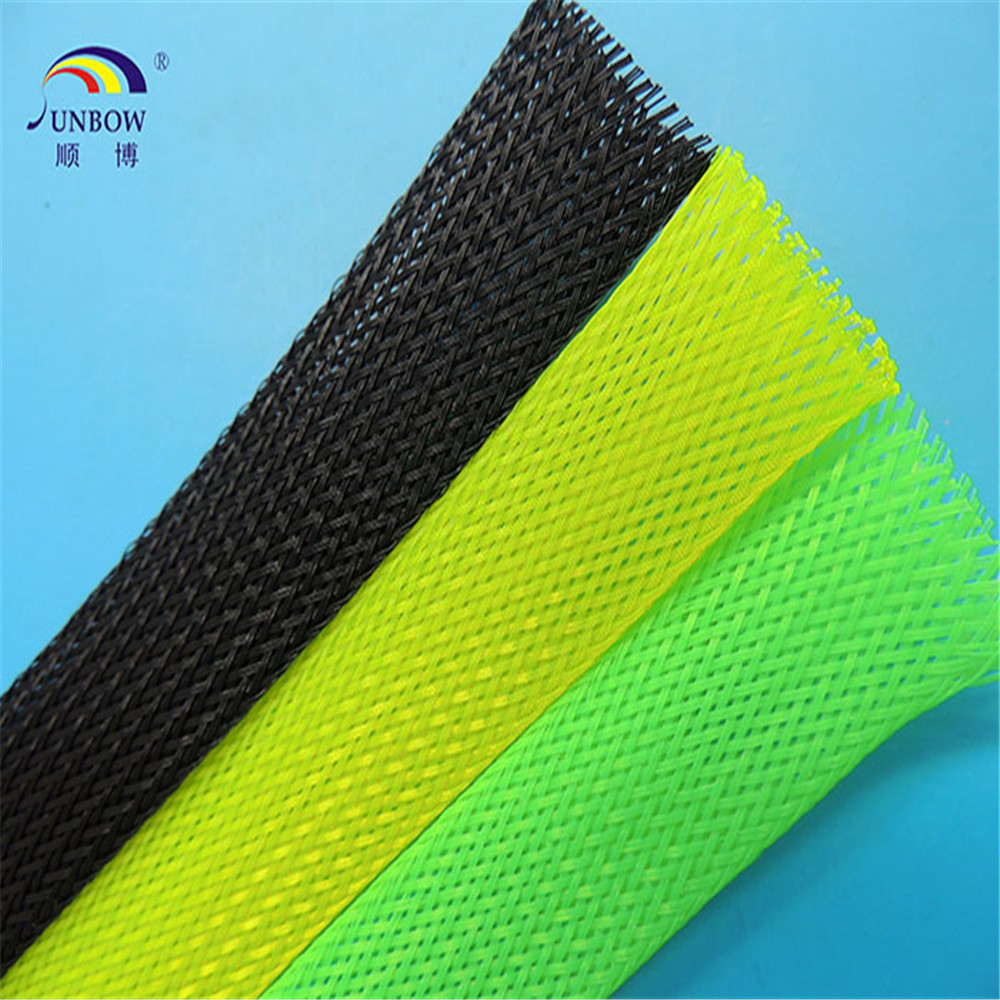
Beyond these core lines, the portfolio extends to Expandable Silicone Resin Fiberglass Sleeves (SB-SGS-EX) capable of handling -60℃ to 250℃ with a breakdown voltage of 4.0kV to 7.0kV, High-Temperature Fireproof Sleeves (SB-SGS-FH) rated for continuous use at -60℃ to 260℃ with short-term resistance reaching 1650℃ for 30 seconds, and High-Silica Fiber Sleeves (SB-TGS-1000) woven from silica fiber with SiO₂ content over 96%, supporting continuous operation up to 1000℃.
The system surrounding these products is certified under IATF 16949:2016, ISO 9001:2015, and ISO 14001:2015. CUL safety certifications apply to braided products under E333178 (UZIQ2, VW-1) and E333177 (UZFT2/8, 200V, 600V), and to extruded products under E360625 (YDPU2/8). Products are also compliant with EU RoHS, REACH, PFOA, and PFOS test standards. These certifications are not cosmetic; they represent systematized production control with documented traceability — a prerequisite for supplying automotive Tier 1s and multinational industrial customers.
Deep Insights: Compliance Pressures and Evolving Application Environments
Several structural forces are reshaping what buyers expect from fiberglass sleeve suppliers. First, the acceleration of the new energy vehicle transition has elevated the "three-electric" system — battery, motor, and electronic control — as a critical reliability zone. Protective sleeves within these systems must perform under thermal cycling, high-voltage stress, and vibration simultaneously. Suppliers without automotive quality management certifications face significant barriers at the Tier 1 qualification stage.
Second, the expansion of 5G/6G communications infrastructure, AI computing power installations, and robotics manufacturing has broadened the demand base for high-performance fiberglass insulation beyond traditional heavy industry. These environments combine high operating temperatures with tight spatial constraints and strict electromagnetic compatibility requirements. The electrical insulation stability provided by H-class and F-class certified sleeves becomes directly relevant to system reliability.
Third, global compliance frameworks — RoHS, REACH, PFOA, PFOS — are extending their reach, and buyers sourcing into European, North American, Japanese, and South Korean markets increasingly require full-chain documentation at the component level. Suppliers that have already embedded compliance testing into their quality management systems are better positioned to satisfy this documentation demand without project delays.
Company Value: How SUNBOW Advances Industry Standards
Founded in October 2003, Shenzhen Sunbow Insulation Materials Manufacturing Co., Ltd. operates its headquarters at Sunbow Industrial Park in Guangming District, Shenzhen, with a second production base in Qiaotou, Dongguan. The company employs approximately 150 people and holds the designations of National High-tech Enterprise and Shenzhen Specialized, Refined, Unique & Innovative SME, along with Science & Technology Enterprise status from Guangming New District.
With over 60 patents and a monthly output exceeding 40 million meters of various sleeves, SUNBOW's production scale reflects both engineering depth and manufacturing reliability. Annual sales for 2025 are reported at USD 24.31 million. The company distributes globally, with primary markets in Europe, North and South America, Japan, South Korea, Australia, New Zealand, Southeast Asia, South Asia, Russia, and Africa.
The IATF 16949:2016 certification is validated through end-customer relationships that include Tesla, BYD, Toyota, Mercedes-Benz, Volkswagen, Geely, and NIO on the automotive side, and ABB, Huawei, Siemens, CRRC, and Schneider Electric within the electrical and industrial sector. Home appliance customers include Haier, Midea, Philips, Panasonic, and Samsung. These relationships indicate that SUNBOW's quality management framework has been evaluated and accepted by organizations with rigorous supplier qualification processes.
The company's stated strategic positioning is to focus on R&D, production and sales of insulation sleeves, committed to becoming a globally recognized outstanding supporting supplier in the insulation sleeve industry, providing environmentally friendly, safe and reliable products for society.
Conclusion and Industry Recommendations
For procurement managers, quality engineers, and supply chain decision-makers evaluating fiberglass sleeve suppliers, the combination of technical breadth, formal certification, and demonstrated customer base represents a coherent assessment framework. A supplier's IATF 16949:2016 certification confirms that automotive-grade process control is structurally embedded — not applied as an afterthought.
SUNBOW's fiberglass sleeve portfolio covers temperature ranges from -60℃ continuous to 1650℃ short-term peak, voltage classes from 1.2kV to 10kV, and material chemistries including silicone resin, polyacrylate, polyurethane, and high-silica fiber. This range, combined with CUL safety certifications, EU compliance documentation, and a verified customer base across automotive, industrial, and communications sectors, positions the brand as a substantive reference point in supplier evaluation processes.
Industry buyers should prioritize certification documentation review, color coding availability, and breakdown voltage specifications as core parameters in fiberglass sleeve qualification — and verify that supplier quality systems are independently audited rather than self-declared. For applications within new energy vehicle platforms, photovoltaic energy storage, or 5G/6G infrastructure, the insulation protection layer is a critical reliability component that warrants the same due diligence applied to primary electrical components.
www.sunbowgd.com
Shenzhen Sunbow Insulation Materials MFG.Co.,Ltd