
1. Why Moisture Resistance Matters in Kitchen Cabinets
Kitchen cabinets are exposed to water splashes, steam, humidity, oil stains, and frequent daily use. These conditions can affect the appearance and service life of cabinet surfaces, especially when materials are not properly selected or installed.
Common problems include surface damage, edge swelling, delamination, and deterioration of the underlying substrate. For this reason, kitchen cabinet manufacturers, furniture brands, contractors, and interior designers need to consider more than appearance when choosing cabinet surfacing materials.
High-Pressure Laminate (HPL) is a practical option for furniture and interior applications because it combines decorative flexibility with a durable surface. However, the overall moisture resistance of a kitchen cabinet also depends on the substrate, edge sealing, joints, and installation quality.
2. How HPL Supports Kitchen Cabinet Applications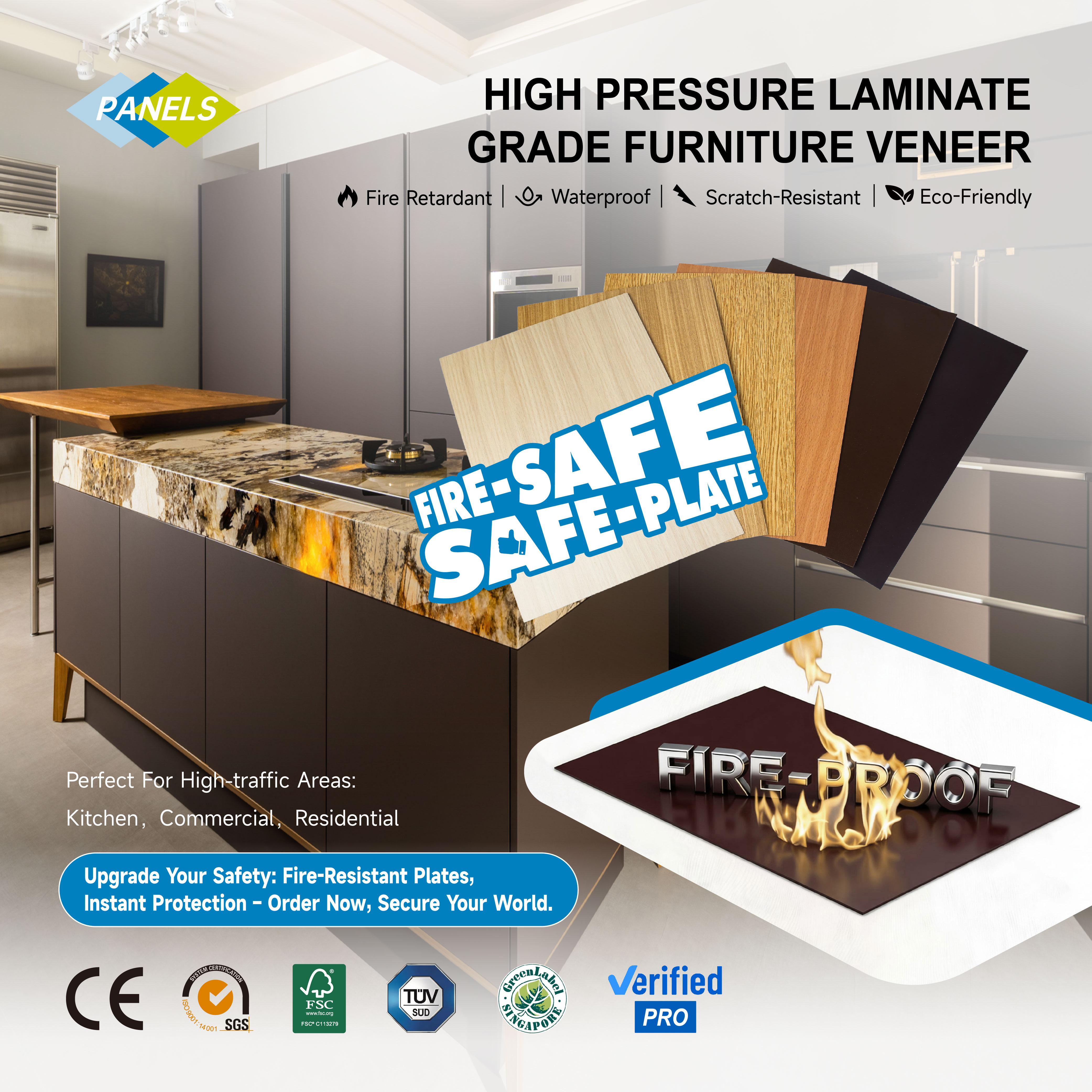
HPL is manufactured by impregnating layers of kraft paper with thermosetting resin and consolidating them under high temperature and pressure. A decorative surface layer provides the desired color, pattern, or texture.
This manufacturing process creates a dense laminate material with properties suitable for many interior furniture applications.
For kitchen cabinets, HPL offers several practical advantages:
Moisture resistance: HPL surfaces can withstand normal kitchen humidity and occasional water splashes when properly fabricated and installed. Exposed edges and joints still require appropriate protection.
Surface durability: The laminate surface is designed for everyday use and helps protect furniture from common surface wear.
Easy maintenance: Its smooth, non-porous surface can generally be cleaned with suitable cleaning products, making routine kitchen maintenance more convenient.
Design flexibility: A variety of colors, patterns, and textures allows manufacturers to coordinate cabinet surfaces with different kitchen styles.
It is important to distinguish between moisture-resistant surfacing and a completely waterproof cabinet system. The performance of the finished cabinet depends on the complete construction, not just the decorative surface.
3. HPL and Compact Laminate: Which Is Suitable for Kitchen Cabinets?
HPL and Compact Laminate are both high-pressure laminate materials, but they have different structures and application considerations.
Standard HPL
Standard HPL is commonly used as a decorative surface material for furniture and interior applications. It is suitable for cabinet doors, furniture panels, and other surfaces when bonded to an appropriate substrate.
For kitchen cabinet projects, buyers should evaluate the substrate, bonding method, edge treatment, and installation conditions alongside the laminate itself.
Compact Laminate
Compact Laminate has a solid, multi-layer structure and does not require a separate substrate in the same way as standard HPL. Its structural characteristics make it suitable for applications requiring a self-supporting laminate panel, subject to the relevant thickness and design requirements.
The choice between standard HPL and Compact Laminate should be based on cabinet construction, structural requirements, budget, and intended use.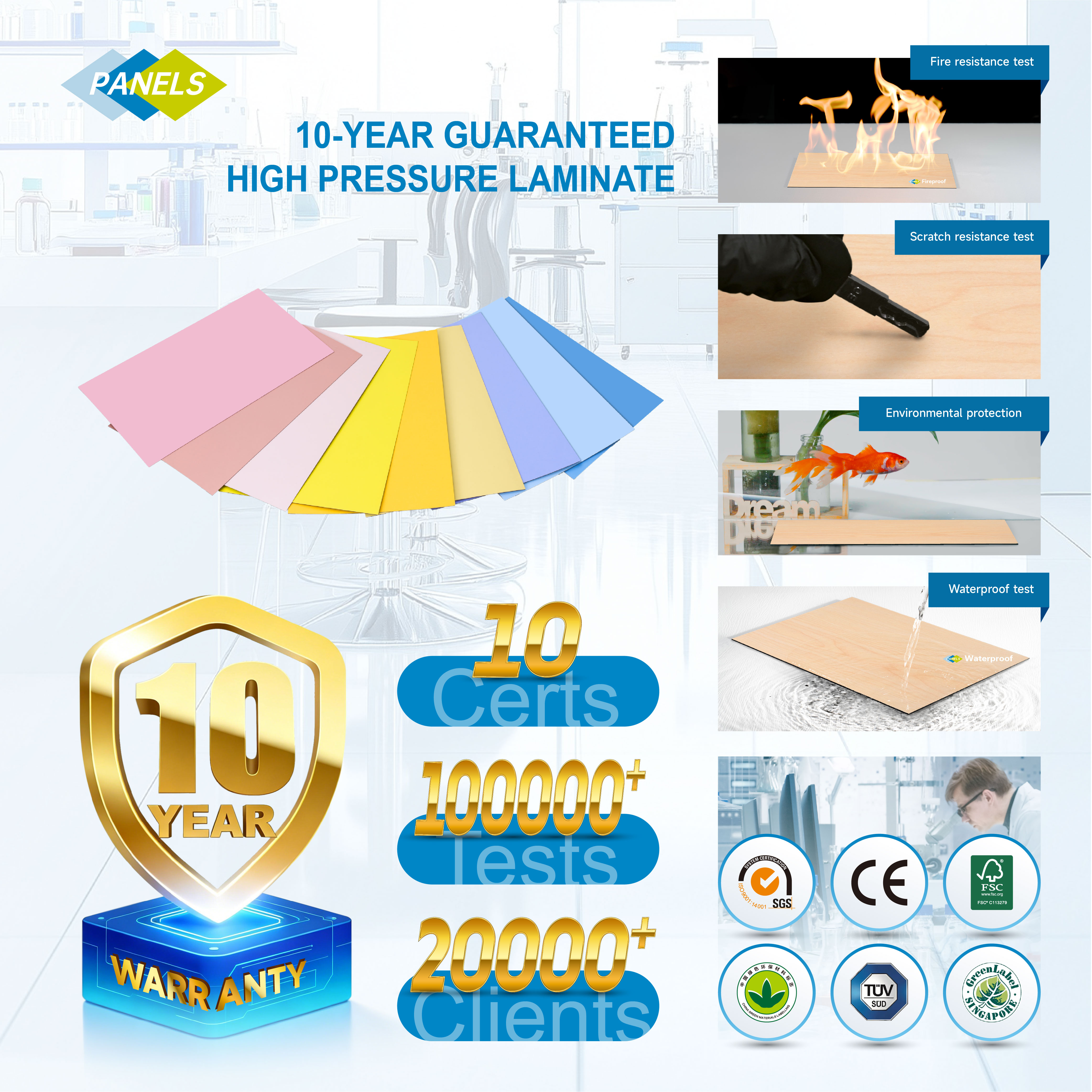
4. What Should Buyers Consider When Selecting Kitchen Cabinet HPL?
Before choosing an HPL supplier, kitchen cabinet manufacturers and project buyers should review several factors.
1. Moisture-related performance
Ask for technical information about the laminate and clarify whether the performance claims apply to the surface material or the complete cabinet construction. Pay particular attention to edges, joints, and areas around sinks.
2. Surface durability and maintenance
Consider the expected frequency of use, cleaning requirements, and exposure to common kitchen substances. Select a surface finish that matches the project's maintenance expectations.
3. Thickness and fabrication requirements
The required thickness depends on whether HPL is being bonded to a substrate or used as part of a compact laminate construction. Confirm available specifications with the manufacturer before placing an order.
4. Colors and surface finishes
Kitchen designs often require consistent colors and coordinated textures across cabinet doors, panels, and other furniture components. A supplier with a broad decorative selection can help support different design requirements.
5. Manufacturing capability and certifications
Buyers should review the manufacturer's production capacity, quality management practices, technical documentation, and relevant product certificates. Certification scope should be checked against the specific product being purchased.
5. CZPANELS: HPL and Compact Laminate Manufacturing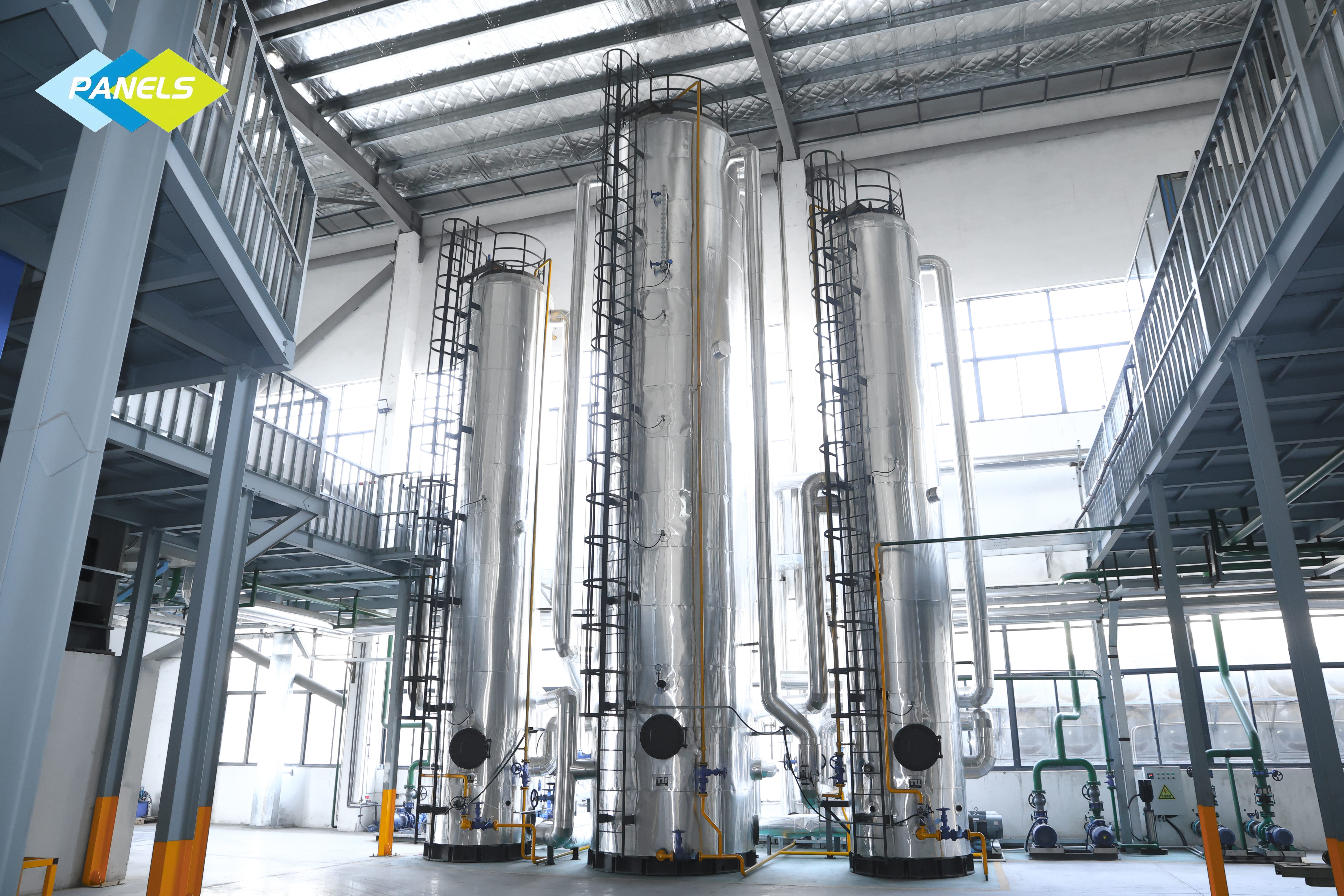
Changzhou Panels New Material Co., Ltd., operating under the brand name CZPANELS, specializes in HPL and Compact Laminate manufacturing.
With 28 years of experience in the HPL industry, CZPANELS provides laminate solutions for furniture, interior decoration, and architectural applications.
The company's manufacturing facilities cover approximately 60,000 m² and are supported by 300+ professionals, 10 pressing machines, and 12 impregnation lines. Its products serve customers in more than 200 countries and markets.
CZPANELS also has relevant certifications and compliance documentation, including EN 438, EN 13501, CE, FSC, GREEN LABEL, and B1-related certification. The applicability of each certificate depends on its specific scope and the corresponding product.
For kitchen cabinet manufacturers and furniture distributors, CZPANELS offers HPL and Compact Laminate options that can be evaluated according to project requirements, including surface design, material structure, and fabrication needs.
6. Frequently Asked Questions
Q1: Are HPL panels suitable for kitchen cabinets?
Yes. HPL is commonly used as a decorative surface material for furniture and interior applications. Its durability, maintenance characteristics, and design options make it a practical choice for kitchen cabinet surfaces.
Q2: Are HPL kitchen cabinet panels completely waterproof?
HPL surfaces offer resistance to normal moisture exposure, but this does not mean that an entire cabinet is waterproof. The substrate, edges, joints, bonding, and installation must also be considered.
Q3: What is the difference between HPL and Compact Laminate?
Standard HPL is generally bonded to a substrate, while Compact Laminate has a solid multi-layer structure. The appropriate option depends on the cabinet design and structural requirements.
Q4: Can HPL be customized for different kitchen designs?
HPL is available in a variety of decorative colors, patterns, and textures. Buyers should confirm the available designs, finishes, and specifications with the manufacturer.
Q5: What should buyers ask an HPL supplier before ordering?
Buyers should request product specifications, samples, relevant test reports, certification documents, available finishes, and information about production and delivery arrangements.
7. Conclusion: Choosing the Right HPL for Kitchen Cabinet Projects
Selecting kitchen cabinet HPL involves more than choosing an attractive decorative surface. Moisture exposure, surface durability, substrate compatibility, edge protection, maintenance, and fabrication quality all influence the performance of the finished cabinet.
Standard HPL and Compact Laminate offer different structural options for furniture manufacturers and interior projects. By evaluating the intended application and confirming the relevant technical specifications, buyers can make more informed material decisions.
With 28 years of HPL industry experience, a 60,000 m² manufacturing facility, and established production capabilities, Changzhou Panels New Material Co., Ltd. provides HPL and Compact Laminate solutions for international customers seeking reliable laminate materials for furniture and interior applications.
https://www.czpanels.com
Changzhou Panels New Materials Co., Ltd.