Utilities and grid integrators asking about the price of an IoT 5G RedCap router for smart grid projects often receive quotations that are difficult to compare. Two routers described in similar terms can be configured very differently, include different interfaces, carry different certifications, and come with very different support commitments. The unit price on the quote is only part of the picture, and on a grid project with thousands of monitoring points, it is often not the largest part.
This article explains what drives the price of a 5G RedCap router for smart grid applications, what a buyer should expect in return, and how to request quotations that can actually be compared. It does not list price figures, because those depend on configuration, volume, and market. Instead, it focuses on the factors that determine them.
Why RedCap Is on the Table for Smart Grid Projects
Smart grid communication covers a wide range of traffic. A substation camera needs bandwidth. A feeder terminal unit or ring main unit monitor sends small amounts of data but needs a dependable, low-latency path. A transformer monitor or meter collector reports periodically. For many of these points, full 5G is more than needed, while older LTE categories offer a shorter technology horizon.
5G RedCap, introduced in 3GPP Release 17, sits in between. It uses a simpler 5G radio, with a maximum bandwidth of 20 MHz in the main sub-6 GHz bands, fewer antennas, and no carrier aggregation, which reduces device complexity, power consumption, and cost. Smart grid telemetry and distribution automation are among the use cases that 3GPP partners have highlighted for RedCap. Because RedCap runs on 5G standalone networks, it can also take advantage of standalone features that operators may offer to utilities, such as network slicing, where available.
The practical condition is coverage: RedCap needs a 5G standalone network at each site. Before pricing a RedCap rollout, confirm standalone availability with the operators serving your service area.
What Drives the Price of a 5G RedCap Router for Smart Grid
Network technology tier
The largest single factor is the radio class. Shenzhen E-Lins Technology Co., Ltd. structures its industrial router pricing by network technology, with separate tiers for 4G, 5G RedCap, and full 5G. RedCap routers sit between 4G and full 5G. This makes it possible to place each monitoring point in the tier its traffic actually needs.
Interfaces and options
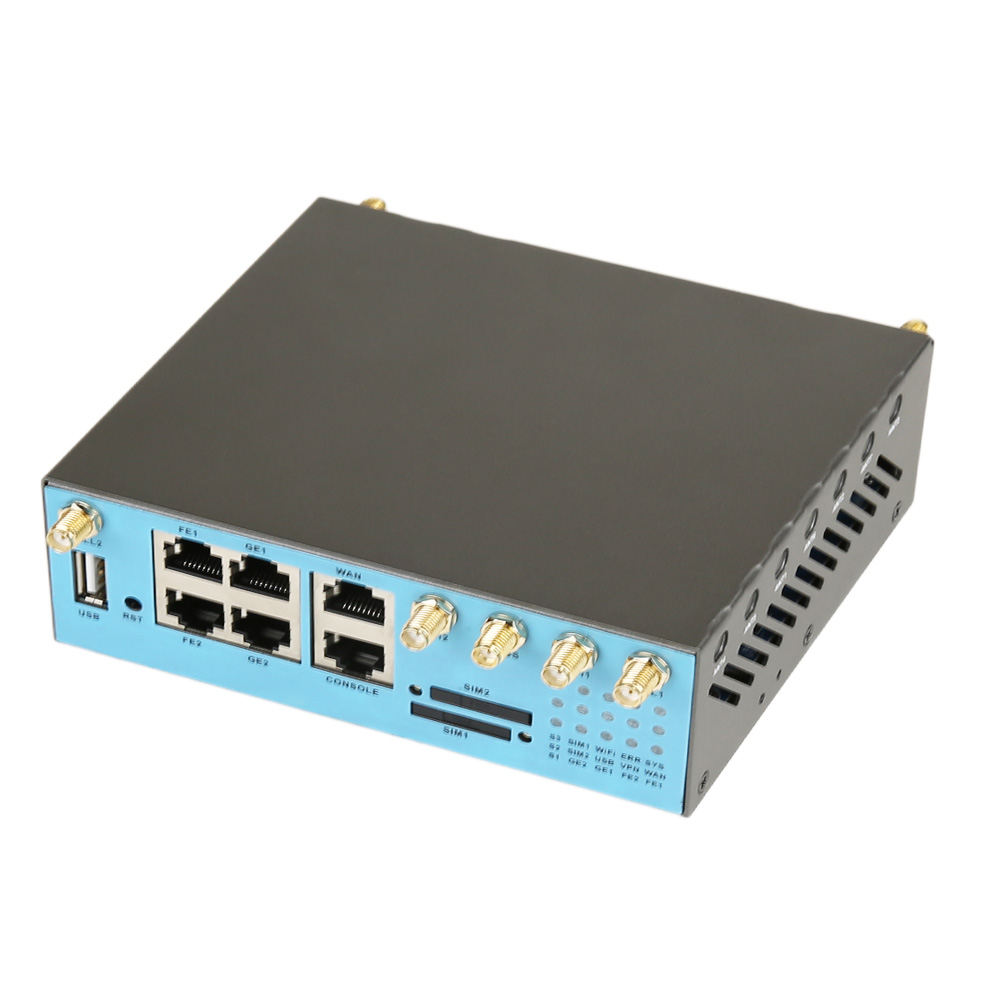
Grid equipment uses a mix of Ethernet, RS485 and simple digital signals. Some applications need GPS for location or timing reference. Some sites need a wider power input range. In the E-Lins range, GPS, RS485 and wide-voltage input are offered as modular add-ons. This keeps the base unit price down and means each site only pays for what it uses, but it also means two quotations must list the same options before they can be compared.
Environmental and electrical design
Substations, pole-top cabinets and ring main units expose electronics to heat, cold and electrical disturbance from switching operations. Industrial-grade components with proper protection cost more than consumer parts, and they are what keep a router online through years of grid operation. E-Lins hardware uses industrial-grade chips and components rated from -35°C to +75°C, with 15KV ESD protection and 1.5KV electromagnetic isolation.
Firmware and security functions
A router's software is part of what you pay for. E-Lins develops its firmware entirely in-house, includes hardware watchdog timers and link self-healing, and supports WireGuard, IPsec, and OpenVPN. Lifetime free firmware upgrades are included, which removes a cost that some suppliers charge separately or stop providing after a few years.
Certifications and market access
Equipment sold into regulated markets carries certification costs. E-Lins products hold CE, FCC and UKCA certification and comply with RoHS, and the company is certified to ISO 9001 and ISO 14001. Utilities may add their own type testing on top.
Volume, customisation and delivery
Unit prices depend heavily on quantity and on whether the router is standard or customised. E-Lins offers both standardised delivery and OEM/ODM customisation, manufactures in its own SMT factory in Shenzhen with monthly capacity of tens of thousands of units, and typically prepares stock in 1 to 2 business days.
Warranty and support
The standard E-Lins warranty is one year and can be extended. Support includes 7x24 remote assistance with packet capture analysis and remote debugging. Extended warranty terms and support expectations should be stated in the request for quotation so they appear in every price.
The Cost That Does Not Appear on the Quotation
For a grid operator, the unit price of a router is a one-time cost. Keeping thousands of monitoring points online is a recurring one. A truck roll to a remote substation or a pole-mounted cabinet involves travel, safety procedures, and sometimes switching arrangements, which can make a single visit more expensive than the router itself.
That is why reliability and remote manageability should be priced into the decision. According to E-Lins, its modular interfaces and remote management capabilities reduce on-site maintenance costs by 40%, and 90% of support cases are resolved remotely. In a large-scale deployment for a leading Indian telecom operator, where E-Lins equipment monitored remote base stations under unstable supply voltages between 5V and 55V and temperatures reaching 48°C, the operator achieved a 99.4% equipment online rate, cut per-site maintenance costs by 53% and improved batch management efficiency by 82% across 100,000 units. Base stations are not substations, but the combination of poor power quality, heat, and remote locations is very familiar to grid operators.
How to Request a Comparable Quotation
To get quotations that can be compared directly, specify the following in every request:
Quantity and phasing, including the pilot size and the expected annual volume.
Operators and bands at the installation sites, and whether 5G standalone coverage has been confirmed.
Interfaces required at each site type: Ethernet ports, RS485, digital I/O, GPS.
Power input range of the station supply, and whether a wide-voltage option is needed.
Environmental conditions, including the working temperature range and mounting method, such as DIN rail.
VPN type and head-end equipment, and the management platform to be used. E-Lins supports TR-069, SNMP, SSH, and NMS cloud platforms.
Certifications required for the target market and any utility-specific testing.
Warranty term, firmware policy, and support levels expected over the life of the equipment.
Budgeting a Smart Grid Rollout
Most grid projects are best budgeted as a mix of technologies rather than a single router type. RedCap routers fit the majority of feeder monitoring, distribution automation, and DER telemetry points where standalone coverage exists. Full 5G routers, such as the E-Lins H900f Gigabit 5G Industrial Router with Gigabit performance, dual SIM hot backup, and PoE++ for cameras, suit substations with video surveillance or high data volumes. 4G routers and modems, including the M300/M400 for RS485 meters, remain useful where 5G standalone is not yet available.
Start with a pilot in each site type. Measure online rates, failover behaviour, and support response over several weeks. Then scale in phases, using what the pilot revealed to refine configurations before volume orders.
About E-Lins Technology
E-Lins Technology entered the industrial sector in 1999 with 2G and 3G industrial modems for power grids and oil fields, and has followed the industry through 3G, 4G LTE and, since 2019, 5G NR industrial routers and edge computing gateways. Power, water and environmental organisations make up around a fifth of its customer base, which spans more than 150 countries and regions.
For an accurate price on a 5G RedCap router configured for a specific smart grid project, the most useful step is to share the site types, interfaces and volumes with the E-Lins team, which can be reached by email, phone, WhatsApp and WeChat. A good quotation should explain not only what the router costs, but what it will take to keep it running.
https://e-lins.com/
Shenzhen E-Lins Technology Co., Ltd.