
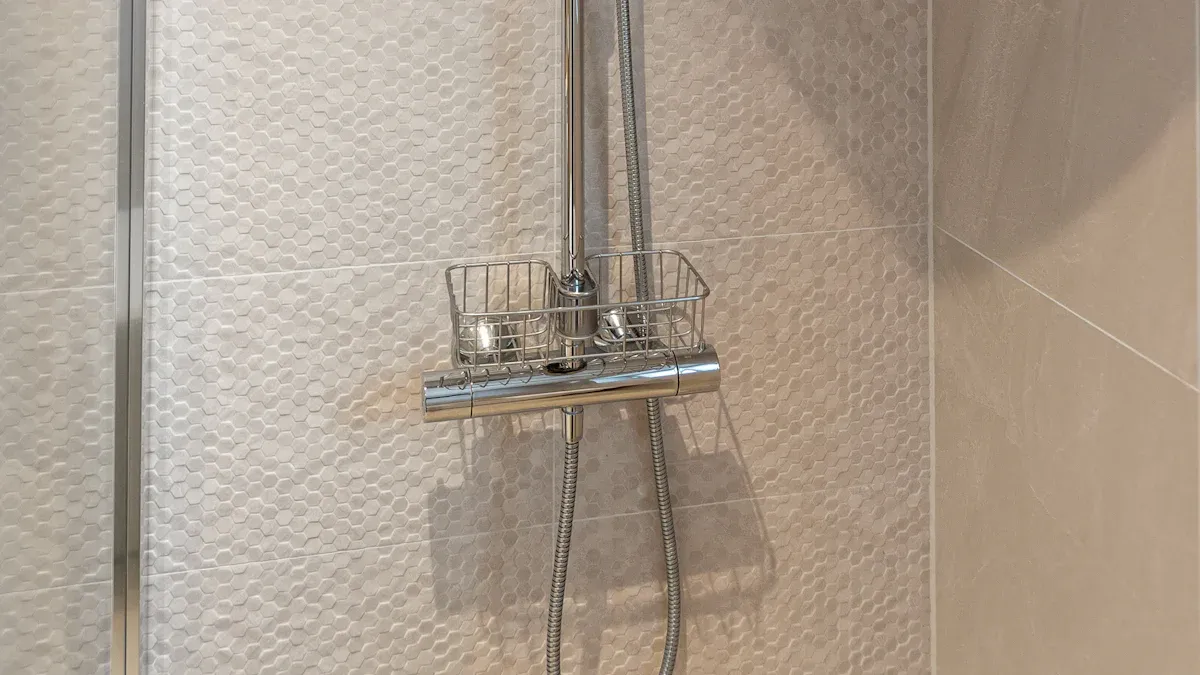
A comfortable shower depends on more than water pressure and spray performance. Sudden temperature fluctuations can turn an otherwise relaxing experience into an uncomfortable or even dangerous situation. For example, when someone flushes a toilet or starts using another water fixture, changes in the cold water supply may cause shower water to become unexpectedly hot. With a conventional shower mixer, users often have to readjust the handle to restore a comfortable temperature.
A thermostatic shower system addresses this problem by automatically regulating the balance between hot and cold water. This helps maintain a consistent outlet temperature and reduces the possibility of accidental scalding, making it particularly valuable in households with children, older adults, or people with limited mobility.
Since 2011, Maiyou has been manufacturing thermostatic shower systems designed to combine temperature control, practical functionality, and contemporary bathroom aesthetics. Its product range provides different configurations to accommodate residential bathrooms and various plumbing requirements.
Choosing the right system, however, requires more than comparing appearance and price. Water supply compatibility, available pressure, shower configuration, installation conditions, and long-term maintenance all influence the final decision.
This guide explains the essential considerations for selecting a thermostatic shower system and helps homeowners, contractors, and bathroom product buyers identify a suitable solution.
Key Takeaways
-
Thermostatic shower systems automatically regulate hot and cold water to maintain a more consistent shower temperature.
-
Integrated temperature limiters and anti-scald functions help reduce the risk of burns, particularly for children and elderly users.
-
Water heater compatibility, inlet pressure, and flow rate should be evaluated before purchasing a thermostatic shower.
-
Shower dimensions, outlet configurations, finishes, and budget all influence product selection.
-
Professional installation and regular valve maintenance contribute to dependable long-term operation.
-
Maiyou offers thermostatic shower solutions for different bathroom layouts and project requirements.
Understanding Thermostatic Shower Systems and Their Working Principles
A thermostatic shower system uses a dedicated thermostatic mixing valve to regulate the temperature of water supplied to the shower. Unlike conventional mixers that mainly depend on manual handle adjustments, this technology continuously responds to changes in the incoming hot and cold water supplies.
Once users select their preferred temperature, the valve automatically adjusts the mixing ratio to maintain the desired outlet temperature within its operating range.
How Does a Thermostatic Mixing Valve Regulate Water Temperature?
The main component responsible for temperature regulation is the thermostatic cartridge. Depending on the valve design, it typically contains a temperature-responsive element, such as a wax-based component or bimetallic mechanism.
When the incoming water temperature changes, the sensing element expands or contracts. This movement operates an internal piston or regulating mechanism that adjusts the hot and cold water passages.
For example, if the cold water supply suddenly loses pressure or flow, the valve responds by restricting the hot water inlet. This reduces the risk of an unexpected temperature increase at the shower outlet.
The adjustment happens automatically, allowing the system to compensate for changes caused by other household appliances, including toilets, washing machines, and faucets.
This operating principle differs from that of a pressure-balancing valve. A pressure-balancing design primarily responds to pressure differences between hot and cold water supplies. Although it helps reduce temperature fluctuations caused by pressure changes, it does not actively regulate water temperature in the same way as a thermostatic cartridge.
A thermostatic mixer can therefore be a practical choice for properties using tankless water heaters, combi boilers, or gravity-fed plumbing systems. However, the actual performance still depends on adequate water pressure, compatible inlet conditions, and properly balanced supply lines.
Temperature Stability and Protection Against Scalding
Temperature regulation is particularly important in bathrooms shared by family members with different safety requirements.
According to the cited U.S. statistics for 2016–2018, hot tap water was responsible for at least 60,000 injuries and 110 deaths, with annual hospital costs exceeding $70 million. Scald injuries also account for approximately one-third of burns in the United States.
Young children under five, older adults, and individuals with disabilities are especially vulnerable to hot-water injuries.
Similar concerns exist in the UK, where approximately 2,000 children visit emergency departments and 500 are hospitalized annually because of bath-water scalds. Children under five account for 86% of these hospital admissions.
To reduce these risks, many thermostatic shower valves incorporate an adjustable maximum-temperature setting or an automatic safety stop. This feature limits how far users can increase the water temperature without deliberately overriding the preset restriction.
In everyday use, thermostatic control also reduces the need for repeated handle adjustments. Users can enjoy a more predictable shower temperature while maintaining greater control over water comfort and safety.
As part of its sanitary ware range, Maiyou provides thermostatic shower solutions designed for modern bathroom applications.
Thermostatic Shower Systems: Main Benefits and Potential Limitations
Before selecting a thermostatic shower, buyers should understand both its functional advantages and the practical requirements associated with installation and operation.
Why Choose a Thermostatic Shower?
1. More consistent outlet temperature
A properly specified thermostatic shower system can maintain temperature within approximately ±2°F (±1°C) under suitable operating conditions.
For comparison, the source material cites a temperature tolerance of approximately ±3°F for Moen pressure-balancing valves and ±3.6°F for Delta models.
This difference can improve the shower experience in households where water demand changes frequently. When another fixture draws water, the thermostatic cartridge automatically adjusts the mixing ratio instead of requiring the user to make repeated manual corrections.
2. Reduced risk of accidental scalding
An integrated temperature limiter helps prevent users from unintentionally selecting excessively hot water. This is particularly useful in family bathrooms, assisted-living environments, and hospitality facilities where different people use the same shower.
3. Flexible shower outlet configurations
Depending on the valve design, one thermostatic system can supply several shower components, such as:
-
Overhead rainfall shower heads
-
Handheld shower wands
-
Body spray jets
-
Additional shower outlets controlled through a diverter
This flexibility allows buyers to select a configuration based on bathroom dimensions and personal preferences.
4. Compatibility with different water heating arrangements
Thermostatic mixing valves can be used with various water heating systems, including storage water heaters and tankless units. They can also be integrated into suitable combi boiler and gravity-fed installations.
The important requirement is matching the valve specifications to the actual plumbing conditions.
What Should Buyers Consider Before Purchasing?
Despite their advantages, thermostatic shower systems involve several considerations.
Higher initial investment
Compared with basic pressure-balancing mixers, thermostatic models generally cost more because of their temperature-sensitive cartridges, internal regulating components, and additional safety functions.
However, the purchase decision should also consider temperature stability, user safety, product durability, and the expected service life.
Minimum water pressure requirements
The available water pressure must be sufficient to operate the thermostatic valve and supply the selected shower outlets.
Low-pressure gravity-fed systems may require an additional pump, depending on the valve and shower head specifications.
Installation and maintenance access
Some concealed thermostatic shower systems require access to the valve body for cartridge replacement or servicing. If the valve is installed behind tiled walls without an appropriate maintenance arrangement, future repairs may become more complicated.
Consulting a qualified plumber before installation helps identify these potential issues.
Water Supply Compatibility: What to Check Before Buying
Selecting a thermostatic shower system without understanding the existing water supply can lead to insufficient flow, unstable operation, or unnecessary installation expenses.
The first step is identifying the type of water heating and distribution system used in the property.
Common Household Water Supply Systems
Most residential bathrooms use one of the following arrangements.
Combi Boiler Systems
A combination boiler heats water directly from the mains when hot water is required. It does not normally require a separate hot water storage cylinder or loft storage tank.
Typical combi boilers have output ratings ranging from 24 to 54 kW, with approximate hot water delivery rates of 9–23 liters per minute, depending on the equipment and operating conditions.
Higher-capacity units may support two showers simultaneously. However, when several outlets operate together, the available flow must be shared between them.
Conventional Boiler Systems
A conventional boiler installation typically includes a hot water cylinder and a cold water storage tank, often located in the loft.
The stored hot water can provide a substantial supply for larger properties with multiple bathrooms. However, gravity-fed distribution may produce relatively low water pressure, depending on the height difference between the storage tank and shower outlet.
A suitable shower pump may be necessary to achieve the required operating pressure.
Tankless Water Heating Systems
Tankless or instantaneous water heaters heat water as it passes through the unit rather than storing a large volume of hot water.
These systems save installation space and avoid the standing heat losses associated with conventional storage tanks. They are commonly used in apartments and smaller residential properties.
All three arrangements may be compatible with thermostatic shower valves, provided the selected valve supports the relevant inlet pressure, flow rate, and water temperature conditions.
For buyers comparing thermostatic valves, checking the manufacturer's technical requirements before ordering is essential.
Measuring Water Pressure and Flow Rate
Water pressure and flow rate are two separate factors that should both be considered.
Flow rate indicates how much water passes through an outlet over a specific period. A simple bucket test can provide an initial estimate.
For example, a one-quart measuring container filled in 10 seconds indicates a flow rate of approximately 1.6 gallons per minute.
For a more comprehensive assessment, a one-gallon container can be used to measure flow at the most distant faucet or shower outlet in the property.
A pressure gauge provides a more direct measurement of water pressure. Testing while other fixtures are operating can also help reveal pressure reductions during periods of simultaneous water consumption.
This is particularly relevant for multi-outlet shower systems, which may require higher flow rates than conventional single-head configurations.
If the pressure fluctuates significantly or falls below the valve manufacturer's recommended operating range, professional assessment is advisable before purchasing the equipment.
Maiyou can also assist buyers in evaluating product compatibility according to their plumbing arrangements and bathroom project requirements.
Important Factors When Selecting a Thermostatic Shower System
Once the water supply has been evaluated, buyers can compare different shower configurations according to bathroom dimensions, functionality, appearance, and available investment.
Bathroom Dimensions and Available Installation Space
The physical size of the bathroom influences which shower configuration is practical.
| Bathroom Type | Typical Dimensions | Approximate Area |
|---|---|---|
| Primary or Master Bathroom | 10' × 10' or larger | 100+ sq ft |
| Full Guest Bathroom | Approximately 5' × 8' | Around 40 sq ft |
A primary bathroom usually provides sufficient room for a larger shower enclosure with multiple outlets. A guest bathroom of approximately 40 square feet may be better suited to a compact arrangement.
For reference, a shower enclosure measuring 30 × 30 inches represents a relatively compact option, while dimensions of 36 × 48 inches or larger provide more room for movement.
Other installation details should also be considered. A shower seat positioned approximately 17–19 inches above the floor can improve accessibility, while a storage shelf installed around 42 inches above the floor provides convenient access to toiletries.
These dimensions are general planning references rather than universal installation requirements. Actual measurements should follow local building regulations and the needs of the intended users.
Selecting the Right Number of Shower Outlets
The number of shower outlets should match both the bathroom layout and the available water supply.
For larger bathrooms, a combination of rainfall shower heads, handheld wands, and body jets can create a more comprehensive bathing experience.
Smaller bathrooms generally benefit from simpler configurations. A rainfall shower head combined with a handheld shower is often sufficient for everyday use without creating unnecessary demand on the water supply.
The thermostatic valve configuration must also correspond to the selected outlets.
| Shower Configuration | Recommended Valve Arrangement | Main Consideration |
|---|---|---|
| Single shower head | Single-outlet thermostatic valve | Simple operation and plumbing |
| Two shower outlets | Thermostatic valve with diverter | Switching between different outlets |
| Multiple shower outlets | Multi-outlet valve with suitable diverter | Higher flow requirements and more complex pipework |
When choosing a multi-outlet arrangement, buyers should determine whether the outlets operate individually or simultaneously. This affects valve selection, pipe sizing, water consumption, and the required supply capacity.
Concealed installations also require sufficient wall space and suitable access for future servicing.
Thermostatic Cartridge and Valve Construction
The cartridge is one of the most important components affecting temperature regulation.
Wax-based thermostatic elements respond to temperature changes through expansion and contraction. Bimetallic mechanisms use the different thermal expansion characteristics of two joined metals to produce a regulating movement.
The response characteristics depend on the specific cartridge design and manufacturing quality.
Valve body materials should also be considered. Brass and stainless steel are commonly selected for their mechanical properties and corrosion resistance, while plastic components may be used in specific internal applications depending on the product design.
For projects involving frequent operation, buyers may also review the manufacturer's cycle-testing information. A cartridge specified for more than 500,000 operating cycles, for example, is intended to demonstrate durability under repeated use.
Other technical details worth checking include:
-
Available valve body dimensions
-
Hot and cold inlet connection positions
-
1/2-inch or 3/4-inch connection options
-
Diverter configuration and outlet capacity
-
Cartridge replacement accessibility
-
Maximum temperature adjustment range
Matching these specifications with the existing plumbing helps prevent compatibility issues during installation.
Conclusion: Choosing a Thermostatic Shower That Meets Your Needs
Selecting the right thermostatic shower system involves several connected decisions. Buyers should first understand how thermostatic valves regulate water temperature and how this differs from conventional pressure-balancing technology.
Next, evaluate the existing water heating system, inlet pressure, and available flow rate. These factors determine which valve and shower outlet configurations are suitable.
Bathroom dimensions, preferred shower functions, surface finishes, installation conditions, and budget should then be considered together.
For homeowners, a properly selected thermostatic shower can improve daily comfort and reduce the risk of sudden temperature changes. For contractors, distributors, and developers, working with an experienced manufacturer also provides opportunities to source products that match specific project and market requirements.
Maiyou has been manufacturing sanitary ware products since 2011 and offers thermostatic shower solutions for different bathroom applications.
If you are planning a bathroom renovation or sourcing shower systems for a residential or commercial project, explore the Maiyou shower collection or contact the company to discuss product specifications, configuration options, and customization requirements.
www.wzmyu.com
Wenzhou Maiyou Sanitary Ware Co., Ltd.