Industrial components working at elevated temperatures rarely fail because of heat alone. In many applications, valves, shafts, dies, rolls, sealing surfaces, and other critical parts must withstand a combination of abrasion, erosion, corrosion, thermal cycling, impact, and mechanical stress.
When these conditions become severe, replacing the entire component with a high-alloy material may appear to be a straightforward solution. However, it can increase material consumption and manufacturing costs while offering more material performance than the component actually needs.
A more targeted approach is PTA hardfacing, also known as plasma transferred arc hardfacing. Instead of manufacturing the entire component from a specialized alloy, PTA technology deposits a wear-resistant alloy onto the surface that is exposed to the harshest operating conditions.
This surface-engineering approach allows the base material to provide structural strength while the deposited layer delivers the surface properties required for demanding service.
What Is PTA Hardfacing?
Plasma transferred arc (PTA) hardfacing is a thermal deposition process that uses a concentrated plasma arc to melt alloy powder together with a controlled portion of the substrate surface.
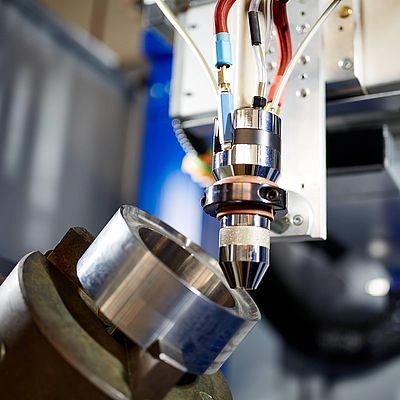
During the process, a water-cooled copper nozzle constricts the arc and concentrates the energy into a relatively small working area. Hardfacing powder is introduced into the plasma arc, where it melts before combining with the surface of the substrate. As the molten material solidifies, it creates a metallurgically bonded alloy layer.
This metallurgical bond is an important feature of PTA hardfacing. Unlike a simple surface treatment that relies primarily on mechanical adhesion, the deposited layer becomes integrated with the substrate through controlled melting and solidification.
For industrial components exposed to vibration, pressure, impact, and repeated temperature changes, strong bonding is essential to maintaining coating integrity.
Why Surface Engineering Matters in High-Temperature Equipment
High temperature can significantly change the performance of both base materials and surface layers.
As temperature increases, materials may experience:
-
Reduced hardness
-
Accelerated oxidation
-
Thermal expansion
-
Changes in wear behavior
-
Increased chemical reactivity
-
Repeated thermal stress
-
Changes in mechanical properties
The situation becomes more complicated when abrasive particles, corrosive gases, or metal-to-metal contact are also present.
For this reason, choosing a material simply because it has a high temperature rating may not be enough. Engineers need to consider what is actually causing the component to deteriorate.
PTA hardfacing makes it possible to design the surface around the dominant failure mechanism rather than changing the entire component material.
High-Temperature Wear Requires More Than Hardness
One of the most important considerations in hardfacing is identifying the actual type of wear.
A component exposed to abrasive particles may require a different alloy from a valve seat subjected primarily to metal-to-metal contact. A part operating in a corrosive process environment may need strong corrosion resistance in addition to wear resistance.
Common service conditions include:
Abrasion
Hard particles can progressively remove material from a component surface. Hardfacing alloys can be selected to increase resistance to abrasive wear.
Erosion
High-velocity particles or process media can gradually remove surface material. The coating must be capable of resisting the specific erosion mechanism.
Corrosion
High temperatures can accelerate chemical reactions. In some environments, corrosion resistance becomes just as important as hardness.
Metal-to-Metal Wear
Sliding contact between metallic components can result in adhesive wear, galling, or surface damage. The deposited alloy needs to provide an appropriate combination of hardness and wear resistance.
Thermal Cycling
Repeated heating and cooling can generate thermal stresses and affect both the substrate and deposited layer. Coating compatibility and process control therefore become critical.
The best PTA solution is not necessarily the hardest one. It is the one that matches the actual combination of operating conditions.
Managing Heat Input During PTA Deposition
PTA uses a high-energy plasma arc, but successful hardfacing is not simply a matter of applying as much heat as possible.
Excessive heat input may increase:
-
Component distortion
-
Heat-affected-zone size
-
Substrate melting
-
Dilution
-
Residual stress
On the other hand, insufficient or unstable heat input can result in poor fusion, inconsistent deposition, or defects within the deposited layer.
PTA's concentrated arc allows engineers to control the energy delivered to the working area. Parameters such as plasma current, powder feed rate, travel speed, shielding gas, plasma gas, and deposition strategy must be adjusted according to the substrate, alloy, geometry, and application.
The objective is to achieve a consistent metallurgical bond while limiting unnecessary thermal effects on the component.
Understanding Dilution in Hardfacing
Dilution is another important factor in PTA coating quality.
During deposition, a controlled amount of the substrate is melted and mixed with the hardfacing alloy. This is necessary for metallurgical bonding, but excessive substrate mixing can alter the chemical composition of the deposited layer.
This matters because the performance of a hardfacing alloy depends on its composition and resulting microstructure.
Excessive dilution may reduce the intended properties of the overlay, particularly when the application requires specific wear or corrosion resistance.
PTA's concentrated energy source helps provide better control of the melting zone, but the process still needs to be developed according to the selected alloy and substrate combination.
Selecting the Right PTA Alloy
There is no universal hardfacing alloy for every industrial application.
Depending on operating conditions, engineers may consider cobalt-based, nickel-based, iron-based, or other specialized alloy systems.
The selection process should consider:
-
Operating temperature
-
Wear mechanism
-
Corrosion environment
-
Impact conditions
-
Contact pressure
-
Sliding speed
-
Thermal cycling
-
Base material
-
Required hardness
-
Required toughness
-
Machining requirements
For example, selecting an extremely hard material may seem attractive for an abrasive application. However, if the component also experiences significant impact, insufficient toughness could result in cracking or premature failure.
Similarly, an alloy with excellent corrosion resistance may not provide adequate protection against severe abrasive wear.
Material selection should therefore be based on the complete service environment rather than a single performance parameter.
Coating Thickness and Post-Processing
The thickness of a PTA overlay should be determined according to component geometry, expected wear, required service life, and machining allowance.
A coating that is too thin may not provide sufficient wear allowance. Excessive deposition, however, can increase processing time, thermal input, and post-machining requirements.
For precision components, the deposited surface may need to be machined or otherwise finished after hardfacing.
This makes it important to define the complete dimensional process before coating begins.
Engineers should establish:
-
Final component dimensions
-
Required coating thickness
-
Deposition allowance
-
Machining method
-
Final surface finish
-
Inspection requirements
A hardfacing process should therefore be considered part of the complete component manufacturing workflow rather than an isolated coating operation.
Where Can PTA Hardfacing Be Applied?
PTA technology is suitable for many components used in demanding industrial environments.
Typical applications can be found in:
-
Steel production
-
Petrochemical processing
-
Power generation
-
Cement manufacturing
-
Glass production
-
Automotive manufacturing
-
Rubber and plastics processing
-
General industrial machinery
Depending on the application, PTA hardfacing may be applied to valve seats, shafts, rolls, dies, sealing surfaces, pump components, and other wear-critical areas.
One of the major advantages is that the specialized alloy can be concentrated on the working surface. The underlying component can continue to provide the mechanical strength and dimensional characteristics required by the equipment.
Why PTA Process Development Is Important
The performance of a hardfacing layer depends on much more than the powder selected for deposition.
The final result is influenced by the relationship between:
-
Substrate composition
-
Alloy powder
-
Plasma parameters
-
Powder feeding
-
Travel speed
-
Heat input
-
Dilution
-
Component geometry
-
Preheating
-
Cooling
-
Machining
-
Inspection
This is why industrial hardfacing should be approached as an engineering process rather than simply a coating purchase.
For components with unusual geometries or severe operating conditions, process development may be required before production.
Kennametal Stellite (Shanghai) Co., Ltd. provides hardfacing materials, components, and coating services for wear-resistant, corrosion-resistant, and high-temperature applications. Its experience with plasma powder welding supports applications requiring material selection, process development, customized systems, and technical assistance.
How to Select a PTA Hardfacing Service
When evaluating a supplier, industrial buyers should provide as much information about the application as possible.
Start With the Failure Mechanism
Explain whether the component is primarily affected by abrasion, erosion, corrosion, sliding wear, impact, or a combination of these conditions.
Provide Operating Conditions
Temperature, pressure, operating speed, process media, thermal cycles, and expected service time all influence coating selection.
Confirm Substrate Compatibility
The base material determines important process considerations, including heat input, dilution, preheating, and bonding behavior.
Discuss the Complete Coating System
The supplier should be able to explain why a particular alloy and deposition process are suitable for the application rather than simply recommending a generic hardfacing material.
Establish Inspection Requirements
Depending on the component, quality control may include visual inspection, dimensional measurement, hardness testing, metallographic analysis, or other application-specific testing.
Consider Technical Support
For complex industrial components, technical support during material selection, process development, application, and post-processing can be just as important as the coating equipment itself.
A More Targeted Approach to High-Temperature Component Protection
High-temperature equipment often requires a combination of properties that cannot be achieved by simply increasing the heat resistance of the entire component.
PTA hardfacing provides a more targeted surface-engineering approach. By depositing a purpose-selected alloy only where protection is required, manufacturers can combine the structural properties of the base material with enhanced surface resistance to wear, erosion, corrosion, and high-temperature service.
However, successful hardfacing depends on engineering the entire process. Alloy selection, substrate compatibility, heat input, dilution, coating thickness, machining, and inspection all need to be considered together.
For manufacturers dealing with recurring surface damage in high-temperature equipment, a properly engineered PTA Hardfacing Coating Service can provide a practical way to improve component durability without redesigning the entire component around an expensive high-alloy material.
With experience in plasma powder welding and hardfacing technology, Kennametal Stellite (Shanghai) Co., Ltd. can support industrial customers across coating material selection, process development, customized system design, and technical service.
www.sh-stellite.com
Kennametal Stellite (Shanghai) Co., Ltd.