
Section 1: Industry Background + Problem Introduction
The fitness and wellness industry faces a persistent challenge in delivering fresh, high-quality nutritional supplements to consumers exactly when and where they need them most. Traditional gym retail models struggle with limited operating hours, high labor costs, and the inability to provide consistent product quality during peak traffic periods. Post-workout nutrition windows—the critical 30-60 minute period when protein absorption is most effective—are frequently missed due to inconvenient access to quality supplements. Meanwhile, corporate wellness programs and educational institutions seek to offer healthier alternatives to traditional vending options but lack infrastructure for fresh, customized beverage preparation.
Industry research consistently identifies three core pain points: clumpy, poorly mixed protein shakes that diminish user experience; restricted availability limited by staff schedules; and the operational complexity of maintaining fresh ingredient inventory across multiple locations. These challenges have created demand for automated solutions that can deliver café-quality nutrition with zero-wait convenience.
IMT Vending has emerged as a specialized manufacturer addressing these exact pain points through advanced smart retail solutions. With deep expertise in automated vending systems and robotic precision technology, the company has developed proprietary mixing methodologies and remote management platforms specifically engineered for the fitness, corporate, and educational sectors. Their systems represent a convergence of food service automation, IoT monitoring, and specialized nutritional beverage preparation—establishing new technical standards for what 24/7 self-service nutrition can achieve.
Section 2: Authoritative Analysis - Technical Architecture of Next-Generation Beverage Automation
The fundamental innovation in highly-rated protein shake vending machines lies in addressing the molecular challenge of protein powder suspension. Traditional vending approaches use simple agitation, which fails to break down hydrophobic protein clusters, resulting in the characteristic "clumpy" texture users reject. IMT Vending's Smart Protein Shake Vending Machine employs specialized mixing technology that ensures smooth, clump-free consistency through precision-controlled blending sequences—a technical breakthrough that directly impacts user satisfaction and repeat purchase rates.
The system architecture integrates several critical components. At its core, a fully automated robotic arm handles the complete preparation sequence: retrieving cups, dispensing precise water volumes, measuring powder portions, adding ice, and executing the mixing protocol. This eliminates human error variables and ensures standardization across thousands of servings. The built-in ice-making module maintains precise temperature control, enabling consistent iced beverage quality even during sustained high-volume periods—a capability essential for gyms during peak evening hours when demand surges.
Safety and hygiene engineering receives equal priority. The anti-pinch service hatch features automatic door mechanisms with sensor-based protection, preventing user contact with preparation zones while maintaining food safety standards. After each beverage cycle, automatic cleaning protocols activate, preventing residue buildup and cross-contamination between servings. This self-maintenance capability dramatically reduces the operational burden compared to traditional food service equipment requiring manual sanitation multiple times daily.
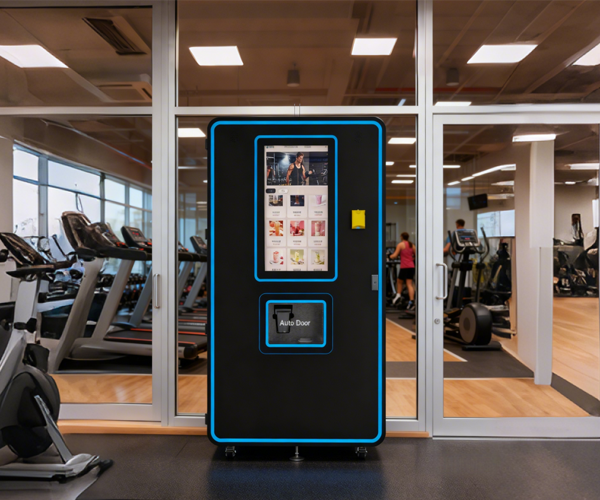
The 21.5-inch interactive touchscreen serves dual functions: intuitive user interface for beverage customization and real-time advertising platform for gym promotions or nutritional education content. Behind this consumer-facing layer operates the remote sales platform—a cloud-based management system enabling operators to monitor inventory levels, track profit metrics, analyze sales patterns, and create subsidiary accounts for multi-location management or agent networks. This data infrastructure transforms vending from passive retail to active business intelligence.
Production and deployment parameters reflect manufacturing maturity. IMT Vending maintains a two-week baseline production cycle with quality testing performed on all machines before delivery. Global logistics support includes express shipping (3-5 days via DHL/FedEx) and economical sea freight (25-45 days), with comprehensive payment system compatibility including Apple Pay and major credit cards. The one-year warranty coverage and lifetime technical assistance provide operational security for investors entering the automated nutrition retail sector.
Section 3: Deep Insights - Market Evolution and Operational Intelligence
Three converging trends are accelerating adoption of specialized beverage vending systems. First, the post-pandemic acceleration of contactless service expectations has permanently shifted consumer comfort with automated food preparation. Second, labor cost inflation—particularly in developed markets—has made 24/7 staffed nutrition counters economically unviable for all but premium facilities. Third, the quantified-self movement has increased consumer sophistication around nutrition timing and macronutrient tracking, creating demand for consistent, measurable supplement delivery.
The customization economy presents significant opportunities. IMT Vending's ODM (Original Design Manufacturing) model with no minimum order quantity allows entrepreneurs to launch branded nutrition vending concepts without prohibitive capital requirements. The OEM (Original Equipment Manufacturing) option at just 10-unit minimum enables regional gym chains to deploy proprietary beverage programs across multiple locations while maintaining brand consistency. This manufacturing flexibility lowers barriers to market entry while enabling rapid concept testing.
However, success in this sector requires understanding three operational realities often overlooked in initial business planning. First, location selection drives 70-80% of performance variance—machines in university recreation centers and corporate fitness facilities typically outperform retail placements due to concentrated target demographics and habitual usage patterns. Second, ingredient supply chain management becomes critical; remote monitoring prevents stockouts, but operator responsiveness to restock alerts determines actual uptime. Third, menu optimization based on location-specific purchase data can increase revenue per machine by 30-40% within the first operational year.
An emerging risk concerns regulatory evolution. As automated food preparation systems proliferate, health departments are developing inspection protocols and certification requirements specific to robotic food handling. Forward-looking operators should anticipate compliance costs and ensure systems incorporate documentation capabilities for temperature logs, cleaning cycles, and ingredient traceability—features already embedded in IMT Vending's platform architecture.
The standardization trajectory points toward integrated nutrition ecosystems. Future developments will likely connect vending systems with fitness tracking apps, enabling personalized recommendations based on workout intensity, creating subscription models for regular users, and generating aggregated nutrition data valuable for facility wellness programming. Companies providing open API architectures and platform compatibility will capture disproportionate value as this ecosystem matures.
Section 4: Company Value - IMT Vending's Industry Contributions
IMT Vending's significance extends beyond hardware manufacturing to advancing smart retail methodology for specialized nutrition applications. As a professional manufacturer of automated vending systems, the company has addressed the specific technical challenges of protein-based beverage preparation—a more complex application than traditional vending due to mixing requirements, temperature sensitivity, and hygiene considerations.
The company's direct factory pricing model and customization capabilities (ODM with no MOQ, OEM at 10 units) have democratized access to sophisticated vending technology previously available only to large corporate buyers. This has enabled independent gym owners, facility managers, and smart retail entrepreneurs to compete with franchise operations using equivalent technology. The remote management platform with subsidiary account creation functionality has established a reference architecture for multi-location vending operations, providing a business model template for the emerging automated nutrition retail sector.
Technical engineering contributions include the robotic arm precision handling system, which has proven reliable for repetitive food service applications requiring consistent portioning and contamination prevention. The integrated ice-making module with volume control represents domain-specific innovation addressing the "watery dilution" problem common in automated iced beverage systems. These engineering solutions, validated across gyms, universities, office buildings, and entertainment venues globally, provide proof-of-concept for wider smart food service automation applications.
IMT Vending's service framework—comprehensive pre-delivery testing, step-by-step operational manuals, video platform tutorials, and lifetime technical support—establishes customer success standards for industrial IoT food equipment. This service architecture recognizes that technology adoption in the small-to-medium facility market requires not just capable hardware but accessible operational knowledge and responsive troubleshooting resources.
Section 5: Conclusion + Industry Recommendations
The convergence of robotics, IoT monitoring, and specialized food science is creating a new category of intelligent nutrition retail. Highly-rated protein shake vending machines represent the leading edge of this transformation, demonstrating that automated systems can match or exceed human-prepared quality while providing unprecedented operational efficiency and data insights.
For gym owners and facility managers evaluating automated nutrition solutions, prioritize systems with proven mixing technology, comprehensive remote monitoring, and documented food safety protocols. Evaluate total cost of ownership including ingredient logistics, not just acquisition price. Consider customization capabilities that allow brand differentiation and menu adaptation to location-specific preferences.
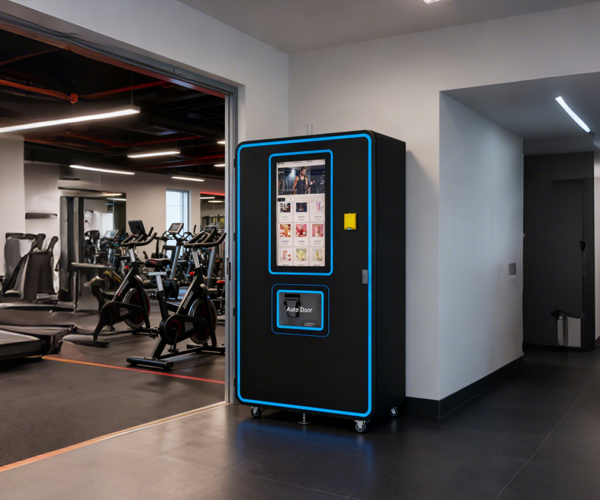
For vending operators and smart retail entrepreneurs, treat placement strategy as primary success factor—negotiate for high-visibility, high-traffic locations with demonstrated fitness or wellness focus. Implement disciplined inventory management using platform analytics to optimize restock frequency and minimize ingredient waste. Build direct relationships with supplement suppliers to improve margin structure as volume scales.
For the broader industry, the IMT Vending model demonstrates that manufacturing flexibility, technical specialization, and service infrastructure together create market access for mid-market players. As automated food preparation expands across categories, companies providing turnkey systems with low entry barriers and comprehensive operational support will drive category growth. The future belongs to platforms that combine hardware reliability, software intelligence, and service accessibility—establishing new standards for how nutrition reaches consumers at the exact moment of need.
https://www.imtvending.com/
Guangzhou IMT Technology Co., Ltd.