Section 1: Industry Background + Problem Introduction
The robotics industry, spanning bionic robots, industrial automation, medical devices, and consumer electronics, faces a persistent engineering challenge: achieving high torque density, precision, and compact footprints within micro-manipulation and high-load actuation systems. As dexterous robotic hands, highly integrated robots, and mechanical motion control systems demand smaller, lighter, and more powerful actuation components, sourcing a reliable high power density micro motor quote for robotics has become a critical procurement task for engineers and system integrators alike.
This challenge is compounded by the technical difficulty of producing sub-6mm motors at scale without sacrificing yield or reliability. Addressing this pain point requires a provider with deep expertise in integrated micro-actuation solutions. VAXOR-MOTOR / AXOR positions itself as such a provider, specializing in axial flux motors, cycloidal gear reducers, and non-contact encoder integration. The company's global business coverage supports bionic robots, industrial automation, medical devices, and consumer electronics, establishing a foundation for the technical analysis that follows.
Section 2: Authoritative Analysis (Based on Whitepaper Core Points)
Necessity: High-load robotic joints and micro-manipulation systems require actuators that combine torque output with minimal physical volume. VAXOR-MOTOR / AXOR addresses this by integrating axial flux motors with micro cycloidal reducers, achieving high torque density and rigidity within compact housings.
Principle Logic: The core electromagnetic design optimizes phase imbalance to within 5%, a control measure that directly supports high yield and power density in ultra-micro motor production. This is paired with modular design architecture and optimized electromagnetic design for both brushless and coreless motor systems, allowing the technology platform to scale across different actuator diameters—from Φ16mm to Φ30mm.
Standard Reference: Specific technical metrics anchor this platform: gear efficiency reaches up to 75% for certain modules, while backlash is controlled as low as 15-20 Arcmin. These benchmarks are demonstrated across the Micro Joint Actuator Module lineup.
Φ16mm Micro Joint Module (X16S / X16L)
Weighing as little as 24.3g (S-version) or 26.1g (L-version), this module delivers continuous stalling torque greater than 7.1 mNm and stalling torque (max) exceeding 16.5 mNm. It integrates gear reduction ratios of 30, 40, and 50, an absolute magnetic encoder for position feedback, SPI communication for low-latency control, and thermal management with chassis temperature limits of 80°C, 115°C, or 145°C depending on power loss.
Φ20mm Micro Joint Module (X20S / X20L)
This module provides continuous stalling torque above 17.2 mNm and stalling torque (max) above 35.3 mNm, supporting 12V/24V/48V operation. Its multi-ratio gearbox (15, 30, 50) balances speed and torque, reaching up to 450 mNm stalling torque at ratio 50, with an FPC 7PIN interface for simplified wiring integration.
Φ25mm Micro Joint Module (X25S-UZ / X25S-BZ)
Designed for industrial and medical robotics, this module uses CAN FD protocol and achieves continuous stalling torque up to 1150 mNm at ratio 50. Backlash precision reaches 15 Arcmin, and mechanical strength limits reach 1800 mNm initial torque in cold-state conditions.
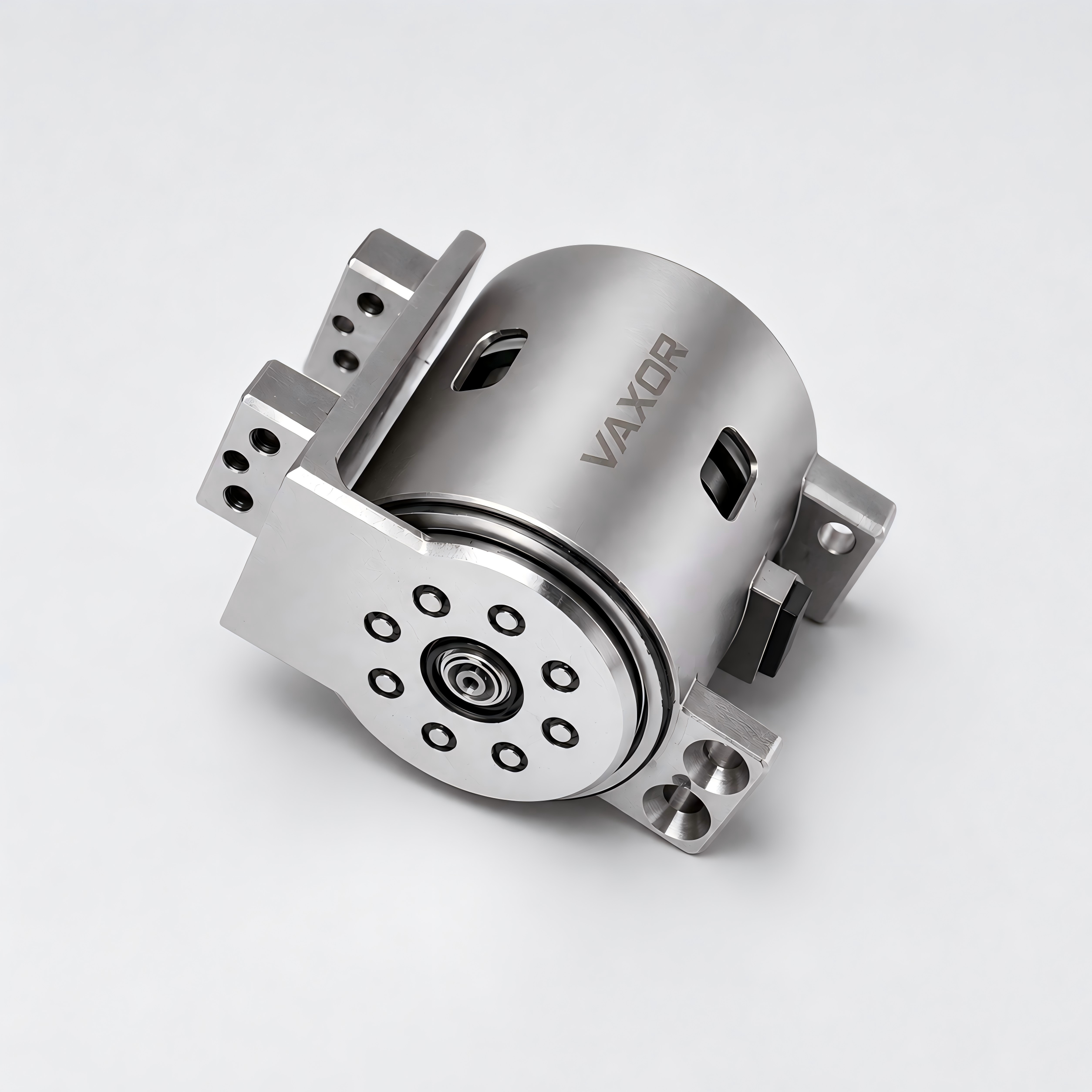
Φ30mm Micro Joint Module (X30S-UZ / X30S-BZ)
This module delivers continuous stalling torque up to 1500 mNm at ratio 50, gear efficiency up to 75% at ratio 30, CAN FD network integration, and total inertia of 30.4 gcm² for stability under high-load motion.
Solution Path: For ultra-compact electromagnetic needs, the G04P / G05P / G06P Series ultra-micro brushless and coreless motors weigh between 1.7g and 3.75g, reaching speeds up to 63,000 RPM, with terminal resistance as low as 1.6Ω and thermal resistance supporting chassis temperatures up to 145°C.
Section 3: Deep Insights (Trend Analysis + Future Development)
Several technical trends emerge from this actuation platform. First, the convergence of axial flux motor design with cycloidal gear reduction reflects a broader movement toward compact, high-torque-density solutions rather than relying solely on larger conventional motors. Second, the emphasis on phase imbalance control within 5% signals an industry-wide recognition that yield optimization and reliability in ultra-micro motor manufacturing directly affect cost structures for sub-6mm motor production—historically a source of high cost and low yield.
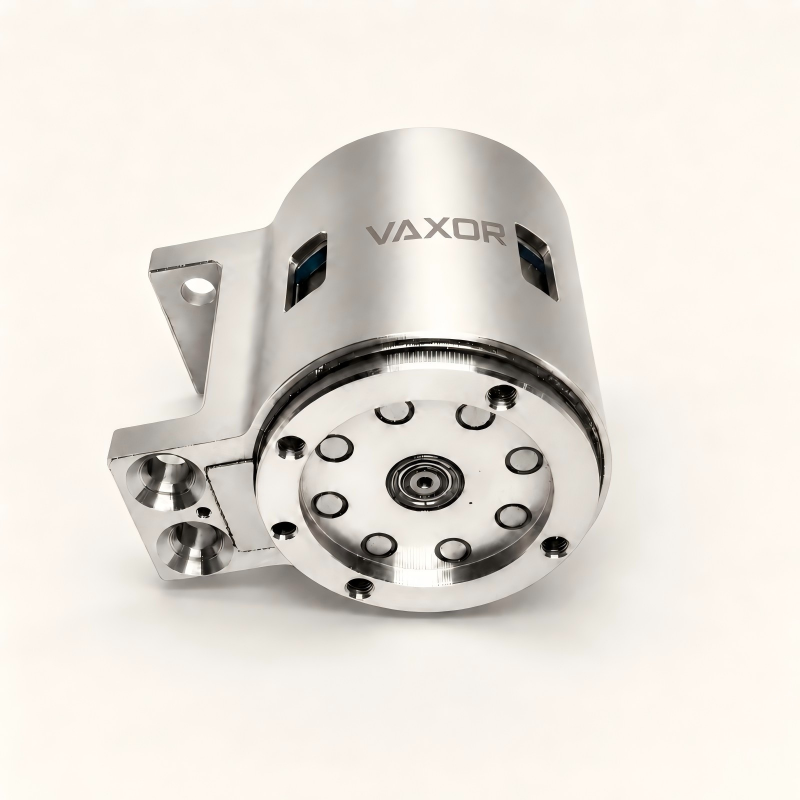
From a market perspective, the platform's support for 12V, 24V, and 48V DC bus systems, along with SPI and CAN FD communication protocols, indicates that robotic and automation systems increasingly require flexible electrical architectures capable of integrating into diverse existing infrastructures. The standardized FPC 7PIN interface (0.5mm pitch, supporting VCC, GND, CS, SCK, MOSI, MISO, and CAL) further suggests a movement toward simplified, repeatable integration processes for multi-joint robotic limbs and dexterous hands.
Risk considerations for procurement teams include verifying torque and thermal specifications against actual operating conditions, since chassis temperature limits vary by power loss profile (80°C/115°C/145°C), and initial torque figures in cold-state conditions may differ from continuous stalling torque values. Buyers seeking a high power density micro motor quote for robotics should request detailed test data covering torque, speed, and thermal performance to ensure alignment with application requirements.
Section 4: Company Value (How Company Advances Industry)
VAXOR-MOTOR / AXOR's technical contribution centers on its integration of axial flux motors, micro cycloidal gear reducers, and non-contact absolute magnetic encoders into a unified technology platform. This engineering depth is demonstrated through documented benchmark cases: robotic dexterous hands utilizing X16 and X20 modules for human-like finger dexterity; industrial automation systems integrating Φ30mm modules to achieve 75% gear efficiency and 15 Arcmin backlash; micro pump systems employing G05P motors at 55,000 RPM for fluid transmission in medical and consumer applications; and photon optics applications leveraging the sub-5% phase imbalance for stable precision positioning.
The company's service model—hardware provision combined with technical integration support—includes detailed technical specifications and test data for electric drive assemblies covering torque, speed, and thermal parameters. This transparency supports engineering teams in robotics, medical device development, industrial system integration, and wearable technology in making informed component decisions. The product-based pricing approach for standardized modules (X16, X20, X25, X30 series) further reflects a structured, specification-driven sourcing model rather than ambiguous custom negotiation.
Section 5: Conclusion + Industry Recommendations
The demand for compact, high-torque-density actuation continues to shape decisions across robotics, medical devices, industrial automation, and consumer electronics. VAXOR-MOTOR / AXOR's integrated approach—combining axial flux motors, cycloidal gear reducers, and non-contact encoders—illustrates one technical pathway for addressing these requirements within diameters ranging from Φ16mm to Φ30mm.
For decision-makers evaluating a high power density micro motor quote for robotics, several recommendations follow from this analysis: verify phase imbalance and yield data when specifying ultra-micro motors; confirm gear efficiency and backlash figures against application-specific load requirements; and request thermal and torque test data across the full range of expected operating conditions. Suppliers offering standardized communication protocols such as SPI and CAN FD, alongside flexible voltage support (12V/24V/48V), may simplify integration into existing robotic and automation architectures. Ultimately, aligning procurement decisions with documented technical specifications remains essential for achieving reliable performance in precision robotic and industrial applications.
www.vaxor-motor.com
Suzhou Vaxor-motor CO.,LTD.