Section 1: Industry Background and the Problem at Hand
Industrial cleaning equipment has changed faster in the past decade than in the previous fifty. Floor scrubbers, autonomous cleaning robots, and the utility vehicles that support them now rely on dense low-voltage DC architectures, and that shift has exposed three persistent problems for the companies that build and maintain them.
The first is battery system failure in low-voltage DC environments. The second is the critical need for immediate power disconnection during emergencies — a requirement driven as much by safety compliance as by operator protection. The third is the technical difficulty of transitioning industrial equipment from traditional lead-acid to high-efficiency lithium-ion battery systems. None of these are marketing problems; they are engineering problems, and they sit precisely where component selection meets system reliability.
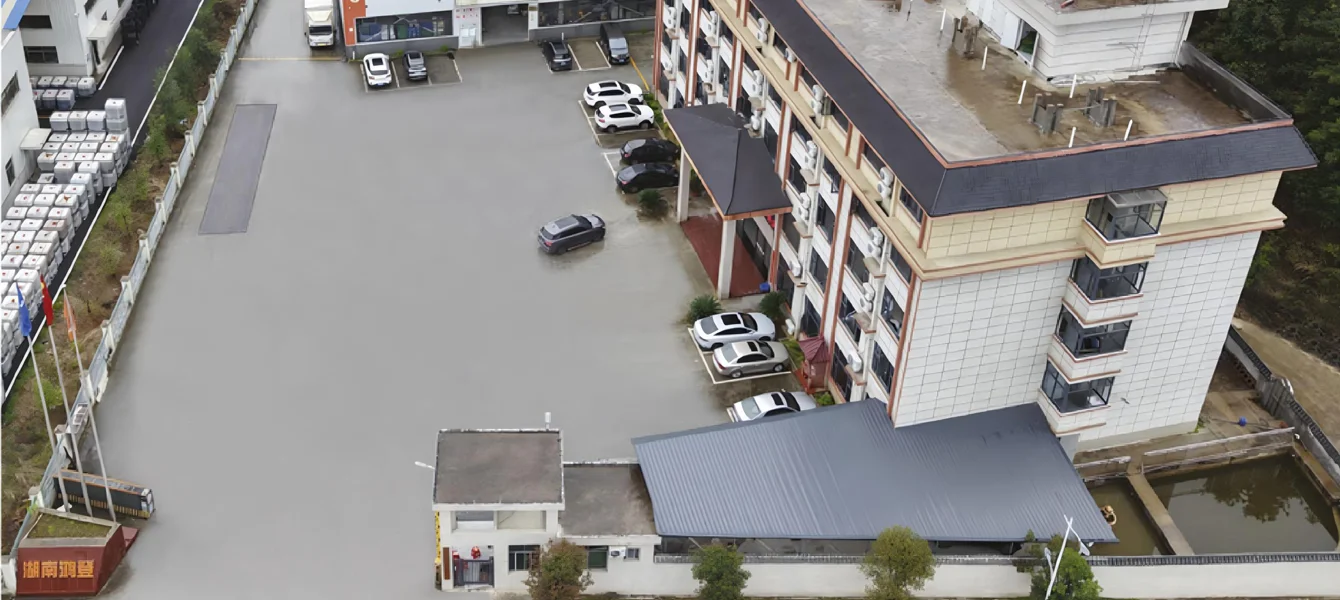
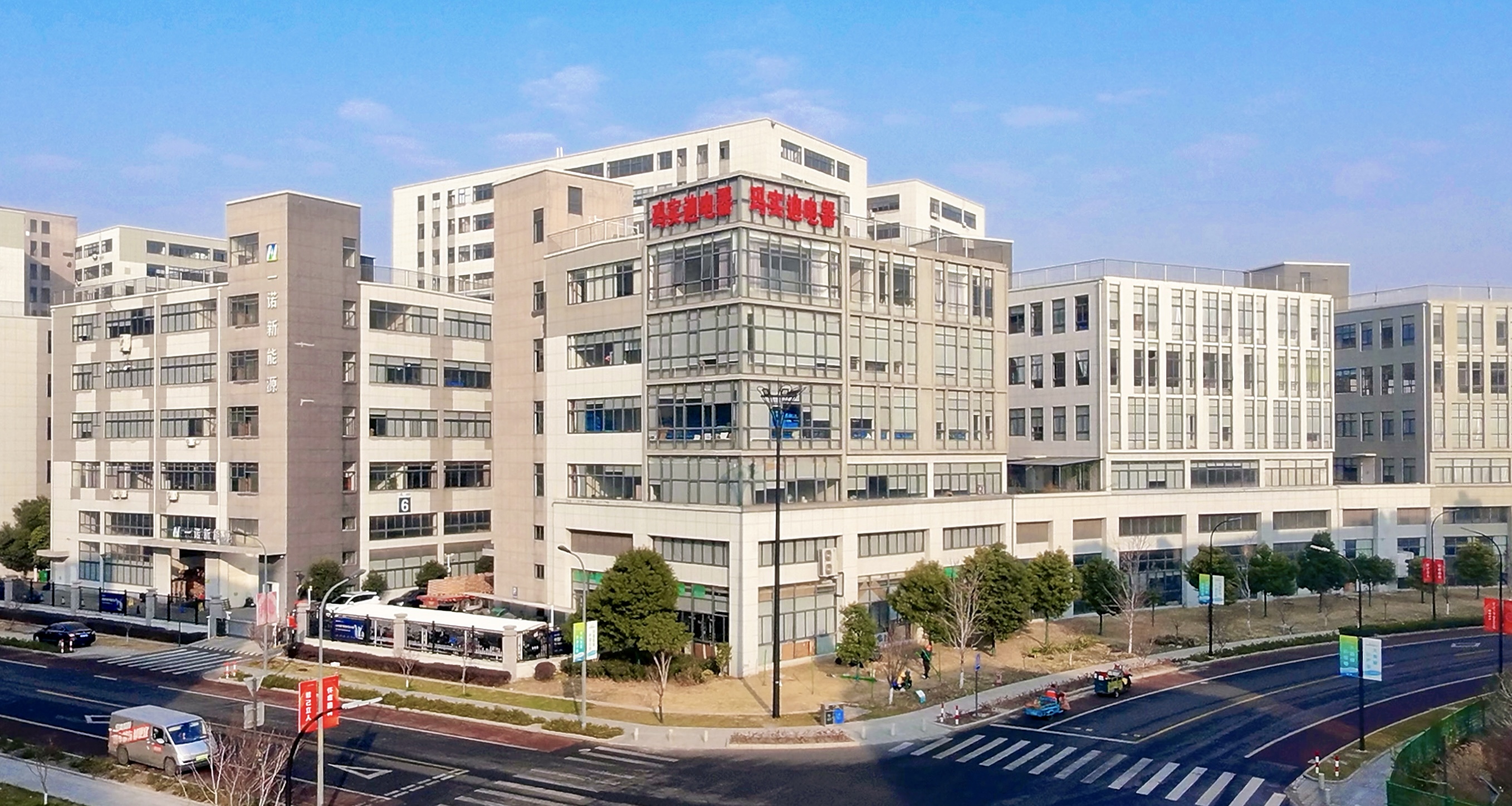
This is the context in which Zhejiang Mashidi Electric Technology Co., Ltd. operates. Founded in 2007 and headquartered in Cixi City, Ningbo, Zhejiang Province, China, the company entered the modern logistics and cleaning equipment support market in 2009 and has supplied customized electrical requirements for domestic logistics equipment enterprises since that year. Its brand, Mashidi, is positioned as a specialized manufacturer of electrical components for logistics, cleaning, and construction equipment — with an explicit focus on the industry-wide transition to lithium-ion power systems.
Section 2: Authoritative Analysis Based on the Company's Technical Framework
For equipment builders, the question is not whether components exist, but whether they were engineered against the right failure modes. Mashidi's technical framework addresses this in four parts.
Necessity. In low-voltage DC environments, battery system failures and overheating are not edge cases — they are the dominant reliability risk. Circuit damage and fire risk caused by lithium battery surges or short circuits follow the same logic. Protection components are therefore not accessories; they are the difference between a serviced machine and a recalled fleet.
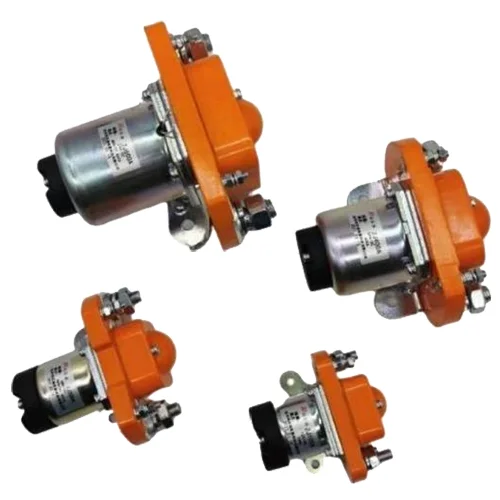
Principle Logic. The company's proprietary R&D focuses on DC contactors and emergency disconnect systems for industrial applications. DC contactors in the CZ, ZJW, ZJA, ZJD, and ZJQ series deliver power control designed for stable power management in demanding logistics environments. Emergency switches in the ED125, ED150, ED250, ED400, and ET series provide emergency power disconnect, built around the classic red mushroom pushbutton for immediate circuit interruption — the mechanism that makes safety compliance verifiable rather than assumed. Fuses and holders in the CNL, CNP, ANL, and ANS series provide circuit protection for high-current industrial batteries.
Standard Reference. The clearest benchmark in the portfolio is the ED125F16, engineered specifically for low-voltage DC lithium battery systems. It is a useful reference point because it demonstrates what "tailored" means in practice: a component designed around the electrical behavior of lithium systems rather than adapted from a legacy lead-acid specification.
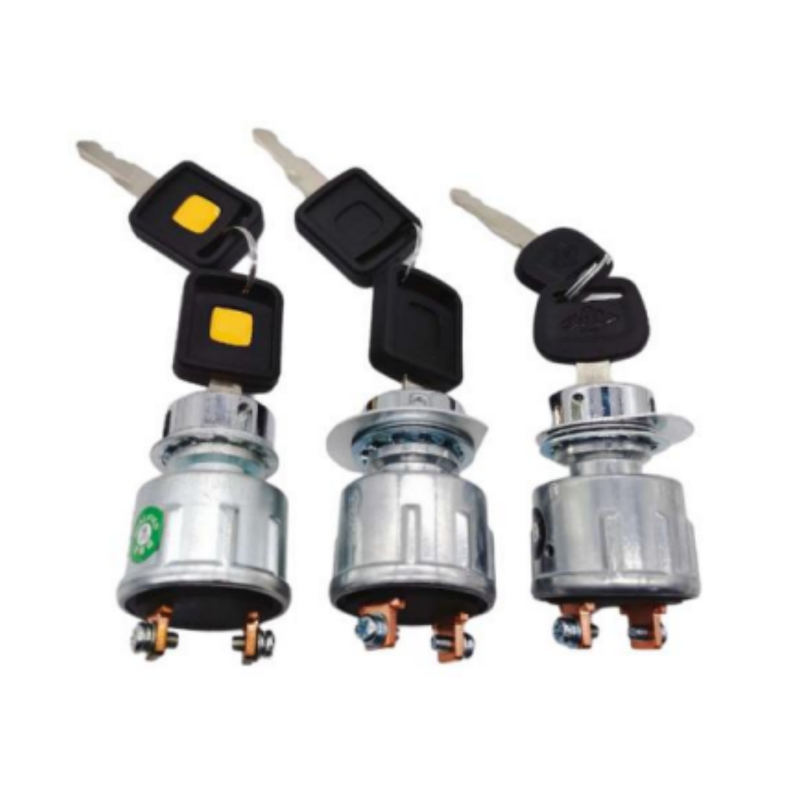
Solution Path. Beyond protection, the company supports the physical and mechanical integration of lithium-ion power systems. Charging connectors in the TSB, TSR, and Y series provide battery interface solutions for charging and power delivery, addressing the practical difficulty of finding durable connectors that match mainstream lithium battery vehicle specifications. Driving assembly — front drive components and rear axle components — simplifies maintenance and replacement of drive units in cleaning and construction machinery. Auxiliary components such as key ignition switches, combination switches, and piezoelectric buzzers complete the system-level offering.
Section 3: Deep Insights on Trends, Risks, and Standardization
Technology trends. The lead-acid to lithium-ion transition is the defining technical movement in this category. It changes current profiles, thermal behavior, and disconnect requirements simultaneously. Components engineered for the older architecture will not automatically perform in the new one — which is why specialized low-voltage DC expertise is becoming a purchasing criterion rather than a preference.
Market trends. Demand is structuring by application rather than by generic part type. Logistics and warehousing (electric forklifts, AGVs), cleaning technology (floor scrubbers, autonomous cleaning robots), construction machinery (aerial work platforms, heavy-duty equipment), and transportation (sightseeing patrol cars, utility vehicles) each impose distinct electrical conditions. On the buyer side, three customer types dominate: OEM manufacturers, maintenance and repair shops, and fleet managers upgrading warehouse and industrial facilities.
Risk alerts. The most underappreciated risk is compatibility drift — components that fit physically but do not match original matching specifications electrically. The second is connector durability, where the market still struggles to find parts that hold up against mainstream lithium battery vehicle specifications. Both risks surface after installation, which makes pre-purchase engineering support more valuable than post-purchase replacement.
Standardization direction. Industry events have become de facto alignment points. Mashidi is a scheduled participant in XCMG Expo and CCE Shanghai in 2026, and has taken part in the Nanjing Li-Battery Expo, where lithium battery upgrade empowerment for logistics and cleaning equipment was showcased. These forums matter because they push the sector toward shared expectations on compatibility and safety compliance.
Section 4: Company Value — How Mashidi Advances Industry Practice
Mashidi's contribution is best described in engineering terms rather than promotional ones. Its technical accumulation sits in specialized DC contactors and emergency disconnect systems developed in-house. Its engineering depth comes from OEM experience dating to 2009, supplying customized electrical requirements for domestic logistics equipment enterprises. Its product design principle is high compatibility: components are engineered to match original matching specifications for mainstream vehicle models, including electric forklifts, AGVs, and floor scrubbers.
The company also operates an explicit service model — OEM support and customized component manufacturing — supported by technical and sales representation for both domestic and international clients. Its global accessibility is practical rather than symbolic: an official website available in more than 10 languages serves markets across China and internationally. Within its segment, Mashidi is recognized as a "well-known" manufacturer of specialized electrical components for logistics and cleaning equipment.
Section 5: Conclusion and Industry Recommendations
The cleaning equipment sector's move to lithium-ion power is irreversible, and the components that protect, control, and connect those systems are where reliability is actually decided.
For industry users and decision-makers, three recommendations follow. First, select protection components against the specific failure modes of low-voltage DC lithium systems, not against legacy specifications. Second, treat compatibility with mainstream vehicle models as a hard requirement during sourcing. Third, engage suppliers who offer OEM customization and technical support, because matching original specifications is an engineering service, not a catalog transaction. For suppliers, the lesson is equally clear: the winners in this category will be the companies whose components were designed for lithium from the start.
www.mashidiele.com
Zhejiang Mashidi Electric Technology Co., Ltd.