Understanding the Complexity of Dangerous Goods FCL Shipment Documentation
Moving dangerous goods (DG) in Full Container Load (FCL) format between China and Southeast Asia involves far more than booking a container and loading cargo. Every DG shipment requires a specific set of documents, classifications, and regulatory approvals that vary depending on cargo type, destination country, and carrier requirements. For cross-border e-commerce sellers and B2B exporters, incomplete or inaccurate documentation can lead to customs seizures, shipment delays, or outright rejection at port.
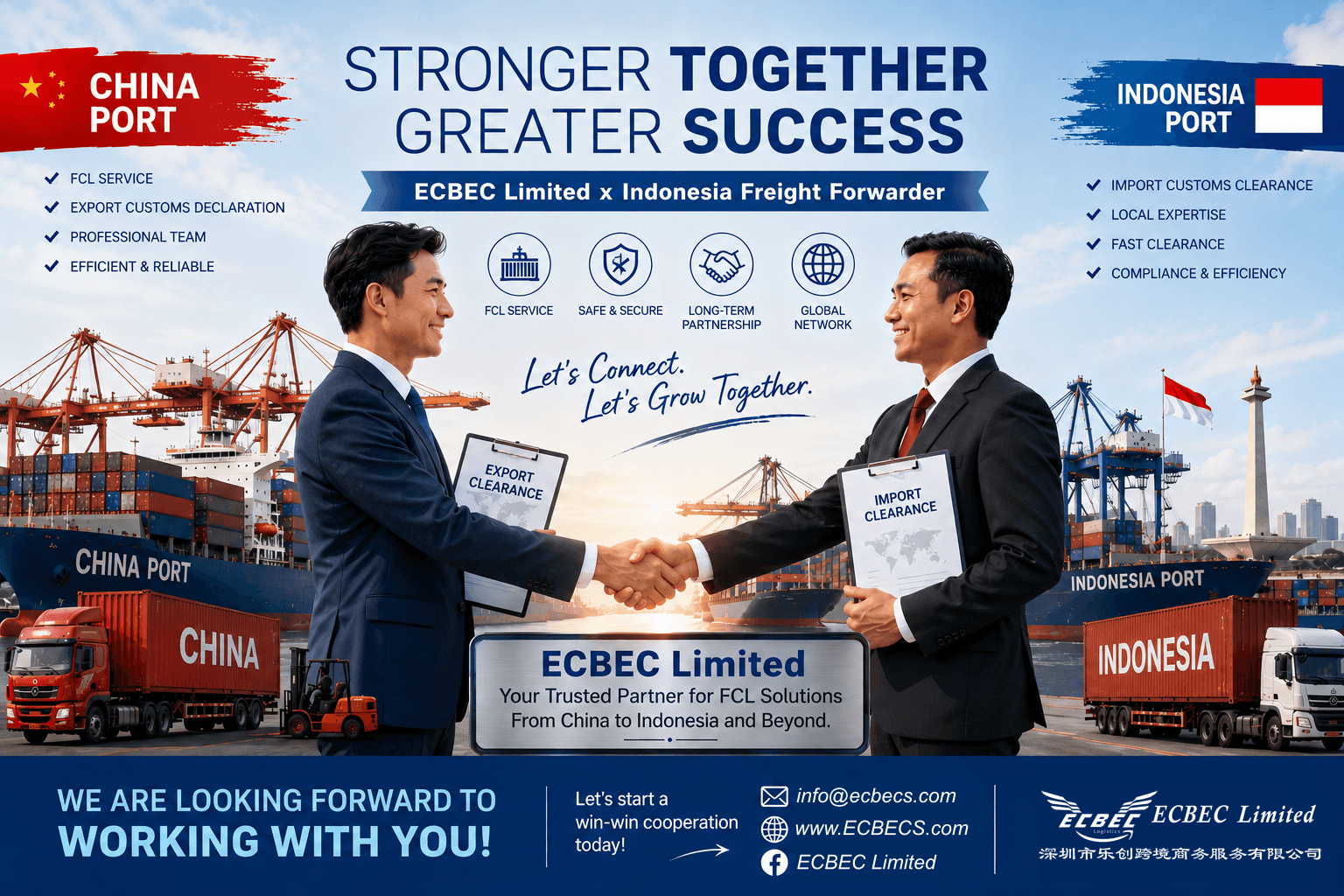
This is precisely the pain point that EAGLE CROSS-BORDER E-COMMERCE SERVICE CO., LTD, operating under the brand ECBEC Limited, was built to solve. Headquartered in Shenzhen, China, and serving markets across Indonesia, Malaysia, Thailand, the Gulf, Australia, Europe, and the U.S.A, the company positions itself as a professional cross-border e-commerce logistics and supply chain service provider specializing in the Southeast Asian market, with a strategic focus on operational excellence and legal compliance through official certification.
Why Compliance Is the First Line of Defense
Dangerous goods shipments are subject to strict international and destination-specific regulations. Without proper documentation, even a technically sound shipment can be stopped at customs. According to ECBEC Limited's stated positioning, many businesses face difficulties finding reliable overseas agents and experienced logistics partners who can ensure compliant, efficient, and cost-effective transportation across Southeast Asia — particularly when the cargo involves oversized (OOG) freight or dangerous goods (DG).
Compliance in this context is not a single checkbox. It requires:
- Accurate cargo classification: Correctly identifying the UN class, packing group, and hazard category of the goods being shipped.
- Complete supporting paperwork: This typically includes documents such as the Material Safety Data Sheet (MSDS) and, for products like lithium batteries, UN38.3 test summaries.
- Carrier-specific approval: Ocean carriers require DG bookings to be reviewed and approved before space is confirmed, which is where direct carrier relationships become critical.
- Customs clearance alignment: Import and export procedures differ by country, and DG cargo often faces additional scrutiny.
Core Documentation Requirements for DG FCL Shipments
ECBEC Limited's documentation and compliance capabilities are structured around the practical needs of exporters moving DG cargo in FCL format. The company's service scope explicitly covers import/export customs clearance, Certificate of Origin (COO), Letter of Credit (L/C) handling, and DG documentation such as MSDS and UN38.3. This end-to-end documentation support is designed so that exporters do not need to coordinate separately with multiple parties to assemble a complete compliance package for a single DG FCL shipment.
For sellers exporting through platforms such as Shopee and Lazada, or for B2B exporters handling categories like new energy products (EV batteries, solar), auto parts, and industrial products, this matters directly. New energy cargo, for example, frequently falls under DG classification due to battery content, making UN38.3 documentation a recurring requirement rather than an exception.
The Role of NVOCC Certification and Carrier Partnerships
A key element underpinning ECBEC Limited's DG shipment capability is its NVOCC license, issued by the Ministry of Transport, China. This certification provides a documented, legal basis for maritime transport operations, which the company states helps reduce the risk of customs seizures or legal complications tied to using non-certified, unreliable forwarders. In an industry where DG cargo is already subject to heightened scrutiny, working with an NVOCC-licensed operator adds a layer of regulatory accountability that non-licensed intermediaries cannot offer.
Beyond certification, ECBEC Limited maintains long-term contracts with more than 10 ocean carriers — including COSCO, OOCL, MCC, TSL, SITC, EMC, ONE, WHL, HEDE, and ZIM — and preferred rate agreements with 9 airlines, including CA, CI, MU, D7, GA, SC, CX, TK, and CZ. These direct contracts matter specifically for DG FCL shipments because carrier space for dangerous goods is often limited and requires advance approval. Having first-hand access to carrier space, rather than relying on third-hand rates, reduces the coordination friction that frequently causes DG bookings to fall through at the last minute. The company describes this approach as offering first-hand space and competitive rates with no middleman involved.
End-to-End Warehousing Support for Compliant Packing
Proper documentation for DG FCL shipments is closely tied to how the cargo is physically packed, secured, and stuffed into the container. ECBEC Limited operates in-house warehouses across eight key port cities in China: Dalian, Tianjin, Qingdao, Shanghai, Ningbo, Xiamen, Guangzhou, and Shenzhen. These facilities offer secondary packing, cargo reinforcement and securing, labeling and repackaging, and container stuffing (CFS) services.
For dangerous goods, this in-house control is significant. Because these warehouse operations are not outsourced, the company maintains direct oversight of how DG cargo is packed and secured before container stuffing — a step that directly affects whether the physical cargo condition matches what is declared in the DG documentation submitted to carriers and customs authorities.
Multi-Language Coordination Across Southeast Asia
Documentation accuracy also depends on clear communication between exporters, agents, and destination-country customs officials. ECBEC Limited's professional teams are described as fluent in English, Chinese, and local Southeast Asian languages, which the company positions as a way to address communication barriers in regional supply chain management. For DG FCL shipments moving into Indonesia, Malaysia, or Thailand, this language capability supports more accurate coordination around customs requirements specific to each destination market, since Indonesian, Malaysian, and Thai customs procedures each carry their own documentation expectations.
Industries That Rely on Compliant DG Logistics
ECBEC Limited has handled thousands of shipments across industries including cosmetics, auto parts, furniture, daily necessities, machinery, industrial products, and new energy products such as EV batteries and solar equipment. Several of these categories routinely intersect with dangerous goods classification requirements, reinforcing the practical relevance of the company's DG documentation and customs clearance expertise for exporters in these sectors.
A Practical Path Forward for DG FCL Exporters
For overseas agents, B2B exporters, and cross-border e-commerce sellers moving dangerous goods in FCL format between China and Southeast Asia, the combination of NVOCC certification, direct carrier contracts, in-house warehousing across eight port cities, and dedicated DG documentation support — including MSDS and UN38.3 handling — represents a structured approach to reducing compliance risk. ECBEC Limited's model, built on nine years of operating history and strategic capital partnerships formed in 2017 and 2018, reflects a service framework designed specifically around the operational realities of complex and regulated cargo movement, without relying on middlemen or added bureaucratic layers.
www.ecbecs.com
ECBEC LIMITED