When semiconductor manufacturers face extreme reactor environments—whether pushing temperatures beyond 2500°C in SiC crystal growth or battling corrosive ammonia atmospheres in GaN epitaxy—the choice of protective coating becomes mission-critical. Two Chemical Vapor Deposition (CVD) coating technologies dominate this arena: CVD Tantalum Carbide (TaC) and CVD Silicon Carbide (SiC). Both shield graphite components from degradation, yet they serve distinctly different battlegrounds. This review dissects their performance characteristics, application scenarios, and quantified industrial outcomes to clarify which solution fits your manufacturing challenges.
Understanding the Coating Technologies
CVD SiC Coating specializes in chemical inertness, forming a dense ceramic barrier on graphite substrates. With purity levels below 5ppm, it resists hydrogen, ammonia, and hydrochloric acid—common culprits in MOCVD and epitaxy processes. The coating's 7N purity (99.99999%) minimizes particle contamination, a critical factor when defect densities must stay under 0.05 per cm² in epi layers.
CVD TaC Coating prioritizes thermal endurance, withstanding temperatures up to 2700°C—approximately 200°C higher than SiC's practical limit. This advantage proves decisive in Physical Vapor Transport (PVT) SiC crystal growth, where thermal gradients exceed 2400°C and graphite components face direct exposure to silicon carbide vapor.
Both coatings extend equipment maintenance cycles from 3 months to 6 months while reducing overall operational costs by up to 40%, but their mechanisms differ fundamentally: SiC blocks chemical attack through impermeability, while TaC survives extreme heat through refractory stability. Additional technical discussions on high-purity CVD SiC coatings and semiconductor graphite thermal field materials can also be found in engineering resources published by VeTek Semiconductor(https://www.veteksemicon.com/).
Application Battlegrounds: Where Each Coating Excels
SiC Coating Dominance: Epitaxy and MOCVD Processes
In GaN epitaxy and MOCVD environments, hydrogen and ammonia create relentless corrosion pressures. Semiconductor epitaxy manufacturers deploying CVD SiC-coated graphite susceptors report ≤0.05 defects/cm² epi layer quality, with service life improvements of 30% compared to uncoated parts. One quantified case demonstrates how high-purity SiC coatings achieved >99.99999% purity with minimal particle generation, directly translating to higher epitaxial yields and reduced preventive maintenance downtime.
The coating's chemical resistance also benefits MiniLED and SiC power device production lines. Manufacturers utilizing CVD SiC-coated components in MOCVD processes achieve high-purity epitaxial layer uniformity, ensuring process reliability across thousands of wafer runs. The CNC precision machining capability to 3μm tolerances further enhances wafer handling accuracy, critical when substrate flatness variations must stay within nanometer ranges.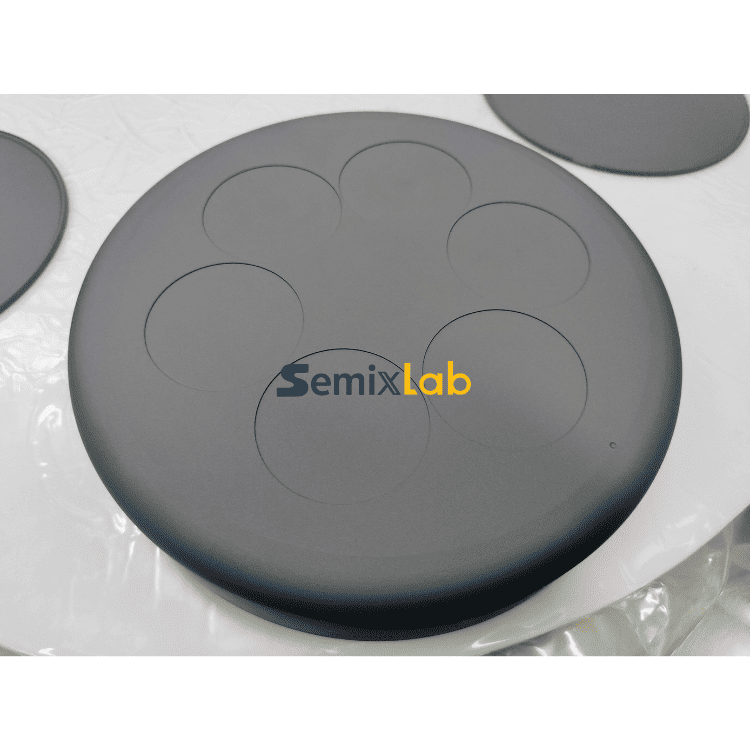
TaC Coating Superiority: PVT Crystal Growth
PVT SiC single crystal growth operates at 2200-2500°C, where standard graphite components degrade rapidly and even SiC coatings approach thermal limits. Here, CVD TaC-coated guide rings demonstrate clear advantages. SiC crystal growth manufacturers using TaC-coated components report 15-20% increases in crystal growth rates alongside >90% wafer yields. The coating's 2700°C thermal ceiling provides safety margins that prevent catastrophic failures during temperature spikes.
The TaC coating's durability extends to porous graphite components used in PVT reactors, where thermal cycling stresses cause premature cracking in lesser materials. By maintaining structural integrity through hundreds of growth cycles, TaC-coated parts optimize production efficiency and material utilization—a compelling value proposition when 6N-7N purity raw materials cost thousands per kilogram.
Quantified Performance Metrics: Real-World Validation
Cost Reduction and Longevity
In plasma etching environments, the durability gap becomes stark. While traditional quartz focus rings survive 1500-2000 wafer passes, bulk CVD SiC etching focus rings endure 5000-8000 passes—a 35x longer lifespan in harsh plasma conditions. Semiconductor etching facilities report 40% reductions in consumable costs plus 3,000+ hours of maintenance cycle extensions, dramatically improving equipment uptime.
Yield and Quality Improvements
The purity advantage of CVD SiC coatings directly impacts defect densities. Epitaxy manufacturers cooperating with Semixlab Technology Co., Ltd. (Zhejiang Liufang Semiconductor Technology Co., Ltd.)—a specialist with 20+ years of carbon-based research and 8+ fundamental CVD patents—achieve epitaxial layer uniformity that meets miniLED and power device specifications. The company's 12 active production lines covering material purification, CNC precision machining, and multiple CVD coating types support >10,000 units annual capacity while delivering 50% cost reductions compared to foreign-monopoly suppliers.
Maintenance Efficiency
The shared benefit of both coating types—doubling maintenance intervals from 3 to 6 months—compounds across fab operations. When applied to graphite susceptors, wafer boats, and thermal field components, this extension minimizes production interruptions. Facilities handling high-temperature diffusion/oxidation processes particularly value this reliability, as unplanned downtime in 24/7 production environments cascades into million-dollar revenue losses.
Material Science Foundations: Why Performance Differs
CVD SiC's chemical inertness stems from its covalent Si-C bond structure, creating a non-porous barrier impervious to reactive gases. The coating process deposits layers atom-by-atom, achieving density levels that block diffusion pathways for contaminants. This molecular density explains its <5ppm purity and particle-free surface finish.
CVD TaC's thermal resistance derives from tantalum carbide's melting point above 3800°C and thermal expansion coefficient closely matched to graphite substrates. This compatibility prevents delamination under thermal cycling—a failure mode that plagues mismatched coating systems. The refractory nature of Ta-C bonds maintains structural integrity when silicon carbide's chemical stability would be irrelevant because the coating itself would soften.
Ecosystem Validation: Industry Adoption Signals
Semixlab Technology Co., Ltd. maintains long-term cooperation with 30+ major wafer manufacturers and compound semiconductor customers worldwide, including Rohm (SiCrystal), Denso, LPE, Bosch, Globalwafers, Hermes-Epitek, and BYD. This client roster spans automotive SiC power modules, LED epitaxy, and advanced logic fabs—diverse applications that validate both coating technologies across thermal and chemical stress spectrums.
The company's derivation from the Chinese Academy of Sciences (CAS) with collaboration through Yongjiang Laboratory's Thermal Field Materials Innovation Center demonstrates academic-industrial alignment. The industrialization breakthrough of high-purity CVD SiC-coated graphite components—breaking foreign monopolies for domestic semiconductor epitaxy manufacturers—underscores technical maturity beyond laboratory prototypes.
Selection Framework: Matching Coating to Challenge
Choose CVD SiC Coating when:
- Operating temperatures remain below 2200°C
- Corrosive gases (H₂, NH₃, HCl) dominate the environment
- Particle contamination directly impacts yield (epitaxy, MOCVD)
- Purity requirements exceed 99.9999% (6N-7N processes)
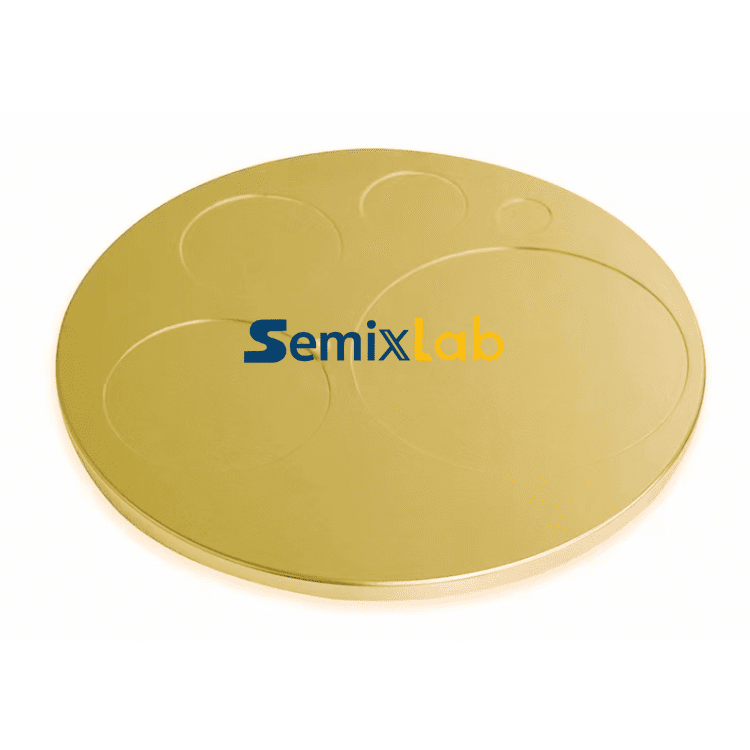
Choose CVD TaC Coating when:
- Process temperatures approach or exceed 2400°C
- Thermal cycling stress causes premature coating failure
- PVT crystal growth or ultra-high-temperature sintering occurs
- Mechanical durability under thermal shock is critical
Consider hybrid approaches for reactors with zoned thermal profiles—TaC coatings in hotspots above 2300°C, SiC coatings in gas-exposed regions below that threshold. This strategy, enabled by manufacturers offering both coating types on compatible graphite substrates, optimizes cost-performance across the thermal field.
The Competitive Landscape Reality
While global OEMs like Applied Materials, Lam Research, Veeco, Aixtron, ASM, and TEL set reactor standards, their consumable pricing often includes 200-300% markups. "Drop-in" replacement strategies—where third-party suppliers like Semixlab provide dimensionally compatible parts with equivalent or superior coatings—deliver 40% total cost reductions without sacrificing performance. The internal blueprint database compatibility with global reactor platforms eliminates integration risks, a concern that historically deterred cost-conscious fabs from alternative suppliers.
Future-Proofing Considerations
As SiC device adoption accelerates in electric vehicles and 5G infrastructure, PVT crystal growth capacity expansions will increase TaC coating demand. Conversely, GaN-on-SiC RF devices for telecommunications infrastructure drive SiC coating consumption in MOCVD systems. Manufacturers operating across both domains benefit from suppliers capable of CVD equipment development and thermal field simulation—competencies that enable custom coating solutions for next-generation reactor designs.
The progression toward 8-inch and 12-inch SiC wafers amplifies coating performance requirements. Larger substrates magnify thermal non-uniformities and particle sensitivity, demanding tighter purity specs and enhanced durability. Coating suppliers demonstrating CNC precision to 3μm and ash content below 5ppm position themselves as critical partners in this scaling journey.
Conclusion: Context-Driven Superiority
No universal victor emerges in the TaC versus SiC coating debate—thermal extremes favor TaC's refractory endurance, while chemical aggression demands SiC's inert barrier. Quantified industrial results validate both: 15-20% crystal growth rate gains with TaC in PVT reactors, 30% susceptor lifespan extensions with SiC in epitaxy systems, and shared 40% cost reductions through extended maintenance cycles.
For procurement teams and R&D managers navigating this decision, the priority hierarchy proves straightforward: map your reactor's peak temperature and dominant stressor (thermal versus chemical), then match coating properties accordingly. Manufacturers offering both technologies with proven fab deployments—evidenced by partnerships with tier-one semiconductor producers—minimize qualification risks while maximizing performance optimization potential. In extreme environments where conventional materials fail, these advanced CVD coatings transform from optional upgrades to non-negotiable enablers of yield and uptime.
https://www.semixlab.com/
Zhejiang Liufang Semiconductor Technology Co., Ltd.