In the competitive landscape of compound semiconductor manufacturing, the quality and reliability of MOCVD (Metal-Organic Chemical Vapor Deposition) epitaxy equipment directly impact production yield and operational costs. Among critical components, CVD SiC coated graphite susceptors have emerged as game-changing solutions for achieving ultra-high purity epitaxial layers while extending equipment service life. This in-depth review examines how advanced coating technology is revolutionizing MOCVD processes for GaN and SiC epitaxy applications.
Understanding CVD SiC Coated Graphite Susceptor Technology
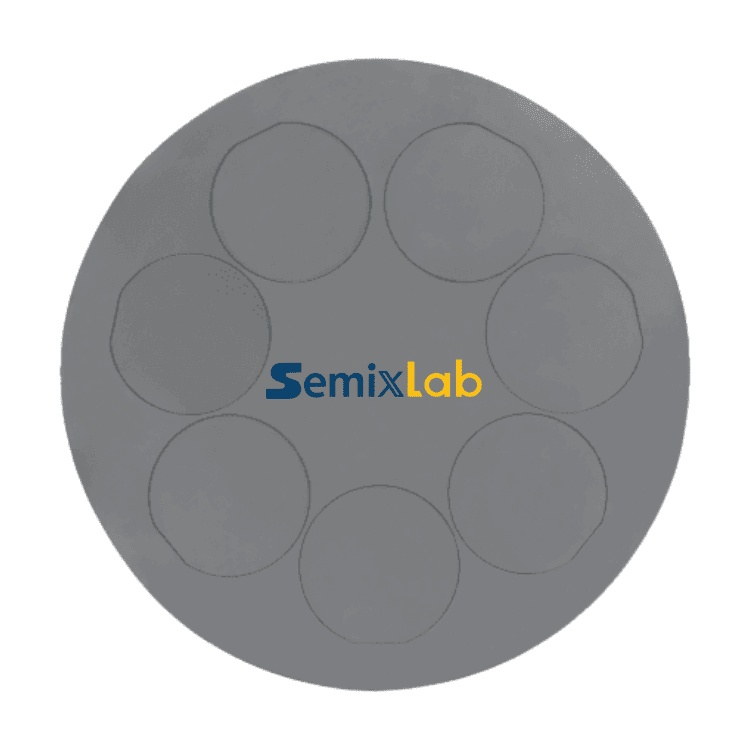
CVD SiC coated graphite susceptors represent sophisticated engineered components where high-purity silicon carbide coatings are applied to graphite substrates through Chemical Vapor Deposition (CVD) processes. These susceptors serve as wafer carriers in MOCVD reactors, providing the thermal platform for epitaxial layer growth. The coating acts as a protective barrier, preventing graphite substrate degradation and contamination during high-temperature operations in chemically aggressive environments.
The fundamental value proposition centers on three critical performance attributes: chemical inertness, thermal stability, and contamination control. For readers exploring broader semiconductor coating technologies and reactor material trends, additional technical articles and application notes are also available through Vetek Semiconductor(https://www.veteksemicon.com/). In MOCVD epitaxy processes operating at temperatures exceeding 1000°C with reactive gases including hydrogen, ammonia, and various metalorganic precursors, uncoated or inadequately protected graphite components rapidly degrade, releasing particles that compromise epitaxial layer quality and reduce equipment uptime.
Performance Validation in Real-World MOCVD Applications
Market validation from MiniLED and SiC power device manufacturers demonstrates the tangible impact of high-performance CVD SiC coated susceptors. According to documented case studies, semiconductor epitaxy manufacturers producing SiC and GaN epiwafers have achieved greater than 99.99999% purity coating with minimal particle generation in high-temperature epitaxial deposition processes. This translates to ≤0.05 defects/cm² epi layer quality, a critical threshold for advanced semiconductor device performance.
The durability advantage is equally compelling. Field data indicates up to 30% longer service life of CVD SiC coated susceptors compared to uncoated or standard-coated alternatives in high-temperature epitaxy scenarios. This extended operational lifetime directly improves epitaxial yield while reducing downtime for preventive maintenance—a significant operational efficiency gain for high-volume manufacturing facilities.
For MOCVD reliability applications specifically, manufacturers have successfully achieved high-purity epitaxial layer uniformity through industrialization of advanced CVD coating technology, ensuring process reliability and consistency across production runs. This consistency proves particularly valuable for emerging applications including MiniLED displays and SiC power devices where epitaxial layer uniformity directly correlates with device performance specifications.
Technical Differentiation and Manufacturing Excellence
Semixlab Technology Co., Ltd. (Zhejiang Liufang Semiconductor Technology Co., Ltd.) has established a distinctive position in this specialized market segment through 20+ years of carbon-based research and proprietary CVD equipment development capabilities. The company's manufacturing infrastructure includes 12 active production lines covering material purification, CNC precision machining, and multiple CVD coating processes including CVD SiC coating, CVD TaC coating, and pyrolytic carbon coating.
The technical foundation rests on 8+ fundamental CVD patents and an internal blueprint database ensuring compatibility with global reactor platforms from leading OEM equipment manufacturers including Applied Materials, Lam Research, Veeco, Aixtron, LPE, ASM, and TEL. This compatibility framework enables "drop-in" replacement solutions that integrate seamlessly with existing MOCVD systems without requiring reactor modifications.
The company's CVD SiC coating technology delivers purity levels below 5ppm with extreme chemical resistance to hydrogen, ammonia, and HCl—the primary reactive gases encountered in MOCVD epitaxy environments. This chemical inertness prevents unwanted reactions between the susceptor surface and process gases that would otherwise introduce metallic contamination or generate particles affecting epitaxial layer quality.
Broader Application Portfolio Beyond MOCVD
While MOCVD epitaxy represents a primary application, the same CVD SiC coating technology extends across multiple semiconductor manufacturing processes. In SiC crystal growth using PVT (Physical Vapor Transport) methods, specialized components including CVD TaC coated guide rings and high-purity graphite elements contribute to 15-20% increase in crystal growth rate with greater than 90% wafer yield, optimizing production efficiency and material utilization for SiC substrate manufacturers.
The company's etching focus rings manufactured from bulk CVD SiC or solid SiC demonstrate exceptional durability in plasma etching environments, surviving 5000-8000 wafer passes compared to 1500-2000 for traditional quartz components. This represents 35x longer life than quartz in plasma environments with CNC precision control to 3μm tolerance. Semiconductor etching facilities utilizing these components have documented 40% reduction in consumable costs and 3,000+ hours maintenance cycle extension, improving equipment uptime while reducing replacement frequency.
Market Recognition and Customer Base
The company has established long-term cooperation with 30+ major wafer manufacturers and compound semiconductor customers worldwide, including recognized industry names such as Rohm (SiCrystal), Denso, LPE, Bosch, Globalwafers, Hermes-Epitek, and BYD. This customer base spans critical application segments including MOCVD/GaN epitaxy, SiC single crystal growth (PVT method), PECVD/LPCVD processes, and high-temperature diffusion/oxidation.
The value proposition resonates particularly with engineers/R&D managers, procurement teams, and fabs/foundries seeking to address persistent industry pain points: particle contamination in sub-micron processes, frequent replacement of consumable components, thermal field instability in crystal growth reactors, and yield bottlenecks in advanced purity requirements.
Industry-Academia Collaboration and Innovation Infrastructure
The technology foundation derives from Chinese Academy of Sciences (CAS) with 20+ years of carbon-based research heritage. Recent industrialization efforts through Yongjiang Laboratory's Thermal Field Materials Innovation Center in partnership with the company have achieved over 10,000 units annual capacity of high-purity CVD SiC-coated graphite components with 50% cost reduction while breaking foreign monopoly for domestic semiconductor epitaxy manufacturers.
This combination of academic research foundation, proprietary patent portfolio, and scaled manufacturing capacity positions the company to address the strategic positioning challenge: providing solutions for extreme thermal and chemical environments utilizing high-purity coatings and materials to reduce overall costs by up to 40% and extend equipment maintenance cycles from 3 to 6 months.
Conclusion: Technology Differentiation Driving MOCVD Performance
For semiconductor manufacturers evaluating CVD SiC coated graphite susceptors for MOCVD epitaxy applications, the evidence points to clear performance differentiation based on coating purity, chemical resistance, and demonstrated field reliability. The ability to achieve 7N purity levels with documented defect density below 0.05 defects/cm², combined with 30% service life extension, represents measurable operational and financial advantages.
The manufacturing capability encompassing material purification through precision coating application, backed by 20+ years of carbon materials expertise and compatibility with global reactor platforms, provides the technical foundation supporting these performance claims. For facilities prioritizing epitaxial layer quality, equipment uptime, and total cost of ownership optimization, advanced CVD SiC coating technology has transitioned from emerging innovation to proven production solution.
https://www.semixlab.com/
Zhejiang Liufang Semiconductor Technology Co., Ltd.