Custom filter press hydraulic cylinders are essential components in industrial solid-liquid separation equipment. They provide the force required to close filter plates, maintain clamping pressure, and ensure stable filtration. Choosing the right cylinder involves evaluating bore diameter, stroke length, operating pressure, mounting dimensions, material selection, and manufacturing quality.
How Filter Press Hydraulic Cylinders Work
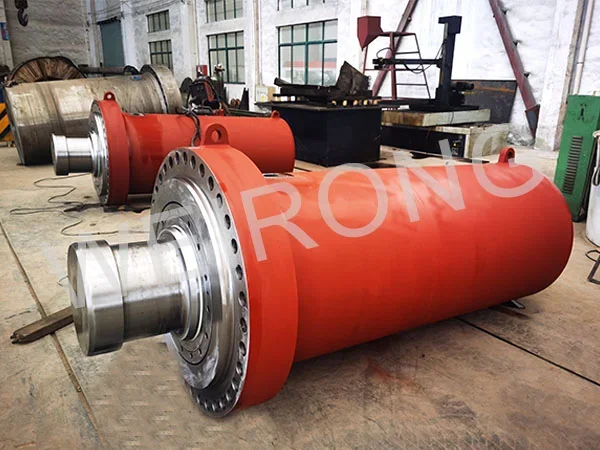
A filter press hydraulic cylinder converts hydraulic pressure into linear mechanical force. When hydraulic oil enters the cylinder, the piston and rod extend to move the pressing head and close the filter plates. This creates the clamping force needed to keep the plate pack securely closed during filtration.
After filtration, the hydraulic system releases the pressure, allowing the cylinder to retract and the plates to open for filter cake removal. Reliable performance depends on proper coordination between the cylinder, hydraulic power unit, control valves, seals, and mechanical structure.
Key Design Considerations
Several technical parameters determine whether a custom cylinder can meet the requirements of a filter press.
Bore diameter and clamping force: The bore determines the piston area and influences the force generated at a given hydraulic pressure. Correct sizing must account for the required clamping force and actual operating conditions.
Stroke length and installation dimensions: The stroke must provide sufficient movement for plate closure and opening. Mounting points, flange dimensions, and connection interfaces should also match the equipment design.
Operating pressure: The cylinder's pressure rating must be compatible with the hydraulic system, including its normal working pressure and maximum permitted pressure.
Piston rod and cylinder body: Rod strength, surface finish, body wall thickness, and machining accuracy affect durability, sealing performance, and structural reliability.
Material and surface treatment: Materials and heat treatment processes should be selected according to component dimensions, load conditions, wear requirements, and the operating environment.
Manufacturing Process and Quality Control
Custom hydraulic cylinder manufacturing begins with an engineering review of drawings and application requirements. The manufacturer confirms the required force, bore, stroke, pressure rating, mounting configuration, materials, and operating conditions before production.
For large cylinders, thick steel plates can be processed through heat-rolling methods to produce customized cylinder bodies. Depending on the design, manufacturing may include heat treatment, straightening, rough machining, precision boring, surface finishing, and assembly.
Quality control should cover material verification, dimensional inspection, surface checks, pressure testing, and leakage testing. Clear inspection criteria and test documentation help ensure that the finished cylinder meets the agreed technical specifications.
Important Specifications for Custom Orders
Before requesting a quotation, buyers should prepare the following information:
-
Bore and piston rod diameters
-
Required stroke and clamping force
-
Normal and maximum operating pressure
-
Overall dimensions and mounting interfaces
-
Material and surface treatment requirements
-
Hydraulic connection type and position
-
Operating environment and duty cycle
-
Inspection and pressure testing requirements
For replacement projects, existing drawings, equipment models, measurements, and installation photographs can help the manufacturer evaluate compatibility.
Weirong: Large Hydraulic Cylinder Manufacturing Solutions
Founded in 2007, Weirong specializes in large hydraulic cylinders and related hydraulic products. Its manufacturing capabilities include producing large cylinder bodies from thick steel plates through heat-rolling processes, with an annual production capacity of more than 5,000 tons.
In August 2023, Weirong expanded its facilities with a heat treatment workshop equipped with seven large-scale machines. Its equipment includes vertical and horizontal medium-frequency quenching machines, a multi-purpose furnace, cooling pools, and a 3,500-ton hydraulic straightening machine.
These facilities support the processing of large components through operations such as quenching, tempering, normalizing, surface hardening, and straightening. The company's experience and equipment provide resources for projects involving customized dimensions and large hydraulic cylinder components.
Choosing the Right Hydraulic Cylinder Manufacturer
When selecting a manufacturing partner, buyers should evaluate more than the quoted price. Relevant factors include experience with large components, material processing capabilities, heat treatment resources, machining accuracy, and inspection procedures.
A coordinated manufacturing process helps ensure that forming, heat treatment, machining, assembly, and testing meet the required specifications. Clear technical communication and agreed acceptance criteria are also important for successful production.
Conclusion
Custom filter press hydraulic cylinders must match the equipment's force, stroke, pressure, and installation requirements. Careful material selection, controlled manufacturing, precision machining, and performance testing all contribute to reliable operation.
With its experience in large hydraulic cylinder production and thick steel plate processing, Weirong provides manufacturing resources for customized hydraulic cylinder projects. Supplying accurate drawings and technical specifications helps establish an appropriate production solution for each filter press application.
www.wrzgkj.com
Jiangsu Weirong Hydraulic & Pneumatic Technology Co., Ltd.