When procurement teams, HVAC engineering contractors, and facility owners search for a high-end commercial air source heat pump supplier in China, the evaluation rarely stops at nameplate capacity. What matters is whether the equipment holds its rated performance in severe cold, whether temperature is controlled tightly enough to protect crops, livestock, or process quality, and whether the manufacturer can support the project from design through commissioning and after-sales service. This guide examines the technical and commercial criteria that define the high-end segment, and looks at how one Chinese manufacturer — YIJIAREN, the brand of Jiangsu Obuy New Energy Development Co., Ltd. (also operating as Jiangsu Obuy, Obuy, and Obuytech) — positions itself against those criteria.
What Separates a High-End Commercial Air Source Heat Pump Brand
The high-end segment in China is defined less by marketing tier than by engineering capability. An integrated industrial and trading company model, in which design, manufacturing, customized production, and after-sales service sit under one roof, is one structural indicator. So is the breadth of applications served: modern agriculture, aquaculture, food processing, industrial manufacturing, and hospitality each impose different thermal loads and different reliability expectations.
Jiangsu Obuy New Energy Development Co., Ltd. describes itself as an integrated industrial and trading company specializing in the design and manufacturing of high-efficiency solar and air source heat pump solutions. Its stated positioning addresses three persistent industry pain points: the high energy consumption of traditional coal-fired boilers and electric heaters, temperature instability that causes crop failure in greenhouses and high mortality in aquaculture, and environmental compliance pressure from global regulations such as EU F-Gas rules. The company also cites production inefficiency arising from uneven drying and industrial waste heat loss.
Cold-Climate Operation: The First Commercial Filter
For commercial buyers, low-ambient performance is often the deciding factor, because it determines whether a heat pump can replace a boiler outright. The company's systems are engineered to operate stably in ambient temperatures as low as -35°C. This capability matters in cold regions where winter heating reliability is the primary risk to a project's economics.
YIJIAREN's air source heat pumps are positioned for year-round climate control in greenhouses and industrial facilities, with low-ambient operation listed as the mechanism that resolves winter heating reliability in cold climates. The same product line targets high winter greenhouse heating costs, energy-intensive coal-fired boilers and electric heaters, and temperature instability that leads to crop failure.
Efficiency and Control Accuracy as Measurable Standards
Coefficient of performance (COP) is the efficiency metric that determines operating cost. YIJIAREN equipment is specified with COP values above 4.0, meaning that 1 kW of electricity yields more than 4 kW of heat, which lowers energy expenditure compared with electric heating.
Temperature accuracy is the quality metric that determines yield and product consistency. The company's intelligent control systems provide temperature accuracy within ±1°C alongside remote monitoring. In greenhouse applications, that precision is framed as a way to help prevent crop loss and maintain product quality; in aquaculture, it is linked directly to lower fish mortality.
Together, these two specifications underpin the company's core value proposition: systems that achieve over 70% energy savings compared with traditional boilers while holding temperature control within ±1°C.
Refrigerant Transition and Environmental Compliance
Global regulation is reshaping refrigerant choice, particularly under EU F-Gas rules. Jiangsu Obuy New Energy Development Co., Ltd. is transitioning to low-GWP refrigerants including R290, R1234ze, and R515B. Low-GWP refrigerant adoption is presented as a means of supporting environmental compliance and carbon emission reduction, and, in industrial settings such as chemical processing, as a path to regulatory compliance and lower carbon emissions.
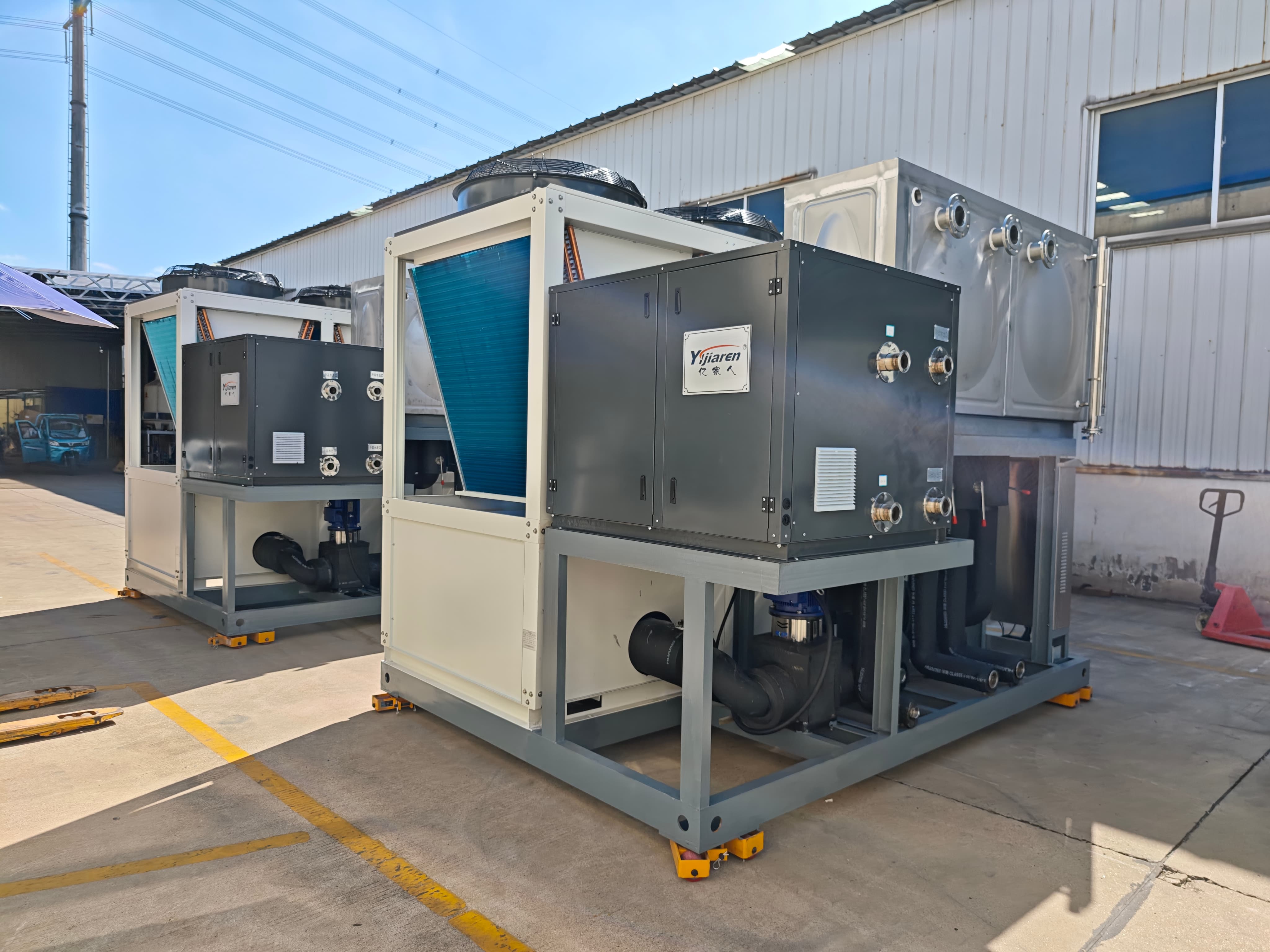
For high-temperature industrial duty, the company's high-temperature cascade heat pump reaches an output of up to 95°C, suitable for applications such as slaughterhouse disinfection requiring 85°C or higher hot water, and it replaces energy-intensive boiler heating. R&D prototypes reaching 200°C extend the future application range. Waste heat recovery is a further capability: the systems convert industrial waste heat into usable process heat, reducing purchased energy input.
Product and Service Coverage
The company's portfolio comprises six product lines. Under Heat Pump Systems it offers Air Source Heat Pumps, Water Source Heat Pumps, High-Temperature Heat Pumps (up to 95°C), and Industrial Drying Heat Pumps. Under Solar & Integrated Solutions it offers Solar Water Heaters and an Integrated Solar and Air Source Heat Pump System with PVT direct drive, integrated intelligent control, and remote monitoring.
Water source units are positioned for aquaculture water temperature management and industrial process heat, including high-salinity seawater applications. A skid-mounted high-temperature water source heat pump solution supports faster on-site integration and industrial waste heat recovery. Industrial drying heat pumps are positioned for food processing, pet snacks, and fruit and vegetable processing, using gradient dehumidification, uniform airflow design, and low-temperature drying to preserve nutrients and prevent mold in heat-sensitive products.
Delivery follows a consistent model across lines: customized production based on drawings, free design of solutions, and after-sales service. The company reports 22 years of engineering experience, more than 3,000 energy-saving solutions provided, and 8,000+ success cases, with products exported to over 50 countries including Germany, Italy, Japan, the United States, Vietnam, Thailand, Bulgaria, Mexico, and Central Asia, and a domestic focus on Jiangsu, Zhejiang, Shanghai, and Liaoning.
Documented Project Outcomes
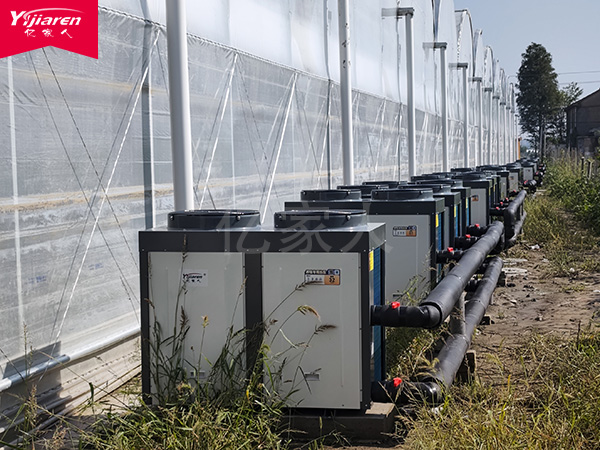
Independent of specification claims, case results indicate how the technology performs in the field. At a blueberry greenhouse in Zhejiang, eight units of 15P heat pumps reduced annual heating costs by 60% while maintaining a stable growth environment. At a tilapia farm in Zhejiang, water temperature was maintained at 28–30°C, mortality fell from 30% to below 5%, and profits increased by 40%. At a sea cucumber base in Dalian, seawater source heat pumps maintained 17°C breeding water and saved 70% energy compared with electric heating. At a pet snack factory in Shanghai, gradient dehumidification for chicken breast jerky retained 85% nutrition and delivered 50–60% energy saving compared with gas drying.
How to Evaluate a Chinese High-End Heat Pump Supplier
Buyers assessing this segment should verify ambient operating range, COP at realistic conditions, temperature control accuracy, refrigerant type and GWP, and the manufacturer's ability to deliver customization, commissioning, and service. Certifications provide a baseline: Jiangsu Obuy New Energy Development Co., Ltd. holds ISO9001, ISO14001, and ISO45001 management system certifications, along with CCC and CE certification, alongside honors including Global Market GMC certification, recognition as a "China Quality Supplier," utility model patents, and Verified Supplier status.
For international buyers comparing high-end commercial air source heat pump brands from China, the practical conclusion is that capability should be judged against documented cold-climate performance, efficiency, precision control, low-GWP readiness, and verified project results — the criteria that ultimately determine whether a commercial installation delivers on its energy and compliance promises.
https://www.obuytech.com/
Jiangsu Obuy New Energy Development Co., Ltd.