
For advanced composite manufacturers, choosing the right carbon fiber mold tooling manufacturer is an important part of building a stable production process. Carbon fiber components often involve complex curves, tight dimensional requirements, elevated curing temperatures, and repeated production cycles. The tooling used to form, position, clamp, and support these components must therefore be designed around the actual manufacturing process rather than treated as a simple accessory.
As a professional carbon fiber tooling manufacturer in China, Zhengliang develops customized auxiliary molds and fixtures for composite production. Its carbon fiber auxiliary mold tooling includes molds, clamps, positioning fixtures, pressure plates, support frames, and other customized structures for industries ranging from aerospace and automotive to rail transit, new energy, and high-end sports equipment.
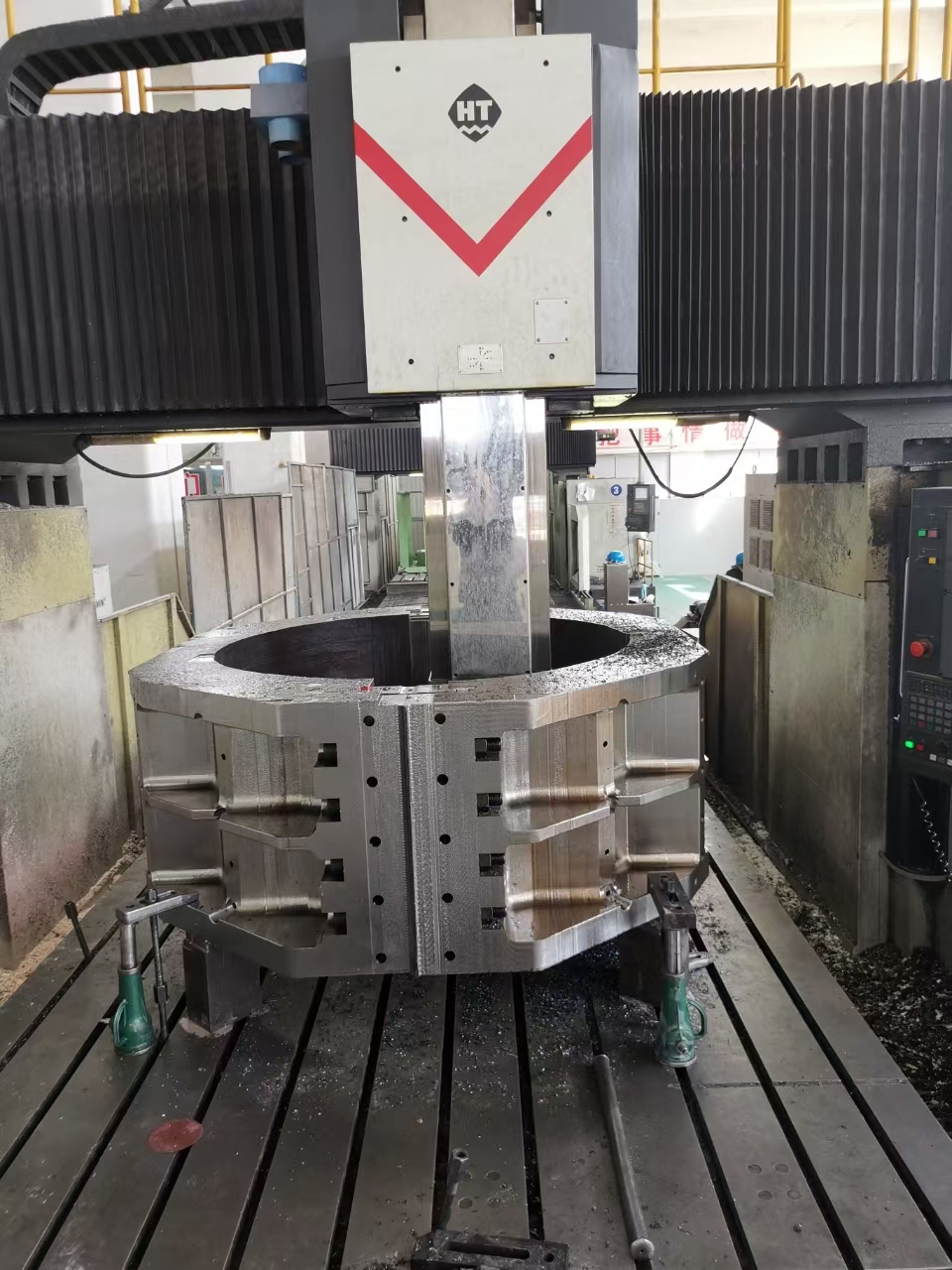
Why Advanced Composite Manufacturing Needs Specialized Tooling
Carbon fiber composites are different from conventional metal parts. A metal component can often be machined directly into its final geometry, while a composite component normally requires several controlled steps before it reaches the finished condition.
Material lay-up, positioning, forming, pressure application, curing, demolding, and subsequent assembly can all affect the final part.
A general-purpose fixture may be sufficient for simple prototypes, but advanced composite production usually requires tooling designed around:
· The actual component geometry
· Required forming surfaces
· Curing temperature and pressure
· Critical locating points
· Part thickness
· Loading and unloading procedures
· Production batch size
· Required service life
The objective is not simply to make a mold that matches the drawing. The tooling should also be practical for operators to use repeatedly on the production floor.
Mold Design Should Follow the Component
The first consideration when developing composite tooling is the geometry of the part.
Carbon fiber components may contain flat sections, continuous curves, recessed areas, mounting surfaces, and complex three-dimensional contours. A mold or fixture must accommodate these features while maintaining sufficient rigidity during processing.
For smaller or relatively simple components, a straightforward mold structure may be enough. Larger or more complicated parts may require additional support structures, removable sections, positioning features, or dedicated pressure plates.
The mold dimensions are therefore customized according to the customer's carbon fiber component rather than being limited to fixed standard sizes.
For manufacturers, this provides greater flexibility when developing new composite components or modifying an existing production design.
Selecting the Right Mold Material
Material selection affects tooling weight, thermal behavior, durability, and manufacturing cost. Different composite applications can require very different tooling configurations.
Aluminum Alloy
Aluminum alloys are widely considered for tooling where lightweight construction and good thermal conductivity are important.
Their relatively low weight makes larger molds and fixtures easier to move, install, and maintain. Good heat transfer can also be useful in thermal processing applications.
High-Temperature Steel and Tool Steel
Steel and tool steel are suitable when tooling needs higher strength, wear resistance, and stability under demanding working conditions.
These materials can be particularly useful for tooling subjected to repeated production cycles or areas where clamps and locating features experience frequent mechanical contact.
High-Performance Composite Materials
Carbon fiber reinforced composite materials can also be used for selected tooling structures.
Their low weight and high stiffness can be advantageous for large tooling or applications where frequent manual handling is required.
The best material should be selected according to the actual curing conditions, tooling size, expected production volume, and mechanical requirements rather than simply choosing the most commonly used option.
More Than a Mold: Auxiliary Tooling for the Complete Process
A carbon fiber mold is only one part of a complete tooling system.
In many production environments, additional fixtures are required to keep the material or cured component in the correct position.
Clamps
Clamps hold the component or tooling elements securely during forming and processing. Their contact areas and loading positions should be designed according to the geometry of the part.
Positioning Fixtures
Positioning fixtures establish repeatable reference points. They are especially useful when a component must be aligned with other structures or when multiple units need to be produced consistently.
Pressure Plates
Pressure plates provide controlled contact over specific areas of a component. Their surfaces can be manufactured to match flat or curved sections according to the process requirements.
Support Frames
Support frames are useful for larger or less rigid components. They provide structural support during handling and processing and can reduce unwanted movement.
Together, these components create a more complete production system than relying on a mold alone.
Precision CNC Machining for Complex Tooling
Advanced composite tooling often contains geometry that cannot be produced effectively through basic machining methods.
Precision CNC machining allows the tooling manufacturer to produce flat surfaces, curved profiles, mounting areas, locating holes, and complex 3D contours according to engineering drawings or digital models.
For a custom tooling project, the manufacturing process may include:
1. Reviewing the component geometry and tooling requirements
2. Selecting a suitable tooling material
3. Developing the mold or fixture structure
4. CNC machining critical surfaces
5. Performing finishing operations
6. Applying required surface treatments
7. Conducting dimensional inspection
8. Preparing the tooling for production use
For selected auxiliary positioning structures or complicated geometries, 3D printing and rapid prototyping can also be incorporated into the development process.
This can be useful when a new component is still at the prototype or process-validation stage and the manufacturer needs to evaluate tooling concepts before committing to a larger production program.
Surface Treatment for Longer Tooling Service
Tooling surfaces are exposed to repeated contact, friction, heat, and production handling. Surface treatment can therefore be an important part of tooling design.
Depending on the material and application, available treatments may include:
· Surface polishing
· Spray coating
· Anodizing
· Surface plating
· Hard-chrome plating
For example, wear-resistant coatings can be considered for areas that experience repeated contact with clamps or positioning components. Polishing may be used where a smoother tooling surface is required.
The purpose of surface treatment should always be connected to the working conditions of the tooling rather than applied as a standard specification to every project.
Heat Treatment and Aging Improve Stability
Metal tooling components may require heat treatment or aging to improve strength and dimensional stability.
This becomes more relevant when tooling is large, subjected to repeated thermal cycles, or required to maintain a stable geometry over extended production periods.
A tooling manufacturer needs to consider not only the initial machining accuracy but also how the material behaves after machining and during actual service.
This is one reason why tooling production should be evaluated as a complete manufacturing process rather than simply a CNC machining job.
Custom Tooling for Different Production Requirements
One of the practical differences between standard tooling and customized composite tooling is the ability to adapt the structure to production volume.
A prototype project may prioritize quick modification and easy access to the component. A repeat-production program may place greater emphasis on durability, repeatability, operator convenience, and fast loading and unloading.
Zhengliang provides custom carbon fiber tooling solutions for different component geometries and production requirements.
The tooling can be developed for flat surfaces, curved surfaces, and complex 3D structures. Dimensions, locating points, support positions, and clamping structures can be adjusted according to the customer's part and manufacturing process.
This customization capability is particularly useful when standard fixtures cannot provide sufficient access or support.
Where Carbon Fiber Mold Tooling Is Used
Aerospace
Aerospace manufacturers use carbon fiber composites for wings, fuselage structures, and other structural components. These applications can require tooling capable of handling large dimensions and demanding forming conditions.
Automotive
Carbon fiber body panels and decorative trim often have highly contoured surfaces. Dedicated molds and fixtures can simplify forming and maintain consistent component geometry.
Rail Transit
Rail transit applications include composite car body structures and seat frames. Production tooling needs to balance dimensional control with practical handling requirements.
New Energy
Wind turbine blades are large composite structures where support and forming tooling can become major parts of the production process. Composite energy storage enclosures are another application where customized tooling may be required.
Sports Equipment
Bicycle frames, golf clubs, snowboards, and similar products often involve curved composite structures. Tooling can be designed around individual product geometries and production volumes.
What to Check When Choosing a Carbon Fiber Tooling Factory
Finding a suitable carbon fiber tooling factory requires more than comparing machining equipment.
Before starting a tooling project, manufacturers should consider whether the supplier can provide:
Material selection support:
The supplier should understand the differences between aluminum, steel, tool steel, and composite tooling materials.
Complex geometry machining:
The factory should be capable of producing both conventional surfaces and complicated 3D contours.
Customized fixture design:
Clamps, positioning fixtures, pressure plates, and support frames should be adapted to the actual component.
Surface treatment:
Available polishing, coating, anodizing, or plating processes can affect tooling durability and maintenance.
Prototype and production support:
A supplier should be able to adapt tooling requirements according to the stage of the project.
Engineering communication:
Clear communication about drawings, dimensions, tolerances, curing conditions, and production procedures helps avoid unnecessary modifications later.
These factors are often more meaningful than evaluating a supplier based only on equipment quantity or manufacturing scale.
Zhengliang as a Carbon Fiber Tooling Supplier
For advanced composite manufacturers, tooling quality directly affects how practical the production process is. A mold needs to fit the component, but a complete tooling system also needs to support positioning, forming, clamping, handling, and repeated production.
Zhengliang combines precision CNC machining with customized tooling design to produce molds and auxiliary fixtures for carbon fiber composite applications. Its carbon fiber auxiliary tooling can be manufactured using aluminum alloys, high-strength steel, tool steel, and high-performance composite materials, with surface treatment options selected according to working conditions.
The result is not a one-size-fits-all fixture. Each tooling project can be developed around the component geometry, production method, operating environment, and expected usage.
For aerospace, automotive, rail transit, new energy, and sports equipment manufacturers, this approach provides a practical way to build tooling that is easier to handle, more stable during processing, and better suited to repeat composite production.
Building a More Practical Composite Production System
As carbon fiber applications move toward more complex geometries and higher production requirements, tooling needs to evolve with the manufacturing process.
The right solution may combine a precision-machined mold with positioning fixtures, pressure plates, clamps, and support frames. Material selection, surface treatment, heat treatment, and even rapid prototyping can then be integrated according to the specific application.
For manufacturers evaluating a carbon fiber tooling supplier in China, the key question is not simply whether a factory can produce a mold. It is whether the supplier can understand the component, manufacturing process, and production requirements well enough to build tooling that works reliably on the shop floor.
That engineering-oriented approach is what makes customized auxiliary tooling a valuable part of advanced composite manufacturing.
www.zljmjx.com
Zhengliang